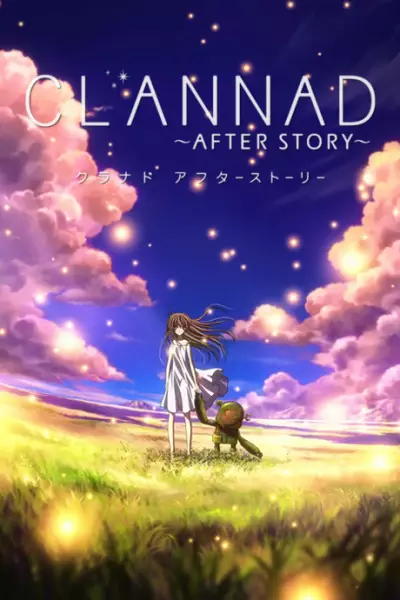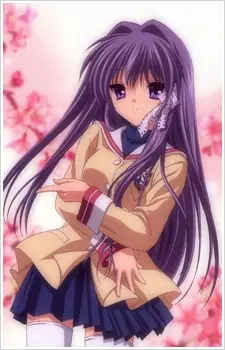

CLANNAD〜AFTER STORY〜 クラナド アフターストーリー
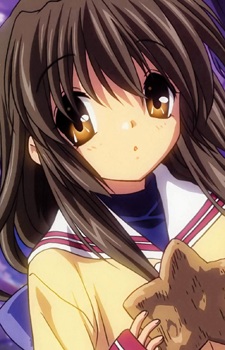
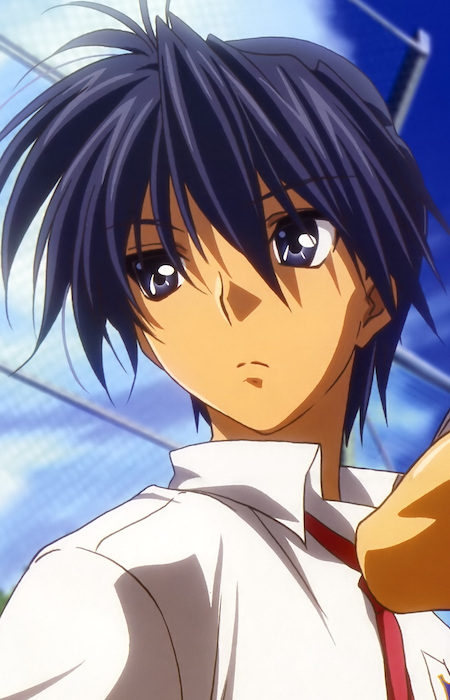
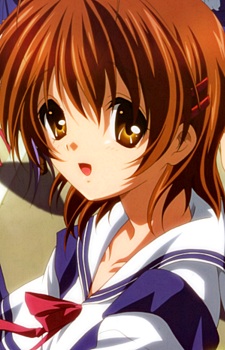
Tomoya Okazaki and Nagisa Furukawa have graduated from high school, and together, they experience the emotional rollercoaster of growing up. Unable to decide on a course for his future, Tomoya learns the value of a strong work ethic and discovers the strength of Nagisa's support. Through the couple's dedication and unity of purpose, they push forward to confront their personal problems, deepen their old relationships, and create new bonds. Time also moves on in the Illusionary World. As the plains grow cold with the approach of winter, the Illusionary Girl and the Garbage Doll are presented with a difficult situation that reveals the World's true purpose. [Written by MAL Rewrite]
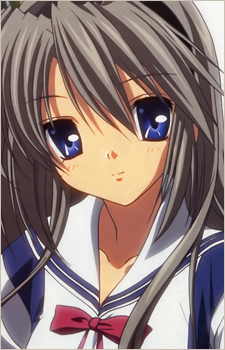
Главный
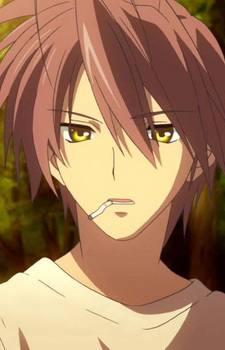
Главный
Главный
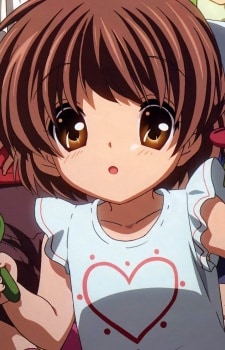
Второстепенный
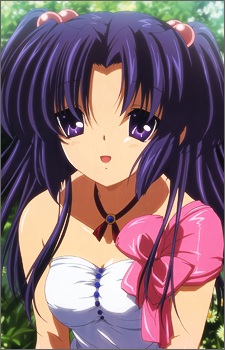
Второстепенный
Второстепенный
Второстепенный
Второстепенный
Второстепенный
Второстепенный
Второстепенный
Ryan_the_Bread
March 7, 2024
What is this? Is this anything? Clannad: After Story is the anime equivalent to watching a YouTube video titled something like “Sad animal videos to make you cry - Part 6”. Is what I’m watching “sad”? In the most basic sense, yes. Does it in any way rely upon a particular connection to the characters/animals involved? No. It relies upon a sense of sympathy/empathy that most people just instinctually have. Clannad: After Story is, to borrow a phrase, all fart and no shit. To accuse a piece of fiction of being “emotionally manipulative” feels strange; most, if not all, art falls under this umbrella. Of course anygiven movie/show/book/song/whatever is attempting to instill within you a certain emotion. Whether or not it succeeds in that, however, has to do with subtlety, pacing, tactfulness, and a ton of other factors that a writer (and their team) should carefully consider and balance. At no point in my viewing experience did the writing in Clannad (either season) feel carefully considered or balanced in the slightest. I found Clannad (S1) to be thoroughly uninteresting. It was essentially impossible for me to care about its boring world, one-dimensional characters, and contrived drama. Adding to that, the humor was about as funny as being told that I have terminal cancer and the supernatural elements were so awkwardly implemented that it led to more confusion about the rules of the world than suspended whimsy. Still, I persisted because the light at the end of the tunnel (After Story) was promised by hordes of anime fans to be complete and ethereal salvation. And I swear to God if I keep falling for this shit... Clannad: After Story is better than Clannad (S1) in the sense that being kicked in the balls is less painful than having all your teeth pulled; both are still thoroughly unpleasant experiences, but at least one doesn’t leave you permanently disfigured. The worst fucking metaphor I’ve ever come up with aside, I will give After Story (AS from here on out) some credit for at least trying to be ABOUT something. Sure, S1 was about Tomoya and Nagisa starting up the drama club and their relationship, but most of what actually transpired was just a bunch of dumbass kids awkwardly bumbling around. S1 was, essentially, a harem that was too scared to call itself such. AS tries to strengthen its focus and be more mature. Does it succeed? Relative to S1, yes it does. AS is more “mature” than its predecessor. It focuses on more serious subjects and has slightly more of an edge. In the wider world of fiction, however, it’s more like the difference in maturity between a 10 year-old and a 15 year-old. Nobody in their right mind would describe it as “mature” except for in relation to S1. To illustrate my point, newlyweds Tomoya and Nagisa are shown to be borderline nervous to hold each other’s hands. In their own apartment. In front of nobody. The subject of them having sex is broached more as though they just figured out how to roll a condom onto a banana than that they’re both high school graduates living together alone. When AS cuts that nonsense out and focuses unabashedly on Tomoya’s struggles with acclimating to his job and adult life in general, it really shines (at least in comparison to what S1 and the first half of AS were doing). As compelling as THAT is though, I’d still never really think to call Tomoya (or any of the other characters) anything close to compelling, interesting, or likable on their own. Or even together, actually. Tomoya in S1 was almost unbearable for me. His only real character flaw was that he was a “delinquent”. As much as he slacked off academically, though, he still found the time to help a gaggle of girls out with all of their personal issues, offer his services and time selflessly to an insane degree, and act heroically in the face of any and all threats. Outside of Optimus Prime, Captain America, and maybe Goku, the whole “my only flaw is my devotion to others and unfettered heroism” is a super boring and often times annoying archetype to me. Being “too good” is not compelling or relatable 9/10 times. Fortunately, AS does go out of its way to shit all over Tomoya and knock him down a few pegs and, as a result, the situations he finds himself in become more interesting. The same can not be said for the rest of the characters, who remain thoroughly whelming in every facet. Am I honestly supposed to care about Nagisa? Why? Her personality is just so aggressively nothing. She’s earnest, shy, naïve, and just so moe, but whatever. Outside of S1 stuff related to the drama club, she doesn’t want anything or have any ambition. That’s actually one of my biggest issues with AS as a whole; nobody wants anything aside from stuff they’re given or already have. What does Tomoya want? To be with Nagisa, of course. Okay, well he already has her, so what else is there? He wants to keep her, obviously. But Nagisa seems almost incapable of independent thought, so I don’t think her leaving him of her own accord is a situation to be fearful of. What does he want outside of the relationship? To just work wherever and be wherever? How interesting. Certainly I wouldn’t fault anybody in real life for being this way, but characters in fiction kind of have an obligation to be interesting to watch. The ones featured in Clannad seldom are. They neither come from the dirt and aspire to normalcy or start at normalcy and aspire to greatness. They start at normalcy and just kind of stay there. This all comes to a head when a certain *thing* happens. I won’t spoil it, but if you even halfway pay attention to the OP it should be obvious (genuinely, even as someone who went spoiler-free the whole way through, I called it immediately). This *thing* changes the trajectory of Tomoya’s life until it doesn’t but I’ll get to that. Point is, this *thing* could have been easily avoided if these empty-headed idiots heeded even the most basic of warnings they had been given. That’s the impression I got, anyway. I understand the themes of “the importance of family” and “the value of overcoming adversity and finding something to live for” as trite as they are, but would they not be more impactful if the characters actually, y’know, fought for something? They mostly just roll with the punches in a terribly blasé way. It’s just a series of things happening to them and them reacting in either a supremely uninteresting or insanely saccharine manner. The *thing* I mentioned eventually gets reversed and, with it, the themes collapse in on themselves spectacularly. It would be one thing if it felt like something we’d been working towards for the duration of the show, and ostensibly there are, like, barely hints that *something* will happen, but it’s not really enough. The *thing* doesn’t get reversed because the characters work towards it, though, it just... happens. It might as well have been a dream. Sure, it dictates how Tomoya approaches life, but it’s not all that different from how he would’ve without the *thing* happening in the first place. There’s no sacrifice and there’s not even any real compromise – things just suck to make you cry and then they don’t because the showrunners wanted to hit a certain tone. This next metaphor probably only serves to showcase how terminally online I am, but here goes... Y’all know the “Chad” meme? Of course you do, but do you also know the one where it’s the male and female “Chads” and it’s really pushing “traditional living” and stereotypical gender roles? The dude says something like “My only purpose is to provide for my wife and child” and the wife says “And my only purpose is to take care of the house and children while you’re out providing” or whatever? That’s all Tomoya and Nagisa feel like at the end of the day. That’s all it feels like Clannad has to say and it does it with a hilarious amount of earnestness and an equally hilarious lack of self-awareness. I don’t know, I just cannot fathom how this is the 16th highest rated anime on this site. That’s higher than anything Ghibli, Your Name., Cowboy Bebop, anything Evangelion, Wolf Children, anything Satoshi Kon ever made, etc. It’s astounding. But it looks nice I guess, and the music’s nice. Whatever. Nagisa and most of the female characters look more like what I’d find under a rock in my yard than any human being, but whatever. Most anime characters look like cats, so why not have them look like praying mantises? Certainly not the worst show I’ve ever seen, but it’s just utterly unsurprising and unchallenging. Not that something being “challenging” is synonymous with quality, but when the characters are this flat, the drama is this poorly plotted, the story is this obvious (aside from the ridonkulous ending), and the emotions I’m intended to feel are this plain and unsubstantiated... Eh? I’m not a particularly unemotional guy (I’ve cried like a bitch at stuff like Anohana and Wolf Children) so when you’re showing me an “emotional” moment and I’m either laughing my ass off or my face resembles Squidward’s house, you’ve done fucked up. Scores: Art (7/10) Music (6/10) Characters (3/10) Story (2/10) Objective (4/10) Subjective (4/10) If nothing else, Clannad is proof that you can accomplish your wildest dreams. If somebody’s still paying Jun Maeda to write garbage, then by golly, the sky’s the limit for us.
Link_of_Hyrule
March 31, 2014
**SPOILER FREE REVIEW** Clannad: After Story is one of the highest rated and most beloved anime to ever be created; it's as simple as that. Rarely will you find a more passionate and dedicated group of fans who genuinely believe that an anime "changed their life". If that is the case, I am by no means trying to take that away from you; I would never tell someone that a show is meaningless if it legitimately meant something to them. However, I am going to be very harsh on this anime; I think I am very justified in giving it this rating. There are way,WAY too many perfect reviews for this series that refuse to acknowledge its flaws, so this review will focus primarily on the negatives of the series, even though there are many things that it does well. In other words: CLANNAD FANS, READ WITH CAUTION! My main problem with the show is simply this: The first half of After Story is guilty of going down the worst possible road that a shoujo anime can go down: the dreaded road of "emotion porn", and some of it is absolutely unbearable. For those of you who are unfamiliar with the term, "emotion porn" refers any story/storyarc in a form of media that is incredibly shallow and uses gratuitous amounts of melodrama in order to get a cheap cry out of it's audience. "Emotion Porn" is directed at the emotionally immature and at those who are desperate for a cry, and unfortunately, After Story's first half is jam packed with it. "How dare you!!!", cried the Clannad fans. "There is nothing shallow about Clannad After Story!!! It's a masterpiece with tons of depth to it at ALL times!!!" they continued. Well, stereotypical Clannad fanboy/girl, I beg to differ: How about After Story's humiliatingly bad portrayal of gang violence? Is that "deep"? Or how about its unnecessary focus on characters that aren't even in the second half of the anime and had no reason to be in season two to begin with? Is that not shallow? Perhaps it's the lack on any real chemistry or development between the only two characters that actually matter until very late in the show? I will eventually get to the good part of the anime (the last third), but for now, lets get through my negatives: What do you think of when you hear the word "gang"? The Bloods? The Crips? The Pyros? Maybe the Mafia? What ever you think of, it should definitely involve brutal, merciless people. Basically, heartless thugs who settle their differences with guns and deal in shady businesses such drug dealing. Clannad After Story offers, well.... a "different" take on gang violence. Apparently, in Clannad-world, gangs are just a bunch of dudes who hang out together, sometimes beat each other up, and then run crying to a teenage girl to patch up their wounds. Oh, and the best part? If you deliver a nice, heart-felt speech to them, they all stop fighting and start being friends with each other! Isn't that nice? Okay, honestly, who the hell could possibly take this arc seriously? Out of all the hilarious examples of Clannad, Kanon, and Air's horribly written, sappy melodrama, this one just might take the cake. THIS. IS. NOT. SAD. Only a complete sap who wants a mindless excuse to cry would be even slightly touched by this kind of emotion porn. Everything is exaggerated to be 10X more dramatic then it would be in real life, nothing about it is emotionally investing, and when you aren't laughing at how this crap is supposed to be sad, you will be bored out of your mind. Never have I seen such a laughable portrayal of something that is a real-life tragedy! Be prepared to deal with this for about 16 episodes before the show actually gets sad. Contributing to the pointlessness and boredom of the first half of After Story: I give you the characters! There are only three characters that matter even slightly in the grand scheme of this anime: Tomoyo, Nagisa (oh god, we will get to her), and a someone I can't reveal due to spoilers (Nagisa's parents are plot devices more then they are characters). And guess what; NONE of them are focused on until about episode 12! The main characters are basically just bystanders or plot devices for story-arcs that revolve around pointless side characters that, as I mentioned before, aren't even in the second half of the anime! These side stories are pointless, forgotten by the plot right after they are completed, and do nothing but waste the time of the viewer. "Why the hell are the writers trying to develop characters only to write them out of the show?" You might ask. To answer, they weren't trying to develop characters; they were just giving the viewers some classic Clannad emotion porn. The plot doesn't matter, the characters don't matter, all that matters is making the viewer cry in as cheap a way as possible. Emotionally mature people will see right through this. And as a consequence of ignoring the main characters for so long, there is no development between them what so ever until very late in the anime! After watching Clannad, you could start After Story at about episode 12 and miss nothing relevant, and that is NOT okay! Oh, and that's not even mentioning that one of the only three important characters is an absolute JOKE! I thought they couldn't possibly be serious with this shit, but they certainly were. Ladies and Gentlemen, let me introduce you to Nagisa Furukawa; the anime girl who has single handedly re-written the term "mary-sue". They should just go ahead and change the name of the term to "Furukawa", because this is some unbelievable stuff right here. She is a shameless, misogynistic idealization of women to the extent of which I've never seen. She is kind, obedient, never questions anyone or anything, has stereotypical ambitions (having a family), and has no discernable personality what so ever. The only thing I can say about this character is that, well, she f*cking exists. Nagisa Furukawa is the most one-dimensional character I've ever had the misfortune of watching; she's an embodiment of an unrealistic idealization of a "perfect wife" rather then a portrayal of a realistic human being, which works against the point of the entire anime. NAGISA FURUKAWA IS AN AWFUL CHARACTER. JUST INDESCRIBABLY AWFUL. Okay, now that the negatives are out of the way, here are the positives: The last few episodes of Clannad After Story are unique, well written, and offer an unspeakably rare take on high-school romance animes; "what happens after high school?" If Clannad has established anything up to this point, it is that Tomoya and Nagisa are in love with each other. It is at this point that the writing of the show takes a direction it should have had from the start: realism. It abandons all the bullsh*t side stories, supernatural elements, and emotion porn (until it blows it all with a deus-ex machina ending, but I digress). It finally does what I was waiting 1 2/3 seasons for it to do; tell a legitimate tragedy with relatable, heart-wrenching, elements. To give you an idea of how sad and tragic the last few episodes of After Story are, consider that at this point, I saw no way this anime could save itself. I don't even know why I kept watching, I was just looking forward to it to being over. Then, suddenly, I was completely emotionally invested in the characters and the environment to the point that I came damn close to crying. When I say this anime gets sad, I mean it! It took way too long, but After Story eventually developed into a tragic story that simply captures how unfair life really is, and it really is beautiful. To recap: Story: 6/10 The last and only significant arc is a masterpiece, but the first half of the show is not cohesive and is unbearably sappy/boring for the most part. Art: 8/10 Beautiful animation. The settings all look fantastic, but the character designs really bother me. Like I mentioned with Kanon 2006, the female characters have heads that are like 50% eye! Anime characters all have big eyes, but this is ridiculous! It's kind of creepy… Sound: 7/10 A decent opening and a good soundtrack, but it has the worst ending theme of any anime ever created. You will not understand why just by listening to it, but watch the show and you will see what I mean. The voice acting is pretty good in the sub, and it's pretty average in the dub. Characters: 4/10 The only important ones are not focused on nearly as much as they should be. All the pointless side characters spend so much time on screen in the first half of the show, and then they just leave at around the halfway point. I simply don't understand why that is considered okay. I like Tomoyo, but he is a bit bland at times. And Nagisa is AWFUL, as previously mentioned. Overall: 6/10 Overall, Clannad After Story does not get criticized the way is deserves to. People romanticize about this show as if it is the second coming of Jesus Christ, but the truth is that it's simply unworthy of such lofty praise. Is it still worth a watch? Probably, but certainly not with the expectations of it being one of the greatest anime masterpieces of all time, because it simply isn't in my opinion. I understand the appeal, but it simply wasn't for me.
-Naami-
November 12, 2009
To be frank, I despised the first season with a passion. For the life of me I couldn’t understand what was so great about it. Yet I still saw the fandom of Clannad everywhere; from the forums to it being favourited on every other profile. I promised to stay away from ~After Story~ after witnessing the fail or rather mediocrity of Clannad. However, seeing the rage of it rising faster and louder with it being currently ranked #1 on the site I caved. Like a kid being peer pressured into smoking I reluctantly watched it. And I’m glad I did. This is a continuation ofthe previous series and opens up with the conclusion of Clannad: That Nagisa and Tomoya has finally started dating. But by no means does it stop here. Not many anime, or any stories even, tell a story where the couple are already together and go off from there. Most of the time it’s about how the two love interests get together and fall in love, which is all well and fine but what about after? Do they actually live happily ever after? Are their futures sure to be fine and dandy now that they are together? I never thought highly of ‘slice of life’ anime. If I wanted to watch an anime about people’s lives I would just record myself, or better yet - watch Big Brother. Anime is all about the supernatural, fantasy, badass and beautiful characters, action, over the top romances and comedic situations -- the unreal! Or so I thought. Clannad ~After Story~ proves you don’t need any of these to make a great anime. There’s no world destruction, huge responsibility, convenient coincidences, twists of fate, gore, blood, lovey-dovey romance or any of the usual routine. It’s life. With heart-wrenching drama. With every day real life events that could happen to any of us. And with bittersweet moments. It does have some supernatural elements though, but if anything, it adds a touch of realism rather than the opposite. Who’s to say these supernatural mysteries do not take place in real life after all? The main cast remains the same, however unlike the first series, ~After Story~ concentrates more on Nagisa and Tomoya, especially in the second half of the series -- one of the many reasons why I enjoyed this. There are also many episodes which are dedicated to characters whom are important and dear to Tomoya and holds value in his life. I also found these a great joy and equally inspiring. The quality of content in these episodes are much higher than those in the prequel series and of faster pace. They don’t draw out one character’s story for five episodes, but instead packs one or two episodes with such inspiring stories that moves a person emotionally. The series has a strong family theme, with Nagisa’s parents being central characters in the story. Tomoya’s father has a bigger part in this series, as we see a progression and revelation between Tomoya and his father. Rarely is there ever a family theme in anime. We hardly ever see parents being shown, never mind being main characters - they really do well in pulling off such a delicate theme. What really made the anime for me was the animation and sound. The animation was so surreal, so vivid it simply made me stare in awe. Key’s animation really impressed me; at times they would they would do sweeping camera follow ups, follow the movement of a flying baseball in slow motion or even chase the movement of a little girl as she runs through a field. The sound was beautiful too. I usually never sit through every single episode’s opening however I could never resist ~After Story’s~ opening. It always sets the mood of the anime and prepares you for what’s to come. Even the opening could twinge your feelings a little. The other themes were wonderful as well. It could go from happy, joyful tunes to melancholic, depressing ones to uplifting and inspirational instrumentals. Nagisa’s Dango Song affected me the most as it would be soft and cute at first then go on to be so painfully uplifting with the use of percussions. Another beautiful thing is Nagisa and Tomoya’s relationship. Not once in the entire show are they shown to kiss and even holding hands was a rare see. Yet, their relationship is truly on another level. What they have is a bond so strong and pure that those sort of actions do not need to be shown to tell us that they are undeniably close. I disliked Clannad. This feeling I cannot change. But Clannad ~After Story~ is a whole other world in anime. It has the art of anime, but has the feel of an old time classic love story of happiness, tragedy and bittersweet revelations. I sought an anime that would make me cry. And sure enough it did. Even the most stone-hearted person would feel a heart aching twinge. Either that or bucket loads of tears. It’s simply beautiful.
AnnoKano
March 28, 2014
If a work of fiction drags its audience into the depths of hell with tragedy, does it retain its artistic merit if the entire experience is nullified by the conclusion? This is the principal question faced when attempting to reach a verdict on Clannad: After Story, a work of fiction which has a compelling power to manipulate the emotions of its audience: to make them laugh, to bring them to tears, and to leave their hearts warm with joy. Exploring themes such as redemption and heartbreak, it does many of these things wonderfully, but in desperation to end with a certain tone, it destroys everything itachieves in a single moment. After Story is the continuation of the first series of Clannad, a harem anime which distinguished itself from its contemporaries by treating its subject tactfully and managing to be amusing along the way. This is largely because of the strength of the main protagonist Tomoya Okazaki. In a genre which is infamous for bland main characters with no purpose other than being a body the audience can insert themselves into, Okazaki is a breath of fresh air. He had a back-story, a personality, and a sharp wit. That he spent so much time around women was not surprising, because his character was charismatic and interesting. His relationship with best friend Sunohara was also like a comedy double act, and was genuinely funny to watch. The female cast, while based on familiar archetypes and not as strong characters as Okazaki, also had more depth than their contemporaries in the genre. They had their own interesting stories and subplots, and most of these were entertaining to watch. It was pretty clear from the offset that Okazaki would end up with Nagisa, and yet these diversions from the main storyline did not feel like distractions. Those characters were important to the story as a whole and their subplots helped to develop them. Afterstory takes things to another level. While the myriad of female characters are still present, it progresses from a harem story to a pure romance. Those female characters from the previous series are retained but they become less like groupies and more like a community. Their relationships with Okazaki and Nagisa are not just on good terms, but they behave like real friends. There is no underlying sense of competition among them for Tomoya’s attention and they interact with the couple cordially. Similarly, the presentation in Afterstory is up to the high standards of the first series, with excellent animation and a quality soundtrack. While the art style is primarily a question of taste (though I question the legitimacy of the ‘bug eye’ critique) there is no doubt that the animation is consistently smooth and polished. It’s not daring or experimental, but it is highly articulate. The soundtrack fits the series wonderfully too, tugging at your heart strings at the appropriate moment, and easing you into laughter when Okazaki and Sunohara are up to their antics. It never errs and even if the same melodies are used time and time again, they never feel repetitive, and they linger on in memory long after the series is over. In short much of the original series’ qualities are retained; the most striking difference between the two is the storyline, which in After Story develops into something far grander than its predecessor. While the first series of Clannad works as a piece of entertainment, in Afterstory the saga evolves into a work of art that explores complex themes, principally the theme of redemption. It does not do so with religious imagery or symbolism, but by masterfully crafting a story around the principle itself. Okazaki, as is known from the first series, is dealt a fairly bad hand early in life. Despite these difficulties he strives to help others and eventually manages to take some control of his existence and improve his situation. After Story does this without coming across as moralising or feeling contrived, a difficult task for a story with such themes. The series also contains a fair amount of tragedy, and this executed masterfully. In one key scene, a blissful moment is thwarted suddenly, quickly spiralling downwards into sorrow. One cannot help but shed a tear for poor Tomoya, whom life had finally begun shining upon. The theme of redemption resurfaces later in the story, where it is played to even greater effect. After reaching a catastrophic low, Okazaki is eventually able to reconcile his relationship with a character he earlier abandoned, in a climactic and touching scene which frames the rest of the series beautifully. This scene is balanced perfectly with the tragic scene mentioned earlier, and the emotional swing between misery and bliss leaves the audience with a feeling bittersweet happiness that every work of fiction strives to instil in its audience accomplished with finesse. Then, in front of our eyes, the beauty of everything before us unravels into something unspeakably ugly. In a decision which can only be described as madness, the story incorporates another tragedy into the storyline- one which serves no greater artistic purpose or develops Okazaki’s character further. It is merely a tragedy for tragedy’s sake. And at that point, After Story enters into the void of sentimentality and emotional exploitation. One cannot empathise any further with the characters or feel any sorrow. In fact, the most appropriate response is anger. Anger that creating something interesting or making any kind of statement was never the intention of the creators, only to toy with our emotions in the hope it would provide us with some kind of masochistic pleasure. It is a plot development from which no story could recover; any meaning one had found in the story until that point is completely lost, and we find ourselves unable to care in the slightest what else might happen to Okazaki. It is perhaps only the desire to get the damned thing over with that compels us to continue with the rest of the series. But continuing the series is an even greater mistake, because the rest of the story serves no purpose other than to add insult to injury. While the second tragedy is nothing more than emotional blackmail, we could say that at least it doesn’t betray the emotions we had felt prior to it. To end on another low point seems meaningless but one still has the beautiful journey reaching it to reflect upon and the opportunity to ponder over its significance. One could satisfy oneself with the fact that while the narrative was obliterated, that such unfortunate double tragedies do occur and that the story is at least ‘real’. Yet even this is desecrated by the conclusion, in which everything preceding it is rendered moot. We are inexplicably transported to a world where all the terrible events of the story do not occur and Okazaki is able to experience the happy life he had always longed for. This is completely unforgivable. If you read any book on writing fiction, there will invariably be a chapter on ‘bad endings’ and the most prominent of these is ‘it was all a dream’. The reason being that such endings mean any inconsistencies do not need to be explained, that no real development occurs, and that anything that did occur is now meaningless. Afterstory’s ending is more or less equivalent to this. As the story had been cohesive and logical until this point, it is unlikely they did so to cover up for any errors made previously or to escape any inconsistencies. Clannad’s underlying supernatural themes go some way into explaining how the series ends the way it does, but does nothing to justify why it should end that way. Such an ending does have one use though, and that is making a happy ending possible despite the previous plot developments. But why do we necessarily need such a conclusion? There is an implicit point being made that the audience would be unable to cope with a sad ending, making it necessary to conjure a happy ending by any means, even at the expense of the rest of the story. This is nothing less than an insult to the intelligence of the viewer. It is disgraceful. To take the audience into their emotional depths under the pretence that there will be a message or something meaningful behind it, only to betray their sense of empathy by providing an escape no-one who faces such tragedies in the real world shall ever have. Such abuse of emotions in works of fiction can only cause harm. It only leads one to refrain from investing too much feeling into fictional characters, making them hesitant to do so in the future. Worse still, while the audience is able to take in the sadness of the situation the characters experience, the opportunity for contemplation of its wider significance is severed. The consequences mean nothing because the problem has ceased to be a problem. In works of fiction, the conclusions you reach are not as important as the journey taken to reach them, since the journey itself is what should lead one to reach those conclusions. In the case of Clannad Afterstory this process has been, not even reversed, but completely ignored. There is no connection between the two events. The journey exists, and it is a wonderful experience. It exhibits a kaleidoscope of human emotions on a powerful level, and does so beautifully. But that journey has no bearing on the conclusions reached either by the plot, or in the mind of the audience. Hence the dilemma posed in reaching a verdict on this series. Does one simply praise the series for what it does well, criticise its faults and attempt to find a balance between the two? This is the approach one would usually take, but when the conclusion is not only disconnected from the journey but contradicts it entirely, that is something which cannot simply be forgotten. It obliterates all meaning, it excavates all depth, it makes the whole damned thing sum up to nought. Take your wish fulfilment and intellectual depravity if you wish, but I would rather be left in the depths of hell.
Dragon422
January 30, 2010
~After Story~ is an anime that touches people's souls. I watched it, and was blown away. This was just less than a year ago. I just spent the last 4 days re-watching Clannad and Clannad ~After Story~. It made me recall that the first season was actually good. The first time I saw it, it just paled in comparison to the ending of After Story, giving me false memories of it being bad when I thought back to it. After Story was still even better. The second time through made me admire the pacing the script writers had to go through to achieve this amount of emotional connectionthat other movies and shows can only dream of achieving. It took multiple revisions of the same plot until they achieved this precipice. It went through a visual story video game, a manga, and a movie, which I'm sure all went through many revisions of the plot themselves, until they carefully produced this gem of a masterpiece. That's the only thing I can call it. I can't say it's any lower than that. All the extra episodes that aren't necessarily vital to the plot are all needed. It's pacing. You can't attach to characters at such an emotional level in a short amount of time. I loved After Story. Even though re-watching something will never give me the same experience as the original time, it still was great. I look forward to 30 years in the future, when I probably have all forgotten part of the plot (though, no amount of time will ever make me forget the possibly life changing experience) that I re-watch it again. I've never experienced anything that touched me like this anime has. People have told me of all kinds of animes that were sad, like Grave of the Fireflies, and such. None of them affected me. I just laughed, and assumed maybe I didn't have a heart since I didn't find anything sad. I mean everything too. Never a movie, book, nor show ever make me feel pity for their real or fictional characters. Everything until Clannad ~After Story~. To be able to create something that can do this deserves a Masterpiece title, because nothing I have encountered has ever done it before. I also seriously doubt there will anything in a long time that will top After Story's presence. In fact, I doubt that it can ever even be rivaled as an equal in terms of character development. The art is simply amazing. If you actually pay attention to some scenes, you'll notice the very high quality background scenery, along with very fluid character animations with great shadow detail. The sound is also one of the strongest points of the anime. The music is amazing and creates the atmosphere in numerous scenes. The ONLY thing I don't like is the happy, cheerful ending song. It only fits a handful of episodes, and completely destroys all mood created in the other episodes. If anything, they should have brought back the Ending of the 1st season for certain episodes. They have songs for everything, for all occasions. To say this anime isn't a 10 makes me question someone's soul. Though, I can possibly understand why they might give it a 8 or 9, since everyone is different. Though to give it anything less is probably a troll attempt, or they just didn't finish the series. The story is fantastic. It's not a brain twisting mystery, nor a plot twist filled thrill ride. It instead shows the roots of human mentality. It shows how a person develops. Clannad ~After Story~ is not an anime you should skip on. I watched the anime through a 2nd time with a friend, since he had not seen it before. Mistake. This is best viewed by yourself, or possibly a loved one. Not a buddy.
Ранг
#18
Популярность
#123
Участники
1,277,848
В избранном
73,681
Эпизоды
24