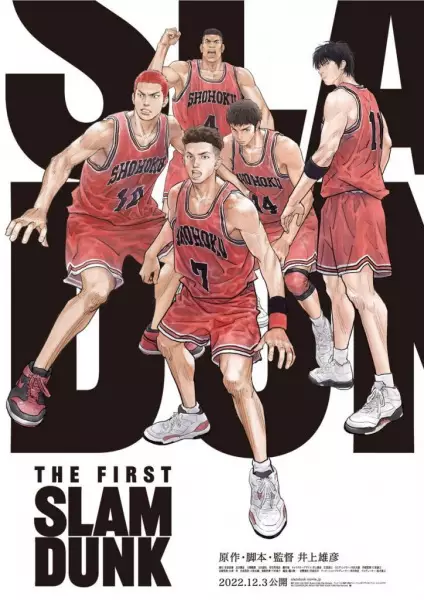


THE FIRST SLAM DUNK
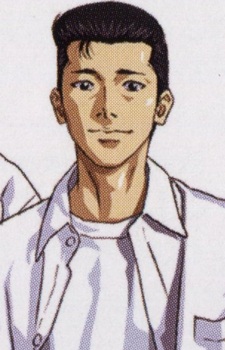
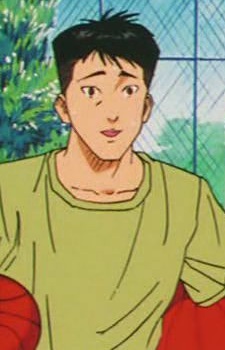
Shohoku's "speedster" and point guard, Ryouta Miyagi, always plays with brains and lightning speed, running circles around his opponents while feigning composure. Born and raised in Okinawa, Ryouta had a brother who was three years older. Following in the footsteps of his older brother, who was a famous local player from a young age, Ryouta also became addicted to basketball. In his second year of high school, Ryouta plays with the Shohoku High School basketball team along with Sakuragi, Rukawa, Akagi, and Mitsui as they take the stage at the Inter-High School National Championship. And now, they are on the brink of challenging the reigning champions, Sannoh Kogyo High School. (Source: GKIDS, edited)
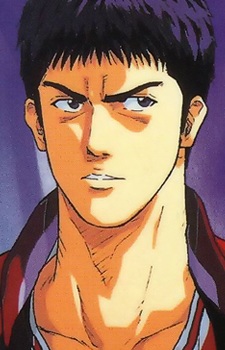
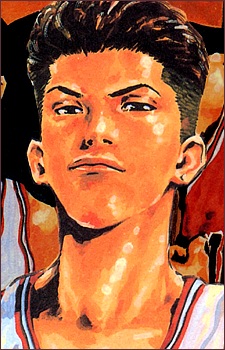
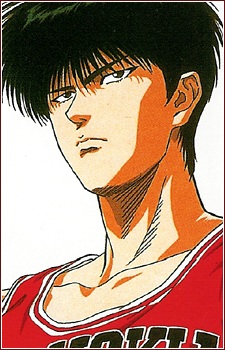
Главный
Главный
Главный
Главный
Главный
Второстепенный
Второстепенный
Второстепенный
Второстепенный
Второстепенный
Второстепенный
HaiKaneDesu
December 5, 2022
Never read a single chapter of Slam Dunk in my life and absolutely hate basketball because you can't double dribble. Yet this film was 100% worth watching. All the players felt so real, blazing fiercely with passion and dedication to achieve victory. Their troubled pasts, challenges and training they had to undergo really amped up the final showdown, almost as if I was watching one of those intense motivational speeches on youtube. The composition went in perfectly when it needed to, encapsulating the scenes beautifully. MHA style. CGI... You will be throwing up and dying for the first 10 minutes and will (hopefully) recover from it bythe end of the film. # Jokes aside, the animation wasn't nearly as bad as other CGI shows, and it rather helped provide the action of the whole court, no different to basketball highlights. Unless you're deathly allergic to CGI, I strongly recommend giving it a watch whether it's for the nostalgia or to see a thrilling shounen.
Fulgore83
March 7, 2024
Второстепенный
I have been a fan of the anime since they broadcast it on television 20 years ago. This film was supposed to highlight the most important match of the series, Sannoh High, the basketball team of Akita prefecture that has been the defending national champion for 3 years and They are considered the top high school team in Japan. Unfortunately, in my opinion, this did not happen, because an in-depth analysis of the history of Ryota Miyagi was inserted into the various moments of the match. After the end of the series they made 4 films, which add nothing to the original series, where inmy opinion more in-depth analysis could have been done on the most important performers. In short, after the end of the series there was a cosmic nothingness, to find out about the events of the national championship I had to read the manga and I found the match with Toyotama (first match of the championship) very exciting. The match against Sannoh is very beautiful and exciting, but in the film they cut parts to introduce the past Ryota Miyagi. The frenzy and excitement of the match doesn't live up to the manga, or the other matches in the anime itself. While I was watching the film, the cartoons of the manga came to mind, all the time the flash was continuous and the beauty of the film was lost in the memories of when I read the manga for the first time, and I discovered the dynamics of this wonderful match. If you're a fan of Slam Dunk, I still recommend watching The First Slam Dunk, but I still have a bad taste in my mouth for having waited so many years and finally recognizing that the manga is much more compelling. The shot that made me smile mockingly and melancholy was when they framed Kainan, but they were so far away you couldn't even see his face, just the color of his uniform.The clash between Eiji Sawakita and Kaede Rukawa in the film is very chaotic, while in the manga it is exciting and exciting, better edited, at the level of the normal series.Finally I can say that the beauty of this film is based a lot on the original series and the manga (the match with Toyota but if you haven't read the manga you'll miss it), however in my opinion it should have added much more. In my opinion, the most beautiful and enthralling match remains the one against Ryonan, stupendous and enthralling. The only thing that this film added and that was perhaps worth waiting 20 years for, is the high five between the two great rivals Hanamichi Sakuragi and Kaede Rukawa, but taking that away the anime is 10 times better.
Chinaz
June 4, 2024
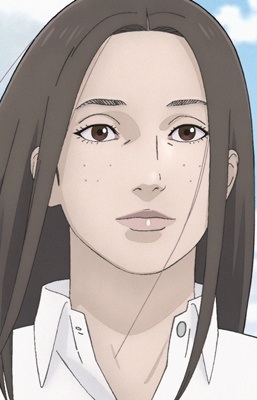
The First Slam Dunk is a film that serves as a model for making animation in cinema. A complete masterpiece! To understand the context of this film, we need to know that the story comes from the manga and anime Slam Dunk, created in the 90s by master Takehiko Inoue. The story of the manga tells the story of a young man with red hair named Sakuragi who was rejected by 50 girls until he met a girl who likes basketball. From there, Sakuragi's character develops, starting from someone who had never heard of basketball until he became one of the best on his school team.The character is highly based on the player Dennis Rodman in his invasive style and fiery personality. All the characters on the court are based on famous NBA players from the 90s such as Michael Jordan, Magic Johnson, Patrick Ewing, Kevin Johnson and Reggie Miller, among many others. This film, The First Slam Dunk, is about the last game in the manga's story, where master and director Takehiko Inoue brilliantly managed to make it so that any viewer doesn't need to have any background on the story to know what the game is. For those who have read the manga, it is a masterpiece, for those who haven't read anything, it is a brilliant animation about a basketball game, animated magnificently, mixing 2D and 3D animation. Only this time, the protagonist is not Sakuragi but Ryota Miyagi, because Takehiko Inoue made a one-shot about Miyagi a few years before submitting the Slam Dunk manga to Shueisha called "Piercing". This story is shown through flashbacks in the film, giving a whole tragic background to the character. Since this story was not shown in the original manga or anime, it was the icing on the cake that the master puts in the film. The flashbacks are not cheesy, much less gratuitously thrown into the film. Quite the opposite, as a viewer, you want to know what happened and why Miyagi is so passionate about the sport of basketball. You want to know why he made a promise years ago and why he is Number 1 (a reference made in the film). You want to know who the mysterious woman is who appears in the trailer and later in the film, watching the game. You want to know the pain the character went through to give his all in the game. You want to have as much empathy as possible because you want the Shohoku team to win. The flashbacks serve to enhance dramatic moments on the court and not just to give us standard information. Regarding the game itself, the sound effects are incredible; it feels like we are actually inside a closed room, watching an NBA game. All the sounds of the ball, the sliding of the sneakers on the court, the sounds of the basketball hoops, the audience, all in perfect harmony. Once again, the master Takehiko Inoue shows, through the film, his ardent passion for basketball. In an absurd transition from the pages of manga to the director's chair, the filmmaker does a masterful job regarding the visual compositions of a game and how to insert the audience in real-time into the basketball plays. Inoue takes advantage of the high production value to transpose his beautiful work with a sense of movement in his layouts to a media where there are no constraints, capturing the game with great versatility and diversity, whether in more dynamic movements of running and feints on the court, in a panoramic view of a play and camera angles from the characters' point of view or the ground to emphasize the gravity of a dunk and especially the delirious outcome of the game. The lessons we learn from the film are also almost infinite, both in the game itself and in the film's production. What leads Master Inoue to make a film about a work he has already finished? Could this be a sign of his other works? The truth is that Slam Dunk moved an entire generation, both inside and outside Japan. There are scholarships in Japan for players to have an opportunity to go and play in the NBA in the United States. There is a book about it that tells the story of all the players who have done this and who currently play in professional leagues. I watched the entire film with a silly smile like a basketball fan, in pure satisfaction with Inoue's care with trash talk, psychological games, classic plays with his back to the basket or in transition à la Showtime Lakers, and several other characteristics that make basketball a beautiful sport. There is so much passion in this project for the way the game is played, how it feels, and how artistic it is that it is unbelievable, with the biggest highlight being the way Hanamichi Sakuragi is an infectious Dennis Rodman on the court, including a sequence that mirrors a famous play by the power forward who did everything to win as a team. In the end, the dramatic investment with the characters is so great and the euphoria with the capture of the game is so masterful that I found myself vibrating and cheering as if I were watching an NBA finals game, with a game-winner at the last second that would leave any viewer in delirium. I forgot I was watching a movie and could only breathe to say: "Phew, what a game that was!" P.S - I watched this movie like 3x times and I cannot stop. Gonna watch it again in cinema today :D
onespankman
July 28, 2023
The First Slam Dunk does something absolutely genius, it adapts the ending of its manga as a standalone film. I didn’t know that going in, nor did I know anything about the manga aside from who wrote it. But I do know the conventions of sports anime filmmaking, and the way this film subverts them is downright genius. One such convention is to put you inside the protagonists’ heads. This fills time without requiring complex animation, and informs the viewer as to the character’s plan and mental state. It is not a technique without merit, but is often used excessively in TV productions as to breakoff tension and slow pacing. Slam Dunk avoids this at points, in absence of internal monologue, communicating the characters’ intentions by a shared glance or via carefully directed animation. Essentially, the Basketball is allowed to speak for itself. This has a unique effect. Since we don’t always know the protagonists’ intentions, every fake out and feint catches the viewer off guard, whichever team performs it. This effectively doubles the tension that otherwise would have existed, and it's only possible due to the film’s restrained internal monologuing. Occasionally, when a character is stuck in their own head or planning something, we do get an internal monologue, but that is always broken off by an opponent move or a quick execution of said plan, leaving no room for tension to break. Another cinematic convention which typically holds back sports anime, even great ones, is reaction shots. A bad reaction shot takes the focus off the players, centering attention on the sidelines rather than the action. This can entirely sever the tension of a scene, and does in many TV productions looking to fill time. They aren’t entirely useless though. A well placed reaction shot can contextualize action through the thoughts and emotions of the crowd, coaches, and sidelined players. They can enhance a narrative if interjected carefully. The scriptwriter and storyboard artists here understood exactly how to use a reaction shot, enhancing the atmosphere and stakes around the match while not meaningfully interrupting the action. Longer reactions are entirely reserved to breaks in play, and those in the action aren’t intrusive. A good reaction shot is often only one second and a single word long, this film gets that, and only interjects such brief cuts. A similar technique TV productions rely on to fill time is cuts to backstory, which typically involve less complex animation than the sports at center stage. In TV productions these all too often come at the height of tension, rendering null all of the emotion built during a match. Slam Dunk too improves on this technique, opening on the protagonist’s backstory, then intercutting between the finals match and the core cast’s backstories, splitting time about evenly between the two. By defining the emotional stakes as the match progresses and interlacing explicit characterization with displays of the characters’ playstyles, the cuts here add tension rather than break it. They too make the film feel like one cohesive narrative, explicitly connecting the character’s arcs to the sport. The viewer comes to understand what the match means to the players as it progresses. The quality of the scene-to-scene editing too extends to the shot-to-shot editing, which perfectly conveys the dynamics on court at any given moment, and ties the animation together immaculately. That animation is fantastic. Anime has been trying for decades to seamlessly blend 3D models with 2D backgrounds, and there are moments here that execute on that perfectly. It is not the first anime production to seamlessly blend 2D and 3D, Studio Ghibli accomplished that back in 2004, but it is the closest I’ve seen an anime get to achieving it with 3D character models. Those models are perfectly lit, and incorporate beautiful line art that somewhat replicate the manga’s style. There is some top tier 2D sakuga on display here as well. That walk out where the 5 core players are slowly penciled in is a perfect introduction to the team and the central match. The closing moments of that match comprise one of the most impressive sequences in anime history. All sound falls away and we’re left only with cinematic storytelling and the emotions of the characters. The characters’ line art stretches out behind them as they move. It replicates the mental state of the players, exhausted, losing control, but locked in on one goal. It replicates a flow state in the invested viewer. Perhaps Slam Dunk’s most impressive subversion of sports anime convention is that every single point scored is shown. It is standard (and often necessary) for TV productions to cut across large swaths of scoring, only showing swings in momentum or morale. This film isn't bound by the production limitations that necessitate that, and can thus portray its content more convincingly than any other sports anime. No room is left for the viewer to question the realism of a comeback because they see all of it play out. Frequent cuts to the scoreboard and clock too aid the viewer in understanding the match clearly as it unfolds. Slam Dunk again bucks convention by not explaining any of the sport’s rules. The first few episodes of most sports anime typically involve a description of the sport’s rules, for obvious reasons. Slam Dunk brilliantly sidesteps this, never explaining a single rule, but always keeping the lay viewer informed through cinematic storytelling. I’m kind of a casual NBA fan, I follow NBA news a bit, and even tune in for finals matches sometimes, but I’m not well versed in the rulebook. Despite that shallow knowledge, I was never once confused during this movie. I imagine someone even less knowledgeable than me would have inferred the relevant rules. The film’s narrative is more impactful for first time viewers in an important way, knowledge of the outcome. Viewers aware of the plot of Slam Dunk, or even what part of the manga this adapts will already know who wins. Almost all sports anime are predictable in this department, that’s just how single elimination tournaments and long-form narratives tend to interact. Slam Dunk doesn’t have this problem though. The viewer is only shown one match, over the course of which emotional stakes are built, but wider plot implications are never covered. We aren’t told if this is their last shot, or even what year some of the players are in. Because the viewer is not fully aware of the stakes, and this is a standalone film, the outcome of the match is not clear from the start. That contributes to tension, and it's something many beefier narratives, including the one on which this film is based, can’t replicate. The soundtrack is phenomenal, incorporating rock and electronic elements to generate hype I haven't felt in years, maybe ever. It's the icing on the hype cake, and it propels the narrative to insane emotional heights. This movie accomplishes in 2 hours what takes most sports manga 300 chapters. What other sports anime do to save money or time, this film does deliberately to enhance the narrative. The First Slam Dunk is the greatest sports anime I’ve ever seen. It will be the impossible standard to which I compare all sports anime for the foreseeable future. No other anime has made my heart race like this one. It’s an anime AED. Or, put another way, it’s a masterpiece.
Zeemod155
May 21, 2024
I can't say I recommend watching this movie as an introduction to Slam Dunk. Because I tried and got mixed results. That's not to say you can't enjoy this movie, in fact I enjoyed it a lot. What it does for 3D and sports action direction is something to be marveled. But the one issue is it's difficult to appreciate. And this movie deserves to be appreciated NOT just enjoyed. To simply enjoy it feels like missing the heart of the chapters/episodes of drama and trauma, of build-up and expectation that are earned throughout these characters' life journeys. And so much of it is dedicatedto that drama/trauma outside of the game compared to the game itself (the build-up and expectation part). And I struggled connect the pieces all the way. But also can't quite place the purpose of certain things like to structure of stopping the single match to have the entire backstory told piecemeal. Like who even knows if I'd find the flash-back-to-flash-forward style of storytelling more or less helpful after reading it all first? So while I was under the impression that one could watch this as an introduction, this isn't a review so much as it is a cautionary tale. Perhaps others who have never read a page of Slam Dunk before got exactly what they wanted (and more?) but that should not be the expected outcome for everyone. And I do feel that having a super popular movie released years after the anime/manga is going to have the effect of garnering new attention from people like me who want to see what's up. So I hope this review is still "valid" in the minds of MAL readers. Although I have to say I'm very interested in picking up the manga/anime now. So in a reverse intentional way "mission accomplished"? It will be interesting to see how manga/anime reads after experiencing this movie in full. It got engaged in the potential of the material which is something I couldn't have said had I never tried this movie out in the first place. MAL requires me to give an overall rating which I feel uncomfortable doing since a re-watch seems to be in order after I fulfill my required reading (at least up to this point in the story). So this is an even split between how I feel now and how I think I'd feel after. Is that even okay? My actual score is blank so it's not like it will affect the aggregate score anyway :)
#62
Популярность
#2819
Участники
75,457
В избранном
1,059
Эпизоды
1