To Every You I've Loved Before
僕が愛したすべての君へ
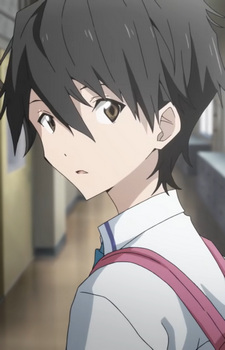
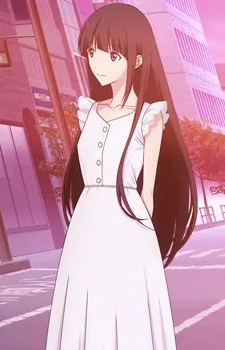
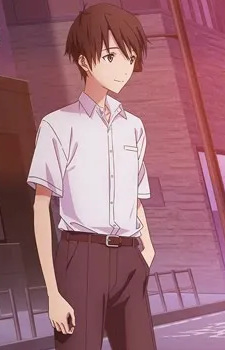
A world where it has been established that people routinely swing between slightly different parallel worlds... Koyomi Takasaki, who lives with his mother following his parents' divorce, enrolls in a local university prep school. Due to the atmosphere concentrated on studies and his social awkwardness, Koyomi is unable to make friends. One day, he is suddenly approached by his classmate Kazune Takigawa, who tells him that she has travelled from the 85th world where she and Koyomi are lovers. (Source: MAL News)
Главный
Главный
Главный
Второстепенный
Второстепенный
NOVA-C
April 20, 2023
It's a perfect series.after i watched both movies in this series,I was overwhelming bythe emotions about the 3 main characters Koyomi,Kazune & shiori. Order i watched this parallel movies, 1~ to every you, I've loved before 2~ to me, the one who loved you I really recommend this series! Believe me at frist my fav anime movie series was Makoto shinkai's universe which contains -Garden of words -5cm per second-WeatherIng with you -Your name, but after i watched these two It became thy second!❤️ "If there are 100 of you in this world,there also 100 of me.the 100 of me must love the 100 of you.no matter wich world is...I'll always love you there" From - 'to all of you that i loved' movie Shortly - "a Well prepared parallel world concept combined with literary romance" if you enjoyed watching steins gate ,Hello world,your name or tv series 'Dark' then you'll cry at the end of these two movies where you figure all the things out<3
Black_March1708
April 4, 2023
It was an ambitious concept of multiple ending, but felt average to me. I have seen both movies, this being the first. I wouldn't consider this a "Happy ever after" ending, but it is technically a more positive ending. The story for both movies differ in terms of love interest and which parent MC choose to stay with after they get divorced. Story - MC stays with mother, a normal citizen. MC goes to public school, falls in love with a smart girl. They played with the idea that both the guy and girl has actually switched places with their other selves multiple times in the movie,but both don't realize. It had a good start, playing with the idea of "What if" and choices. Makes the viewer actually think about how different life be if they made different choices, maybe they be happier, maybe they be together with a girl instead of strangers if they just dared to start that conversation. Voice Acting - Horrendous. It be mean to say the movie is boring at times, but the actors surely are. MC is the most tone dead emotionless character i have ever seen in all anime. The other characters' performance aren't any better either, but damn MC voice acting really kills the mood since you will hear him the most. The voice acting is absolutely flat, no range of emotions. Its hard to feel happy or sad when your voice actors can't even portray that emotion. Animation Does not fee like a movie level budget, rather ordinary. Not to say that its bad, given the standard of the movie, breathtaking animation really is not needed at all. Is it necessary to watch the second movie Honestly no. Both movies at the end will give you a short summary of what goes on in the other universe for context. Of course, the other movie will go into way more detail on the perspective of the other side. Conclusion Overall, it is an average forgettable movie. I looked forward to this movie and i was left underwhelmed. I consider this the better of the two movies.
Kyuped
January 1, 2024
A Unique Journey Through Love and Parallel Worlds: Boku ga Aishita Subete no Kimi e & Kimi wo Aishita Hitori no Boku e Had the pleasure of experiencing two extraordinary anime movies during New Year’s Eve, "Boku ga Aishita Subete no Kimi e" (the blue movie) and its counterpart "Kimi wo Aishita Hitori no Boku e" (the red movie). People who love theories of love, romance, relationships and its complexity should watch this. Very underrated. I chose the blue-to-red path. What was supposed to be the depressing-emotional route filled with more confusion. - though I didn’t feel confused at all despite the fact I was ½ drunkwhilst watching both movies. The anime introduces us to a world where parallel worlds are a routine phenomenon, and love transcends these dimensions. The concept of a different world due to different decisions made resulting in divergent outcomes, reminiscent of masterpieces like Steins;Gate, beautifully intertwines romance with the complexities of parallel existence. One of the standout elements of these movies is the execution of their unique concept. Watching them in the order of blue to red, felt like peeling back layers of a mystery, gradually revealing the intricacies of the plot. This approach enhanced the overall viewing experience, creating the feeling of “Ohh so thatss what happen”. The interpretation of parallel worlds within the anime is well-crafted, providing a fresh perspective on the concept. It brings to mind the enchanting works of Makoto Shinkai, known for his mystical approach to love, only here, the mysticism is replaced by a compelling sci-fi backdrop. The musical score of these movies is another highlight, featuring Keina Suda. The OST, reminiscent of romance anime like "Road to You" and "Flavours of Youth," perfectly complements the sweetness and the bitterness of teenage romance. Notably, the contrast between Keina Suda's and Saucy Dog's songs in each movie adds a layer of emotional complexity, capturing the essence of teenage love and the inevitable passage of time. Keina Suda's musical prowess shines through in the OST of "Boku ga Aishita Subete no Kimi e" (the blue movie). The songs, such as "Kumo no kou" (Love the clouds) and "Rakkaryusui," capture the essence of teenage love and the nostalgic sweetness of memories. These tracks, with their melodic and emotionally resonant tunes, perfectly complement the themes of eternal love and the joy found in cherishing moments with loved ones. Suda's music creates a poignant backdrop that enhances the emotional impact of the narrative. In "Kimi wo Aishita Hitori no Boku e" (the red movie), Saucy Dog takes the lead, contributing a memorable main OST song titled "shion" - named after Kimi Ai’s main female lead. This composition beautifully reflects the melancholic reflection on the passage of time and the inevitability of change. The lyrics convey a sense of regret, acknowledging the pain of saying goodbye and the longing for what once was. Saucy Dog's work adds a layer of complexity to the storytelling, emphasizing the bittersweet nature of life, love, and the inescapable passage of time. Not only do BokuAi's story & KimiAi’s story contrast each other, the main soundtracks produced contrast each other as well. The contrasting themes in the music of the two movies enhances the storytelling. Keina Suda's compositions in "Boku Ai" focus on the happiness and warmth of memories, providing a musical backdrop that resonates with the joy of love. On the other hand, Saucy Dog's "shion" in "Kimi Ai" explores the regrets, longing, and the unchangeable nature of memories. The juxtaposition of these musical themes adds emotional depth, underscoring the divergent paths of the two films. "Boku Ai" explores the idea of eternal love and the joy found in cherishing memories, while "Kimi Ai" delves into the themes of unwavering love, the pain of separation, and the desire to reunite with a lost love. These contrasting themes are expertly woven into the fabric of each movie. While these films are undoubtedly praiseworthy, there are some notable drawbacks. The voice acting, at times, feels messy and may detract from the emotional impact for some viewers. Additionally, the artstyle, reminiscent of older works from the 2010-2015 era, may be perceived as outdated, and certain animations lack the crispness expected in a 2022 release. The pacing in "Kimi Ai" is also a bit brisk compared to its counterpart, potentially affecting the enjoyment for some. In conclusion, "Boku ga Aishita Subete no Kimi e" and "Kimi wo Aishita Hitori no Boku e" stand as compelling tales that explore the intricate dance between love and parallel worlds. The unique narrative unfolds with a poignant journey through memories, both joyful and fraught with regrets, highlighting the profound impact of choices made in the realm of love. The anime masterfully weaves the concept of parallel worlds into the fabric of the characters' lives, portraying love as a force that transcends dimensions. It delves into the notion of loving someone in every conceivable way, finding joy in shared memories, and being grateful for the connections forged. Conversely, it also explores the depths of love, where one's commitment reaches the point of defying fate itself, doing anything to reunite with a beloved or to ensure their happiness. At its core, the anime imparts valuable morals about love, memories, decisions, and regrets. The stories emphasize the importance of cherishing the moments that bring happiness and fulfillment, while also acknowledging the inevitability of choices that may lead to heartache and remorse. The characters grapple with the complexities of navigating love in the face of changing circumstances, showcasing the profound impact of decisions on relationships. A central moral of the story resonates with the concept of parallel worlds influencing one's choices. The narrative suggests that every decision creates a branching path, each with its own set of benefits and drawbacks. This intricate dance of choices and consequences underscores the need for thoughtful consideration before making decisions, particularly in matters of the heart. The anime serves as a reminder that one's choices shape not only their present but also the parallel worlds that unfold alongside it. In essence, "Boku ga Aishita Subete no Kimi e" and "Kimi wo Aishita Hitori no Boku e" offer more than a mere exploration of love and parallel worlds; they provide a canvas for reflection on the complex nature of relationships, the intricateness of love, and the profound impact of choices. These films are a testament to the intricate beauty of storytelling that transcends dimensions, leaving audiences with a profound sense of introspection and appreciation for the complexities of human love. Thank you for reading. I hoped I didn’t spoil or give hints on anything.
Whipdash
October 27, 2022
Short early review... The animation feels dated, the story seems to be a bit all over the place, but it's not all negative. The movie opens up with an intriguing start, which I thought would promise more of an interesting plot, though it's not that special. I don't know what to really say without going into spoiler territory, but I do honestly think that it would be worth the watch as long as it's free. I myself paid 1900 yen to watch this and all I can say is that it was alright. If you are very interested in parallel universes and paradigm shifts (which I am interested inmyself, but this just didn't seem to work) I think it might be a hit for you. But for me it felt slightly shallow, and I honestly don't know what else to say about it. My apologies, I have now watched the first part of this movie, aka 'Kimi wo Aishita Hitori no Boku e' and my point still stands with this movie, it wasn't, in my opinion, needed. Though I recommend watching it if you want the full experience from the 'first' movie. Animation 5/10 Story 6/10 Sound 5/10 VA 5/10 Reminder, I am not fluent in Japanese, and I watched this in Japan, but I did follow the plot at an okay level, but it honestly didn't strike a chord with me.
Tuls
April 6, 2025
It was rather evident that certain parts of this would appear repetitive, which will remain true no matter which film you decide to watch first, and it proves my point of the concept not being well-thought-out. It isn’t amusing to rewatch reused scenes, especially when they don’t provide additional context, and it’s an issue that should’ve been considered beforehand during the series composition. Understandably, it’s a bit more bearable than KimiAi as it contains marginally better bilateral communication, though the sci-fi elements attempt to muddle the narrative more than what’s necessary. It isn’t hard to follow per se, perhaps because I watched this second, but at timesit contradicts itself more than it supports its idea of individuality. Virtually all of the production issues are analogous to its counterpart, the editing being slightly worse here, and the montages still eat up most of the significant character interaction instances. It severely mismanages parallel shifting and consciousness retention, rendering emotionally gratifying scenes unimpressive as the focus invariably fluctuates. BokuAi, much like KimiAi, seems unconcerned about developing a coherent and empathetic story of love and family, a vision that stays persistently unconvincing throughout its two films.
#2047
Популярность
#2001
Участники
126,598
В избранном
481
Эпизоды
1