

シャングリ・ラ
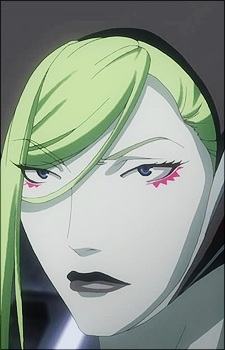
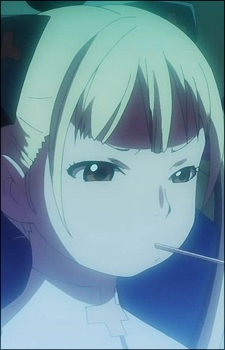
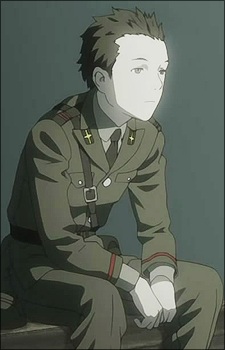
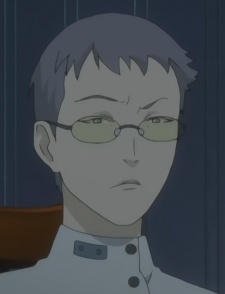
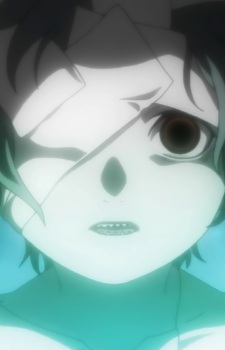
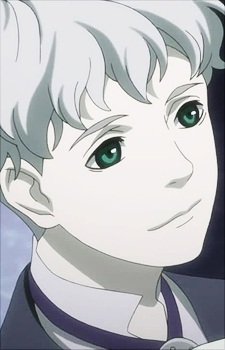
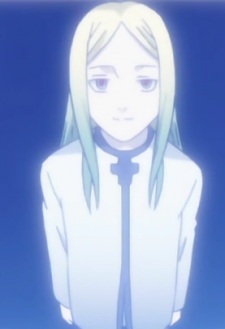
In a post-apocalyptic society, much of earthquake-riddled Japan has been left to ruin, resulting in an abundance of greenery. Governments manage much of the world's emissions, resulting in a massive class divide and economic disparity. The Japanese government launches "Project Atlas," a utopian city that will replace Tokyo but can only fit a certain amount of people. This limitation means that some people will have to live outside the city in jungles, as refugees. However, with any flawed plan comes those who are willing to challenge it. These include Kuniko Houjou, an heir to a renegade town; Mikuni, a mysterious and powerful child kept in a secret temple; Kunihito Kusanagi, a soldier for the high-tech and exclusive monopoly Atlas; Karin Ishida, a genius economics whiz with her hand in markets across the world; and the villainous Ryouko Naruse, leading Atlas in its domination of this future world. Can this group of rebels, forming a movement known as "Metal-Age," band together to demonstrate that inclusion and teamwork prevail over cruel segregation? [Written by MAL Rewrite]
Главный
Главный
Главный
Второстепенный
Второстепенный
Второстепенный
Второстепенный
Второстепенный
Второстепенный
Archaeon
November 26, 2009
Everybody knows of at least one anime that, while being rather decent for the most part, is sorely let down by certain rudimentary failings which a little more planning could have easily resolved, and it's unfortunate that as anime has gradually become more commercially viable, this phenomenon steadily been increasing. It's a sad fact though that one of the main avoidable flaws is also one that a little common sense could fix. A case in point is Shangri-La. Adapted from the manga of the same name, which in turn is an adaptation of a series of science fiction light novels by Ikegami Eiichi, the anime version isa reasonably good envisioning of the story. In what is effectively his first time directing a full series (movies notwithstanding), director Bessho Makoto has done a pretty decent job of bringing the series to life. Set in the mid 21st century, the world has become a very strange place indeed as an international committee forcefully imposed a "carbon tax" on all the CO2 producing nations of the world in order to mitigate the effects of Global Warming. The financial and economic markets of the world altered greatly because of this change as more nations poured their money into the carbon markets in an effort to offset their current tax levies. Unfortunately, Japan suffered a major earthquake which destroyed most of it's infrastructure during this time, and to further compound matters, Japan's carbon tax rate was not lifted out of fear it would set a precedent, making Japan one of the poorest nations on earth. However, a lifeline has been thrown to the ailing nation in the form of ATLAS, a project to rebuild Tokyo far above the ground, while the land itself is given over to the jungle. The story begins with a young girl being released from a Japanese detention center, where she has been for two years. She is Hojo Kuniko, the "leader" of the anti-government group known as Metal Age, and her newfound freedom sparks a chain of events which will shake the world. As far as the story goes, it can honestly be said that Shangri-La has almost everything anyone could possibly want, however this is also it's Achilles' Heel. The plot, which is generally paced quite well, has a tendency to go off the beaten track in an effort to justify events in the anime, and this is where the whole thing begins to unravel. Quite simply, Shangri-La tries to cram far too much into 24 episodes. The rather lengthy introduction to the story earlier is an example of just how much content is in this anime, and while one can appreciate the effort that has gone into producing a viable screenplay, an experienced screenwriter like Onogi Hiroshi should really have known better than to try and put the whole story on screen. Likewise the director, having had some experience with the Ah! Megami-sama and Armitage: Dual Matrix movies, should have made the effort to keep things a little more simple. As it is right now, Shangri-La isn't a bad series, however the numerous twists, turns, plots, counterplots, double crosses, extortions, blackmails, vendettas, factions, and characters who have a stake in the future of Japan, all serve to cloud the story proper, and confuse the viewer who may be left scratching at some new direction to which the show has suddenly veered. While the series does try to tie up the various loose ends and explain what has actually happened, there is simply too much to absorb in one go, and many people may find themselves stretching the series out just so they can absorb what has already happened (and maybe make sense of it). For the most part the series is fairly well animated and the characters move nicely. However, whenever the show takes a turn towards action or combat, then the cracks begin to appear. The action sequences are decent enough in their own way, but there are numerous occasions when the characters somehow defy the laws of physics (Kuniko's spinning boomerang attack outside of ATLAS being a great example of this at work). One can only attribute this to a marked lack of attention to detail, or an attempt to make the show look "cooler" than it is. Whatever the case may be, Gonzo have let themselves down with Shangri-La as it is a long way from being their best work. On the plus side though, the backgrounds and settings are failry well realised. Likewise, the characters are also reasonably well designed, although there is degree of naivety inherent in this, especially in the case of Kuniko, as while the characters appear as individuals facially, their clothes never really seem to change at all (except for Momoko). To be honest, I was expecting somthing a little more in keeping with the theme and setting of the series given that the characters were designed by Range Murata (who also designed the characters for Last Exile and Blue Submarine No.6), but like everything in this show, this department is a bit of a mixed bag. Musically the show is a bit hit and miss. The OP, a boppy little J-Pop track called "Kimi Shinitamo Koto Nakare" by May'n, has some extremely well choreographed visuals to go along with it. The ED is another J-Pop track, this time by Midori, called "Hajimari no Asa ni Hikari Are", and while it's a nice enough little ditty, it's not really memorable in any way. Both the OP and ED are decent enough tracks, but the series is let down by some poor and cliched thematic music. That's not to say that all of the mood music in the anime is bad, no, it's simply that the usage of certain tracks is a bit on the silly side. One example in the very first episode occurs when the viewer is shown ATLAS for the very first time - cue the dark and foreboding "Castle of Ultimate Despair" style music. It's this cliched music usage that really spoils certain parts of the series as the viewer is left in no doubt who the bad guys are. Even if the show had tried to be a bit more ambiguous with their definitions of right and wrong (and oh how I wish they'd gone down that route), the music would have simply given the game away. As far as the voice acting goes, it's pretty good on the whole. The cast are fairly talented, and are able to express a good degree of emotions, however there are several occasions where the drama is really "hammed up", which somewhat ruins the mood of the scene. One of the biggest problems with Shangri-La is it's wealth of characters. The show has several leads and numerous supporting characters, which on paper would make for some great development if handled correctly. Unfortunately,the development of most of the characters is often haphazard, or stunted completely, and the reason for this is because the series attempts to justify everything. In simpler terms, the show tries to give every regular character a reason for their actions, thoughts, idealogies, feelings, etc, and because of this there is no real focus on the lead roles because the show simply runs out of time - which is why many people find the ending to be extremely rushed. Shangri-La isn'ta bad series, and I would be lying if I said that I didn't enjoy it. The show has many interesting concepts to recommend it, but none of them are ever fully explored due to the attempt by the screenwriter to cram the entire novel series into 24 episodes. The sci-fi twist is coupled with a supernatural angle later in the story, and while this is not a bad thing, the show uses this as a justification for certain actions and events without ever fully explaining the link. The trade shenanigans in virtual carbon could have made for an OVA at the very least, as could life in the show's version of Akihabara. Somewhere along the way the environmental message also went missing. Being ambitiousis all well and good, but it shouldn't be taken so far as to be a detriment to the series. On the whole this series has much to criticise about, however don't be fooled into thinking it's godawful because of it's flaws. It's said that the whole is greater than the sum of it's parts, and Shangri-La is an example of this at work. Even with the numerous flaws I was extremely surprised to find that the story was pretty engaging, the characters were amiable and relatable, the settings were nice to look at, and the majority of the music was fairly easy on the ears. It's these positives that are the reason why the series is raised above the level of medicority, and while the plot may be a little garbled and far too convoluted and involved for it's own good, that doesn't mean that the premise or story are bad. It simply means that one has to work that little bit harder to figure out what's actually going on. It's just unfortunate that, with so much potential inherent in the story, we didn't get to see the show as it should have been. Still, better luck next time, and hopefully Gonzo et al will learn from their mistakes.
Второстепенный
CherryHawk
September 14, 2009
I happened to have caught the first episode of this anime on it's air date and I stuck it through all the way to the end. I must say that I am very pleased as upon finishing this anime I am left with that "epic journey" feeling. Well lets get to it... STORY 6/10 - It was interesting, but I suppose I wouldn't say that it's breathtakingly captivating. Sometimes there will be discussions about the worlds fictional economy and to the less sophisticated the dialogue might go in one ear and out the other. Towards the middle you might feel the plotbegins to go into tangents but it does eventually tie together. All in all, it had it's "awesome" moments and it's "touchy" moments, and as for the ending... it was good. ART 8/10 - I'm personally not that nit-picky about this kind of stuff, but it looked good to me. Lots of awesome explosions, nice backgrounds, action scenes and the characters were drawn well (particularly the transsexuals who definitely looked like transsexuals) SOUND 7/10 - I personally can't remember any of the background music and I don't think there were any notable inserts which says enough for itself. The SFX were up to date and what they should be, sounded great. I give it a 7 cause I enjoyed the opening and ending credits which to me can sometimes make or break an anime if it's borderline. CHARACTER 8/10 - Main character is very like-able, cute but not drenched in "moe" which is a plus in my opinion. A lot of the other notable characters are cute little girls as well. What I found the most interesting was the presence of a couple transsexuals in the main cast that played a big role in the story. They fit their roles really well, ironically playing motherly roles with those touchy family like bonds as well as having their own sense of transsexual humor. They may be one of the more memorable assets to this anime. ENJOYMENT 7/10 - Simply put, I enjoyed it : ). I wasn't tossing and turning in bed waiting for the new episodes to come out, but I didn't skip a beat to watch them when they did. I probably won't watch it again but I'm glad I watched it. For those who haven't watched it I would give it 3-4 episodes before you decide you don't like it. If you like animes where the main character can seemingly do anything then you should check this one out.
Fratele9
June 4, 2010
I find this anime extremely underrated. This anime was outstanding and a jewel of the genre. It is as enjoyable as it is clever, as fun as it is sad in a sense, and kept me hooked from start to end. It gives the Code Geass sort of feeling, so it was not a shock that I enjoyed it. The only negative sides I really saw were that they could have developed a few of the characters a little more. But I see an unfathomable amount of potential in this series if they were to extend it, giving it a chance to do as such. The plot itselfwas interesting and got complex at some times. But I like some complexity in plot lines, for it keeps the audience wondering, guessing, and wanting to know more. And this was the case with the beautifully drawn, beautifully enacted, and beautifully thought over Shangri-La.
HiroShotgun
May 19, 2016
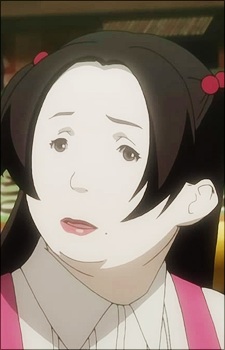
Shangri-La is a weird show to me because I honestly can't tell who this show is for. With a long list of story lines and plot threads all mashed up together, all trying to tell there own stories with varied tones and subject matter, you would think in all of that there would at least be something you can like about this show, or at very least something positive to take away from it. In actuality this show feels like what was intended to be many different ideas that were intended to have their own series devoted to them got crammed together like some sortof anime soup. I don't mean to take away from the writer though, in actuality I thought that many of the plot elements in this show had potential. What could have been is sort of the tune I'll be singing to though. From the very start of episode one I felt this way. At first it seems like a interesting take on the post apocalyptic setting, In which the worlds polar ice caps are melting at such an alarming rate that populations across the world are forced to consolidate their living space and leave most big cites to be taken over by the forest out of necessity to keep the worlds carbon balance at bay. This show also shows what a word economy based on carbon would be like, these are actually some of the most entertaining parts of the show to me but I realize I'm not everyone. And this is where the biggest problem this series is put in full spot light, the main character Kuniko is one of the least interesting people in the story. There are a TON of interesting sub-plots in this show that easily overshadow the "main story." The only interesting things that happen in this show are things that usually have little to nothing to do with Kuniko. I guess I just personally dislike her to some extent simply because I was much more interested in the side characters. So I beg ask the question, Is it that Kuniko is badly written or that the supporting cast is just written better than she is? I don't rightfully know myself, if you decide to watch this then I guess you will come to your own conclusions. The supporting cast I mentioned before is quite interesting, and in some resects is worth checking the show out for. You have Momoko, the trans-sexual motherly figure to Kuniko ( wow, I never thought I'd write that). Karin the carbon terrorist (sort of) and just over all economical badass. And Mikuni-sama, the mysterious little girl that carries a strange disease that doesn't allow her to go out in the sun, but does seemingly give her some horrifying powers. And Kuniko has a boomerang, riveting. The characters do give this show some redeeming qualities so if you are just looking for a few neat characters to tickle your fancy (not like that) then you could pick a worse show. The story is still a mess though. "Okay, lets have an episode with a lot of action in it!" "Wont that drain our budget and force us to spend way too long focusing on the supporting cast since Kuniko is a action based character?" "Shut up! No one will care about this show if we don't blow most of our budget on the first half! Now animate some more explosions and have that one chick beat up the waiter guy again, that doesn't make people feel uncomfortable at all." Shangri-La is very average in my opinion. It has some good things going for it, but at the same time a lot of stupid crap as well. Mediocre is probably the best way to describe this in short. This show has been licensed by Funimation, and is relatively cheap on DVD. If you are wondering there is a english dub that is quite serviceable. There is also a French dub if thats you thing. This show gets a 5/10 in my book, but I do recommend it if you don't mind sitting through a bit of a mess. Thank you for reading, please tell me if you found this helpful.
TevishSzat
August 1, 2019
To all the budding writers and screenwriters out there, I say this: there are a lot of models of what to do. No doubt you know them, stories you've watched or read that moved you, made you feel, or made you think. But if you ever need a sample of what not to do, or how to put things together wrong, I have good news! You've got Shangri-la. In some ways, this is a hard one for me, because when I review something, even something bad, I'd rather be sparing with the vitriol. There are plenty of reviewers who curse a lot,or even come up with good creative smackdowns, so I try to keep a somewhat more academic tone. But there are only so many times I can say “That didn't work.” “Why was that here?” “That was pointless.” or other such critiques before the litany becomes nothing more than conceptual noise. I suppose that wouldn't be the worst thing in the world, however, as 'Conceptual Noise' is a fair descriptor for Shangri-la. In that vein, let me introduce you to a concept you may have heard of, but probably not in the context of reviewing an anime: Signal-to-Noise Ratio. Basically, it's the ratio of what you actually want (Signal) compared to the meaningless garbage that does nothing but waste your time and effort picking through it (Noise). Shangri-la's Signal-to-Noise Ratio is terrible. I think this is the biggest problem of the show – screen time is constantly wasted on themes, ideas, characters, and plot arcs that go nowhere and ultimately add nothing to the core of the show. They exist, they waste your time, and if you cut them out entirely you would find you missed out on surprisingly little. Here's a quick list of the characters who were utterly worthless: Kunihito (a theoretically main character), Yuri, Souichirou, Nagiko, Leon, Shion, Kanaria, Shougo, Takehiko, Tarsian, and Tomoko (though at least she was briefly entertaining). More characters like Karin (along with her supporting cast of Klaris, Zhang, and Medusa. More on them later.) and Mikuni (along with her supporting cast of Sayoko and Mi-ko) failed to amount to anything in the grand scheme of things, but don't really count as completely wasted because at least they provided some material of intrinsic value in the middle. Some of this is down to the fact that the actual conflict in the climax comes out of nowhere and goes nowhere. I'm not opposed to twists, not by a long shot. But to do a twist well – and this can surprise amateur writers – it needs to be set up, and still flow from what came before. When the truth is revealed in the movie Psycho, it's entirely consistent with what you've seen up until that point, even if it is surprising for the unspoiled. Just because something couldn't be predicted doesn't make it a good twist. I wouldn't have predicted it if after 22 episodes of Shangri-la everybody was eaten by Titans in 23 only for Eren Jaeger to show up in 24... but that wouldn't have made it a good twist or a good climax. Shangri-la doesn't quite do that, but it gets about as close to an unintentional Outside Context scenario as a real narrative, even a poorly-constructed one, could be expected to come. The thing is, it's not just the climax. The climax is the worst about it by far, but the whole show establishes and sheds elements, clearly not caring about how its universe ties together, disregarding any concept of thematic consistency. Its structure is a wreck, a decaying Frankenstein's Monster made of pieces cobbled together and not caring when one happens to fall off. The show starts with an environmental message that's about as subtle as a brick... but that falls by the wayside pretty quickly. There's a major plot about market manipulation, but while that's setup for more of the show, it really isn't supported as a theme itself. Even Kuniko's revolution isn't the point in the end; at about the two-thirds mark it falls by the wayside, never to return to focus. Instead we get new, different arcs, that are often not really predicated on what came before, and many of which don't bear on what comes after. As a result, the story is a wreck. It's a rare failure in that any given component part could be at least decent in isolation, or if supported by a different plot or setting but here's the thing... Lego bricks are fine in isolation. They're great toys that can be used to build up any number of creative constructions. But if you take a bunch of Legos, put them in a bag, squirt in superglue, and shake until the glue dries, the mass of plastic waste you'll dump out won't have any of the good qualities it could have had despite the quality of the parts. Shangri-la is like that, and the more you stick with it and realize that, the more painful it becomes to watch. Even the characters, while better constructed than the plot, suffer the same problem of adapting to serve the flavor of the moment, disregarding logic, consistency, and their own potential. For instance, when we're first introduced to Mikuni, we see her use her psychic powers to kill a retainer who lied to her. Over time, her habit of asking tough questions to those who see her is referred to as a “test”. She seems unrepentant, even pleased with such an outcome, and I labored on the mistaken assumption that her abilities were mind-reading and psychokinesis until at least halfway through the show and that she deliberately killed liars. Only towards the end are we supposed to believe that the painful death is out of her control and not something she likes to see happen. It doesn't add up. There are a lot of other reveals like that; some of them aren't set up or given the time they need to have an impact, while others feel like they downright contradict themselves. The flaws, though, do extend all the way down. They're more glaring and terrible when the show has built up, but from very early on you can start to recognize something wrong: the show doesn't have consistency in its theme. Far be it from me to say something like “You can't have a setting with both cyberpunk and magic”. Because that's blatantly false. A ton of good pieces of media can have very unique settings that include both a scientific understanding of the world and a mystical one, advanced technology right alongside arcane sorcery. There is, however, a right way and a wrong way to create a setting like that, and the hallmark of the right way is going to be that the disparate elements feel like they're parts of the same whole. In the RPG Shadowrun, you can have elves and trolls and shamans alongside megacorps and hackers and techno-future cityscapes because the trolls can be hackers, or the elves might be executives in a megacorp, or the shamans cast their rituals in the dingy alley of the futuristic city. In Shangri-la, the themes it juggles spend a lot of time compartmentalized. When we check up with Mikuni, she doesn't feel like she belongs in Atlas, or the world that Atlas exists in: her palace of perpetual moonlight, for most of the show, could be an entirely separate dimension from the one in which Kuniko and her Metal Age friends live. If it weren't for the occasional character visiting the 'other world' you wouldn't even know you were in the same show. Karin and Kuniko aren't quite as far from each other as either of them is from Mikuni, but they still represent fairly divorced ideas from one another. Kuniko is, at least in her pitch, a rebel. The story she wants to engage in, that her existence naturally gravitates towards, is a story about the struggle of have-nots against oppressive elites. Karin, at the same basic level, is a white-collar criminal. A likable one, perhaps, but that's what she is. Her “natural” story is much more of a high-concept thriller, about the nature of AI or attempting to get ahead within a broken system. They're both cyberpunk stories (more or less) but they're so different that they shouldn't intersect. These characters shouldn't be in the same narrative with the emotional weights and investment they're given. Kuniko's character type doesn't exist in Karin's story, and Karin's is a villain in Kuniko's sort of story, which isn't how she's portrayed. It seems like that was probably deliberate, but it wasn't a good choice. With a lot of skill and effort, some writers might have been able to pull it off, to have these characters from different sub-genres or even genres meet and interact and make it interesting and consistent, but that's not what the writers behind Shangri-la do. And it gets dramatically harder to pull off when there are at least three 'worlds' rather than just two. And the narrative capable of pulling off the X meets Y meets Z scenario would know how Outside Context Problems work, and how to make them compelling for the viewer. It could be interesting to have a Mikuni-type character living in this strange bubble world-within-a-world have to go out and encounter a whole new genre, but to do that, and to get the emotions of the viewer on the same page with the emotions of the character, you'd want them to explicitly have an initial separation. Mikuni both exists in Atlas and in her own little world. Kuniko both follows her own story, the arguable main plot, and gracelessly intrudes on Karin's. This is a case where the writers tried to have their cake and eat it too, and it just doesn't go as is. And... I've talked about the climax already, and how a show with an already cracked foundation falls apart, but I think it's worth the time to say: it's worse than that. The downfall of Shangri-la isn't just that the core problems add up and cascade into major issues. Which they do, but it goes beyond. The skill showed in setting up Shangri-la, or the lack thereof, continues throughout and frankly gets worse in the story's final act. Multiple times in the last third, increasing into the final few episodes, my train of thought came to a screeching halt to demand “Why?!”. Reveals are made that are utterly nonsensical. Why? Characters drop in and out of the story in a continuous roulette wheel of appearing to die only to show up fine. Why? Entire new plot elements emerge that belong to nothing before and sometimes have no effect on anything that comes after. Why? We waste tons of time on lame exposition telling us things that had already been explained in fewer words, with no emotional investment in the new explanation and no reason to do it with soulless narration when it could have been effective with either real scenes or visual storytelling. Why? The vast majority of everything done by every character over the course of the show has absolutely no bearing on the final act, which has different stakes and different conflict from anything that was set up before. Why? Why any of this? Why did we even bother with the vast majority of the show? The answer is that the writing is just that bad. If the writers knew what they wanted to do they didn't know how to do it, and I'm not sure they even knew what they wanted. The closest thing we get to a good story is the story of Karin and Medusa. Barring the episode with Kanaria, which comes out of nowhere and goes nowhere the show couldn't have gone without it, her story is internally consistent and has some good emotional notes. If you just threw the main plot in the trash, and many of the other side plots, Karin's storyline at least resembles the skeleton of a good story, rather than jumbled pieces. It has a beginning, middle, and end that go together alright; I felt like I understood her character and her struggles; her chain of events was logically consistent; she had a solid and consistent theme; and I even felt something from the climax of her arc – which is more than I can say for the main plot or any of the other side stories that Shangri-la throws away. There are aspects of Shangri-la that aren't bad: the technical aspects. The art looks pretty decent, and while you should tone your expectations way down from the opening (this isn't an action show, and the action scenes there are run the gamut from alright to actually kind of bad) I can't say it's actually terrible. At least there's some flow, some good backgrounds, and the characters do move when they're supposed to be moving, which is more than I could say for some other shows where the writing is as bad as Shangri-la's. The sound too, is... fine I guess? The music is inoffensive and usually fits the scene, and the character voices usually sell what they are pretty well. There can be times when a performance is just a bit annoying or a delivery sounds forced, but I'm not sure what actors could make some of the lines they're given sound natural. Some, particularly Nagiko and Tarsian, could have done better about not sounding like they were reading off a script they didn't really care about, but even if they didn't give 100% they gave more than the writers. Shangri-la is a disappointment. A huge disappointment. It didn't start strong, but even with that being the case it just got weaker and weaker as it progressed. Sometimes Karin or Kuniko approached at least decent writing, but Shangri-la as a whole utterly fails to accomplish any level of quality. SCORE BREAKDOWN Story: 2 (and one of those points is just for Karin and MEDUSA in isolation.) Art: 6 Sound: 6 Character: 3 Enjoyment: 2 Total: 3 (3.8) Verdict: Unless you want to spend about twelve hours getting an object lesson on how NOT to create speculative fiction, skip Shangri-la and try to forget you ever looked its way.
Ранг
#4435
Популярность
#2977
Участники
69,155
В избранном
161
Эпизоды
24