
Psycho-Pass: Providence
劇場版 PSYCHO-PASS サイコパス PROVIDENCE
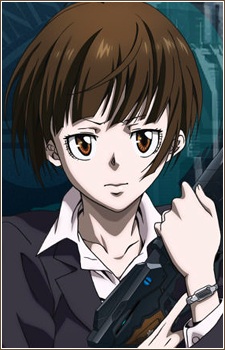
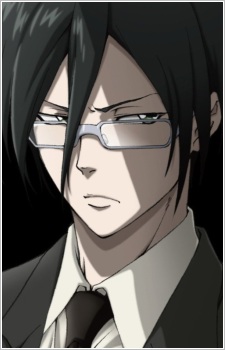
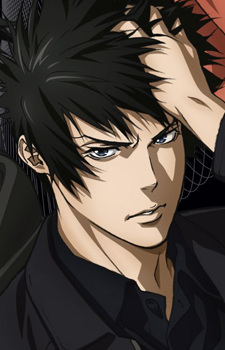
In 2113, the Ministry of Foreign Affairs (MFA) dissolved their secret paramilitary unit known as the Peacebreakers. However, the squad disappeared, and their activities remained a mystery. Five years later, the Peacebreakers resurface when they murder Milcia Stronskaya, a scientist in possession of highly classified documents essential to the future of the Sybil System—Japan's surveillance structure that detects potential criminals in society. To investigate the incident and prepare for a clash against the Peacebreakers in coordination with the MFA, the chief of the Public Safety Bureau decides to recruit the former Enforcer Shinya Kougami back into the force. Having defected years ago, Kougami currently works for the MFA under Frederica Hanashiro's command. Kougami's return creates tensions between him and his former colleagues Akane Tsunemori and Nobuchika Ginoza, but they must set aside their past grudges to focus on ensuring the security of the Sybil System. [Written by MAL Rewrite]
Главный
Главный
Главный
Второстепенный
Второстепенный
Второстепенный
Второстепенный
Второстепенный
Второстепенный
Второстепенный
Второстепенный
TCTriangle
July 6, 2023
The first season of Psycho-Pass is one of my favorite anime of all time, one that I have rewatched half a dozen times since its release. Like most fans, I felt disappointed by S2 and kind of "meh" about S3 and other spin-offs. I think this movie is the best Psycho-Pass entry since S1, which is pretty high praise from me. Although some plot elements were a bit contrived to give all the characters things to do and inject some more depth into the story (some could argue forcibly), overall it works to expand the series in a fresh direction that was better than bothS2 and S3 in my opinion. Instead of retreading the same Sibyl system ideas (like S2) or make something so different that it didn't feel like Psycho-Pass anymore (S3), this new film instead explores and tries to answer the question of, "what happens if a similar system/society tries to develop to compete with Sibyl?" This movie finally gives us interactions and banter between fan favorites from S1 (Ginoza, Kogami, Tsunemori) and some extremely well animated fight choreography/martial arts scenes. A new song by Egoist also helped give this movie a boost in terms of being close to S1 in feel and quality. There's also more much-awaited interactions between S1 cast and S2 cast, in case you liked the S2 characters as well. Lastly, the ending was a bit of a twist in a good way that ends up tying everything together, and did not feel overly safe like the first movie did. The movie's ending also develops Akane's character the most since S1. Overall, this film was Psycho Pass at its best since S1 under Urobuchi. Does it beat S1? No, not even close. But it doesn't need to since it still added to the world and character building, and unlike S2, felt like a fresh take that deserved a spot within the franchise. If you're a fan of the series, check it out. It might not reach the highs of the original, but it might surprise you in a pleasant way.
Hatsuyuki
December 18, 2023
Ughhhhhhhhhhhhhhhhhhh.. cool ? I guess ? I don't know, i didn't really feel anything at all watching this. I got some nostalgia after the first 10 minutes with the soundtrack blasting and the TK opening but this didn't really do anything for me in particular. Once again it's one of those situations where they bundle 4-5 regular TV episodes together and sell them as a 'movie' even though the animation/storyboarding/direction are nowhere near movie standards. I guess adding some context to S3 is appreciated but this came a little too late and at this point, it just feels like it's Production I.G's way to make some money offthe back of a franchise that frankly, has run its course a long time ago. 6/10
RealAuraz
August 29, 2023
May contain minor spoilers (talking about appearing characters), but nothing major. I got to watch it in the cinema and really enjoyed it. Kogami, my favorite character, was as interesting and skilled as always and continues to fascinate me. A thing about Psycho Pass I like in general is the continous critical thinking about their own actions and morals, and this movie is no exception. It seems to play between SS Case 3 and Season 3, and fixed a lot of open questions I had when watching Season 3. Style: That movie looked incredibly good. Music Beautiful as always, and even though they used a lotof cgi again it looked fantastic. I really enjoyed watching it. Overall: great story, great characters ( not only kogami, all of them with their different personalities delivered a great cast), great voice acting, great visuals. Makes you think about some things in your life too. I can‘t state it enough, I can definetly recommend watching it, but if you did not like the previous Psycho Pass, you won‘t like that one either. 9/10
izumiyamura23
October 21, 2023
Providence is easily better than the First Psycho-Pass movie, which kind of says a lot on how the series can stand on its own without Urobuchi. The SS cases preceding this and Psycho Pass 3 onwards are also very close to season 1's quality, which makes you wonder - with the first film coming out AFTER Psycho Pass 2, why did Ubukata rush to make Season 2 with recycled ideas from season 1, destroying the series' reputation? If Season 2 didn't happen, Psycho Pass could've been up there this year and years prior next to Bungo Stray Dogs. However, Providence also slightly suffers from its bizarreposition in the franchise, being that it was probably written before season 3 but developed after that entry, requiring viewers to backtrack a bit or just wait to watch Season 3 to understand fully. There's also a heavy CGI scene that focuses on Teppei, who is still basically the forever background character of the series, and thus you wonder why we needed that scene at all. Anyways, it does a great job exploring a fresh concepts and a fresh philosophical angle, that being religion. The return of a certain season 1 character also helps this as he provides insight and philosophical commentary. Another thing the film does right is dethrone Kogami as the invincible martial arts god he's been since killing Makishima. In the first time since forever, he gets humbled by someone else, someone far stronger that he can't compare with. And it's not Ginoza, which makes it more surprising. The other interesting thing the film does, without spoiling, is that it gives us a look at what Kogami could be if he slipped and lost control. Makishima is still dead, but he also lives on in Kogami as they had essentially synced thought processes at the conclusion of season 1. Kogami obviously isn't the villain here but the way it plays out is what one would imagine if Makishima took the driver's seat in his mind. Providence also does a great job of setting up/addressing season 3, though it does not answer the question of why season 3 tried to set up Kei Ignatov as a rival to Kogami in fighting skills, with several mentions of Kei having a terrifying "dark side". The given explanation in season 3 is either due to Kei having gone to war, or taking after his brother, but Kogami has also participated in wars.
LightningComet
November 17, 2024
Oh, how the mighty have fallen. Where Psycho-Pass in its first season was an intelligent examination of the balances between societal control, justice, and idealism, it has with this film truly devolved into a mess of incomprehensible plotting featuring empty husks of characters with incoherent motivations. Other reviewers that disliked this film seem to also harbor harsh feelings toward season three, but I believe that to be mostly unfair. In fact, I would argue that consideration of the third season would be a good and quick way to identify what exactly is missing in Providence that made seasons one and three so much more memorable thanthis drivel: good dialogue. Psycho-Pass is probably the talkiest cop show that actually warrants being taken seriously, a trait that is somewhat diminished in season three but almost entirely absent in Providence. The real key here is what is being spoken. With season one, the subject of discussions usually pertained to questions surrounding the push and pull between those three aforementioned topics; the cases being handled were mostly simple and were made even clearer to the audience by removing the whodunit factor by following the criminals around. One could even argue that these cases’ procedural details were largely irrelevant on a thematic level; how is a psychopathic high schooler murdering her classmates and posing them in grotesque homages to her father’s art even remotely pertinent to those debates of security and freedom? Short answer: it isn’t. The point of these murder cases is to demonstrate how criminality and, in tandem, judicial practices have changed in the world presented. This is actually what drew me to the series way back when: if the world is ostensibly a utopia, why are there still such horrific crimes being committed? That line of thinking is needed to dive deeper into the franchise’s central debate of security versus freedom, especially in the latter half. Season three was more of an episodic mystery show, meaning the perpetrators’ identities and methods were what were frequently explored in the dialogue. The reason this did not bother me but, in fact, kept me engaged week-to-week is that those topics were all in some way indicative of flaws in Sibyl; the point of these cases was that only a human would or even could have identified something as being problematic or the result of foul play, thus affirming the franchise’s thesis of the need for humanity’s individualistic agency, the value in having people control their own fates. That each case indicated different cracks in the system and society at large kept the season feeling routinely fresh, the other primary reason being that different characters were given the spotlight in each arc (with mixed and limited results, though I still respect the effort). But here we have Psycho-Pass: Providence, the entry where very little (especially of actual substance) is spoken. To pull back a bit and see how it contrasts with films as a whole, this is not inherently a bad thing, even if it is new to Psycho-Pass; I see this effort to inject longer bouts of silence as an attempt to be more contemplative and emphasize characters’ emotions more than developments in the world presented. Providence is really trying to be Blade Runner, a film where, even though the plot is paper thin and the dialogue is sparse and mostly uninteresting, the story is remarkably well-conveyed; there are few other films that utilize atmosphere and mood so effectively (see also Three Colors: Blue). All this is to say, however, that Providence is not the kind of film that employs atmosphere, visual fidelity, and shots of people watching life pass them by to great effect. This film fails as a psychological and emotional examination of quiet characters and their (in)humanity because both the franchise (most of it, anyway) and this film have always been more about the world and far less about the people in it. Providence tries to have it both ways and fails both ways; the few attempts at connecting the interpersonal, intrapersonal, and investigation-relevant problems the characters face to the franchise’s thesis of individualism, this time through religious metaphor, feel extremely forced in addition to being, in some ways, a retread (see the Sybil worshippers in season three). I should note that I don’t think it’s fair to call the film’s plot scattershot or even overly-convoluted. It is, however, damn near incomprehensible during an initial watch because the head of Psycho-Pass’ dialogue and characterization has never before been quite so firmly and deeply up its own ass. Those that have read critiques of season one will know this to be an actually rather remarkable feat. Providence has this idea in its head that the characters’ mere act of speaking like the Renaissance-era people they cosplay should automatically make them smart, and yet all the dialogue succeeded in doing was upset me by making once-interesting intellectual characters totally insufferable. This issue of extremely clunky dialogue is dwarfed, however, by the fact that, with all those contemplative silences, not enough is actually said about what is happening or why it matters. There is a wealth of missing information here that only serves to make the experience annoyingly confusing. Why characters do the terrible things they do was never quite clear to me, yet all these actions warrant further explanation beyond the fact that Psycho-Pass has a history of being grim-dark. The tragedy is that it’s now grim-dark with whatever points intended by the creators frustratingly muddled by the film’s shoddy presentation. If that was not bad enough, Providence also falls victim to the practice of not leaving well enough alone e.g. Kougami. To be fair, the problems with his characterization really started with his decision at the end of the third Sinners of the System film to effectively be an Enforcer all over again except for the Ministry of Foreign Affairs, meaning he would be fighting foreigners and would use guns rather than Dominators (as such, the coolest sci-fi element of the franchise is largely absent from the film, dumb black hole gun notwithstanding; not exactly a great marketing ploy). The question I have is this: why is Kougami doing a bunch of 007 nonsense on behalf of a government for which he has no love? Here’s his arc across the franchise: in season one, he’d already fallen from grace, having resigned himself to being a state-sanctioned stone killer but who then proves himself to be an egotistical murdering bastard by the end. Psycho-Pass: The Movie and the third Sinners of the System film have him feeling tortured over his decision to execute Makishima; he wanders freely around Asia without any direction beyond wanting to do right by people, perhaps even in atonement for his sins, before making the boneheaded decision to return to Japan and be a state-sanctioned killer again because… freedom wasn’t what he thought it was? I bring all this up because Providence actually touches on this negation of his entire arc; he says that his current job helps people, which doesn’t make any sense considering he is still just an executioner for Sibyl. The film, in contrast to its attempt to be more emotionally introspective, makes no effort to have Kougami actually reflect and change or even effect healing within the people he had hurt with his betrayal. He calls up Akane, ostensibly to apologize (and only at the prompting of Professor Saiga), but instead tells her he regrets nothing. This is never brought up again. When this happened, I immediately laughed, cupped my hands around my mouth, and called out to my TV, “Nice apology, dicknuts!” Sure enough, Akane herself pretty much says the same thing after he hangs up. Though I had already suspected it, that moment was when I really knew this film was too dumb for me to enjoy. On the topic of 007 nonsense, I have a bit of a bone to pick with the action sequences in this film. I think the proper word to describe them is “overdone”, the reason being that they bill themselves as extremely climactic and lethally consequential but carry only a minimal amount of actual dramatic weight or narrative tension. To compare this to seasons one and three/First Inspector, confrontations between the detectives and criminals felt engaging because they were significant; characters and audiences both endured harrowing journeys to get there. That these scenes also made the effort to put the franchise’s themes front-and-center was competent writing. In Providence, none of the ideas being spouted during the confrontation had been examined in ways that really affect the characters and how they feel; the film plays catch-up in these few minutes on all the things it should have been doing with its dialogue and character interactions throughout the majority of its runtime. But no, it had to pretend to be more like Blade Runner while still appealing to the crowds who just want to watch characters and machines fight and blow up during a way-too-long climax with four different POVs running concurrently. It doesn’t help that there is also a feeling of diminishing returns with these action sequences. All of them look strong (even if the sound mixing goes completely out of whack, which I found annoying), but the sheer frequency and duration of these set pieces made them feel less like the integral next step of the story and more like fanservice in a way only a superhero film could be. And usage of the word “fanservice” is a decidedly apt choice to function as a segue to discussing the ways in which this film contributes to the setup of season three. Or, more accurately, should contribute but doesn’t. The long and short of it is that I found nothing in this film to explain anything in season three other than why Akane is behind bars; you’re probably not going to get any cathartic “Oh, that’s why!” kind of moment in relation to Shindo and Ignatov’s family history because what is provided doesn’t actually have any thought-provoking conflict behind it. Maybe I’d need to research this to know for sure, but I was too busy trying to parse out Shindo's father’s motivations to really notice anything of import (hint: I failed. Miserably). There is something that does bother me, though: why does Chief Kasei bleed after getting shot? Is she not an android avatar of Sybil, as evidenced by the fact that she was clearly an entirely mechanical being in season one? Or is Akane actually a murdering lowlife shitheel like Kougami now? If that's the case, then I called it back in December 2019: Akane Tsunemori is criminally asymptomatic. Chances are, though, the production team added the blood just to fool the in-universe press. Joke’s on them because they should have tried harder to fool me! Hahahahaaaaa! Although… I paid forty-five dollars preordering this shit from Crunchyroll, so… Ahh… fuck. - LC
#1544
Популярность
#3212
Участники
60,100
В избранном
178
Эпизоды
1