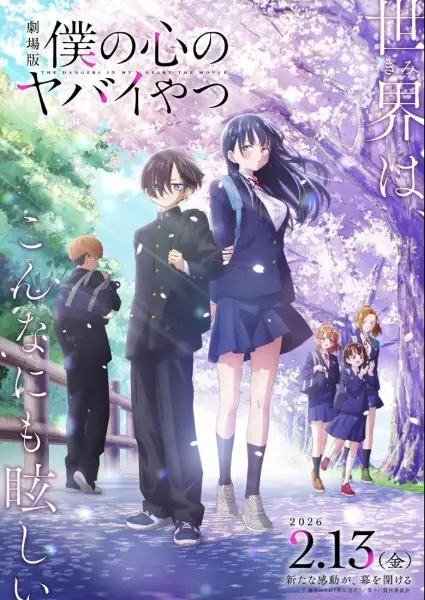

The Dangers in My Heart Season 2
僕の心のヤバイやつ 第2期
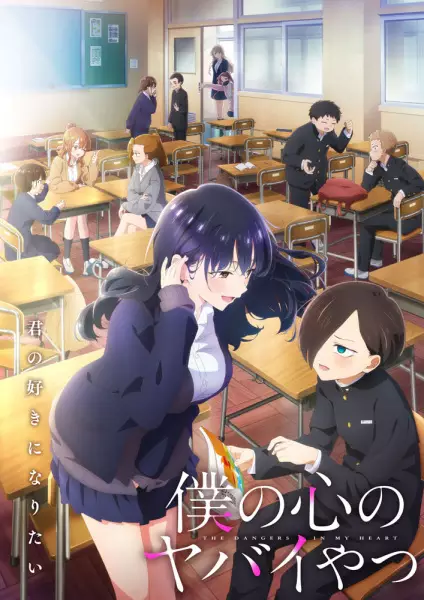
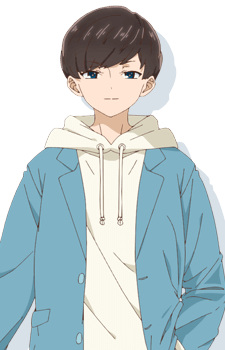
After an eventful winter break, Kyoutarou Ichikawa and Anna Yamada reunite with a stronger bond. They continue to grow in their own ways, with Yamada taking on more challenging photoshoots and Ichikawa maturing both physically and emotionally as he tackles his affections for Yamada. However, spending time together outside of school allows for their relationship to deepen, and it becomes increasingly difficult to deny their budding romantic feelings. Grappling with these unexpected and new emotions, Ichikawa and Yamada realize that, with the passage of time, their relationship is bound to change—and they must ultimately decide whether they wish to remain close friends or finally become a couple. [Written by MAL Rewrite]
Главный
Главный
Второстепенный
Второстепенный
Второстепенный
Второстепенный
Второстепенный
Второстепенный
Второстепенный
Второстепенный
GentleDragonite
March 31, 2024
[MINOR, non-specific spoilers] The Dangers in My Heart Season 2 is amazing, heartfelt and surely reignited my love for romance anime. I daresay that this is one of the best romantic comedies since Kayuga-sama love is war, and the most realistic romance since Tsuki Ga Kirei, and seems like an easy choice for Romance of the year. In this day and age of romantic comedies, they tend to be highly repetitive, often coupled with a couple of many annoying, one-dimensional character tropes and random plot points slotted in to prevent romantic progression. However, Dangers in my heart stands out through elevating its characters into relatable, andmost importantly realistic human beings, which ultimately makes its narrative all the more compelling and personal. The most impressive part of Dangers in my Heart, in my opinion, is how it uses the *overused* school setting in romance anime to its fullest potential, using "stereotypical" romantic situations such as school trips, festivals etc. to develop its characters further, allowing them to grow from a child to someone more than that. When individual romantic events show no sense of linearity in typical romance anime, each romantic situation Kyoutarou and Yamada get into helps them grow as people, understand each other better and slowly realize how important the other is to their lives. Secondly, as mentioned before, the characters are written in such a compelling and relatable fashion, not as idealized people who could do everything to please others, or as perfect characters who know their way through every situation, but as imperfect people who discover their flaws and work to make themselves better. Kyoutarou in particular, started off in the first season as a teenage edgelord who seemingly has a screw loose, locking himself away from other people as he believed everyone was out to get him. Many of us have been there, being insecure about what other people think of us, being insecure about the person we are, constantly worrying about how imperfect and "lame" we are. However, as the series progresses through the second season, Kyoutarou has clearly moved on to become someone not scared of others, but most importantly, not scared of himself. From taking one step forward, two steps back with his relationship with Yamada, he slowly justifies his own feelings of love and understands just how important they are, regardless of what others may say, regardless of what society may say. Kyoutarou realizes that he loves Yamada. Every single episode subtly shows another phase in his development, it never feels rushed or forced as he progresses naturally from an introverted teenage edgelord to a man we could all respect and look up to. While her development is not as detailed as Kyoutarou's, Yamada is a great compliment to Kyoutarou, not only in the fact that she has amazing chemistry with him, but also that she has her own insecurities and worries, like a typical teenager would have. This include being fearful that she is not her perfect self. She is scared of her jealous self, scared of her clumsy and air-headed self, as well as jumping through hoops to express who she really is, but Kyoutarou in large part, as well as the other characters, make her realise that she is likable and loved regardless of her imperfections. The realism extends to the rest of the cast, with many other characters having their own quirks and insecurities. While you wouldn't expect the side cast of romance anime (which typically focuses on the main duo) to be interesting, the side cast of characters actually help compliment the main duo well, either by being supportive and recognizing the need for the main duo to come to terms with their feelings, or by affirming how much the main duo, more specifically Kyoutarou, has grown as a person. Additionally, the side cast's variety in personalities creates unique (mostly), comedic situations that have a few really funny punchlines I would not spoil for you here. I am most impressed by Yamada's mother, specifically, as parents in romance anime usually don't play a huge role, more often that not appearing as a roadblock for the main duo's relationship to be recognized. However, Yamada's mother shows real care for Yamada, not being closed minded about Yamada's relationship with Kyoutarou, but recognizing that love could play a major role in her child's well-being and happiness. Thus, she supports her in many ways, through words of affirmation and more impactfully through her actions, pushing for Yamada to find her happiness with Kyoutarou. In the world full of idealized portrayals of love, Dangers in my heart season 2 does not indulge in the "match made in heaven" bullshit, but instead shows just how beautiful two people, supporting each other and helping each other grow, being in love truly is.
tongboonbin
May 23, 2024
If you like well-crafted scenes with beautiful graphics and crazily suitable background music, this anime is for you. Simply put, everything the first season did really well already, the second season took and made it so much better tenfold. The animation was greatly smoothed out, the blurriness sometimes seen in the first season of The Dangers in My Heart changed to sharp focus, accentuating the true natures of both main characters. The background music somehow manages to do its job even better, combining with the smooth animation to create truly breathtaking scenes that would really put viewers in the moment. Already done really well in thefirst season, the second season produces scenes that made me pause the anime, in a good way because I just had to stop and appreciate the sheer beauty of the moment. The plot, unfortunately, is one of two things that sticks out to me as the one aspect of the anime that could probably have been done better. Yes, there's some character development throughout the two seasons, but one feels like most of the development was done during the first season. As for the romance aspect, the ending had already been established in the first season, and the second season, in my opinion, could have done a little more to continue making viewers glued to the screen. There are hints of a couple between two characters (which I'm not going to name), but isn't built upon enough for viewers to truly care about them. Sure, there's some episodes that really make you laugh and smile like an idiot, but the momentum, unlike the first season, was a bit more blunted. I would also argue that there isn't as much of a conflict this season as there was the first season, which means even less of a pull factor to viewers. However, they do still excel in making scenes that make viewers go "how the heck did they get here?" which is a plus in this criterion at least. Some of the characters were very disappointing misses. The two characters introduced at the later half of the anime, Andou Kanna and Yurine Hanzawa, were created to add a bit of tension to the season, but not nearly enough to truly make a difference in the minds of the viewers. If they had a bit more character development other than being there just to act as a bit of comic relief and force to push the main characters together, that would have, in my opinion, been a little better for the anime as a whole. The female main character's friends also suffer from a lack of development, not having been built upon enough to make the viewers relate with them. Why can I say this? Because when a character is truly memorable, viewers will remember their names. I couldn't for this anime- for nearly all the characters except for a few. However, now we talk about the great parts of this anime. For every disappointing miss, there was a character that really felt as if the producers really nurtured with all their hearts. Sho Adachi, one of the male main character's friends, is one of them. Sure, he's still the typical pervert friend whose only dream is to look at melons all day long, but he gains an extra dimension in this season, which makes him a lot more bearable. Kenta Kanzaki, another one of the male main character's friends, is a great side character, combining with Honoka Hara to make quite the interesting side couple whose names I could actually remember. There's actual conflict, there's some chemistry between them that really grows on the viewers after a while, and they truly were great hits. With all that said, we go to the main characters. Wow. I know I've probably written a lot already, but this shows how much I became invested in the show. A big part of that is with the main characters. Kyotaro Ichikawa still shows a little bit of his chuunibyou tendencies, but he's largely shed all that to show a more socially awkward side of him, which I really like. Another thing that I really like is his smile, which while goes with the "moody guy shows smile for the first time", somehow manages to touch hearts really well. He's also become a lot more relatable, because which boy doesn't go "Does she like me? Does she hate me? Maybe I shouldn't be with her..." all those insecure thoughts that typical males with even the slightest bit of hesitation would have. However, it isn't a romance comedy without the comedy, and he really shines in that aspect with his continued snarky remarks that manages to force surprised snorts out of me. Anna Yamada is also very relatable, with all her anxieties and fears presenting a stark contrast to her outspoken and bubbly exterior. While being quite aloof at the beginning, she does evolve into a character that can be sympathized with, a character whose journey can be cheered on by viewers who see her as someone that should be cared about. From her underlying insecurities to her touching emotional sensitivities, Anna Yamada is a three dimensional character that epitomizes the saying, "Don't judge a book by its cover". And of course, we must talk about the music. As an idea of how good it is, I normally only watch the opening and ending themes of an anime during the final episode of the season. To be fair, I did that with the ending song, which is ok; not too bad, not too good either. However, with the consideration that I've been listening to the opening theme of The Dangers in My Heart Season 2 since I've started writing this ridiculously long review should amount for something. The animation, once again, is top-notch; the producers really poured their time and effort into an opening theme worthy of a great anime. While starting off quite simple, the opening theme goes on to capture my heart with lyrics that truly feel like the main characters would have sung if they had sung a duet together. TL:DR - Plot's a bit flat, Characters are either 100% hits or 0% misses, but I can just listen to the opening theme all day long. Review: 9.5/10 (Not as much of an emotional impact as others, but the scenes and music are truly beautiful)
bigboiroy
December 28, 2024
I have no words, yet so much to say. I feel so empty, yet so full. It’s rare for me to find an anime that leaves me feeling like this not only at the conclusion, but all throughout its runtime. It’s even rarer for me to become as invested as I was with the story and its characters. The Dangers in My Heart did all this and more with seemingly no effort at all. It’s nothing short of artistic beauty at its simplest form, reminding me of how beautiful love can be. This show isn’t just a romance anime; it is first and foremost ananime about change. How those around you and the choices you make can change someone. Conversely, the choices you make and the way you treat people can change others. Ichikawa started off as a character so difficult to watch that I put off this show for longer than I should have, but looking back on it, it’s because of how much I saw my younger self in him. Exhibiting strange behaviors and daydreaming of grandiose displays because I wanted to feel seen by everyone. Playing a character that isn’t who you are because you want to feel noticed. I have struggled with anxiety my entire life and I can attest it is hard to be noticed the normal way. Seeing it in a character made me cringe and avoid continuing the show. “I was a hollow shell. I thought everyone was making fun of me.” Ichikawa’s struggle with self-worth and inferiority was so real that it was sometimes difficult to watch. Your mind automatically puts you lower than those around you and you find difficulty in speaking your mind. You assume that every snicker around you is about you, every negative whisper you hear is against you, and the people laughing over there are laughing at you. You constantly feel insecure and find yourself comparing to others. Ichikawa’s delusions of murder weren’t simply cringe childish antics; they were the manifestation of his self hatred and his coping mechanism for his anxiety. By the end of the show, he has progressed leaps and bounds with his maturity that I could not help but feel emotional. He learned how to deal with his insecurities and instead focus on self improvement. He relied heavily on Anna in the beginning, but the show made a point to declare that he doesn’t need her to feel wanted and seen at school. This is not a bad thing, but rather it is a testament to how far he has come with himself and how far he has matured. Similarly, Anna learns how to love herself, even the bad parts, with Ichikawa’s help. The antisocial loner with the outgoing popular couple has been a trope that has been beat to death for a while now but I think this anime explores the trope further than any I have seen before. The characters don’t stay stagnant; they grow and change into people that I didn’t think possible in episode 1 in such a natural and realistic way that you can’t help but to be invested and root for them with all your heart. Themes of insecurity, uncertainty, and ambivalence all show up naturally. I still vividly remember all the times I showed up to school in new clothes or the first time I spent money on a nicer haircut, hoping people will see me. This anime is artistically so beautiful and made with so much passion both visually and sonically. The soundtrack in particular fits the show so perfectly and conveys so much emotion without any words. It is highly reminiscent of A Silent Voice, which makes sense considering it’s the same composter. The relationship between the main characters is so well developed and done so perfectly. As jaded as I am with anime recently, I’ve struggled with finishing many shows without thinking it as a chore. I found myself dreading this one to end. Just two kids growing up, and it felt like I was growing up with them. It has truly reminded me how incredible and intricate love can be. While the love between Ichikawa and Anna is important enough, finding out how to love yourself is even more beautiful. “Comparing myself to others I fall into self-loathing It's scary, but still In everything about you I find salvation The world you showed me Was incredibly beautiful”
Mcsuper
March 30, 2024
The Dangers in My Heart Season 2 was an incredible run from start to finish, and I cannot believe how far we have come since the “cringe” start at the beginning of this series. This season has provided a ton of fun, quite a few laughs, quite a few pay-offs, and some emotional moments as well. Apart from the sheer sweetness of this series, Kyoutarou’s growth has been incredible to watch, and as someone who shares some of the same traits as him, like being an introvert, some of his character growth really resonated with me, and he continues to be easily my favourite characterin this series. It is so early in the year, but it is already an anime of the year contender for me. I tend to like most romance anime that I have watched, but the one wall that they almost always hit is never really escaping the “Will they, won’t they?” phase of the show. Characters meander and the story progression goes at a snail’s pace, which in due time, makes the story lose its charm. A big reason for that is the caricatures and tropes of the characters that are in love. For example, whenever the main female character is a tsundere, all we see is her punching the dude or denying her feelings. In this show, there is no such annoying trope, and the dynamic between the two leads is a breath of fresh air. It’s just two somewhat socially awkward teens just getting to understand one another, without the progression being too dragged out. Of course, I also love seeing the female lead be taller than the male lead, as it is just a unique touch to the whole dynamic. Another aspect of the series I really enjoy are some of the subtleties to the character growth. The characters feel somewhat realistic, in that they physically grow, something normal for their age of course. Kyoutarou grows a little taller, his voice deepens a bit, and Anna might be a bit excited, but it was never a huge deal. The characters understand more about one another at a nice pace. What was unknown at one point gets learned later on, such as when Anna understands how Kyoutarou would retract back into his shell when he was in certain situations, or Kyoutarou would understand how Anna would feel at a particular time. When they talk to each other, they might stumble on their words sometimes, but when it matters, they know exactly what to say. Overall, I really enjoyed how the show never got “in your face” about the character growth. Kyoutarou has been a pretty relatable character to me to some extent, especially with his introversion. Kyoutarou's challenges with socializing and public speaking kind of resemble how parts of my life have went. I was a pretty chatty kid, but as I grew into my teenage years, for some reason I got more reserved, and I had stage fright and a fear of public speaking. Yeah, I took drama classes, and classes that required me to talk with others, but I was not, and still am not the most talkative person around in the slightest. Whenever I saw Kyoutarou talk to his inner self, while it might feel somewhat cliché, it always was executed perfectly because it acknowledges that a lot of the time, the biggest thing holding someone back is themselves. Deep down, they know they can do whatever they set their mind to, but they sell themselves short. Like people say, sometimes a person's worst enemy is themselves, so whenever Kyoutarou achieved something substantial, I was so proud of him. As for the other characters, there aren’t any real weaknesses to the cast. Anna of course is a very cute, somewhat awkward character that put a lot of proactive care into developing the relationship further. Most of the other characters were really fun to watch, and support the main duo very well. They all know about Kyoutarou and Anna’s blossoming relationship, but they always let the two grow by themselves (save for that flash mob group), even if they would sometimes create situations where that was possible. The parents, relatives, friends, everyone in their social circle were so supportive, and happy whenever both Kyoutarou or Anna were successful, to the point where it would always warm my heart. No unnecessary family drama, no unnecessary love triangles, just friends and family being wholesome and supportive. Moeko and Kana probably had the best moments as side characters, but there is not one bad character in this series. No, not even the perverted guys. Sure, it might be a bit exaggerated, but people at that age always have something dirty to talk about. The visuals and directing were for the most part, very solid. The blurriness does get a little much at times, but it never hindered my enjoyment. The staff did a fantastic job of really having the emotional moments hit hard. Kensuke Ushio, who worked on the music, continues to show that he is one of the best in the business right now, right there with Kevin Penkin and Evan Call, possibly Hiroyuki Sawano as well, at really elevating the show to new heights. It has been nothing but joy watching this show every week. I never thought a romcom could surpass *Kaguya-sama: Love is War* for me, but this has been something truly special. The sheer state of giddiness I would be in before starting each episode was a testament to how much of an impact this show has had on me. Whether or not we see this series return anytime soon, it’ll still hold a place near and dear to my heart, which was in danger almost every week of watching this. 'There's no guarantee we have a tomorrow together, and if there isn't, then maybe I should try for what I want a little."
GonXalo
April 1, 2024
Boku no Kokoro no Yabai Yatsu, or "The Dangers in My Heart" (abbreviated as Bokuyaba), has been one of the greatest surprises I've had in my over 15 years in the anime/manga industry. It's the unequivocal proof that, even though the industry may seem saturated with works featuring similar elements, genuine and refreshing stories can still be crafted to surprise and excite us, breaking away from the established conventions they impose upon themselves. In this case, we're talking about a romantic comedy of opposites attract, something we've seen numerous times within the genre. However, it stands out for being a touching, nostalgic, and precious storywith authentic and real characters. It subtly explores the internal conflicts of a young heart in the midst of self-discovery. Despite Bokuyaba being a RomCom at its essence, balancing equitably and fluidly between its romantic and comedic moments, that's just its surface layer. Once we delve into its deeper layers, we realize that besides being a beautiful and captivating story of youthful love, it's also a tale about the changes we undergo during one of the most complicated and turbulent times of our lives: adolescence. It's a change that manifests both physically—where we see our characters develop their bodies, grow taller, change their voices, as well as attempt to alter their physical appearance by losing weight or changing their look with a simple haircut—and mentally—where our characters mature, learn from their mistakes, face their insecurities, take on more responsibilities, become more aware of their surroundings, and always strive to better themselves. But above all, it's the emotional change where we discover our preferences and fall in love for the first time. Bokuyaba portrays impeccably and convincingly how the feeling of adolescent first love is; the nerves we feel when we're with the person we like, the anxiety to see them again, smiling unconsciously when they talk to us, and blushing relatively easily. We try to act differently than we would with others because we want that person to see how great we can be, to make a great impression. Staying up late talking on the phone, worrying when several days pass without seeing them, feeling jealous when they're with someone else—there's a plethora of mixed emotions that confuse us and make us doubt. It's a reflection of the inexperience we have at that age. But beyond that, Bokuyaba also focuses on something very important that most of these high school romance anime forget or omit, and that's the building of emotional bonds that go far beyond love. While love is the predominant feeling throughout the story and the main motivation for both characters, it's just the tip of the iceberg because Bokuyaba prioritizes building a relationship on foundations as important as trust, respect, and honesty between both parties, mutual understanding, being aware of each other's problems, being an emotional support in moments of fragility, having the patience to wait or listen carefully when the other wants to say something, and being able to empathize with their situation and try to help them in a selfless manner. It's a story that goes beyond simply showing sweet or cute interactions between the protagonists; it's a deep emotional connection that feels real and human. All of this can be seen reflected in its two protagonists. On one side, we have Kyoutarou Ichikawa, a shy, reserved, short, and friendless boy. At first glance, Kyoutarou seems to be the typical lonely protagonist without any outstanding qualities. However, as we delve deeper into his character, we realize that he is much more multifaceted than he initially seems. Kyoutarou is quite withdrawn and dislikes socializing with people, but he doesn't hold back when expressing his dislikes, he prefers to blend into the background and not get involved in others' affairs, although he often acts impulsively to help his classmates, despite being quite intelligent, Kyoutarou struggles greatly with self-esteem issues stemming from his past and a negative event that marked him, making him even more insecure and fearful, creating a complex of inferiority, as well as self-hatred and disdain. Throughout the story, we will see Kyoutarou constantly having to confront these internal problems stemming from his past, while simultaneously discovering these new feelings gradually blossoming within him, such as falling in love for the first time. We will be witnesses to how both aspects conflict internally within his own mind, causing him to wonder and question how he should act or what step he should take next to confront these new emotions. However, it is through this that Kyoutarou, unlike the vast majority of protagonists we see in romantic comedies, will progressively change. As he interacts with his classmates and makes new friends, he will open up to the world, revealing his most intimate and human side, his unknown facets, his phobias, and quirks. But no matter how much Kyoutarou tries to change, he will often stumble, doubt, or make mistakes, he will thinks doing it wrong and regress, he will feel afraid of this change and what it might mean for him and the relationship he is building because maturing is a long process and a path full of curves where we will constantly see Kyoutarou searching for answers to these new stimuli he has never before experienced. On the other hand, we have Anna Yamada, our co-protagonist and the romantic interest of our Kyoutarou. Anna is a box of surprises, a completely unpredictable and very expressive girl who is completely opposite to Kyoutarou; she is quite tall, cheerful, charismatic, and very sociable, although she may seem a bit clumsy at times. Additionally, she works as an actress and a magazine model. The first impression she may give off is that of the "ideal girl" that every man would like to have. However, as we get to know Anna from Kyoutarou's perspective, we realize quite the opposite, showing us an ordinary girl with her own problems and flaws. Anna is a girl who has been "forced" to act like an adult, to mature prematurely, and to have more responsibilities due to her work. But Anna is still a 14-year-old girl, emotionally very unstable, who cries relatively easily, feels useless for not being able to help, and thinks she's not a reliable person because of it. Since childhood, she has grown up with certain insecurities and frustrations, seeing that there was always someone better than her in everything she tried. She is afraid that the people closest to her will eventually hate her for who she is, presenting a wide range of internal issues that will be revealed through her dialogues and interactions. Bokuyaba shows us that both Anna and Kyoutarou, no matter how "different" they may seem from a superficial perspective, are much more alike than they imagine, and that idealizing someone based on their appearance or status without knowing that person is one of the greatest mistakes we can make. The development of their relationship is fantastic because there is a sense of progression and continuity, where it's gratifying for the viewer to see both characters grow personally as their romantic relationship evolves. Many RomComs seem to "live in the moment," giving us episodes that only aim to show something cute and disconnected. In these anime, you could watch the episodes in non-chronological order, and the impact would be minimal because the characters would act the same, and only the "setting" would change. In contrast, in Bokuyaba, it's the opposite; there's a continuous progression where you can see how the characters grow closer and fall in love as they meet at school and talk daily. At first, they are just classmates, having short and direct conversations, both maintaining a certain distance with minimal eye contact and no physical contact, displaying a much more formal and respectful attitude. Here, we won't see our protagonists walking home together in the first episode, let alone seeing the girl in a bikini at the protagonist's house after only speaking a few times at school. There's no sudden intimacy that arises overnight because Bokuyaba develops their relationship slowly but steadily. Our protagonists go through various phases in their relationship: they get to know each other, talk daily, and become friends. Trust and intimacy grow, they become more comfortable being together, grow closer, take more liberties, start to become curious about each other, a curiosity that gradually transforms into interest, they want to know more about each other, from interest comes attraction, and then, love. It's a romantic construction where even the smallest details persist throughout the story and are extremely significant to the characters. A small bottle of milk tea that the boy gives to the girl to calm her in a moment of guilt will continue to be present as a decorative element in her room in the next episodes. A small gift like a keychain will become one of the most important and valuable objects for the character because of its meaning, becoming a kind of talisman that accompanies them everywhere throughout the series. The same goes for many dialogues and interactions that directly influence each other, many doubts that linger in the character's subconscious for several episodes, they will regret having done something wrong or question what they could have done better, he understands that he is in love but he doesn't know what the next step he has to take is. Furthermore, it's a relationship that feels incredibly organic and human because of the way both interact with each other. When one wants to say something to the other, the other patiently waits to listen. When one has doubts about doing something, the other encourages them to move forward so they can do it. It's a relationship that constantly feeds off each other; there's no "passive and active" dynamic. In Bokuyaba, both actively seek each other out to talk or simply spend time together. Both have moments where they go on the "offensive" or "defensive" by saying or doing something that surprises the other. They both gradually open up to show their most intimate and vulnerable sides, becoming more aware of each other's personal problems and trying to help each other move forward and overcome all the barriers they encounter along the way. It's a relationship that grows like a plant, where you have to water it every day and protect it from possible external dangers. It has been cultivated with a lot of time, understanding, and patience, a progression that gradually unfolds without haste, where neither of the two characters wants to make a misstep. Obviously, many doubts arise along this path; as I mentioned earlier, their insecurities are constantly in conflict, the fear that everything they have built up to that point might fade away will be present. They are two teenagers experiencing love for the first time, but even so, Bokuyaba shows us straightforward writing that doesn't beat around the bush, where misunderstandings or situations of total "breakdown" between them are resolved in a mature and natural way, without the need to prolong the conflicts or enter into vicious circles that lead nowhere. These are two characters who, thanks to the honesty and trust they both feel for each other, and obviously, the courage they muster at that moment, can resolve their problems by talking about them directly. Speaking of characters, in Bokuyaba, we have a cast of teenage characters who, incredibly, act like teenagers, where Norio has fantastically captured what the school environment is like at that age. It's not a story that drastically infantilizes its characters with the aim of making them "extremely pure," where we see 14-year-olds acting like 7 or 8-year-olds. Here, we see 14-year-olds acting like 14-year-olds. I mean, who hasn't made dirty or perverted jokes with their classmates? Exactly. In Bokuyaba, there's an excellent representation of everything that involves that school environment, both in groups of boys, where we see they are much noisier, unbearable, and more perverted, with hormones raging, liking to act "cool" in front of the girl they like, having a much rougher and prouder attitude, etc. As well as in groups of girls, where they have closer behaviors among themselves, more contact, take more liberties, are much quieter and less noisy, have much "sweeter and fluffier" interactions, etc. But above all, what stands out most about the secondary characters of Bokuyaba is that they are an excellent complement to the story. Not because they really have any kind of individual development, but rather the opposite. They are an excellent supporting cast for what really matters: the main couple. Where the vast majority of anime would insert their secondary characters as "destructive" elements or ones that constantly intervene, unnecessarily prolonging things, creating misunderstandings, or hindering the progress of the relationship, here it's the opposite. We have a cast that, in addition to being excellently characterized with different personalities to give us a broader and more diverse comedy, helps the couple directly and indirectly. From the friends Kyoutarou makes during his school journey to the beloved Nigorikawa, who appears as a kind of alter ego of Kyoutarou in his introspective moments, as well as Anna's friends or her parents. But the ones that stand out the most are Kanna (Kyoutarou's sister) and Moeko (one of Anna's best friends), two characters who, although we don't know them in depth, manage to be endearing and beloved characters. Because both are aware of the situation between our protagonists and will show very noble gestures towards them. Instead of interrupting them, they will give them the private space they need by leaving them alone so they can talk or inventing an excuse for them to stay together. In moments where something stagnates or there are doubts, they will be the first ones there to push our couple to take the next step. The supporting characters in Bokuyaba are everything we need in a romantic comedy: charismatic and funny characters who, at the same time, don't steal the spotlight from our protagonists. And although many of them are aware of the situation between them, they don't interfere and give them the necessary time to flow and continue advancing their relationship at their own pace without feeling pressured or obligated to confess prematurely. Another thing I would like to talk about regarding Bokuyaba is the naturalness and expressiveness that the work has in all aspects. There are many school romance anime where you hear two characters having a conversation and you feel that deep down it's all very artificial. Let me explain; there are conversations where you hear one character and immediately hear the other, and you feel that what they are talking about is something "written by a scriptwriter," where the voice actors follow the script "to the letter," it's all very "robotic" and "plastic." In Bokuyaba, it's the complete opposite, and this is due to many factors involving direction. Here, the use of timing is masterfully handled, as well as fluidity and spontaneity in their conversations. Many times, one character is speaking and the other interrupts, or both talk about different things at the same time, they will also be surprised by each other's unexpected responses or actions, the rhythm and dynamics of their conversations are unpredictable. Here, we are not facing two characters "reading a script"; we are facing two "people" speaking naturally, and we see this reflected in their small everyday chats that often aren't even important to the story but are there. There are many times when both fall silent because they can't follow the thread of the conversation or run out of topics to talk, they stutter or overthink things, even going to say something but then regretting and retracting, showing gestures of nervousness or guilt, sweating in their hands, changing expressions on their faces, gesturing and body movements, sometimes moving their fingers or balancing their feet—gestures that speak louder than words-. It knows how to portray genuine feelings of discomfort and shame, convey powerful tension, and give us wonderful and unforgettable moments of emotional catharsis, all accompanied by fantastic voice acting from the seiyuus (mainly those of Anna and Kyoutarou) who have managed to immerse themselves so well in the characters that they know very well how to make a perfect intonation in their voices to transmit the essence and feelings of each scene. Another notable aspect of this show is its production and adaptation. Although I consider the manga a must-read for every fan of the work since there is much more information about the characters and contextualization of all the subtext the story possesses, the adaptation it has received is masterful in every sense, providing a completely new experience with fantastic adaptation where they have managed to add small changes and details that often make the scenes more impactful or emotionally weighty. There are precious moments of intimacy and an appropriate pace for each situation to flow naturally, accompanied by a wonderfully orchestrated soundtrack by Kensuke Ushio, which perfectly captures the characters' feelings throughout the entire story. There are pieces for every type of situation, from ones that start with several instruments timidly playing out of sync but gradually try to connect to create a coherent sound and a melody that represents moments of approach and discovery of new feelings, we have melodies that are tranquil and friendly, with slower and more varied sounds for everyday moments, others that are soft and calm but maintain a certain degree of intensity for scenes of greater intimacy, and others that, although starting slowly, progressively escalate in intensity until they explode into a wonderful and powerful melody alongside the uncontrollable overflow of emotions from our protagonists. All of this is accompanied by real scenarios, fantastic art, and the use of lighting and colors that are often used as visual metaphors, where we see Anna being illuminated by a bright ray of light as a representation of the salvation Kyoutarou has found in her, creating unique and immersive atmospheres, with orange and reddish sunsets in more impulsive and overflowing scenes, and blueish evening skies in calmer and more contemplative scenes, all thanks to the direction of Akagi Hiroaki, who has known how to transmit the essence of the manga and its characters perfectly. Norio-sensei is a meticulous author like few I've seen, and this is reflected in Bokuyaba. The amount of subtext in the story is monumental, but unfortunately, very few people realize it. This is due to many factors regarding the translation. There's an immense amount of wordplay that is impossible to convey meaningfully in our language, several hints or "hidden" messages that go unnoticed by the audience, various actions where there are more intentions than it seems, the use of certain words and the misinterpretation that characters may have when hearing them, certain conversations that seem inconsequential but will gain relevance in the future, or that the characters will remember. It's one of these stories that you can watch over and over again, because, besides being a very dynamic and entertaining story, you gradually realize all these almost imperceptible details the first time you see it, details that greatly enrich the work on a personal level. Bokuyaba is a story that keeps you on the edge of your seat for all 24 minutes of each episode, a rollercoaster of emotions that leaves you eagerly awaiting what will happen next, much like an action shounen would do, but not because it has frenetic action or epic moments, but rather because you want to see how the story unfolds, you want to see if the protagonists will be honest with their feelings, if they will be able to take the next step. Many times, the narrative itself will play with our anxiety and make us think that our protagonists will take a step back or cowardice at the last moment, or at least that will be our sensation for a few minutes. And just when we let our guard down, we'll see how our protagonists, with great courage and determination, take that step we've been eagerly awaiting, with powerful cathartic scenes where emotions are running high, beautifully orchestrated scenes that transport us directly into their world. Personally, I have to admit that I quite like romantic comedies, but lately, I was feeling tired of seeing "more of the same." I mean, stories like Takagi-san, Nagatoro, Sono Bisque Doll, Sukinako, Komi-san, among others, are very nice, entertaining, and with some, I've even been moved. But I feel like they're missing something. Perhaps substance? Perhaps more credibility in their interactions? I'm not really sure what it could be, but Bokuyaba has shown me something completely different from all these romantic comedies. When I watch an episode of a romantic comedy and finish it, I'm left with the feeling that "it was a nice episode," but with Bokuyaba, I found myself saying every time I finished an episode, "this was truly beautiful and captivating." It has managed to awaken feelings that I thought had already died within me. I could be writing for hours and hours about this work, but to not drag on any longer, to summarize my review: Bokuyaba is a teenage romance story that explores the conflicted and turbulent heart of adolescence. It's about change, growth, and maturity, about creating emotional bonds. It's a gripping, addictive, and captivating story that leaves us with a sense of nostalgia, with powerful personal messages and life lessons: learning to love and accept yourself. 10/10
Ранг
#64
Популярность
#919
Участники
301,347
В избранном
6,076
Эпизоды
13