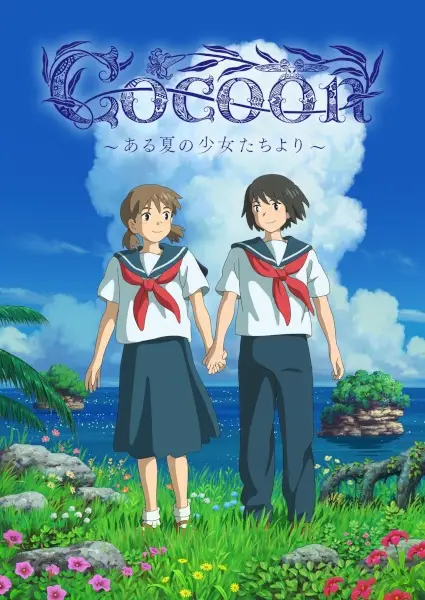

cocoon ~ある夏の少女たちより~
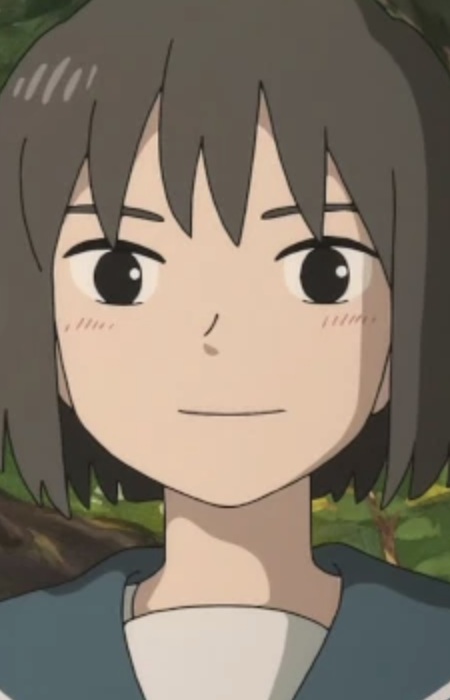
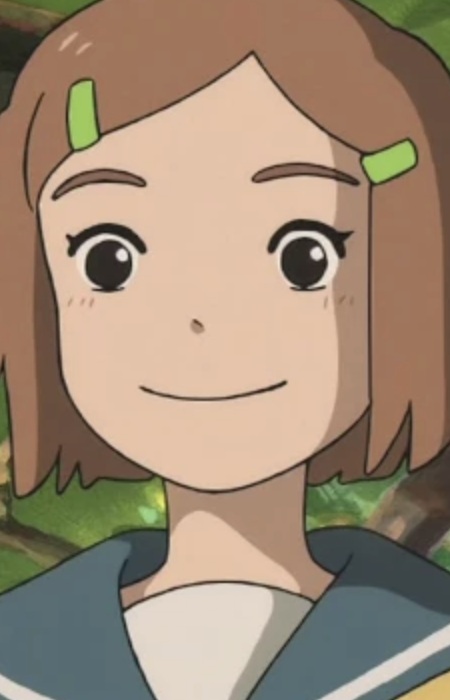
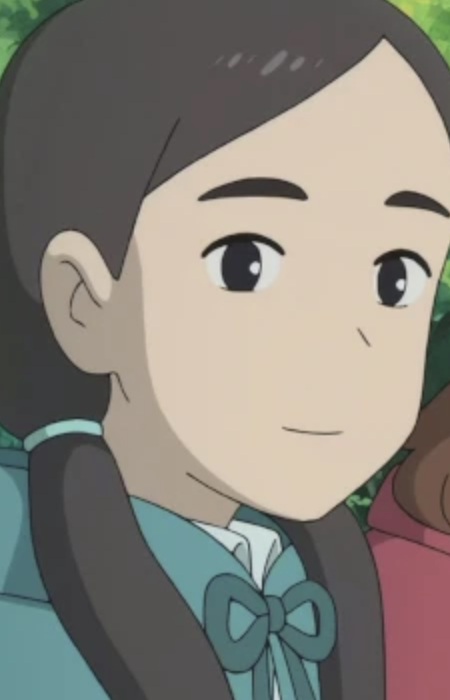
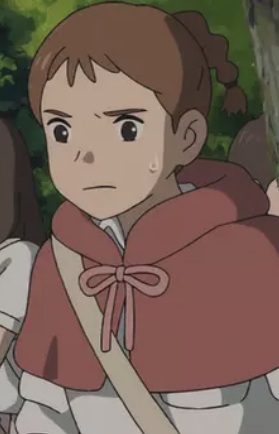
San and Mayu are two schoolgirls living in Okinawa during the closing months of the Pacific War. Together with their classmates, the two friends are drafted into the war effort as nurses for wounded soldiers. When ordered to die for their country, the remaining members of the group escape only to face the harsh environment of a tropical paradise that has become a hellish battlefield. (Source: MAL News)
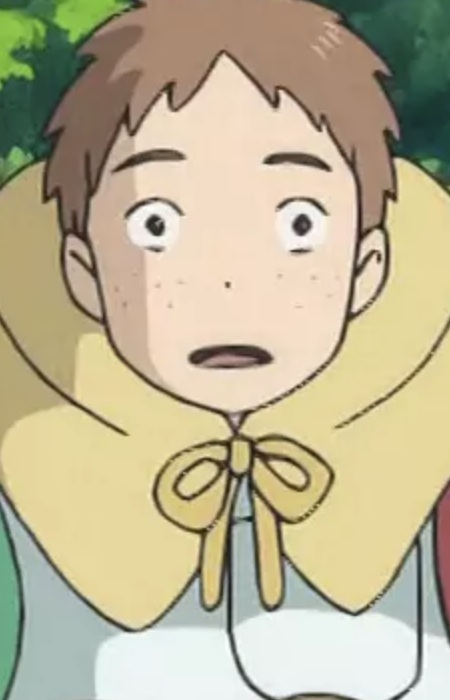
Главный
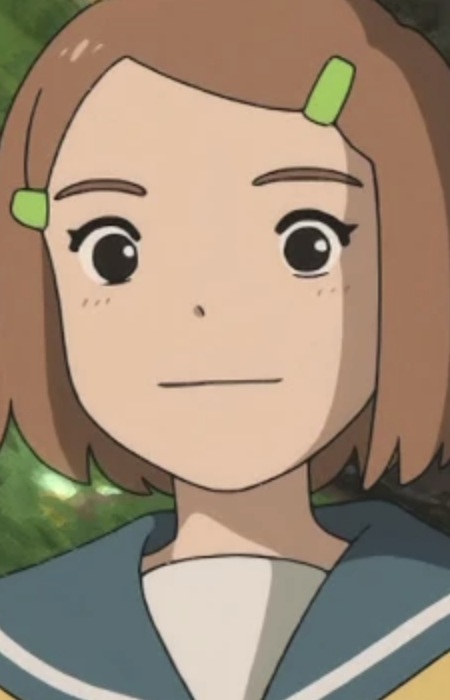
Главный
Второстепенный
Второстепенный
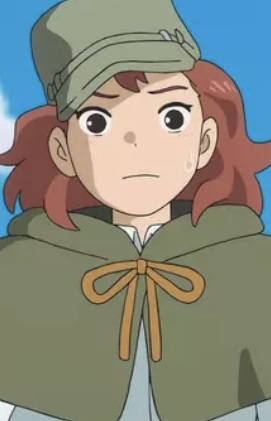
Второстепенный
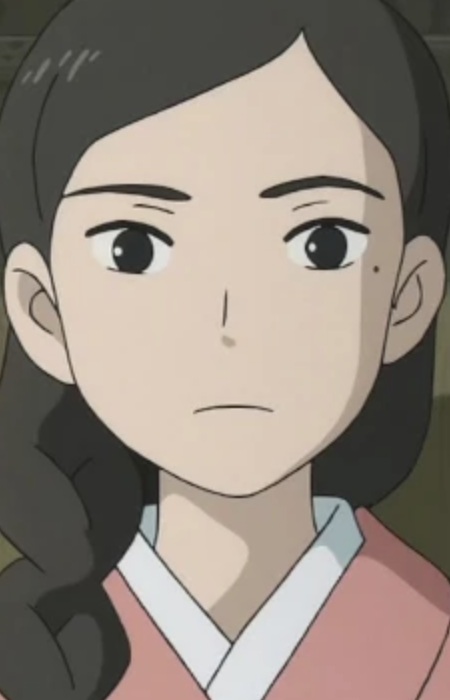
Второстепенный
Второстепенный
Второстепенный
Второстепенный
Второстепенный
Halcyon13
April 2, 2025
cocoon is structured as an excerpt of a larger wartime chronicle, sectioning a particular piece of the struggle and centering on a specific person's minor development. The scope of the one-hour film, while small, establishes its visual identity well enough to distinguish itself, given it's an NHK TV movie and all. The original source is based on the real story of the Himeyuri students, also known as the "Lily Corps", a girls' high school turned into a nursing unit during the Pacific War. They were mobilized by the Japanese army under false pretenses of impending victory and safety; however, as the film depicts, the girlswere subject to harsh work in caves turned into makeshift hospitals and executing medical tasks in life-threatening conditions. cocoon follows Mayu and San among a band of other Okinawan girls constructing safehouses and soon having to assist at the hospital while constantly in fear of aerial attacks. The dialogue among the girls does an especially solid job in slowly isolating them and decreasing the available land in their own country, usually by indicating they must continue to head south although logic tells us one can only go south for so long. Once the girls have realized this futility, more drastic measures to die an honorable death become tempting. Mayu and San's inferiority complex-ridden relationship is an underlying theme behind the wartime catastrophes. Mayu is an older girl and the subject of admiration among the group, a symbol of leadership. That goes for San too, who looks up to Mayu and sometimes sees her as a proxy for thoughts she's unable to confidently voice to the group. This becomes a recurring mental conflict and ultimately the obstacle San must get past to increase their chances of survival. One of the key metaphors drawn in parallel to San's low self-esteem is that of a "Kaiko", referring to silkworm pupae. The Japanese silk moth is evolutionarily fascinating because it has wings but is unable to fly. Similarly, San is a thoughtful, bright girl unable to express herself for fear of rejection, leaving many things unsaid or undone, unlike the moth, who will crawl forward endlessly through willpower. The insect is initially pitied by San, but soon her perseverance to survive gives new perspective on crawling when flight isn't possible, taking the road less traveled. cocoon's metaphoric strengths are further visible in its approach to bloodshed and death. The girls were relatively sheltered and knew how to study, and while labor is difficult, witnessing the gore of mangled bodies is easier heard about than seen. Mangaka Machiko Kyo disguises blood and death as flowers, a way for San to cope with the trauma in the moment. In the story, this is Mayu's idea, and the imagery of multi-colored petals sprouting from a missing limb is startling, bloody or not. The idea of these teenagers being exposed to these scenes is harrowing by nature, but even more so when we envision San desperately trying to imagine petals in place of death. Despite its strong sense of visual storytelling, as an overall ode to war it gets as far as one hour will allow it, which is not that far. Politically, there is little substance, and in the ways of optimism, it sort of falls into a daze of inevitability. Unavoidable death and unavoidable stragglers who manage to survive. I'm more inclined to remember some of the conversations related to false patriotism than the teenage angst, and it would have benefitted from an open ending as well as slightly less political ambiguity. The film's simplicity strikes two different chords, an emotionally resonant one and an admittedly surface-level exploration of heavy ultimatums the girls are faced with. It's hard to necessarily hold it against the film's runtime, but it limits its thematic output when we cut in and out of climactic segments that are otherwise central to the Japanese side of innocent civilians caught in the crossfire. In the premise of the film, the girls suffer not only from the enemy but from their brethren too. There's no upside to the battles for anyone in the midst, a motif omnipresent in each tragic event happening one after the other. cocoon becomes emotionally potent when sacrifices are made, throwing the two leads into questioning why they should bother living when the future is so uncertain and bleak. It cleverly circles back to the silk moth, personifying why the girls refuse to take the easy way out, arguably showing more resilience than the soldiers in a deluge of blood. This is where its simplicity highlights what the writing leaves for thought, and regardless of it cradling the ethical crimes, the distilled apocalyptic scenes bear value, even if only for remembrance of a war past. Veteran Studio Ghibli animator Hitomi Tateno serves as the animation producer here in collaboration with studio Sasayuri. Her usual work is checking in-betweens, and in cocoon, her taking on a supervisor role works well in service of developing the picturesque look of a rural area. Visually, it does resemble a Ghibli-esque style, but it's not so much inspiration as it is Tateno's experience. The distinctive line art, color selection, and even expressions are presented impressively, and while the digital process reduces background detail, the dynamic layouts often show depth. Many of the static shots were my favorites, when the peripheral movements in the frame are in focus and add to the mood. Kensuke Ushio's tranquil jingle and piano score seem to fit the film appropriately, and while it may run short on fluidity here and there, the audiovisual traits embody an undeterred hope. In commemoration of the 80th anniversary of the end of World War 2, cocoon wriggles past the agony of staining the Earth.
Firechick12012
April 13, 2025
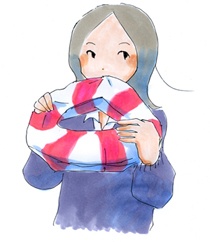
Japan's war movies really are a different beast from other countries' war movies, aren't they? American war movies tend to focus more on the soldiers, the action, the violence and death, or, for some reason, romance. I haven't seen war movies produced by other countries like Italy, Germany, or China, so I don't know how they go about it. I do know that the majority of Japan's war movies, or the ones I've seen at least, tend to place more emphasis on the children, the slice-of-life, and character development before getting into the war stuff. Grave of the Fireflies, In This Corner of the World,Totto-chan, Who's Left Behind, Barefoot Gen, Glass Rabbit, and more recently, Cocoon. Granted, I know a lot of this is because Japan doesn't like acknowledging their own war crimes and adopting a victim mentality, and I don't think I need to reiterate that Japan needs to do more to acknowledge its own part in World War II. However, I also feel that Japan's war movies and war media have value in their own right. Cocoon is an...interesting movie, not just because of how different it looks from the original manga, but the changes it makes in the adaptation process do make me raise my eyebrows. Based on the 2009 manga by Machiko Kyo, which came out 65 years to the day that World War II ended, Cocoon centers on two girls, San and Mayu, who go to an exclusive all-girls school down in Okinawa in the closing months of World War II. The girls and their friends make the best of things as much as they can, but it's not easy. Later, the entire class is drafted into becoming rear-line nurses to care for wounded soldiers, hiding in a cave and turning it into a makeshift hospital. This makes things complicated for San as she's not too fond of men, but she perseveres with Mayu and all her friends by her side. But war is a cruel beast, and as the world around them burns to the ground, San and Mayu lose all of their beloved friends one by one. The road to survival becomes more hellish by the day. One thing that really stuck out to me and others who read the manga is that the art style is drastically different from the manga. The manga opts for a more deliberately sketchy, childish, unpolished drawing style with watercolor backgrounds and screentones, evoking a child's drawings. The anime opts for a more polished, Ghibli-esque look, which makes sense as one of the producers for this is Hitomi Tateno, a former Ghibli animator. I can only assume that the producers made the decision not to try to adapt Machiko Kyo's style to animation, maybe because doing so might have been too difficult or something. I don't hate this decision, as the animation for Cocoon is still gorgeous all the same. The Ghibli influence is clearly there, but the simplistic yet unique character designs, detailed backgrounds, and stunning imagery really bring this story to life in a new way. Hell, the actual director for this movie, Toko Ina, did the animation for The Chronicles of Rebecca and key animation for Eizouken and The Heike Story. For their first time doing a long movie like this, the team they assembled at Sasayuri did an amazing job. The soundtrack by Kensuke Ushio is nice too, though not one of his more memorable scores. The characters, while fine on their own in the movie, went through quite a lot of changes in the transition from comic to screen. Many of the manga's characters were straight up cut out, with their fates given to other existing characters. One big change is the character of Tamaki. In the manga, she was just a vain, lazy girl who cared too much about her looks, couldn't handle the horrors of war, and is unceremoniously killed in a pretty horrific way. Here, she's still vain, but is much more proactive and helpful, proving to be an important confidant to San. Hina is also given slightly more relevance, though her manner of death is vastly different here compared to the manga. Actually, the anime changes a lot of characters' manner of deaths, assigning them fates that manga-only characters were subjected to. I can only assume this was done to streamline things, especially since the movie runs only an hour long, and the movie wanted to focus more on the characters that were more present throughout. The existing characters are fine characters, not the most fleshed out but still compelling in how they're children forced to grow up during a terrible time and made to see/do things no child should ever have to go through. The anime even adds subplots that weren't in the manga. For one, there's a whole running thread about San making a birthday present for Mayu but not giving it to her because the twins made her a better present, and she doesn't give it to Mayu until the end of the movie. This was not present in the manga, not to mention all of the new scenes given to Tamaki and Hina to expand their characterization. But the anime removes just as much as it adds. For one, no mention is made of Yuri's back scars, and several characters in the manga aren't present at all in the anime. The movie also made the decision to remove a lot of the gore and violence (Except for one important scene at the very end), and even in the violent scenes they leave in, blood is...replaced with flower petals for some reason. I can only assume they made the blood and violence symbolic because the networks would probably get mad at them for showing children suffering graphically, but...I don't know, changing the blood to flower petals comes off as kinda silly when you're trying to show how horrific war is. The manga never tried to hide the fact that its characters died in really horrible, graphic ways, like being disembowled, blown to pieces, or covered in maggots. Plus, other war movies before this never shied away from showing people being killed in horrible ways, so why did they have to tone it down here (Again, except for one scene at the end)? Did Japan's broadcasting standards change their rules about this or something, or was it because Cocoon was being broadcast on public TV and they didn't want it to be too intense? Who knows? Speaking of questionable decisions, I have to go into spoiler territory here because there's two changes they made that I wasn't a big fan of. In the manga, San is almost raped by a soldier, and Mayu manages to save her and kill the man in question by suffocating him to death. San never finds out about it until Mayu tells her later. But in the anime, San wakes up as Mayu is choking the man and...stops her from killing him. Why? This change did nothing for the story other than have San find out Mayu's secret much earlier, and having San save him is out of character for her because she hates men. Not only that, the manga explicitly stated that the man who tried to assault her was one of the soldiers they helped in the makeshift hospital, which further traumatizes San because she can't fathom that someone she tried to help would repay her kindness by attempting to rape her. It's basically a scathing critique on Japanese imperialism and how, in Japan's crusade to become the strongest power in the world, they basically treated their own citizens as disposable and didn't consider how their actions would affect them. So changing it so that San saves her rapist from Mayu and having the rapist survive completely goes against the manga's anti-imperialism message. Later in the manga, San and Mayu come across another nursing unit that plan to all commit suicide together because they want to die on their own terms and not get raped by any soldiers that find them. For some reason, the movie made it so that San and Mayu's nursing unit, all their classmates, are the ones that do this, removing any mention of them not wanting to get raped by soldiers, even though in the manga, they all died at that point, with the twins Mari and Yuri having starved to death immediately before this happens. Not only that, it dilutes the impact of an earlier scene supposedly showing everyone dying among gunfire, so it feels like a complete cop-out to have them survive only to then suddenly show them all committing suicide together when they had never established wanting to do so previously. I honestly wonder if the producers consulted Machiko Kyo about the film and got her to approve of these changes, or did them without her permission. I want to like this movie, and by itself, it's a perfectly fine war movie about young girls trying to survive. You can enjoy it without having read the manga, especially since Machiko Kyo's works haven't been legally translated into English that I know of. But having read the manga and seeing the changes the anime made, I honestly recommend reading the manga, as it's a much stronger, more compelling, more visceral experience that'll stick with you. I still enjoy the movie for what it is, and I'll certainly watch it over a lot of the slop that's churned out these days, but again, I seriously question why the staff made the changes that they did, because a lot of them just straight up don't make sense if you know about the manga. Cocoon isn't a bad movie by any means, far from it, and as a standalone feature, it's still a sad, compelling movie that'll make you think. However, I think this is one of those times where the anime adaptation just doesn't do the original source justice, especially with how it completely discards the manga's original messages in favor of being just another sad war movie where almost everybody dies.
Manu_
July 20, 2025
Cocoon as a film left me with a lot of mixed feelings. It is based on the story of the Himeyuri Student Corps, a group of young female students recruited by the Japanese military to serve as nursing personnel. Their story has been adapted numerous times in many different forms. Cocoon is the only adaptation I have seen, but if it is representative of how the story has been portrayed in popular media, it leaves me with serious reservations. My main critique of the film lies in its representation of the killings. Once the Battle of Okinawa was effectively lost, the Japanese military abandoned the girls theyhad conscripted, ordering them to disband and fend for themselves. As a result, 136 out of the 240 students and teachers died. But how, exactly, did they die? That’s where the film reveals a significant weakness. For a film that seems intended as a tribute to the fallen, it offers a vague and underdeveloped account of how events unfolded, and more importantly, of who was responsible for their deaths. We know from the testimonies of survivors how many of these tragedies occurred. Many of the girls were coerced into committing suicide: given grenades, poison, or instructed to bash their own heads with rocks, or to throw themselves into the sea. To this day, the question of whether these were truly voluntary suicides or forced acts remains debated. But it’s clear that in places like Arasaki Beach, many of the students were pressured into ending their own lives. The film, however, barely touches on these difficult questions. Instead, it presents a faceless, unnamed force firing at the students as they try to flee. Are these meant to be American soldiers, systematically hunting down unarmed schoolgirls through bombed-out towns and open fields? Or are they Japanese soldiers firing blindly while resisting the U.S. advance? We never know. We never see their faces. Historical testimony confirms that some students were indeed killed by American attacks, for example, at Arasaki Beach, or inside caves targeted with artillery or gas. But this leads to a crucial point: the film seems to lean into a vague moral stance, the idea that “all war is bad and civilians always die”, while avoiding the specific historical and ethical responsibilities involved. As far as I know, the U.S. military was not hunting down unarmed schoolgirls with the ferocity of serial killers, as the film at times seems to suggest. Many of the deaths appear to have been collateral damage during assaults on Japanese military positions. These deaths were horrific, and the senseless loss of life deserves to be remembered. But the film barely addresses the role of the Japanese army in those deaths. Many of these young women were given grenades or poison and instructed to commit suicide. They were abandoned. Some were abused or violated. Others were used as human shields, placed in harm’s way while Japanese soldiers retreated. These are documented atrocities, and the film barely hints at them. Unfortunately, this anime film appears to be yet another example of downplaying Japan’s wartime actions, especially in regard to the treatment of the Himeyuri students and the horror of their deaths. For a film that claims to honor their memory, it offers a weak and evasive picture of what truly happened.
dograzor
April 4, 2025
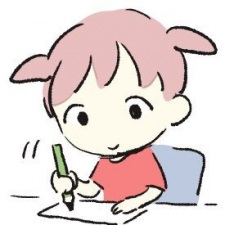
Good animation, backgrounds and music although some significant rewriting from the manga and a subsequent lack of depth with both characters and themes, as well as a short runtime really held this back as an adaptation - can only assume this was for the intended TV audience. A bolder choice on the artistic style could also have benefited the work immensely, as so rigidly following the Ghibli aesthetic essentially abandons the more eerie style and atmosphere of the manga with it's abstracted, just out of sight (or not looked at) horrors. The artstyle of the 'Pigtails' short, another Machiko Kyō manga adaptation, would be an exampleof a better fit. In summary: A good enough watch, although falls short in a number of areas as an adaptation of a what is a very interesting manga.
LuxuriousHeart
April 10, 2025
I enjoyed the anime. Though my gripes are similar to my gripes with Library Wars, and that's the censorship. Of course, there's still some depictions that show Japan in a bad light, with the words and actions of the soldiers. With that complaint, the series is beautifully tragic. The ghibli art style works for this, and the censorship with the flowers makes it more impactful. I don't like censorship of the overall message of the story, but the flowers were a nice touch. It added a surreal element to the movie, made it seem like the MC wasdisassociating. The flowers emphasize the trauma that the MC has to cope with. The propaganda and always listening to the teachers shows another aspect of war. I do recommend this short film. It's short and to the point. It tells a tragic story. It even has a plot twist at the end.
#2403
Популярность
#7990
Участники
7,664
В избранном
18
Эпизоды
1