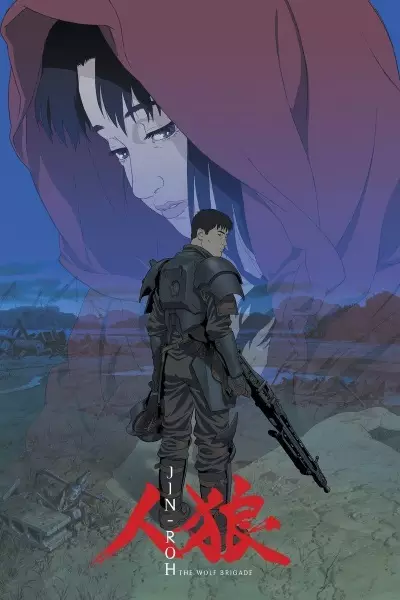

Jin-Roh: The Wolf Brigade
人狼 JIN-ROH
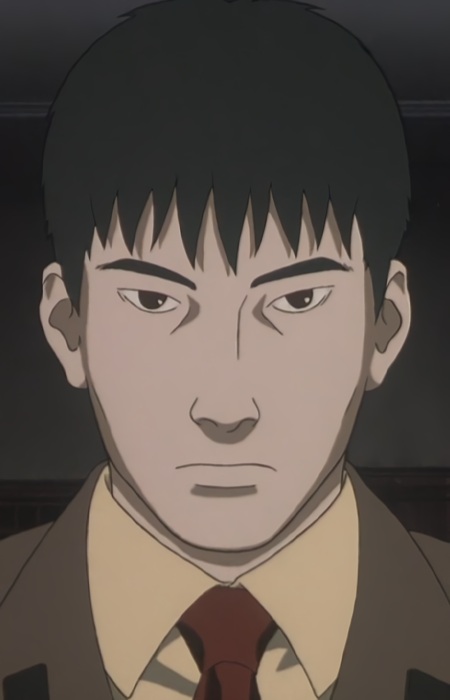
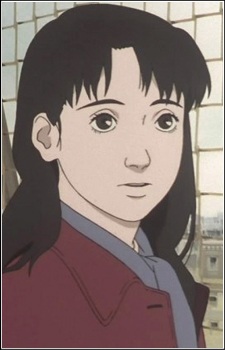
In an alternate history, following World War II, civil unrest and terrorism run rampant in a devastated Japan under foreign occupation. During a botched interception of underground munitions being transferred by a terrorist organization, Constable Kazuki Fuse, a soldier in an elite counter-terrorism unit, witnesses the true terror of human nature. He fails to prevent a teenage girl from carrying out a desperate suicide bombing that subsequently causes immense destruction to Tokyo. With mental scars and his competence under question, Fuse is sent back to the military academy for re-evaluation. Unbeknownst to him, he will soon be caught up in a web of government conspiracies that have the power to determine the future of all of Japan. As Fuse treads the fine line between human and beast, he ultimately discovers to which side he truly belongs. [Written by MAL Rewrite]
Главный
Главный
Главный
Второстепенный
Второстепенный
Второстепенный
Второстепенный
Второстепенный
Второстепенный
Merril
October 23, 2008
This movie is artistic animation. It does not have caricatures of people, use stereotypes to aid character development nor is there enough dialogue for easy digestion of characters feelings. The picture is thick of emotionally charged imagery and reflection, more clear and direct than can be done in live action. For example the fire bombs at the beginning and the reaction of the officers, the tears on Kei's face and breath of Fuze after running all cause connections with the audience instead of the usual detraction anime has. Things like what Fuze is brooding about constantly are shown as glances into the character,you really have to be following the story to understand anything about the characters. Motivations and subterfuge are the grips of the story after viewing. The animation is dry, on a color scale you would say that there are no 'warm' colors. Much like done in The Matrix or Gladiator, the lack of color is definitely intentional but still loses marks for art rating (made up for in char/enj). Then there's the story, its very simple yet extremely complicated to piece together as-you-watch-it. I had particular trouble with understanding the back story, its not necessary and only briefly covered by prose. As the watcher this creates alot of interest to me, I am not given the required information to understand the entire situation going on in the government but still take blind leaps of faith into the characters, trusting them as genuine. I do not know if the good guy won in the end or if the country is worse off. But this isn't to say I felt a lack of resolution, I am very content in the story. The character development is extremely interesting in this story, the use of imagery to portray characters as heroic, frightened, or animalistic in nature is wonderful. To play into the red riding hood theme you can clearly see at times the animation giving birth to wolf like qualities, or with the girl showing true meakness, frailty and confusion. The short dream sequence is quite graphic and horrible to fathom in reality, but shows the truth behind the story setting and how things felt to Fuze.
ZephSilver
August 1, 2016
Hot breath dissipates into the cold night air, with muffled grunts escaping the shape of shadowy figures. Under the moonlit sky, nothing is seen but the stark red glare of a misshapen beast. Nothing is heard but the synchronize march of a predatory unit on the prowl. Nothing is felt but the lifeless icy grip of steel, held firmly by the dispassionate monstrosity as its crimson gaze locks onto its target. And nothing is smelt but the cloud of gunpowder, the pungent sting of sulfur assaulting the tongue, as the mist hovers over dispensed chrome casings smeared in the blood-soaked remnants of The Wolf Brigade'sprey. And as the moon cascades into its slumber and the sun perches itself on the thinly veiled horizon, a new figure emerges. Under the pitch-black headgear and ghoulish red frames, the wolf reverts back to its original form. The predator is gone, leaving a man in its place. This is the tale of Jin-Roh. The tale of a lone wolf. Like an urban mythos being brought to life, Jin-Roh wisps the viewer up and sends them jettisoning into the unknown. A place where alternative Japan find itself in a state of civil unrest. Tension builds, tempers flare and riots break out in the damp decrepit streets. In an endless pursuit of unattainable justice, the people has had enough and violence is the only ultimatum that would voice their grievances. But standing between them, the bureaucrats that dip their probing fingers into their pockets and the satisfaction of unadulterated vengeance, are the Kerberos Panzer Cops: an elite counter-terrorism group tasked with oppressing and carrying out capital punishment against any individual or organized body that threatens the stability of Japan's government. With swift precision and unwavering conviction, they descend upon the detractors. Giving no time for pause and leaving no room for sympathy, once their fangs sink in, there's no letting go. No pleading for mercy. No hints of empathy. Just the transparent hand of the pack delivering the gavel with a devastating blow. But despite the atrocities committed by this unit in the name of justice, when their impenetrable armor is removed, what's shown are people that turn out to be surprisingly human, sober in their awareness of their cutthroat methods and expected duties. And it's this unmasking that introduces us to Kazuki Fuse; a man who isn't completely unified under the pack's objective, and the one we follow after an incident brands him with a hellish memory that he cannot erase — witnessing a girl taking her life by self-detonation right in front of his eyes. He could wash away her blood stains but he can't rinse away the permanent scar left on his psyche. And so the wolf is ousted from the pack, shedding his animalistic tendencies in search for answers far greater than himself and for a truth far crueler than the actions his pack partakes in. More often than not, the best stories of fiction tend to be the ones that tell universal truths. These are the stories embellished with themes and life lessons that beckon back to real world scenarios. They adhere to primal instinct and timeless constants, making them tales with longevity beyond the topical comings and goings of contemporary media. Fairy tales are by far the most elementary example of these kind of stories. Originally starting out as a form of storytelling intended for listeners of all ages (as its original German term of "Märchen" meant "little story"), it's only in recent centuries that they've been narrowed down to being featured primarily in children's literature. And while not very common anymore, we still get rare cases of fairy tales being aimed towards a much older, intellectual crowd. Jin-Roh is one of these rare occurrences. It took the basic structure of the folktale, Little Red Riding Hood, and retrofitted it into a gripping tale of betrayal, yearning desire and fulfilling one's purpose. But the movie is about much more than that. It's about coming to terms with the choices you have to make. Forgiving yourself, even when doing so only serves as self-pity for the defendant. It's a story about humanity's sins and how we go about dealing with it. But perhaps more important, Kazuki Fuse's sins and his willingness to carry that cross, even if it means discarding what little humanity he has left in the process. And in an almost ironic twist of faith, Fuse find himself coming face to face with a woman bearing a striking resemblance to that of the suicide bomber that set him on his journey to begin with. And so begins the warped tale of their uncanny relationship and the dreaded path they're destined to follow. Originally intended to be a live-action film from Mamoru Oshii's Kerberos Saga manga, it was later decided that it would undergo the animation route instead, with Oshii hiring, who was at the time, an up-and-coming key animator and future frequent collaborator, Hiroyuki Okiura, in what would become his directorial debut, to help see Oshii's vision through. This decision to switch from live-action to animation was perhaps the best move that he could have taken for the project, as it allowed the movie to flourish in ways that only the boundless freedom of anime could allow. But since the screenplay was intended for the live-action treatment, we're given techniques and refined storytelling that's often reserved for that medium in particular. Jin-Roh, as a result, was an animated film that took the best of both worlds. This was immediately noticeable with the hyper-realistic anatomical structure of all the characters introduced, the dark hues and lush layered color of the matte paintings that loomed in the background, the meticulous attention to detail to even the most minuscule of objects that found itself littered throughout each scene, and in the movement of the shifting environment that our characters find themselves traversing across. All of these attributes placed Jin-Roh in a realm rarely achieved by other animated features. It's a lived-in universe independent of the viewer's gaze and awareness of it. An almost tangible form that's just out of reach. Scattered with motifs that beckon back to the classical Red Riding Hood folktale and other parables that were gracefully interwoven between these time-stamps of unkempt tranquility, Jin-Roh rides the thin line of heady content, while still being an enthralling thriller planted firmly in the realm of theater. It walks this tightrope effortlessly, stringing us along with it. And with the violins slowly creeping into the mix and the unnerving thump of drums that echoes the heartbeat of the city, the time spent here becomes symbiotic with our living quarters. Immersion that blurs the line of augmented reality and the screen that keeps us staring through the looking glass. But the truly memorable moments blossoms when everything else takes pause, leaving the audiovisual cues and actions on screen to do the legwork. It's the mechanical thud of the Brigades' footsteps ringing out in the distance. The heavy breathing and frantic staggering of the prey, feet sloshing through the echo chamber of the sewage canal. Wind interspersing between follicles of hair, faint glimmer of cold sweat hanging off the chin. Beady eyes jutting frantically at its final glimpses of color, right before the thunderous clap of gunshots ring out, metal slugs tearing into the soft tissue of an unwilling participant. These are the moments that Jin-Roh becomes more than just a movie; it becomes an experience. Moments that keeps us under its spell, only to find ourselves snapping out of it when the credits begin to roll and our reflection enters the frame. In-between all of this, we're given several stories meshing together into one cohesive piece. One of which is a game of cat and mouse carried out by several law-enforcing agencies within the government. Fuse finds himself caught up in the power struggle due to his connection with the Wolf Brigade — a secret subsidiary of the Kerberos Panzer Cops. Each of these agencies partakes in this charade of comradeship with fingers crossed and daggers pointed at each others' backs. But the Public Security division gets more than what they bargained for when their prey bites back. Political subterfuge is met with bloodshed and Fuse find himself at a crossroad that will forever alter his course. A decision rests in his hands. Forbidden love or the special armed garrison that makes up his pack? Would he challenge the narrative, that red thread of ill-fate that binds the wolf and red-hooded woman? Or will he succumb to the natural flow of the world and snuff out the warmth he's found? And here we're forced to stand, in the ironclad boots along with Fuse, as the weight of his decision presses down on his shoulders. Hard-body wrapped around the soft, warm embrace of fragility incarnate. Time is up. An answer must be given. And we're all held hostage to hear the final verdict. Jin-Roh never lets up, it keeps the viewer entrenched in the underpinnings of its universe. No stone is left unturned. No emotion is left unaccountable. It presses forward, taking us down every avenue along the way. By the time we're met with our final destination, every nook and cranny make itself known unto us. The world of Jin-Roh shows its hand without so much as flinching in its decision. We're left mentally exhausted but amply rewarded. And while there's no comfort assured to us at the end of the journey, there's a feeling of finality that gives us a chance to exhale burden-free. But that blessing isn't extended to our man-at-arms. Despite his best efforts, Kazuki Fuse will always be an outcast. He could walk upright, intermingle with the faceless masses, carry on trivial conversation and be just another sheep guided by the invisible hand of bureaucratic meddling. But when all the masquerading is over and the sun retires for the moon's return, Fuse finds himself facing the truth once more. The sheep's clothing is tucked away, blood-lust coats his throat, and his true nature, the wolf, is revealed once more. Jin-Roh stands as one of the most visceral and haunting viewing experiences I've had in all the years I've spent consuming titles in the anime medium. There are moments here that still leave me with goosebumps from just reminiscing about it. Oshii's prowess for strong, uncompromising storytelling and Okiura's dedication to seeing it brought to life, made this a pairing on par with the unified work of other established duos in the medium like Yoko Kanno and Shinichirō Watanabe. It was a cerebral experience that knew when to land the emotional punches and when to rein it back to let the impact settle in. And as far as an anime goes, Jin-Roh's shadow dwarfs the efforts of most animated films I've seen up to this point. There are even moments that I believe outshines Oshii's magnum opus, Ghost in the Shell. It's truly impeccable craftsmanship. A title that won me over with its opening sequence alone. "We are not men disguised as mere dogs. We are wolves disguised as men." Haunting, relentless and often contemplative, Jin-Roh brands its viewers with an unflinching look into the hidden folds of humanity's perpetual sin. It's a powerful romanticizing of a classic tale but done so with a modern twist. With powerful imagery that becomes ingrained into your subconscious, and a potent message that opens up the channels for meaningful discussion, Jin-Roh will go down as an unsung classic that will be appreciated by those fortunate enough to experience what it has to offer.
Paraturtle
May 14, 2016
Story: An incredible wealth of potential wasted on hand-holding the audience into a waste of time. There's a constant motif of this narrative being symbiotic to Little Red Riding Hood, and while this is a cool thing at first, it's played to death over and over as the narrative continues. Virtually nothing new comes forth from this motif, and because it's crowding the run-time with over expository allusions, there's no room for characterization, world development, or memorable sequences. What crawls out from this hot mess is something that's more brawns than brains. There's no real goal any of the characters are trying to achieve. It's not thatI needed any aspirations clearly stated for me, but since this narrative forsakes visual allusion for blatant dialogue expository hand-holding, it was strange for the writer to conveniently forget to explain what it is the cast of characters each individually want. I'm not asking for a wealth of subplots, but by doing so, the writer could have created a world I could connect with. For instance, the first 10 or so minutes of this film are fantastic. There's clear evidence as to what everyone is doing and why. Then, upon Fuze killing the girl, the film starts to go downhill. It becomes impossible to really understand what anyone wants, why, and how they're going to go about doing it. From then on out, it's a matter of guess-timating and accepting what takes place merely because the film says so, not because the characters or anything around them would naturally do so. And, upon the film's final moments, nothing really comes to fruition. There's no message, theme, or value to be retrieved from the narrative. Because it fails to properly create anything other than visual pleasure, the project fails to do anything than that. Art: The animation here is incredibly solid. Many times it felt like watching a live-action. Not because the images were so realistic, but the motions themselves looked great. Characters do more than sit still. They look around, brush their hair to the side, turn their head to the side, tap their foot. It all feels very real and based on an immersive intention. The backgrounds feel lively, but as the film progresses, things are re-used and less interesting. It's as though the film halfway decides to put anything new aside and return to the old stuff we'd seen before. It's not a super big deal, but considering how gorgeously dystopian everything looked I will admit that I was disappointed to not see anything new halfway in. Characters look marginally different and realistic. Some anime like to hyperbolize features, but this film is definitely grounded in realism with its designs. Sound: An excellent, wonderful soundtrack. I only had issues with one song, and that's because it didn't sound as good as the others, but was still pretty great. Sound effects were all very good and felt fitting. Unfortunately, they used a stock bullet effect that sounds unbelievably unrealistic. It's used in so much stuff and I still have no idea why. It sounds terrible. Audio levels for the dialogue are all pretty great. Things sounded solid and I thought the VA work was quite exellent. Character: I don't care about anyone. Nobody has any character at all, and nobody has anything to care about anyway. The only reason this isn't a 1/10 is because the use of motifs for the 2 lead characters is still cool despite it being executed horribly. Enjoyment: I couldn't wait for it to end during the last 10 minutes. The whole project was downhill after the end of the complicating incident's scene. If I ever watch this again, it's just that beginning part. After that, I'll turn it off. I will, however, definitely be listening to that soundtrack again. It's excellent, and I'll be damned if anyone ever thinks it's no good. It sounded absolutely beautiful, somber, and sobering. If anything, the music has the potential to recover such a boring work. However, this was still plagued with far too many errors in regards to its execution. Such a shame. ((If you liked this review, friend me for new reviews on other works, both manga and anime!))
cobrascope
November 4, 2009
Well animated and there is a good story (albeit a complex one) at the heart of it but it's so slow and the characters seem so unemotional it's hard to care about what's happening on the screen by the time it reaches its fascinating if rather depressing climax. There is a good film in here somewhere but it's just presented in such a dull and uninvolving way that it seems like a wasted opportunity.
Shrubberypatch
November 10, 2007
What a unique and interesting movie... Jin Roh tells two stories. One is the one where the main character becomes the center key to a dispute between the police forces. The second one puts the protagonists in the shoes of the characters of an older and darker version of a famous story. While we are watching the first and main story, we are slowly taken through the second one. The stories to not clash, they combine and depend on each other to exist. The second one is easy and provides most of the character development, while the first one provides the setting and the introductionand development of secondary characters. Although not bad at its roots, the movie makes the story over complicated and doesn't manage to fully fledge it out. The amount of information we receive during 100 minutes is too unequally places and vast. It doesn't help that the major opposing factions have similar names. This does not help the characters either. The ending is very good and deep, yet unable to fully give us a conclusion. We finally see the truth about the main character and the second story comes to a conclusion, while the first one is somewhat left hanging. The style of the animation makes the characters look very realistic and less anime like. It's a win or lose situation as the style may not appeal to every viewer, but it was an excellent thing to do. It also looks old, but once again it does not stand out as a bad thing. Both of these things add to the visual experience, and truthfully it is hard for me to imagine this movie using a different animation style. I found it interesting to note that there are almost no bright colors. The movie shifts back and forth from washed out exteriors, to the dark sewers under the city. The only brighter color is the one from the 'eyes' of the Panzer Cops. The sound was very good. Most of the background music was well places and did its job perfectly. The voice actors were nothing spectacular, though well chosen. There is something else about Jin Roh, that doesn't feel right though, something that keeps it from being an excellent movie, yet rising it up to being an above than average movie. I cannot explain what it is... This is one of those movies that I need see only once and be able to forget it by the time I start watching something new, yet still remember it and its most shocking moments when the right time arises. Is it worth watching? This depends. It requires quite a bit of patience, understanding, curiosity and a liking of the genre, but watching it will definitely not be a waste of time.
#1168
Популярность
#1352
Участники
203,984
В избранном
2,216
Эпизоды
1