明治撃剣-1874-
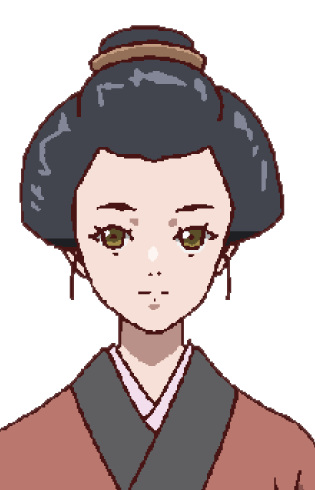
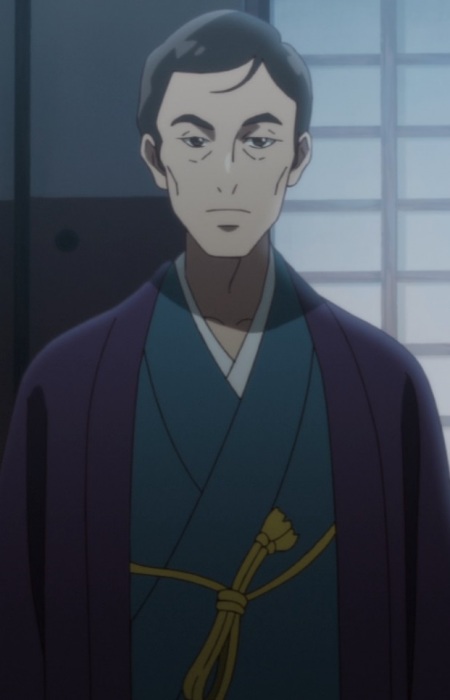
Shizuma Origasa, once a renowned samurai in the Aizu Domain, has fallen on hard times following his home region's crushing defeat against the new imperial government. To make ends meet, Shizuma now works as a rickshaw puller in Tokyo. Meanwhile, he tirelessly searches for his missing fiancée, Sumie Kanomata, the younger sister of his close friend Gennosuke, who had entrusted Shizuma with her safety in his final moments. After foiling an assassination plot, Shizuma is hired by the police force, and he uses this opportunity to further his pursuit of Sumie. However, he soon lands in a whirlpool of political conspiracies involving government loyalists, persistent rebels, cunning courtesans, meddlesome foreigners, and even a mysterious yakuza member, Kyoushirou Shuragami. [Written by MAL Rewrite]
Главный
Главный
Второстепенный
Второстепенный
Второстепенный
Второстепенный
Второстепенный
Второстепенный
Второстепенный
Второстепенный
KANLen09
March 17, 2024
Meiji Gekken: 1874 - Thank effing God that we're done with Crunchyroll and their absconded Originals branding. I love history...when it comes to anime, and Japanese history is FLOODED with stories like these that adds the animation element and makes the entire product interesting. Shows like mangaka Satoru Noda's Golden Kamuy and the modern original interpretation of Hideo Furukawa's The Tale of the Heike into Heike Monogatari, those shows are truly standouts when the topic of history or historical elements are the core function of the stories directed to the people. Japan itself has fought many valiant battles outside of its home country, as well aswithin, which showcases the legendary stories ranging periods to the scenarios themselves, one of which is the Meiji Restoration which dates 1868 and beyond. And this is where Meiji Gekken: 1874 stands in its influence as a show where: 1) Like Golden Kamuy, it has a historical profile to stand and tell its own interpretation of the story, and; 2) Like Heike Monogatari, only have its MC and other significant characters be the original element to add to the twist while staying true to the historical events taking place. The problem of this show is just one: it's "Everything, Everywhere, All at Once" but 100 times worse with so many flaws hindering at one straight-lined (but made rather complex for some reason) plot. The MC of Meiji Gekken, the former Aizu Domain samurai Shizuma Origasa, he stands alone as the plot device, within a civil war of unrest (the Boshin War) that has now passed into peacetime in Edo, to find his lost fiancée named Sumie Kanomata. And just like any upstanding citizen, he works his way up from being a rickshaw puller, and then into the police force to get a better lead on Sumie. On the other hand, there is another story going on, but bigger than Shizuma's: Kyoushirou Shuragami, whose Shounai Domain origins as a samurai, this is his alias in the Edo times to scout out an enemy that he has been tracking for quite sometime, which this enemy wants to shake the foundation of Meiji-era Japan to be ruled by foreigners, at a time when opium was readily the most valuable business trade. Both former samurai of their respective origins going on about their quests, soon comes to a head when their circumstances collide, involving the police force (which is governed by the Meiji government through the Metropolitan Police for censorship) and rival clans which Kyoushirou infilrated to get information on his enemy. But wait, there's one more small, but significant route to the end game: the British government and their illusive spies, of which Senri Kuroki a.k.a Mary Blackwood is one to investigate on the surrounding Edo happenings. And like both Shizuma and Kyoushirou, her investigations collide together with both samurai when there's treasure found that links back to Kyoushirou's enemy: Buhei Hiramatsu, overseeing the Moriya and Fujishima clans of which he uses them as part of his criminal enterprise, that the former clan is where he temporarily stays until he gets a lead to progress further. Just look how unnecessarily complex the above plotline is, though the complete picture is still drawn out like a simple puzzle piece. For one, let me just do the homework for you if you still have that confused look on your face: Shizuma: - Fiancée Sumie Kanomata, alias Hinazuru for her assassin duties for revenge on the Meiji government from the atrocities of the Boshin War, who interacts with Koume as an innocent party - Chief Superintendent Toshiyoshi Kawaji, who recruits Shizuma to the police force - Kyoushirou Shuragami, formerly known as Ikegami Souichirou when he was betrayed by Buhei on the process of signifying Japan and Britain together in terms of trade business Kyoushirou: - Buhei Hiramatsu, main enemy who dons a foreign-like look as a cover - Ryuzo Moriya, head of the Moriya Clan who took him in whilst his business with Buhei, going back and forth on business trade - Retainers of mage Gensho, archer Dario and giant-build Guen who followed him on his conquest to kill Buhei Senri: - Goro Fujita, undercover Metropolitan police for the Meiji government Unfortunately, this "larger than life" story plot has too many things going against it: - The flow of the anime, which (due to the show airing on the rather obfuscated broadcast TV station BS Shochiku Tokyu) has inconsistent run times based on the episode's content, ranging from your usual 24 minutes to a full half-hour timeslot, which causes an inverse reaction that was considered part of the taboo of anime pre-mid 2010s. - Unless you're on the analytical side, every episode just gets insane with what is just supposed to be a simple plot device, made difficult to understand what is actually going on, right until the final moments where the story actually clicks. Almost like a forced ending... - The characters are all one-note characters, acting out of their livid dreams (Shizuma) to pursuing revenge (Kyoushirou), and the kinda "necessary but necessary" side plot to rare treasure findings (Senri). The story...works, but you'll be lucky to do a character and story timeline to pace what the hell is the anime conducting its own pacing. Being a remnant of the Crunchyroll Originals branding, this show was the last of its initial batch of shows announced back in February 2020 with its mix of Japanese and Western animation medium, and if you know your history well, you already know how the entire branding went in a blaze of fire with its "overpromise and underdeliver" philosophy. And with the production of this show simultaneously changing hands until its "Last Man Standing" studio of Tsumugi Akita Animation Lab to finish things up, the entire show had seemingly been curse-inducingly D.O.A-ed before it ever got to the finish line. For reference, this studio with its small staff headcount only digital handled in-between and key animation at best, and Meiji Gekken may have been the project that threw their current projects out of whack, but only minor. Even the staff team is also disappointing. Director Jin Tamamura may have always been in the anime directorialship chair in the mid-2010s until the fall from grace with Fall 2018's Akanesasu Shoujo (heck, Fall 2017's Imouto sae Ireba Ii. was a great show that he directed as well), it's clear that no one in the industry wanted him as he laid dormant until now with his team from Tsumugi Akita Animation Lab, including Naoki Tozuka as series composer. I'm genuinely worried for next season's Tensei shitara Dainana Ouji Datta node, Kimama ni Majutsu wo Kiwamemasu a.k.a I Was Reincarnated as the 7th Prince so I Can Take My Time Perfecting My Magical Ability, if Meiji Gekken: 1874 showcases part of what the studio is worth with both director and series composer, and not in a good way. Also, there is music, but only the OST. No OP/ED themes for a rather unconventional show, I can take that every once in a blue moon. But seriously, it's lackluster. If anything, Meiji Gekken: 1874 is just as fascinating as a note piece in Crunchyroll's now beleaguered and infamous marketing, which continues to this very day. The entire show is quite a mess, though if you're up to the challenge, be my guest.
captainkunnka
January 21, 2025
First things first, as much as I like the show, people are completely right: the plot is convoluted as hell. However, it CAN be understood: it's not that the plot is bad or makes no sense, it's just that the show-runners have WAY too much trust in me to memorize and connect stuff. Which is why you really need to watch this when you haven't watched anime in a while, and can fully focus on the story. The story consists of Origasa - a police officer in a small town - somehow getting himself involved into a complicated political plot to overthrow the Shogunate. While Origasa'srandom missions weren't particularly engaging, the subtle storytelling of the political drama was so damn good. The various factions are characterized reasonably well, though, I admit, some characters have oddly similar designs and they're easy to mix up. A run-down of the things that happened so far every now and then would've been nice, too. Though I guess if you hate flashbacks - you'll love this. As I said, the protagonist's story-line was pretty boring. Not only does it feel like filler with pretty bad, meaningless characters, but it also hinges on a romance we have ZERO information on. I don't think Origasa's wife even has any screen-time, yet apparently it's the major thing in Origasa's character; it's that odd. The show has noticeable priorities when it comes to everything else, too. The focus on politics mean characters suffer and feel like caricatures. Some are there just to move the plot forward (for example, a side-character will completely change their stance on a topic, just so that one of the main-characters can be where they're meant to), others don't have much depth to them. Look, I'm human. I see a white-hair samurai with an eye-patch cutting stuff up stoically, I'll like it and watch it. But it's not peak writing or anything. To sum up in a sentence, the show's motto is a bit like "It's not important how something happened, but that it happened". So, if the main characters need to escape from a pretty disasterous situation? Rest assured, the show will whip something crazy out because it doesn't care about being unrealistic. Origasa is your generic blend of compassionate and cool. He is not openly OP, but he has an abundance of MC energy. He has smug one-liners for every occasion, he's wise when he needs to be, stupid as a joke if he needs to be, trauma to make him cool, and so on. He can throw a sumo wrestler twice his size, if he loses a battle it's because he lost on purpose, blah blah blah. I simply don't like characters like this. Then, we have his fiance. As I said, we don't know much about her, not much is done with her character in general, and her bond with Origasa is zero. The Main villain was AWESOME, legit one of my favourite characters in all of anime. Side plots, like a random tournament arc and everything connected to edgy boy's squad, felt out of place and added little value to the overall story. MC has some police missions early on, which follow your basic tropes. Unreasonably evil soldiers abusing their power, MC is pure-hearted. That sort of thing. The detective subplot pays off in the very end, but it can be frustrating to watch at times. The humor was scarce and hit-or-miss, with some jokes feeling forced. Mostly no fan-service, luckily. The dialogue is extremely blunt with characterization, but quite subtle and takes some thinking to decypher with the main plot. It's an odd blend that can frustrate a viewer. World-building was great, painted the picture of Japan pretty well. Visually, the show ranges from average, to occasionally good, to almost distractingly bad. The music was great, sound design was solid, with voice acting generally strong, though I wasn’t fond of Origasa. Overall Enjoyment: 7.0/10. The political plot was brilliantly crafted, and it's a shame most will fail to appreciate it. Don't expect much from the characters, though something brilliant might just sneak up on you. The random focus on fight-scenes when what this show does best is politics was odd at times.
Ранг
#8710
Популярность
#5915
Участники
16,288
В избранном
44
Эпизоды
10