
Whisper of the Heart
耳をすませば
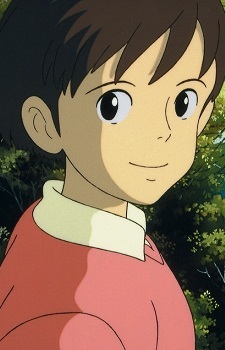
Shizuku Tsukishima is an energetic 14-year-old girl who enjoys reading and writing poetry in her free time. Glancing at the checkout cards of her books one evening, she notices that her library books are frequently checked out by a boy named Seiji Amasawa. Curiosity strikes Shizuku, and she decides to search for the boy who shares her love for literature. Meeting a peculiar cat on the train, Shizuku follows the animal and is eventually led to a quaint antique shop, where she learns about a cat statuette known as "The Baron." Taking an interest in the shop, she surprisingly finds Seiji, and the two quickly befriend one another. Shizuku learns while acquainting herself with Seiji that he has a dream that he would like to fulfill, causing her dismay as she remains uncertain of her future and has yet to recognize her talents. However, as her relationship with Seiji grows, Shizuku becomes determined to work toward a goal. Guided by the whispers of her heart and inspiration from The Baron, she resolves to carve out her own potential and dreams. [Written by MAL Rewrite]
Главный
Главный
Второстепенный
Второстепенный
Второстепенный
Второстепенный
Второстепенный
Второстепенный
Второстепенный
Второстепенный
Oolong
February 24, 2011
The strength of Whisper of the Heart is the strength all films that have been touched by Miyazaki seem to have. That is, the details. In this film the things that have impressed me were the little extras that are contained in each characters movements. It's something that you very rarely get—at least this consistently—outside of Miyazaki films. Whether it be reaching for the lamp cord from bed, failing, and needing to sit up to do it properly, or whether it be the normal silences in conversation (as apposed to dramatic silences), everything just feels a lot more real, a lot more vibrant than mostfilms. Regarding this film in comparison to other films Miyazaki has been a part of, this one seems to by far have the fewest fantastic elements (that is, elements which contain impossible occurrences or imaginary creatures). If I could compare it to any other Miyazaki film, I would say that it is most like My Neighbor Totoro, in that they both focus on the more or less ordinary lives of their characters, rather than large, sweeping plots. It is something that needs to be watched with a mind set that is not waiting for something to move forward, or endanger the characters lives, or otherwise throw them into an absurd situation. Everything that happens in the plot is very believable, yet has its own magic about it because of the playful way it is presented. One thing that was especially impressive about this film, although most Miyazaki films carry this trait, was the accuracy of the child psychology (and psychology in general). When you watch the characters of this film interact with each other, and when you see things happen to them and how it affects them, you get a feeling of profound truth. This film is dramatic, but it was not cinema dramatic, it was true dramatic. If a character is sad, that doesn't become their entire personality, it is something that affects their personality. The reason I ramble so long about this is because of how rare it is to see in any medium of art. It is something that if you are looking for it, it is truly beautiful and astounding. This quality of work is not easily imitated. If you ask me why I rate the art a "9" I will tell it is because of its expressiveness. The landscapes are beautiful, sure, but the real reason I give it a 9 is because of the work put into the animations of every character. There is nothing lazy about it, and there is a uniqueness to the characters movements that takes serious attention. Most films will cut corners in this department, but even though you could call this movie's art dated, that doesn't decrease the pleasure gained from its attentiveness. Still, I will hesitate to recommend this to everyone. If you want a plot that 'actually goes somewhere,' so to speak, this film will not give that to you. If you want a film with a tonne of weird and unbelievable things (such as you may be used to with Miyazaki), this film will also not deliver that. What this film delivers is a very detailed picture of its characters which is at times heart warming, at other times heart breaking, and at all times true. Loved it.
ksyndrome
August 22, 2013
Whisper of the Heart is unique with respect to its Ghibli film counterparts in that it seems almost mundane. Here we have our main heroine Shizuku Tsukishima and her life as a middle school-aged girl. While the film is essentially a slice-of-life with a hint of the "boy-meets-girl" rom-com trope thrown in, the way in which its characters are presented is not only relate-able to the audience but also endearing; an adult could sympathize with Shizuku just as much as a child could. As someone who values character development greatly, I feel that the creators efforts really pay off in showing how our main heroinedevelops over a short period of time, providing insight into her stream of consciousness with her full range of emotions on display. Combined with a diverse ensemble of a supporting cast, Shizuku's character really comes to life over the course of the film. True to form as a Ghibli production, this film complements its character driven narrative with a slew of wall-paper worthy long shots and vibrant animation schemes which I have yet to see that often even in more recent large scale production anime ( there are several such scenes in the latter half of the film, but no spoilers here of course!). Not much else to say here, I recommend you watch the film and see for yourself. Sound quality in the film was solid throughout. But what really won me over was the Japanese rendition of Jon Denver's country road. Not only was it an impressive rendition by itself, it was incredibly appropriate for the small town slice-of-life feel that the creators seemed to be going for. Even after hearing it on replay throughout the film, I did not tire of that song, which in my opinion, speaks volumes for how fitting the song was for the film's overall atmosphere. Sadly, the other background music did go relatively unnoticed, but upon re-watching the movie and listening to the original soundtrack again, the rest of the background music was quite good as well. When we think of studio Ghbli we often times think of Hayao Miyazaki and sometimes Isao Takahata. In the case of Whisper of the heart, we have a tale with all the flavor and style reminiscent of these Ghibli greats, and yet was directed by neither Miyazaki nor Takahata but instead by a man named Yoshifumi Kondō, whose life was cut tragically short after the release of his 1st and only film. A darn shame too, because at the time he was considered a legitimate candidate to succeed Miyazaki as head of the studio. As a film that seems almost forgotten among the plethora of excellent productions from studio Ghibli, Whisper of the Heart is a much watch as an entry level anime for people just getting into the medium and as a deeper exploration into the world of anime film for seasoned veterans out there. In addition, as with all Ghibli films, Whisper of the Heart feels like it was made with a general audience in mind, so you needn't be a fan of slice-of-life to enjoy watching it. Even if you end up not liking this film I hope you found my review helpful. Of course I am always looking to improve, so feedback is always appreciated. Just leave a message on my profile thread if you have any comments, criticisms, or just wanna talk about anime!!
Aryaragi
January 28, 2014
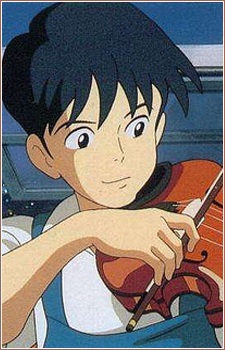
Adolescence is among the most memorable phases in one's life. During this time, we tend to make decisions based on adrenaline instincts, work as we wish to, while repudiating any advice. Some of us even develop endearing feelings of love for someone, while also chasing our own dream or even remoulding them for the sake of someone else, often out of inspiration and seldom out of desperation. Working on the themes of adolescence and infatuation giving rise to a wonderful journey of self discovery, Studio Ghibli presents us with Mimi wo Sumaseba also commonly known as Whisper of the Heart. The story mainly revolves around thefemale lead, Shizuku Tsukishima, a junior high school girl living in New Tama Town. The story progresses as Shizuku constantly finds a certain someone, named Seiji Awasama, always issuing books before she does at her town library, which leads her to grow a sense of respect while her imagination weaves together a personality of Seiji as one could only describe as the "Prince Charming of her life." Much to her disappointment, Seiji is any thing but the "prince charming" she had imagined him to be; but Seiji had a unique charm of his own. One thing led to another and soon, Shizuku starts facing typical teenage life problem ranging from the urge to rebel against her parent's wishes, unnecessarily squabbling with her siblings, while also realising she has fallen in love with the "not-the-prince-charming-she-had-imagined", Seiji. Hereby follows a movie about self discovery, presented in the most heartwarming way possible. Now it may seem like any other teenage-romance on pen and paper, but Whisper of the Heart, has its own charm, specially due to the way it presents itself. The problem with most romance shows now a days is that they tend to be extremely dull or overly melodramatic and their predictable plot structure doesn’t help them much either. While being melodramatic, most also tend to be highly unrealistic with their character interactions, their behaviour, body language and much more which just brings their over all quality down. Whisper of the heart, throws all these out of the window and carves its path through this genre in a rather realistic and dramatic way, without crossing the dreaded line between the dramatic and the melodramatic. Character interactions are seamless and seem as realistic as it can get for a story of such sorts. Characters behave as a mere reflection of any other ordinary teenager, as they would to the shown circumstances and these strokes of realism are even more integrated into the movie with the help of detailed, subtle body language of the the characters through which many emotions are shown, rather than told through mere dialogue exchange. The characters themselves are rather eccentric even though they are fairly ordinary people. The female lead, Shizuka, is a rather charming and adorable girl. Her relation with her family and her friends is well portrayed through meaningful dialogue. Her monologues of what she thinks about her sister, mother, her best friends and her general view of the situations she faces helps build up her base character along with her relationship with the side characters in a gradual and methodical way. The development that Shizuka goes through the movie, simply put, is phenomenal. From a naive junior high student, who didn’t know what she wanted to do with her talent, and on the bigger scale, with her life; Shizuka realises her field of interest and recognises her talents. Her love for writing also explores her vivid and colourful imagination. She comes to realise the importance of family and meeting up with family expectations, while chasing her individual dream too, but the main motivation behind most of her development is her love interest, Seiji. Seiji is quite the character himself. He is shown as an ordinary boy, working at his grandfather’s small antique shop, while learning both, to build and play the violin. The development between Seiji and Shizuko’s romantic relationship, albeit a bit cheesy, was handled with great care. While Seiji doesn’t receive as much development as Shizuko on screen, most of his character development is rather implied. While maintaining Seiji’s lively manner, we see a sense of responsibility grow in him which we naturally see in most teens as they go through their phase of adolescence. His growth in sense of responsibility is established through his interactions with Shizuko, specially, the conversation they have on the school rooftop where they realise they have to work their way so that they could live and spend more time together in the future.All these character interactions which lead to their subtle development, was neatly woven together by the skilful hands of the director, Yoshifumi Kondou, who is known for his works in various other critically acclaimed works such as Omoide Poroporo and Akage no Anne as an animation director. Studio Ghibli has always been known for sending the audience into another magical dimension with their various works, but sometimes, due to the lack of proper direction, the whole magical element backfires, and in the end, the movie tends to become a mess. Thankfully, Whisper of the Heart, is not one of these movies! Even though the movie is highly realistic at its core, Studio Ghibli didn’t stop from adding their key fantasy elements into the movie. And with the efficient direction, these were used to enhance the whole experience of the viewer. Shizuka’s main writing work is dynamically shown, rather than being simply narrated. These scenes range from talking rabbits wearing monocles to riding an air stream to an unknown mysterious castle. All these fantasy elements are integrated into the movie with great caress without leaving deep scars on the strokes of realism, the movie portrays. The animation delivered by Studio Ghibli, as usual, is fantastic. Great detail is maintained in almost every frame and the movement of characters and the general motion is as fluid as it can get. The landscape scenes are pretty eye candy and the movie is completely devoid of any ugly CGI. There are some great camera angles used when necessary, sometime to show the overarching city while some soothing music plays to evoke a strange feeling of nostalgia. The artistic direction of the movie takes credits when the fantasy world is involved, as the colour palette becomes much more vibrant and animation becomes subtly smoother and camera angles range from the typical to experimental ones where Shizuka is shown riding the winds to the castle. Along with the magical animation, the movie imbues a deep sense of nostalgia with its musical direction. The movie begins with Olivia Newton John’s cover of the famous song, Country Road, which itself evokes a warm fuzzy feeling in the viewer, making them feel right at home. Other than that particular cover of John Dever’s, country road, a japanese rendition is sung many times in the movie and their placement couldn’t have been more correct which added to the overall atmosphere of the film, whenever they were used. A personal favourite would be when Seiji plays the violin and Shizuka sings along and the elders join in with various other instruments, to create one of the most joyous and heart warming scenes in anime for me personally, but one could feel free to disagree, I guess. Other soundtracks just add to the magic of the film and its overarching, heartwarming atmosphere. To weave such a fantastic atmosphere, and evoke feelings of nostalgia with the music alone, credits must be given to the “music director”, Yuuiji Nomi who is also known for his quirky OST’s in Nichijou. With all that said and done, I must conclude by saying that Whisper of the Heart is a wonderful coming of age film; and a journey of self discovery. This film has something for everybody to enjoy, whether it be seeing yourself as a teenager grow up in the movie, facing similar problems or for parents, who could see how to co-operate with their child when they’re in their rebellious phase of life and let them freely chase their dreams. The fantastic musical score coupled with the fluid animation has the right balance of drama imbibed into it. It may appear to some as a typical animated work at first glance but once the experience is over, many will quickly realise that Whisper of the Heart is anything but typical. And yeah, Country Roads, will never be the same again, for me at least.
hikage11
January 8, 2008
Story: The story is based on a manga by Aoi Hiiragi. What I like about it is that it focuses on a problem that each of us go to at a certain point in our lives, what we want to be when we grow up. This is usually affected by our own capabilities, dreams, certain circumstances and people around us that either pull us down or help us keep going. I think students can relate to the plot better since they are going through similar to what the characters in the story are. Art: The characters are drawn in the usual Ghibli style. Although simple, the characters areable to portray the emotions needed to make the story believable. The background is very well designed and the little details like thrash on the street, pipes from the houses are all there. They make the environment the character moves in more real. I like these aspects bests in the movie. Sound: The music fits the story well, you can get the feel of the story right away and the translation of Country Roads is very amusing. Character: The main character responds to her problems immaturely at first but we can see her become more responsible as the story progresses. Overall: It's very inspiring once you relate yourself to the plot. It combines a little humor, determination, anger and a little bit of puppy love. A movie you can watch over and over again and pick up ideas from.
Pyrakuu
June 3, 2011
I have no idea why people enjoyed this movie. I have never been a very big appreciator of these Miyazaki stamped films, although I don't necessarily dislike them all, but this film is the worst of them I've seen. Lets go through the details. The animation is in constant conflict. While the backgrounds have some fairly impressive detail, the moving parts of the animation are inconsistent and often poorly done and all movement is extremely choppy. The backgrounds and characters also don't seem to work very well together in some situations as if they exist on different layers. Another example ofthis disconnect between background and the moving pieces is Scooby Doo, where it seems as if they locked the animators for the characters and those for the background in different rooms and never showed each other the other's work. The sound is downright annoying some of the time. I dislike the use of Take Me Home Country Roads as essentially the theme song of the movie and each time characters sang in the movie it proved more annoying than impactful in any way, and the rewrites the main character made were pretty terrible. Also this film takes one from many other Japanese films and employs the "roaring ambiance," the obnoxious cicada and other such random noises. Aside from that the miscellaneous background music is not noteworthy, although sometimes not very very well selected, and the voice actors are generally fine. Finally, the story and characters have basically nothing going for them. The characters are generally not believable and flat, the randomness of dialogue is off-putting, the story is slow and boring. First off, the "romantic element" of this movie feels artificial and forced. The initial romantic triangle doesn't make any sense because we don't even know the character's relationships with each other in the first place. When the female lead says she was friends forever with the dude, I didn't even know they talked. It's also extremely awkward and all the characters fill stereotypical roles, the shy girl, the mediator (main character) and the idiot guy. As for the main romance of the movie, the proposal at the end was extremely annoying and I couldn't take it seriously at all. Checking out books to get someone's attention is the absolute dumbest thing I've heard, the most hilarious line of the movie being Shizuku wondering if he was handsome just seeing his name in the books. Oh it's also a great romance when the girl doesn't even know who the guy is and he just inexplicably likes her. So yes, in the end, all of these elements mix together to form a sub-par community "classic" that I wouldn't recommend to anyone.
#405
Популярность
#665
Участники
404,271
В избранном
5,699
Эпизоды
1