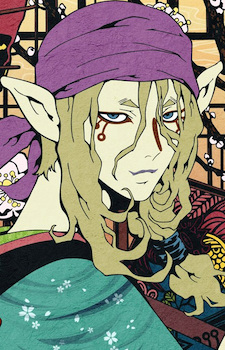

Ayakashi: Samurai Horror Tales
怪~ayakashi~ Japanese Classic Horror
A collection of three classic Japanese horror stories: "Yotsuya Kaidan", the story of a wife betrayed by her husband who seeks vengeance even in death. "Tenshu Monogatari", the story of forbidden love between a goddess and a human, and "Bakeneko", the story of a mysterious cat monster with a vendetta against a certain family.
Toast-Junkie
April 27, 2010
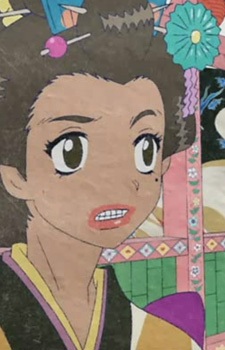
Sadly when I received this series, the information about Japanese Culture which was supposed to be included was not there. This was important in order to receive a fuller understanding of the stories. I tried desperately to get hold of a .pdf file of the information, but sadly I couldn't find it. Although many of the images and symbols probably got lost in the series due to my Westernised mind, despite this I decided it could be a good way for me to interpret it from my standpoint. The stories in itself did not get lost to me and certainly didn't hinder my enjoyment. Sodon't be reluctant to watch this series if like me your knowledge in Japanese Culture is lacking. Japanese Horror is well-known to most of popular culture through the Hollywood re-makes such as “The Ring” and “Ju-On”. Ayakashi offers something different to the horror genre by giving us three “classic” tales, by incorporating many symbols and traits of Classic Japanese Tales such as Gods, Demons and the all too famous “Yuurei”. Each story offers a different type of story in the horror genre, which gives you a good taster especially since the whole series is only eleven episodes long. The first of the three is the well-known legend of Yotsuya Kaidan and arguable the most famous Japanese ghost story, which is told with an active narrator (who is the originally the person who penned this story). It has the ingredients for a good horror story: revenge, love, betrayal, murder, and curses. It also has a MacBeth-ian curse. The art style fitted the mood of the story of revenge, but also the ukiyo-e style suited the story as it had been quite famous in kabuki theater at the time it was written. The art alone also lets you know what sort of story it is. There are three things that makes this story stand out: Each character proves his or her own worth to the story, no character is left out or forgotten. They are needed in order for the story to be completed. This is a sign of a good story and partially the reason why Yotsuya Kaidan has become such a classic. The second thing, is the excellent use of imagery throughout the story, although I stated this above that I lacked the knowledge of Japanese Culture to appreciate parts of the story to understand it fully, the imagery I did understand certainly made this story stand out. The third thing which ties into the second is the artful way of telling the story. It was the major reason why I liked this story so much. The way the narrator discussed the idea of horror stories and the way the audience perceived it, the responsibility the author and the audience had towards a story. A theme that always gets discussed again and again is how much you are subconsciously and unconsciously controlled by a story as a writer. It reminded me of one of my favourite quotes by John Fowles, “It is only when our characters and events begin to disobey us that they begin to live.” The last two factors is what made this re-telling so good, especially since this story has been filmed, put on theatre x-times and now for the first time as an anime. One needs to pull in the audience through other means than just a good plot, in order it to appeal with a classic story. These two components of an active narrator and putting imagery to good use is why I enjoyed this re-telling of Yotsuya Kaidan story so much. The second story is based upon a play from Kyooka Izumi called “Goddess of the Dark Tower”. This centres around the forbidden love between a goddess and a human. This anime represented many of the traits of Kyooka's work such as the supernatural, his narrative style which was similar to traditional rakugo, this can be seen through the two friendly demons and their commentary on what happens in the story, especially at the end of the story. Dramatic dialogues, which were used in kabuki drama is another element of Kyooka's writing, you'll notice this throughout the story. The most striking of all the concepts used in his stories, which is a driving force of the story is that of a beautiful older woman (the goddess) taking care of a young man (the falconer) or that is how I interpreted it. His plays are quite famous in Japan and are still performed now, so this may come to be lost to many Westerners since many of his plays have sadly remained untranslated. This attempt to put one of Kyooka's into anime form was left much to be desired due to one downfall, but a crucial one and that was the timing. His plays are well-known for their complex plot and suspense. It's difficult to build up a complex plot in three episodes and at the same time build-up suspense. The suspense was not completely lost, but certainly much of it lost, as it was lost by fitting it into such a small time constraint. This time constraint became the reason for many of its failings, this is illustrated especially through the characters. I questioned the logic behind the characters' decisions and plot holes,[spoiler] for example how the falconers' girlfriend is able to enter the castle without any of the goddesses noticing, especially since no-one comes back alive and this statement is made pretty clear about the castle. [end of spoiler] The character development also became lost otherwise it might have explained the lack of logic behind characters' decisions. It made the characters forgettable, especially with such a large cast. If it had the full eleven episodes, it might have turned into something worthy instead of something that felt full of gaps. The art certainly made up for the rest, as it had a more optimistic feel compared to the first story. As all in all, it has an optimistic ending or better said it ends on a positive note. Not only that, but the art changes in each part of the story to suit the world it is in. The world of goddesses, the world of humans and the “in-between”. The goddesses with their gorgeous kimonos and the enchanting castle that they live in, the whole place is like a fairy tale from afar, but once you become seduced by all that beauty, it's too late. It's illusion. The art used in the world of humans is clearer and defined with more use of primary colours. No tricks, it gives a sense of what you see is what you get. The “in-between” world is different with everything undefined, as the lines are fainter and the colours blend into together. Sadly this story had been failed due to one component, because of this many viewers would question not only the things I did, but also why is such a story in this collection, although if it had been done under more desirable conditions it would be a horror story, but it comes off more like a fantasy genre fairy tale. The goddesses need for cannibalism appears to be excuse from the directors to call it a horror story and to place it in this collection. Ah, the last arc, the reason why so many people possibly have picked up this anime. Reviewers and people who recommend this series tell others if the other two stories are not to your taste, skip them and watch the last arc: “It's definitely worth it!” Well, everyone, it certainly lives up to its hype, despite the fact that I had the gg version which apparently made a major translation mistake and would confuse viewers. (What this mistake is I have yet to find out.) I will definitely give it merit for being the best of the three. The story is based on the famous “bake neko” or goblin cat from Japanese folklore and is an original story from the writers of this anime. The opening scene already winds you into it, where you see a scene of panic and a mysterious man commenting calmly on the situation, while assessing it at the same time. The story is full of mystery, while you and the medicine seller are trying to find out what has happened, which has caused the grudge of this “bake neko” haunting the family. The first two episodes builds the suspense and let's us get to know each individual and the finale reveals the secret of this family. The arc is full of Japanese folklore and it would have been quite useful for me to have had the .pdf included when I got hold of this series since there was certainly a lot I missed. This is alone seen by the pictures on the wall, this is exemplified when two of the characters speak to each other in the first episode and the camera shoots includes the picture on the wall while the character is speaking. It seems the character is represented by that picture or better said the animal on the wall and the conversation is between the two animals since the second screen shots switches to the animal of the wall and the voice of the character is the only thing heard. As though the animal is speaking and not the person. Once again, the way the story was told was masterful, as it combines it's beautiful and unusual art to tell the story. The way the characters were drawn and the clothes they wore were representations of the characters they were, simply by contrasting the medicine-seller with his air of arcane and the pompous, sake-drinking uncle. The switching of scenes is beautifully done by using the sliding door, a simple but wonderful effect. It's as though you're watching it on stage and the sliding doors are like the curtains. This enhances the effect of the art, with its rice paper overlay effect and the vigorous colours used. It really is like the reviewer Malyrush states a “moving representation of Japanese ukiyo-e”. The background stays still, while the objects that move in that scene move, this can be seen quite clearly in first episode when the medicine seller arrives in the area that you can see the smoke moves, but the rest is still. Beautiful. It would be nice if anime producers and creators would finally break conventions and experiment with art, as beautiful and unusual art like this could be created and be used to facilitate the story-telling like in this final arc. This final story is definitely worth a look, especially if you enjoyed Mushishi. It brings across many of the components that Japanese horror is well-known for, the key element being the idea of “what could be out there”. The music in each story is wonderful, especially in the last arc. But what deserves a special mention is the opening. I'm very picky when it comes to openings and most of the time I skip them because they mostly grate my nerves, but this one. Oh, wow! It starts with traditional Japanese music and then uses that to bring in the rap.. I thought it was quite skilfully done, since combining both genres could have quite easily gone wrong. I absolutely loved it. The opening changed its art every time the arc changed and the best one once again was the final one. Just have a look on youtube for it and you'll see what I mean. The ending was also quite good, but it wasn't quite as good as the opening. It suited the mood of all the stories and used scenes from the episodes you had just watched and also at the same time discreetly previewed the next episode. This series is definitely worth a watch, in particular if you're interested in Japanese culture and history in anyway. All the arcs represent many issues going on in the Edo period, in particular the misogyny, which also represented the powerlessness of lower ranked people. It is also a breathe of fresh air to a lot of anime with its art and its refreshing way of story-telling. If you're looking for something different or want to try a different style of anime give this a look!
Lindle
June 20, 2011
Ayakashi: Japanese Classic Horror/Samurai Horror Tales is a horror anthology of three unrelated stories: Yotsuya Kaidan, Tenshu Monogatari, and Bakeneko, the third of which received a far more successful spinoff in the form of Mononoke. Each arc was done by a different, and then-unknown director, though the director of the third, Kenji Nakamura, went on to make the critically acclaimed series "Mononoke" and "Trapeze" (He also made [C], though that fails to fall into the previous category). This review will mostly be split up into the three arcs. (NOTE: The R1 release of this series switched the first and second arcs around. This will belisted in the original order). Arc 1 - Yotsuya Kaidan (episodes 1-4) Yotsuya Kaidan (Yotsuya Ghost Story) is a story based on someone who died in horrific circumstances, due to being wronged by pretty much everybody around her, and manifests as a vengeful spirit, laying a curse on all those responsible. This tale is actually told as a story within a story, as narrated by a scriptwriter adapting it into a play. This arc happens to be the only one based on an actual Japanese tale, but that doesn't lend it many favours. It begins on very bad footing, the key reason for it being this: The characters actions make insanely little sense. Every character is a stunningly terrible person with absolutely no train of reasoning to follow. They could not be more one-dimensional if they tried. This was obviously an attempt to make us hate them more, and make the inevitable ramifications of the curse more cathartic, but it's done so ham-fistedly that it simply becomes stupid rather than cathartic. Unfortunately, the horror elements that could have made this halfway entertaining are botched as well, as a result of a limited animation budget and some really bad directing causing major corners to be cut, making large chunks of the arc funny instead of horrific. The art isn't terrible, but it's not impressive either, and it makes itself quite clear on how low-budget it was. There are also frequent live-action sequences as well, which would probably have seemed more impressive if it wasn't so obviously yet another corner-cutting method. At the end of it all, we have a poor-quality story with poor quality directing and terrible characters, giving Ayakashi a very bad start. The only redeeming feature of this arc is an excellent monologue in the final episode, detailing the aspects of this as a story in the real world, and how it transcends its existence as a story to be something much more real. Story: 4/10. Characters: 1/10. Production: 3/10. Overall: 3/10. Arc 2 - Tenshu Monogatari (episodes 5-8) Tenshu Monogatari (Goddess of the Castle), in spite of being in a horror anthology, is less a horror story and more a tale of forbidden love. While there are horror elements, courtesy of the Forgotten Gods the arc focuses on, it mainly focuses on one of the Forgotten Gods falling in love with a human rather than, say, the Forgotten Gods eating people as the arc starts off with. However, this change of style is somewhat welcomed after the overblown style of the previous arc. But unfortunately it's not very good either. While this arc does fare better than the first, it succumbs to a major pitfall quite common of romance series: We have to actually give a crap about the main characters for it to work. And in the course of a mere four episodes, which are far more plot-focused than they are on characters, this becomes an impossible task. This is a shame, because unlike the last arc, there is actually a halfway decent story to be told here. However, just like the previous arc, this story is damaged by blatant directing issues, corner-cutting, and a low animation budget. And wow, the animation budget really doesn't get much lower than this. The animation is amazingly cheap. While this doesn't make it funny like it did in the previous arc, it completely nullifies anything the action in this had going for it. Which is sad, because there were obviously some good ideas at hand here. With a decent budget and more episodes to develop the characters in, this could have been good, but sadly this isn't the case. So while Tenshu Monogatari manages to be better than the first arc, it still produces nothing of worth and is generally a waste of time. Story: 6/10. Characters: 4/10. Production: 1/10. Overall: 4/10. Arc 3 - Bakeneko (episodes 9-11) Wow. Talk about saving the best for last. The Bakeneko (Goblin Cat) arc is an enourmous departure from the last two arcs in every sense. The first, and most obvious, is that everything in it looks beautiful. Corner-cutting is obviously at hand here, but it is used to the arc's benefit in every single way. Its method of corner-cutting is to use an unmoving plaid style similar to that of Gankutsuou. However, it far out-performs Gankutsuou in that sense. The way that the Bakeneko arc is animated makes everything look as though it is a moving Edo-period painting, and is executed flawlessly. But the budget they saved on animation, rather than simply going unspent, is used to create absolutely mind-blowing action sequences. That isn't the only aspect of the production that is leaps and bounds ahead of the previous two arcs, however. The directing in the Bakeneko arc is absolutely mind-blowing. The transition in directing quality from one arc to the next is effectively the difference between Tommy Wiseau and Stanley Kubrick. Toei probably weren't even trying with the first two, and merely saving their resources for this arc. The amazing directing in this is responsible for the key factor in this arc: It's the only one in this horror anthology that is genuinely scary. This is as a direct result of Nakamura handling the tension in this arc amazingly. Every moment of fending off the titular monster is incredibly intense. This is also probably the best example of Monster Delay (not revealing your monster's appearance for a long time) that I've ever seen. And as mentioned before, every action sequence is brilliant. This includes what is easily the most beautifully-animated rendition of people being torn to shreds and having their remains splattered across a wall that I've ever seen, to name just one moment. Another aspect of this arc's excellence is our main character, The Medicine Peddler/Kusuri-Uri. This arc has taken a lesson from the previous arc in not trying to develop characters in too short a space of time. Instead, Kusuriuri relies on how little we know about him to be an interesting character. His otherworldly appearance, his strange mannerisms, and his charisma all make Kusuriuri an excellent character. But moreso, it is the method with which he needs to slay demons that makes him stand out. For him to be able to unsheathe his sword, he must know three things: The form the demon takes, the truth of how it came into existence, and the reasoning behind the demon's actions. Only once he truly understands the demon is he able to exorcise it. This, I believe, adds an excellent layer of depth to this arc. But while the directing behind this arc is certainly its most stunning aspect, it is carried by an excellent story as well. The aforementioned requirements behind unsheathing the sword cause the backstory behind the demon to unfurl, creating a stunning, tragic tale that I daren't spoil the details of. Story: 8/10. Characters: 8/10. Production: 10/10. Overall: 9/10. General: The music in Ayakashi is shared between the arcs, and is the only aspect that is consistently excellent between them. The background music is always fitting, is rather excellent, and in the Bakeneko arc's case, the absence of outside noise is used to more amazing effect than any of the music is. The only letdown in the case of the music is the opening theme, and even that is only hit and miss. The melody and beat to it is actually extremely good, and is a disturbingly apt mixture of classical Shamisen music and hip-hop, but is unfortunately let down by a terrible vocalist. The acting in the original Japanese is adequate, but mostly unmemorable. But it is still significantly preferable to the dub, which you may recognize as sharing the entire cast of Vision of Escaflowne. And if you ever saw the Escaflowne dub, you should know to stay away. The only character whose performance really matters is that of Kusuriuri, who is given an excellent, otherworldly charm by Takahiro Sakurai in the original track, and is given a terribly normal-sounding performance by Andrew Francis in the dub. In case you didn't get the point already, don't go anywhere near the dub. Overall, Ayakashi is two thirds poor quality and one third stunning. However, the last third is told in different format in the spinoff series Mononoke, and while I don't yet know which version of this arc is preferable, it's probably not worth watching the first two arcs of Ayakashi just for this arc as a result. Final Words: The first two arcs are very bad, but the third is amazing. If all of Mononoke is as good as the third arc it may well be one of the best anime ever made. Also Recommended: Aoi Bungaku, Mononoke Music: 9/10. Japanese track: 6/10. Dub track: 2/10. Overall: 6/10.
berserkersoul
May 14, 2015
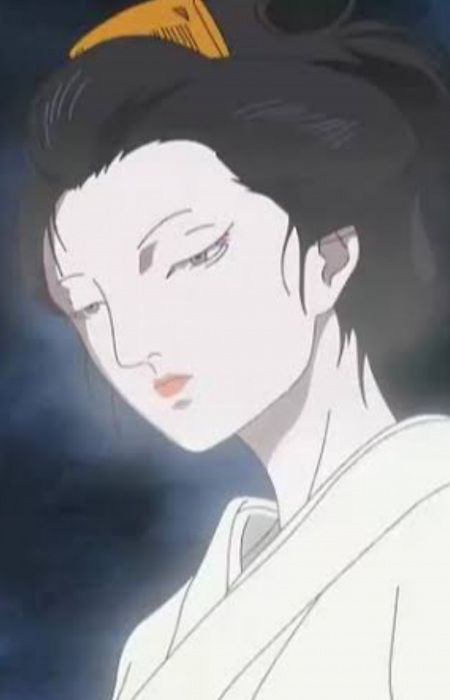
(the stories portrayed have some graphic images like murder/gore, rape, etc. so watch as your own risk!!) *THIS IS LONG SO READ THE "IN SHORT"S The series is split up into three main stories: episodes 1-4: a story about a beautiful woman who falls in love with a man who ends up betraying her, abandoning her and her new born. in an angry rage she kills herself and turns into a vengeful spirit out for revenge episodes 5-8: a story about the forbidden love between a "forgotten god" and a human commoner episode 9-11: a story about a wandering medicine seller who specializes in finding and vanishing Mononokes (orrestless spirits who cause harm/disease/death). the bride of a family dies on her wedding day at the hands of a mononoke and the medicine seller needs its reason, form, and truth to put the spirit to rest. STORY (7/10): the stories were interesting to say the least (although i admit i have a personal bias towards the last story because it was made into a fantastic spin off called Mononoke, 10/10 would recommend). needless to say episodes 9-11 were perfect. it was equal parts lively, sad, entertaining, and creepy. episodes 1-4 were also very good! i have a think for mythology and folklore so i read up about them and it was refreshing to encounter something i havent come across. it was quite suspenseful and beautifully made. i also loved the effect the cure had on people in japan during the modern era; it reminded me of the cure of MacBeth! 5-8 was my least favorite. it wasnt really much of a horror story but more of a romantic fairy tale. there was really nothing scary or creepy or edgy about it. however it did serve as a nice break in between the other two stories. IN SHORT: all of the stories brought their own flavor in interpreting the folklore but story 2 (episodes 5-8) turned out to be more of a love story. nothing edgy or scary about it. ART (9/10): this is always my favorite category and im anxious to get started (this might be the longest section) so the first story looked very pretty!! the art style depicted the Edo era of japanese art styles and how the characters were drawn resembled people being painted during that time but with obviously a modern twist. it was really creative and they used their dark color scheme to their advantage. the last story had a similar art style as the first (which i adore)! i also love the use of the really bright colors and different patters and designs on objects (it might make some people sick though) animation wise there werent anything to complain about. the last story is my favorite because of the artistically places jump cuts that characters will do for dramatic effect. the second story got pretty low marks. the art style was much different than the other two and it was kind of jarring. as more animation, there was nothing bad about it. IN SHORT: no problems in the animation department. stories 1 and 3 were beautiful homages to the medieval japanese art style. again, story 2 seemed out of place and i found it quite ugly to be honest. SOUND: (7/10) the music was fitting but didnt enhance the scenes. background music should do both. ambient noise was pretty good! the sword and fighting sound effects were pleasing. soundtrack is a different story. the outro music was very pretty but the intro was confusing. rap music wasnt a good way to set the viewer up for what they were about to see in my opinion IN SHORT: pretty but not enough to evoke/enhance an emotion depicted in scenes. intro was jarring and didnt set the viewer up for what they were about to see. outro was beautiful!! CHARACTERS (7/10): no characters really stood out except for the Oiwa chan (vengeful spirit in story 1) and the medicine seller (story 3). every other character was kinda washed over. that doesnt mean the other supporting characters were good and didnt help enhance the story and the experience; they just werent as memorable. The "forbidden goddess" had the most depth. she had a back story with some potential and with more time we could have seen her develop into a more meaningful character IN SHORT: medicine seller was the most bad-ass. the vengeful spirit was the most memorable. the goddess had the most depth ENJOYMENT AND OVERALL (7/10): it wasnt too bad. the boredom i felt during story 2 was made up for by the other two stories, but i understand why that story was put in and was put in the middle. it was a good palate cleanser. after watching episode after episode of just gore and terrible scenes, the viewer might bet bored/too disgusted/being to wash over scenes because they all look similar. i enjoyed story 1. i really enjoyed the other two. the length on the stories seemed to fit well, they didnt seem rushed or drawn out. IN SHORT: story 2 was a good palate cleaner between the other two stories. pacing was spot on. it was pretty to look at as well. RECOMMENDATIONS: dont watch this: ***if you have a weak constitution ***faint heart or are triggered by something like domestic violence (story 1), gore, rape (story 3), abuse (story 1 and 3). ***if you like shonen animes (you will probably be disappointed) watch this if: ***you liked being creeped out ***you like historical animes
-ryougishiki-
February 25, 2015
Summary: The series is divided into three parts, each featuring a famous Japanese story about ayakashi, a supernatural monsters/beings in Japanese mythology. Yotsuya Kaidan (episodes 1-4): A classic Japanese ghost story about a woman who is betrayed and killed by her husband, becoming a vengeful ghost and haunting the people who are responsible for her death. It is written by Nanboku Tsuruya IV, and the story is also narrated by him during the anime. Tenshu Monogatari (episodes 5-8): A story of a forbidden love between a goddess and human. Zushonosuke, a falconer, falls in love with a woman whom he saw bathing in a lake, without knowingthat she is a forgotten god. Bake Neko (episode 9-11): A wandering medicine peddler arrives in Sakai Clan on the wedding day of the eldest daughter of the family. However the bride dies mysteriously and a ghost begins attacking the house and the other family members. The medicine peddler tries to understand the reason why the creature that attacking the house became a vengeful ghost to kill it. Story (7/10): First of all, this anime must be watched by people who is interested in Japanese culture, as each story have the elements of their original time, or the people who likes classics and historical anime. Yotsuya Kaidan (7/10): It is classic ghost story, so it may not be very unique in 21st century. However 4 episodes makes a good job depicting the original story of Nanboku Tsuruya IV. The story successfully makes Oiwa’s and her sister, Osode’s stories intersect in one point and later concludes without leaving anything out. The writer Nanboku Tsuruya IV himself narrates the story and I liked his narrating voice. Tenshu Monogatari (7/10): A falconer, Zushonosuke and a goddess falls in love with each other at first sight. The goddess, who is forbidden to love a human, struggles in choosing love and living as a human or to continue living as an immortal entity. I think it would be better if they didn’t just fell in love with each other and meet and talk with each other to develop feelings for one another. I personally liked the words Zushonosuke said to her the most, that living 20-30 years while enjoying your life as a human is far more beautiful than living an infinity like a dead. Bake Neko (9/10): The shortest story in the series, but I loved this one the most. The search for the reason for bake neko to seek vengeance, and revealing the dark secrets of the family members were great to watch. The protagonist medicine seller was also the most impressive character in the series. I will watch Mononoke, another anime he is also the protagonist of, next. Sound (9/10): The soundtracks of the anime are all perfect except one— the opening. I don’t know why they made a rap-like song opening, while making all the songs in anime classical Japanese musics. The ending is also pretty good. I listened a few songs in the anime a dozen times. There weren’t anything odd with the characters’ voices. They were all fit for an anime like this. Art (8/10): The art is pretty good. You feel like you are in the medieval Japan when you are watching this. Nothing looks out of place, and there are of course no colourful eyes or hairs like we often see in animes. Characters (6/10): There aren’t many unique characters. Medicine seller from Bake Neko, who is an exception of this, is the character I liked the most. The goddess and Zushonosuke from Tenshu Monogatari are not very bad either. The characters from Yotsuya Kaidan are the weakest ones comparing to the other two stories. Enjoyment (9/10): Each story is as long as they should be. If it was shorter, the story would be rushed, and if it was longer it would be boring. Only Tenshu Monogatari could be better if it was a bit more longer to give time for the goddess and Zushonosuke to develop feeling for each other. I never got bored while watching this and finished it in two days. Overall (8/10): The characters are the weakest point of the series, while the sound is the strongest. I recommend this anime to the people who likes history or classics as I have said before. As I am a person who likes both the history and the classics, I absolutely loved this series. But a person who likes only shonen or shojo might be disappointed after seeing my high point for this series. I give an 8/10 for Ayakashi: Japanese Classic Horror.
Ston3_FreeN7
May 23, 2011
Ayakashi: Japanese Classic Horror is a group of three different storylines, of which a couple are adaptations of classic japanese stories. As such, this review will naturally be longer than many I've done before as all three arcs deserve their own review, I believe. Also, not that I have not seen the original versions of the stories told in this series, so I have no prior knowledge of any material covered. The first story told "Yotsuya Kaidan" is about a woman being betrayed, and effectively killed, by her husband and her seeking revenge as a ghost. The atmosphere is effective, but the actual attempts at "horror"just didn't come off as scary or chilling. Part of this is because the characters didn't have any room to breath and, as a result their motivations and actions just seemed random at times and another is because the horror felt very very forced. It is possible to develop characters in a short arc, it has been done before in stuff like Aoi Bungaku's "No Longer Human" story arc so..when you don't care about hardly any of the characters, it's hard to care if/when they die or whatever. That said, the unfortunate Tamiya Oiwa was at least decently sympathetic and Tamiya Iemon was very very hate able...but there could have been more depth to the side characters as well. The art style and music for Yotsuya Kaidan is very well done. The realistic and dark edge the art has really goes a long way to set the mood the story has, particularly the life like appearance the characters have is agreeable. The music is a great mood setter as well, and the voice acting is great. Particularly Hirata Hiroaki, the voice of Sanji from One Piece, did a wonderful job as the down right bastard Iemon. The second story arc, Tenshu Monogatari, tells the story of forbidden love between a "Forgotten God" name Tomi-Hime and a human named Himekawa Zusho-no-Suke. The Forgotten Gods actually feed on humans and Tomi Hime's mother had actually met a sad fate for falling in love with a human as well, so it's at least an interesting subject in theory for a story. The problem, once again, is that the characters just don't have any depth to them and the actual love story is handled very..sloppily and is just rushed in general. When the viewer doesn't connect with the characters in some way, it's just really hard to care about their plight or whether they can make it out alive. That said, one interesting thing the story does is how it handles the actual wife of Zusho-no-Suke and how she reacts to his falling in love with a "demon" as she calls Tomi-himi. Of course, it isn't handled very well in the end but it still is somewhat interesting. Again, the music is very good and the voice work is top notch. Though there really wasn't much that stood out particularly well in the vocal department either, but the voice work did fit the characters and such. The art style is a bit different from the first arc, not quite as dark and, well, it doesn't hurt the tone of the story much at all. Though the actual animations seemed to take a hit, the art did fit the love story and all. The final story arc, Bakeneko, is as advertised: easily the best part Ayakashi as a whole. Ironically, it is also apparently the only arc to be original to this anime. Part of this is probably because of the fact that the creators could come up with their own story and could do as they wished since they didn't have to strictly adapt a famous work and thus were much more creative in their efforts as a result. And, oh boy, does it show. Telling the story of a family being haunted by a cat demon and a certain mysterious Medicine Seller's attempt to save said family and put the "Mononoke" to rest, Bakeneko is trippy, suspenseful, and oh so engaging. The story is effectively about how and why the demon is attacking the family, with the suspense being built throughout the first two episode and the last one does an excellent job at pure storytelling as you learn the circumstance of the "Mononoke." But, definitely one of the high points of this arc is the main character Kusuriuri who is a guy that just oozes cool and is genuinely interesting. You don't really learn anything about him, unfortunately, you just sort of get glimpses of his personality and ability. It's enough, though, to make the viewer wonder just who the hell is he. The other characters are actually interesting as well, with the families past getting a large amount of development. Ironically, this only serves to highlight the flaws of the other two story arcs as these characters are very well handled in only 3 episodes, which is ONE whole episode less than the others. Visually, Bakeneko is a treat. The art is beautiful, very detailed and does a great job of highlighting the atmosphere of the overall story. The character designs, particularly Kusuriuri, are very stylistic and just incredibly pleasing to the eye and much of the story is actually told through the art which makes the best of the animation medium to help the story. Really, I'd find it difficult to imagine anyone saying this isn't one of the best looking anime out there. The animation is very well done as well, Toei obviously pulled out all the stops here. As far as sound, the music is as excellent as ever and the voice work is great. Sakurai Takahiro does a great job as Kusuriuri, adding a great deal to his characters mystique and overall charm. The music in the last episode particularly should be commend as it was powerful stuff. Story: 7 There is obviously some worth in the overall storyline for these tails as two of them are considered Japanese classics, but it feels as though something was lost during the adaptations. Feeling heavily abbreviated, it's just hard to really care about the happenings of Yotsuya Kaidan and Tenshu Monogatari. Though I will say that the formers take on what a story could possibly mean to a author and how a viewer/reader could influence a story is very interesting. Bakeneko's tale of a families dark history is just very well done even though it is actually the shortest of the three arcs. The writing was top notch and just did a fantastic job at building suspense. Art: 8 Art is top notch for the most part throughout Ayakashi, though it does take a bit of a hit animation wise during Tenshu Monogatari. Still, for the most part the characters designs and such fit the mood of each storyline and most definitely do not hamper any enjoyment what so ever. Sound: 9 Great sound across the board, particularly the OP and ED. Never would have thought rap would work so well for a historical piece, but "Heat Island"does. The ED song, "Memento of Spring", is excellent and is very nicely inserted into the end of each episode. The music used during the actual episodes are very nicely done, though not exactly memorable. Just good for atmosphere building. Voice acting is great with Sakurai Takahiro and Hirata Hiroaki being particularly note worthy as Kusuriuri and Iemon respectively. Character: 6 The characters' actions are largely questionable for the first two arcs, the actions they take seem sort of random and can sometimes seem to come out of thin air with no buildup. It feels as though what ever character development that may have been part of the original was cut out and, as a result, the characters and the plot just moves way to fast. Bakeneko has pretty good development considering the story arc is so short, and Kusuriuri is a very interesting character who is great to watch. Enjoyment: 6 I spent a good percentage of especially Tenshu Monogatari just randomly check how much time it had left to go each episode, that should say enough about enjoyment right there. I can tell there is a good story hidden inside, it just wasn't adapted very well that is painfully obvious. Pretty much the same for the first arc. Bakeneko was, predictably, very entertaining. Interesting characters and plot, along with great art and music add so much to enjoyment. Overall: 6 Overall, Yotsuya Kaidan and Tenshu Monogatari are just plain weak and poorly adapted. This is very much worth watching for that final arc though, and I'd very much say watch this series in it's entirety. Who knows? The viewer may enjoy it much more than I did as a whole.
Ранг
#2640
Популярность
#2617
Участники
85,376
В избранном
312
Эпизоды
11