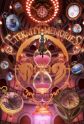
The Last Blossom
ホウセンカ
Autumn 2023. Akutsu, an elderly inmate serving life in prison, is on the verge of a lonely death in his single cell. A flower, touch-me-not, that can talk like humans says to him, "What a rotten life you had." Through their "conversation," Akutsu starts reflecting on his past. Summer 1986. Akutsu is living with Nana, a woman six years his junior, and her son Kensuke in a shabby apartment with a garden full of touch-me-nots. A one-night victorious comeback by a dying yakuza, and the story of his family recounted by a flower that blooms in prison. (Source: Annecy Festival)
Главный
Второстепенный
Второстепенный
Второстепенный
Второстепенный
Второстепенный
Второстепенный
Второстепенный
Hanana_Banana
March 8, 2026
“The Last Blossom” follows the story of Akutsu, an elderly prisoner serving life in solitary confinement. As he lies at the end of his life, a small balsam flower growing within his cell suddenly begins speaking to him. What starts as a surreal and almost absurd conversation slowly unfolds into something much deeper. Through his exchanges with the flower, Akutsu begins to reflect on the life he once lived: his years as a struggling yakuza, his complicated relationship with a woman named Nana, and the series of decisions that ultimately led him to spend the rest of his life behind bars. While the premise may initiallysound strange, the film uses this supernatural element not for spectacle but as a vehicle for introspection. The talking flower becomes almost like a mirror for Akutsu’s conscience - questioning him, provoking memories, and forcing him to confront the truths he has spent decades avoiding. As his past is revealed piece by piece, the audience is invited to slowly reconstruct the life of a man who once believed he was in control of his own destiny. At its core, “The Last Blossom” explores themes of regret, redemption, and the quiet consequences of our decisions. The film asks viewers to consider how small moments - the words left unsaid, the opportunities overlooked, the relationships taken for granted - can ultimately shape the direction of an entire life. Through Akutsu’s reflections, the story encourages the audience to pause and consider how their own choices might one day be viewed in hindsight. One of the film’s most prominent visual symbols is the balsam flower itself, which functions as more than just Akutsu’s unlikely companion. The flower serves as a recurring motif throughout the story, representing both the fragility and resilience of life. Even within the confined space of a prison cell, something capable of growth and reflection remains. In this sense, the flower becomes a symbol of the possibility, however small, that understanding and change can still emerge even at the end of a life. Another subtle yet meaningful motif appears through the recurring presence of Othello, the strategy board game that Akutsu plays throughout his life. The game becomes a quiet metaphor for the film’s central message: no matter how the board looks at a given moment, it is always possible for the outcome to change. The idea that “you can always turn it around” echoes throughout the narrative, reflecting both Akutsu’s persistence and the broader theme that life’s trajectory is often shaped by the choices made in critical moments. The film’s soundtrack further strengthens its reflective tone. Rather than relying on dramatic musical cues, the score is understated and atmospheric, allowing moments of silence and contemplation to speak just as loudly as the dialogue. This restrained approach gives the story room to breathe and reinforces the introspective nature of the narrative. Ultimately, “The Last Blossom” is not a fast-paced film, nor is it meant to be. Its slower pacing allows the audience to sit with its themes and consider the weight of the questions it raises. For viewers willing to engage with its reflective tone, the film offers a thoughtful meditation on the nature of choice, memory, and the meaning people assign to their own lives. In the end, "The Last Blossom" leaves viewers with a quiet but powerful message: a life is rarely defined by a single decision, but by the accumulation of many small choices made over time. Understanding those choices, and the people connected to them, may be the closest anyone comes to understanding the true shape of their life.
#4018
Популярность
#9896
Участники
4,391
В избранном
5
Эпизоды
1