クロスゲーム
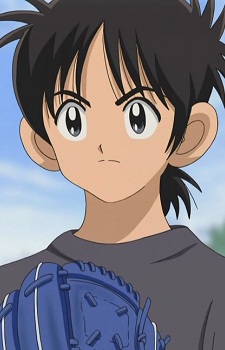
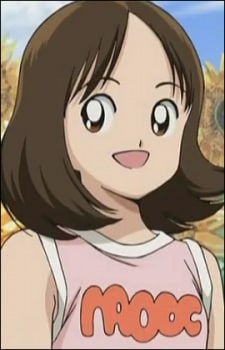
Kou Kitamura and Aoba Tsukishima are often at odds—even though their families happen to be close friends and business partners. Although the only child of a sports shop owner, Kou has never been interested in playing baseball. Despite this, he possesses an impressive batting ability honed by frequent visits to the local baseball batting center run by the Tsukishima family. On the other hand, Aoba loves to play baseball and is a star player with exceptional pitching form. However, these two seemingly complete opposites share something very important to them—Wakaba Tsukishima, Aoba's older sister and Kou's destined sweetheart. Admired by the quarrelsome duo, Wakaba often finds herself the catalyst to their never-ending rivalry. But whether or not they realize that they have more in common than either would care to admit, only time will tell. The game of baseball may just be what the pair needs to ultimately overcome their own personal struggles. [Written by MAL Rewrite]
Главный
Главный
Второстепенный
Второстепенный
Второстепенный
Второстепенный
Второстепенный
Второстепенный
Второстепенный
Второстепенный
LiLSatania
August 27, 2010
This is the first anime that I watched that was written by Mitsuru Adachi. I love baseball anime so I give this one a chance, I never thought that I'll love it so much~ :D Just finished re-watching it for the third time. Story: Honestly, i was blown away by the first episode, what a very strong start for an anime. It was all unexpected, Just the first episode and it already made me cry... The story was about the cat and dog relationship of Kou and Aoba. Adachi-sensei used his usual pattern of story, the childhood friend route. With a lot of twist, surprise event and a roller coaster of emotion that you will like. We have comedy, romance, drama, Baseball action in one place. First, let’s discuss comedy, Adachi-sensei never missed any opportunity to crack a joke, the very important thing about delivering a joke was the Timing and that was done perfectly. He will happily use anyone or anything (old or new) as a punch line, so even its just an ordinary day you will find it funny and interesting. Next is Romance, the romance in the story isn’t rushed, you can see it develop little by little, with love triangle in every corner makes it interesting so you can enjoy the love and hate relationship of the two protagonist until the end~. Drama, when Adachi-sensei put a drama in his work it become the key point of the story, just like what happened in the first episode, it will leave an impression until the end of story. Baseball action, Maybe because Adachi-sensei have his own baseball team that he can deliver such an exciting baseball game. He knows When and how to make incredible events to happen, totally surprising, that's why I love the baseball manga the he writes. Another key point of the story is memories~ Every now and then you'll see a flashback in the story, well I didn't find it annoying, it plays a major role in the character development of the main characters. Sometimes those memories makes me teary.Ending, I'm somewhat contented with it, all the feelings was sorted out and finished the climax of the waited battle in the baseball tournament. Somewhat because i wish he continued it until koushien XD Character: If u already read some of Adachi-sensei's manga you will find that all of his male protagonist has the same kind of character and i think same goes for the female. This time its Kitamura Kou, only son, cant even play catch ball till 5th grade, hard working and good at lying. The Ace Pitcher of the Seishu Academy, a typical character that you will like. Tsukishima Wakaba, same age, birthday and birthplace as Kou and love him more than anyone else. She plays a major role in the story despite of her status. Tsukishima Aoba, wakaba's little sister, who hates Kou very much and love Wakaba. If there's a word to describe her its "Tsundere". Kou's teacher about pitching. Very talented in Baseball despite of being a girl. Akaishi Osamu, position catcher, 5th batter and later the Captain of the Seishu baseball team. Like Kou he loves Wakaba too. Azuma Yuuhei, 1st base and the 4th batter and a talented one. He first appeared as an antagonist. He's emotionless when talking and only shows different emotion when playing baseball. Takigawa Akane, I'm really surprised of her appearance in the story, almost jaw dropping. The girl that moved next door and the daughter of the Soba Restaurant owner and a great painter. Her appearance takes the story to a new height. Art: Here's another trademark of Adachi-sensei. Imagine a classic drawing and add modern day coloring and you will get a remastered feeling. His character design is all the same, specially the ears and the hair color were black, blond and brown. Same goes for the character faces, i had read in one of his manga that even Adachi-sensei criticize his own work for having the same face design for some character. Overall, the classic animation style that used in this anime was some-what refreshing if you want to escape the modern day animation style. Sound: The Opening song "Summer Rain" really suits the anime, it gives the listener a tropical kind of beat, maybe because of the guitar. Good thing that they didn't replace it until the end of the series. The Ending song Koi Kogarete Mita Yume fit perfectly to the 1st quarter of the season~ that slow and sad song can easily make u cry if added in the scene specially in the 1st episode~ The 2nd one is Orange Days, a Rap song, IMO it doesn't fit the anime, its not like the song is bad or anything, just that using a song like that in an anime with a classic style of animation isnt good. The 3rd Moeru You na Koi Janai Kedo got a nice beat and slow rhythm . And the last ED song is Rehersal, one of my favorite song. The piano is great and the lyrics too. Enjoyment: I really enjoy Cross Game. I laugh on the jabs, cries in the sad and touchy scenes and get caught in the suspense and excitement of baseball action. that you will ask for more. Well if you Want more baseball action, read H2 and Touch.
KurosuGemu
April 29, 2010
Story: 9/10 Cross Game is my first Adachi anime, and I was thoroughly impressed by its storytelling. The whole series is slow paced and filled with tension. Despite being somewhat predictable, Cross Game is well executed. There is only 1 filler episode out of 50, and even that episode tied pretty well into the main story. My only criticism is Adachi could have fleshed it out a little more, adding some more episodes. Yes this show already has 50 episodes, but it feels shorter than that. Animation: 8/10 I really liked the art from this show. It feels like an old school anime, and the nostalgic atmosphere itcreates serves it well. There were a few points in the show where the animation quality dipped. However, the no non-sense/frills animation was pretty consistent throughout its entirety. Characters: 10/10 Cross Game’s cast is one of the most memorable in all of anime (that I have watched at least). Each character is developed so well that there isn’t really a character that you won’t like. In fact, you will really sympathize with the main cast’s struggles, hardships, and triumphs. Sound: 10/10 I loved the OP and the first ED. The next few ED’s are great, but not as powerfully moving as the first one. The first ED “Koi Kogarete Mita Yume” is a beautiful song in its own right, but coupled with this anime, it really could not be more perfect. The OP “Summer Rain” is another song that really speaks volumes about the show and instantly feels like a classic. Finally the soundtrack is wonderfully arranged and really adds to the tension/excitement of the show. Enjoyment: 10/10 I’m not really a big fan of baseball and when I started this show I was a little hesitant, but I had heard great things about it. From the start, the show hooked me in and never dropped the ball. Easily one of the best slice of life shows I’ve seen (one of the best anime’s I’ve seen for that matter), so I highly recommend this show to others. If you can get past its animation (for some, that’s the weakest part of the show), you will be rewarded with a classic. Average Series Rating: 9.4 - Classic
Baconzombie
December 20, 2013
“Simple is best.” -Coach Maeno One of the most common misconceptions viewers have regarding any form of media is something I call the “been there, done that” phenomenon. That is, if something similar has been done before, chances are the viewer will form a set of judgmental comparisons and criteria to be matched. This leads to the unrealistic expectation that equates to the viewer expecting some sort of literary revolution, only looking forward without truly embracing what the present has to offer. Adachi Mitsuru’s Cross Game accepts its genre boundaries, and relies on the deftness of its storytelling and the depth of its characterization to keep youwanting more. Kitamura Ko is the only son of Kitamura Sports Shop, whose apathetic nature belies his immense potential as a baseball player. Living down the street from Tsukishima Batting Center, home to its four sisters, Ko’s family has formed a long-lasting relationship with the Tsukishima’s. This bond is strengthened by the fated pair, Ko and the Tsukishima’s second oldest, Wakaba, both being born on the same day in the same hospital. Almost immediately, Adachi throws a tragic curveball to the viewer, to which he first displays his skillful handling of his story. With such heavy dramatic potential in just the first episode alone, Adachi carefully utilizes this opportunity to not throw away his setup in favor of melodrama, but instead capitalize on creating a human connection between the characters and the viewers. This connection cements the foundation for a strong cast of personalities, led by Ko and the Tsukishima’s third sister, Aoba. The two protagonists are startlingly similar, and Adachi builds the pair up like two halves of a perfect whole. Despite Aoba’s generally spiteful attitude towards Ko and his reluctant acceptance of her continual ridicule, the exchanges between the two do not detract from their development, but instead define its progression. Additionally, a further romantic element is introduced, which adds a dramatic tone that quickens the story’s pacing towards their lives in Seishu High School and their dreams of aiming for Koshien, while introducing human complexities and relationships that are surprisingly, never overdramatized. However, to assume the depth of characterization stops with the protagonists would be a major mistake. Perhaps the most interesting character besides the leading pair is Akaishi Osamu, a childhood friend to Ko. Eventually named team captain to Seishu’s baseball team, Akaishi’s personality and decisions throughout the series draw a heavy emotional connection not expected of side characters, especially in sports anime that typically focus only on the protagonists. A whole slew of other characters are also given some time to shine, from Seishu’s cleanup hitter, Azuma Yuhei, to the team’s former manager, Shidou Risa. Each character opts to stay true to who they are, while developing as a result of the progression of the story. Adachi embraces the notion that people never completely change who they are, but they do make adjustments to make better of their lives. Outside of the drama and relationships is a generally lighthearted dialogue that surrounds a rather typical formula to get to Koshien, Japan’s High School baseball championship. The progression of Seishu’s baseball team and Aoba’s struggle to continue baseball despite not being able to participate in official games become key plot points that seamlessly intertwine with consistent character interaction defined by Adachi’s keen sense of humor. Speaking of humor, jokes are masterfully timed and clever, despite seeming cliché from time to time. The juxtaposition of the serious and the blithe is a tone not seen pulled off correctly too often in anime, but Cross Game is able to nail it almost every time, making sure each joke is cracked just the right number of times and at the right time too. However, the frivolity of their banter is not wasted either. Even the lightest of jokes serves a purpose to further an emotional connection between the character and the audience, and as the series progresses, the viewer will find him or herself laughing or crying along with the characters. Regarding the actual baseball in the series, there is definitely plenty of it, and the games are done very well. One does not have to be a fan of baseball to simply enjoy the timely suspense of a close game, and unlike most other sports anime, the series doesn’t sell out on creating unrealistic situations or miracle comebacks to keep the viewer at the edge of her seat. The pacing of Cross Game is slow for a sports anime, but well-executed. The three major twists in the series are timed perfectly, which adds a sense of believability, for coincidences in life do occur, but not constantly. While relationships between characters may seem to grow complex, the foundation of the series remains rather simple and true to itself. For this series to be labeled as a “drama” is definitely justified, but a bit of an overstatement. It carries many slice of life elements and ultimately is a feel-good experience, but the sheer variety of what it has to offer extends beyond a simple genre label. However, that’s not to say that the series is flaw-free either. With a decent amount of characters spanning 50 episodes, one can’t help but to ask for just a bit more from a few more characters. There were many lovable personalities throughout the series, and while some continued to develop, others like Nakanishi or Senda could have had some more time dedicated to them, seeing how they were both constants throughout the series. The animation is relatively consistent throughout the show. Released in 2009 by SynergySP, Cross Game definitely isn’t one of the top shows in the animation department; however, the series definitely wins some points with its charm in character design. Even though the art style might not seem too refined, it is easy to grow onto, and within a dozen episodes, one will hardly notice any huge complaints in that department. One step above the animation is the quality of Cross Game’s soundtrack and voice acting. While there isn’t anything in particular that stands out about the voice acting, Irino Miyu’s Kitamura Kou and Tomatsu Haruka’s Tsukishima Aoba were a fine lead pair. The true standout of Cross Game’s sound set was its OST, which includes several tracks that were awe-inspiring when played alongside certain scenes. However, the OST probably was not used to its full potential mostly because the most captivating tracks were saved for the grandest moments, and most of the series consisted of lighthearted moments with lighthearted tunes to match it. The only opening of the series, Summer Rain, was an excellent choice to carry the series through 50 whole episodes. The first ending, Koi Kogarete Mita Yume, was my personal favorite and a highly emotional ballad. The other endings were all solid with their own respects. They say to never judge a book by its cover, and Cross Game is an excellent example that supports this time-worn metaphor. Underneath a genre filled with complexities and controversy, Cross Game flourishes with a simple tale to tell, and it’s given a lengthy amount of time to do so. Unhurried, yet engaging – simple, but beautiful – Cross Game was an emotional and memorable experience that has undoubtedly been the best Sports-related anime I’ve watched thus far. TL;DR Version Art: 8/10 + Charming design + Consistent animation - Nothing too special - A few gaffes in animation Characters: 9.5/10 + Extensive cast that is believably human + Heavy emotional connection + Excellent Development + Does not fall victim to repetitive tropes - Some characters could’ve used more attention Sound: 9/10 + Excellent OST and op/ed sequences + Solid voice acting - Some wasted potential in soundtrack usage Story: 10/10 + Engaging story that is simple at heart + Nearly perfect pacing that always keeps the viewer at the edge of her seat + Highly entertaining baseball games + Mixes well with characters Enjoyment: 10/10 Overall: 9.3/10, Highly recommended for anyone to give a try. Potential classic of the genre.
Rampant
August 3, 2010
Well, I will say first of all that both this manga and anime are perfectly nice, perfectly pleasant, and probably perfectly enjoyable for a lot of people. It is all smiles (except for Aoba who is, you know, completely incapable of anything but frowning or looks of indignation), all optimism, and simple but sweet. Unfortunately, that keeps it from being very good either. The story is your typical "gets one star, enjoys a meteoric rise to the near top, loses anyway, probably eventually wins but ONLY in the very last year" formula. Typical to this, ONLY the protagonists and "notable" opponents ever in ANY way matter.The only real gags in the entire anime revolve the few times they do not have the protagonists/notables easily succeed...which is not a very good gag element. The only real change to the overall plot tendencies is that they throw in a tragedy, and the tragedy is not a very good one...having to see people get all sadfaced and wax nostalgic about it is pretty annoying, and the onslaught of flashbacks repeated, while not as bad as it could be, is fairly overboard. To the actual baseball parts of the action, since pretty much the largest negative emotions it displays are an "oi oi oi" "are you kidding me" attitude, there are not really any sore losers or sore winners. I know that the cliche "big personalities! ridiculous action!" shounens are not that great either, but all this manages to produce is a baseball team with no personality, taking matters to the other extreme. The baseball games are never really interesting because of this, and there is no real reason to sympathize with the team and want it to win no matter how much time they spend on all of the characters. The characters are pretty weak. It is nice that Ko is not a brat, but he is also pretty bland, having no real personality to speak of...this goes for a lot of characters, probably everyone but Aoba really. Their personalities are pretty much all "stare around thoughtfully/at another person, crack a smile, play baseball". I appreciate that they wanted to use silence to set some sort of tone, but they failed to craft any meaningful personalities because of it. Unfortunately, Aoba is your standard grade unenjoyable tsundere who does NOTHING but complain and lie about her "true feelings" for 50 episodes, so she is not a good break from all of this at all. The art is a nice style, but it has some major problems. The character art becomes very chunky and bold in a lot of zoom ins for some reason, despite having previously looked fine zoomed out just seconds before. The next biggest problem are the mouths, which are some of the least expressive I have ever seen in an anime...just because you chose a simple style does not mean you have to totally cop out of drawing faces! They pretty much are just a barely open o ( or closed | all of the time. The other biggest flaw with the art is the coloring - everything is vivid, but nothing actually has any detail! Pay attention and you will notice this is true...it does not ruin the anime, but it makes it difficult to find much interesting. The animation is very smooth most of the time, a real treat to watch actually, but it also deals in most of the major problems of modern anime. It has a ton of slow zoom ins on characters to simulate movement that is not there. It has tons of white action lines to simulate false excitement in the sports scenes (no idea why, they ACTUALLY decently animate most of the time, so why do this?) - this happens more as the anime goes on, initially it was rare. There are lots of repeat moments (as in triple takes et cetera), lots of white outs during action scenes to try to draw out and create a bigger impact, and other various tricks that really fall flat...again, it is not bad enough to destroy the in episode pacing or destroy the "feel", but it is overboard and slightly distracting. The voice acting is completely average, and the music is terrible and interferes with a lot of moments. A final miscellaneous flaw is that the transitions are incessant and really poorly done. Oftentimes they will flash to some random scenery and pan straight up, this happens literally about 30 times. Also literally about 30 times they will use the terribly drawn cat (worst part of this anime) to clumsily transition. This is a decent sports anime/manga, but really I would say that not only are there better slice of lifes around, and alternately there are better hot blooded sports anime/manga around, and that I would fill my time with either of those alternatives first before looking to a work like this.
PixelB
February 15, 2023
Cross Game humors itself to be a sports anime. It's not. This show is ABSOLUTELY NOT a sports show. It tricks you into thinking that it is something that it is not. While 80% of the show or more has focused on the "theme" of baseball, the reality is that it might as well be nothing. 80% of this show is absolutely nothing. It's too generic. People just throw balls and practice. There are no play-by-play games. Not a single game is described in detail. A large majority of games are skipped off-screen. People run. Coaches talk and do knocking drills. People hit balls.There are no descriptors. At all. I'm convinced that Mitsuru Adachi, the author of Cross Game, can't write any compelling baseball manga. See, a baseball anime would actually have details about the damn games. There would be play-by-plays. Monologues of players at bat, the catcher's monologues of the calling of the game, and the pitcher's monologue of his own mental state of mind are shown. This is especially so when games are in tense situations. Not all plays should so slow-paced and detailed, but certainly, for the exciting showdowns, this stuff is pretty normal and necessary for a viewer to get invested in the play, characters, and stakes at hand. This show does none of that, and it extends to the entire cast of characters as well. In a sports show, each character should show their progression: their strengths and weaknesses, their struggles, and their eventual payoff for hard training. At the very least, the main characters should. I am well aware that characterizing 9 characters--an entire baseball team-- and other side characters is extremely tough while also trying to include baseball games and a plot. That being said, it's unacceptable that none of the characters have any shown progression in baseball. There are basically only four named characters on the baseball team of Seishuu Academy: Azuma, Kitamura, Akaishi, Nakanishi, and Senda. Azuma's a batting genius. He's got no flaws, and never had a slump. He barely has any mishaps, and even in the final game in extra innings, he barely breaks a sweat. Kitamura's a pitching genius. He's only got one flaw, which is his lack of stamina, which also eventually gets phased out. That's it. Akaishi, Nakanishi, and Senda don't even get enough screen time for me to exactly pinpoint any flaws or strengths unless you consider Nakanishi to be fat and slow. You don't know any players' batting skills other than Azuma's, and you don't know what pitch types they prefer. Is it not enough evidence that there's no attention to detail when you consider that the game-winning homerun doesn't even show you what type of pitch was being thrown, and what count it was at? There's no attempt at making this show's focus on baseball. So the show clearly tries to distance itself from sports. What is it after? Romance? Slice of life? Characterization? Well, it dabbles in all of those aspects but also fails to deliver. Aoba and Kou's relationship really reminded me of Akane and Ranma's relationship in Ranma 1/2, which is a good thing, but there are basically no slice-of-life scenes outside of baseball-related activities. I hate to say it, but even the slapstick rom-com that Ranma 1/2 did was successful in character development and it achieved what it was trying to do, but what is Cross Game trying to do? There's romance in this show, but it's very slow and unrewarding. Regardless, the only reason the romance ever progresses is because of forced drama. There are a lot of dramatic situations that force people to expose fragility in order for the show and characters to progress, and it's just lame. As I said, there are no slice-of-life scenes, there's forced drama to increase tension in the shallow baseball games and romance, and all of these genres are half-baked in the show. There's no identity. if the show decided to take one genre and stick with it, I'm sure the show would have been an enjoyable experience. Too bad it never does.
Ранг
#254
Популярность
#1942
Участники
132,387
В избранном
3,082
Эпизоды
50