Summer Storm! Open for Business
夏のあらし!春夏冬中
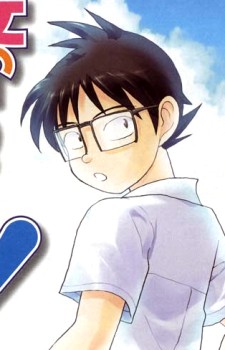
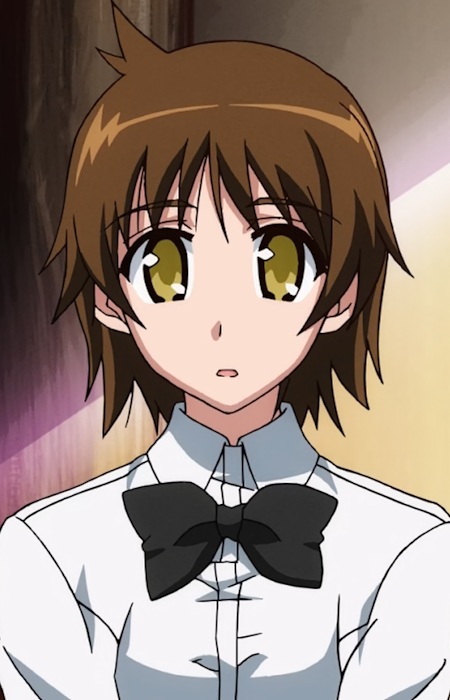
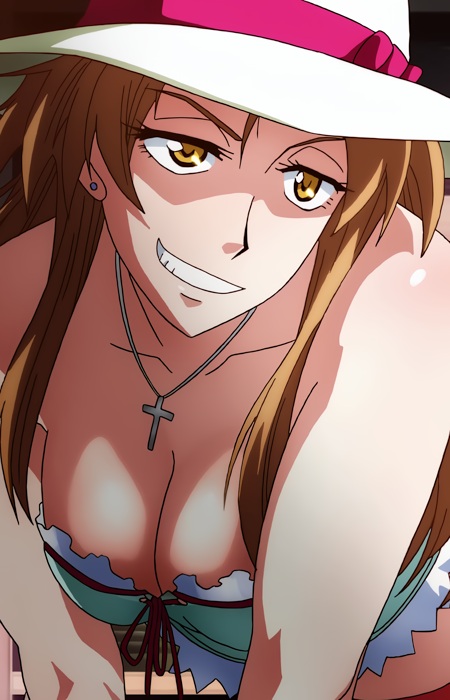
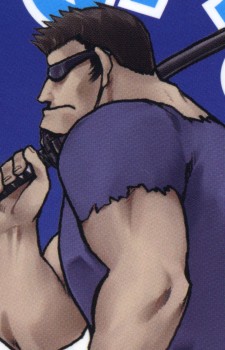
The summer of a man's boyhood memories continue. Still on the cusp between childhood and being a man, he has linked with the ghost of a young woman from the World War 2 era. She, and the ghosts of other young ladies from that time, continue adventures alongside their linked partners, learning more about each other and travelling through time via their supernatural connection. While he struggles to see his crush on her come to fruition, meanwhile his friend—a girl his age, pretending to be a boy—seeks his attention as well. (Source: ANN)
Главный
Главный
Главный
Главный
Второстепенный
Второстепенный
Второстепенный
Второстепенный
Второстепенный
Второстепенный
Второстепенный
Elm
December 30, 2009
Short summary: Not as good as the first season, but still worth watching. Long summary: Season 1 of Natsu no Arashi!, if I had to describe it in one sentence, was a captivating mixture of drama, romance, comedy, and some action with a quirky "retro but modern" feel. Akinaichuu manages to retain all these things to varying degrees, but unfortunately ends up falling a bit short of matching season 1. Story: (6 - Fair) The concept of Arashi and Hajime traveling back in time to the World War II era to save people was a big part of Season 1. However, for most of the first portion of Akinaichuu, thisconcept seems to have been replaced in favor of mostly pure comedic episodes, and only late in the season do we start feeling the spirit of season 1 again. The comedy episodes, while well written and definitely in line with the witty humor of the series, are essentially stand alones and thus end up feeling almost like fillers. However, within these fillers are a few indications (such as the concept of predetermined destiny) that build towards the final arc near the end of the series, which I found to be a great finisher that made me remember why I like Natsu no Arashi so much. If the whole season had been like that final arc, this season would have been that much better. Art: (8 - Very Good) Season 2 managed to keep that "old fashioned yet modern countryside" feel of the art in season 1, which is a good example of "If it isn't broken, don't fix it" Sound: (7 - Good) The VAs of the series voice their characters just as fittingly as they did in season 1. The opening and ending songs were good as well, with last season's opening doing a better job of that "retro yet modern" feel, but this season's ending better than last's in achieving that feel. Character: (8 - Very Good) All the characters are back, and don't suffer from any (unintentionally) awkward character changes. All of them get a chance to make us laugh (which they do quite well), and various relationships, like that between Jun and Hajime, are further explored in funny yet insightful ways, without neglecting the main relationship of Arashi and Hajime. Overall: (7 - Good) Akinaichuu managed to keep a lot of what was so entertaining about season 1, but the lack of an encompassing plot made it harder for the series to be engaging until near the final arc of the season. Nevertheless, I still had a good time laughing at the antics of the characters I've grown very fond of, and anyone that enjoyed season 1 would likely enjoy this season as well.
Второстепенный
donutsonfire
December 31, 2010
If you enjoyed Natsu no Arashi!, then it'd be natural for you to be watching the second season right? DUH! I really loved the first season and I expected nothing less in the follow-up!~ Turns out I was more or less right! Anyways, here a little bit of my thoughts on this 2nd season! *Btw, I refuse to write a short a summary of Natsu no Arashi!Akinaichuu at the start of my review. I believe I'd be wasting your time and it'd be just re-summarizing the summary provided on the "details" tab. Story: 9 As with my review for Natsu no Arashi!, I fairly liked the one-shotsper episode and I thought that's what kept each episode of both seasons high refreshing and new. It made me want to keep plowing through the episodes just to see what's the next surprise! The only reason why I think it's shy of perfection is the lack of a centralized plot, therefore I believe one-shots has it's pros and cons! I'm sure y'all will enjoy Natsu no Arashi! Akinaichuu's storyline if you enjoyed the first season's. Art: 10 Also explained in my review for the first season, I'm an extreme Kobayashi Jinn (the mangaka for both Natsu no Arashi! and School Rumble) buff, so I enjoy the artwork he draws. For me, I love the way he designs each individual so they stand out from each other and doesn't get too confusing! Sound: 10 Somehow, I thought it was an improvement from the first season! Because I pay a lot of attention to OST, this section I marked fairly high as somehow during Natsu no Arashi! Akinaichuu!, there was more OST than the first one. The OST was fairly well paired with the situations in the anime, therefore no questions on that. I was fairly pleased with the opening and ending themes which I thought was very original! Just the opening theme was slight awkward...I'll explain below! Character: 10 No doubts about the character section as being a solid 10! Each character was a pleasure to watch and the versatility of each character helps override my initial impressions about how a small character list can become a good series! I've said in the first review, I really like the characters that Kobayashi Jin makes, and it is shown through each of his series that they are very unique and original! Definitely something I enjoyed about this show! Enjoyment: 10 I loved Natsu no Arashi! and Natsu no Arashi! Akinaichuu! There was no question on the enjoyability of this series. My attention did not waver at all in any episodes, and trust me, it's not entirely because of Arashi or Kaya! Regardless which episode or featuring which character, Natsu no Arashi provided me a solid 5 or something hours of enjoyment that I'd never regret spending! Overall: 10 I don't really get this "overall" section...basically isn't it just the "enjoyment" section repeated? Anyways I'll try to make it sound a bit differnt ;D! LOL. Anyways, I thought this series was really amazing to watch and I thought it was definitely one of the best i've seen in a while! Don't get me wrong, I'm not a crazy fanboy, but despite the low ratings you may see, I believe (and i'm sure some others) that Natsu no Arashi! & Akinaichuu was way too underrated! It may be overshadowed by moe moe series such as Kaichou wa Maid-sama (which is actually very very good as i'm the same age as the people in the series! Hehe), but Natsu no Arashi stands its ground on it's own genres, which frankly, isn't all too popular with the otaku group of today's world. Not that i'm saying all Otakus will dislike this show, i'm just saying they will expect too much moe moe and will be disappointed by such a down-to-earth and realistic (just the character's emotions, not the supernatural stuff!) show such as Natsu no Arashi! Anyways, back to Natsu no Arashi!. Was it only me who was confused by the opening?! Is that blood that Arashi is showering in? I'd be happy to hear your thoughts on my profile page! LOL!!! Meh, in a way, I wish there'd be a 3rd season, but due to it's rather low popularity, I doubt it. If you're wondering what happens to Arashi and Hajime and everyone else, I'd suggest you read the manga, but it isn't fully scanlated into English....Being a half japanese is such a bonussss hehehe.... LOL I hope you'll enjoy Akinaichuu as much as i did!!!
Chibi_Hige
December 30, 2009
"Shio kudasai!" .... salt please Even a line as simple as that was made incredibly hilarious (much to my surprise) as I was constantly made to laugh throughout the whole series. There are many slap-stick quality jokes embedded in the show but most of them were original, which I appreciated. It was definitely unique and I have never seen a show quite like it (whether comparing it as a comedy or just the plot). Although the story is fairly decent, it wasn't the best but everything else made up for it, but then again everyone's opinion differs. Comedy, for this series, was definitely its strong point butthat wasn't the only thing that kept me watching. If it was just another high school comedy I probably wouldn't have watched it, and of course most of this is also based on the first series, which was better in my opinion. The thought of going back in time to change the present appealed to me and the thought that they used it for trivial matters made me grin. In any case, this show was definitely worth the watch and I thoroughly enjoyed it as a comedy series.
ktulu007
February 25, 2015
Not long ago I looked at the first series of Natsu no Arashi. It was okay, suffering quite a bit from tonal problems, repeating an episode basically wholesale and some jokes that didn't work, but it also had quite a few good points and it was decent overall. So, does the second series improve on any of those aspects? Does it degrade? Let's take a look and see how it compares. Story: The story continues with Arashi, Hajime and everyone else working at the cafe. This series does drop the attempts at dramatic stories about their time traveling and goes completely into comedic mode. Which is whatthe series should have been doing the entire time. Consequently, this one doesn't have the problem with tonal weirdness. Now we can focus entirely on the comedy. So, is it funny? Well, the series still has comedy that's hit and miss. We've still got the “jokes” that are just references to something from pop culture without anything funny being done with them. We've got a reoccurring joke about one of the cafe's regular customers wanting salt but not being able to get any. Why is that funny? The short answer is that it's not. I have no idea why someone not being able to get salt is even supposed to be funny. It's not like he does anything weird or over the top in an effort to get some. He just asks for it and then doesn't get it. Some of the jokes don't even make sense. You've got one where the joke is that a girl accidentally puts on a wedding dress without noticing until she's done. It's funny because... no one in reality would accidentally put on something as cumbersome as a wedding dress especially when you add in all the accessories? If you got the hyper masculine dude in a wedding dress then that would at least be a funny image, but a girl wearing a wedding dress isn't funny, even if she is doing it by accident. There are quite a few jokes like that too. There's also a problem with the romance. In the first series they had some romance with Kaja's backstory and they had the implied stuff between Yayoi and Kanako, but most of their attempts at romantic content were pretty downplayed or left as one-sided crushes. In this series, Kobayashi decided that it would be a good idea to develop romance between a girl who's been a ghost for sixty years and a thirteen year old boy. Even if you only count the summers when calculating her age, since that's apparently the only time the ghosts wander the Earth, she's still far too old for him. Why do works of media think it's a good idea to pair teenagers, young or otherwise, with supernatural beings who are far too old for them anyway? Inukami did that too. As did the infamous Twilight. Now, I will give this series some credit. It doesn't use such an extreme age difference and it does downplay the content as opposed to putting it front and centre, but it's still screwed up and it definitely leads to some uncomfortable moments. To its credit, the series does have some really funny moments scattered throughout. And it does have more jokes that work than jokes that don't. Even if most episodes are going to have plenty of both. The secondary romance between Yayoi and Kanako is kind of cute too and it does lead to some good moments. It's almost like romance works a lot better when there isn't a disturbing age gap. Characters: The cast remains pretty much as they were. Those characters who were pretty fleshed out are still well fleshed out, which is most of the main cast, whereas those who just followed their tropes still follow their tropes. So, it's still a pretty strong group of characters, particularly for a zany comedy work. Art: Most of the art problems from the first series are gone or at least minimised in this one. The wonky perspectives are still around, but they aren't nearly as prevalent. However, that doesn't mean that the art as a whole has improved. This series has its own major issue. It likes to incorporate ridiculous amounts of fan-service. The first series had a little bit but not so much that it was really a problem. With this one you get a lot. There are various shots animated so that the focus is on a girl's bosom or bum. There are also a bunch of cases of the girls being shown in states of undress because the series really needed to remind you that they have boobs. That was far more important than keeping things classy. Now, I will still give the series credit for having nicely done character designs, when they aren't throwing them into random fan-service outfits, and for doing expressions really well. Sound: The performances remain competent. It's still nothing special nor are there any that stand out, but the actors all do well. Now, I will give this series credit for having slightly better music. Most of it is still pretty standard, but there are some pieces that are actually good and do stand out. Ho-yay: In the last series the ho-yay came exclusively from Yayoi and Kanako. In this one, there's an episode about a manga artist trying to get Arashi to kiss one of the other girls. It's a dumb episode, overall, but it still does have near kisses between Arashi and most of the other major girls and it nearly has one between two of the male characters. Yayoi and Kanako are also featured a lot more and they are definitely being portrayed as a couple. Even if the series never comes out and explicitly states it. So, the ho-yay factor on this one is a 5/10. Final Thoughts: Natsu no Arashi Akinaichuu definitely improves in some regards. However, it also degrades in a variety of ways. Is it an improvement over the first? Slightly. My final rating for it is going to be a 6.3/10. It's a decent enough series. If you enjoyed the first series you'll probably like this one too. There's no real reason to watch it otherwise. Next week I'll look at Akuma no Riddle.
13lueH0ur
March 22, 2015
We were young once; wishing that summer would last forever, getting worried over the most trivial matters, falling in love with the wrong people, and thinking we knew everything. And then comes that certain age when we are confronted by the ghosts of our past to remind us that it was that rose-colored youth which shaped who we are today. Caught in the crossroads of growing up, reminiscence is a therapy session we all could use every now and then. So grab the nearest ghost of the past, and jump straight into two seasons of Natsu no Arashi’s unconventional ride of history-redefining proportions. STORY - 6 HajimeYasaka, spunky 13-year-old, moves in with his grandfather in the countryside and experiences a summer he will never forget. Taking place as a distant memory from Hajime’s youth he meets the most unlikely bunch who changed his life. Along with a tomboyish model, World War II ghosts, a ripped detective, and a foxy con artist, they run a vintage cafe with occasional time traveling during their free time. Combine that with the growing man’s search for love and we have ourselves a supernatural, slice-of-life, historical, coming-of-age romcom about a 13-year-old’s journey through time and self. As intriguing and loaded the premise is, the main hook of the series lies in its puzzling time travel mechanic. Instead of the usual objective of do-overs and clairvoyance, Natsu no Arashi bypasses the time travel paradox by treating the very act of time travel as part of the natural timeline. Time travel here is not an intervention but a phenomenon that triggers inevitable events we took for granted. Simply put, destiny factored in time traveling, making for some interesting retrospective story progression. Whether it’s for playing a prank, disposing spoiled food, saving air raid victims or uncovering past secrets, time travel is an entertaining constant in Natsu no Arashi. But how does the plot actually fare? The first season was an origins story for the people Hajime encounters while the second attempted to develop character relationships. Though the first had more impact and direction due to the second being too distracted by gags, both suffer the same problem of lacking plot movement. It could’ve used more episodes since some of the development seemed erratic. But for how everything's been presented, the gaps and irregular flow gives it the feel of a scrapbook. You get a peek of the fun and memorable bits adding to the show’s episodic nature, in exchange for some plot investment. This doesn’t mean Natsu no Arashi fails to grip its viewers. It has its share of powerful moments to the effect of historical dramas, unrequited love, and themes of fleeting youth. At its most relaxed, it plays around with time travel and the cafe setting; often employing slapstick to reference and trope humor. The School Rumble cameos for Jin Kobayashi writing both mangas were also an awesome touch. Bottom line is, while Natsu no Arashi can flaunt a fun and creative premise with unpredictable execution, it falls short with aimless pacing and sluggish plot development come the second season. ART - 9 Shaft? I’m in. That being said, I expected the usual sleek designs, exaggerated movements, barrages of text, and random color filters spilled on every scene. Upon finishing the first season, I had one question in mind. “What year was this made?” 2009. From the slightly dated color palette and wishy-washy ambient lighting down to the clunky character designs bearing yesterday’s eye style, I could’ve sworn I was watching a show from the early 2000’s. To put things into perspective, Natsu no Arashi was aired in the same year as Bakemonogatari. I guess we know where most of the animation budget went. Second season was up just four months after the first, with more refined production values as shown by increased clarity and smoother movements. Despite that, it still stuck to the classic feel of the first. Setting technicalities aside, did Shaft just deliberately retrograde their own show? Even for them, that’s reaching a whole new level of creativity. That doesn’t mean Natsu no Arashi lacks any visual highlights. Animation is deceivingly smooth. Further aided by Shaft’s frequent scene cuts, this produces the illusion of a continuous flow of actions which gives the impression of something always happening on-screen. Character designs are also a plus; pronounced in gender, personality and social class. General appearances are bold and brash for men while slender and meticulous for women. Personality is captured by each character’s unique face while the eyes have it for social standing. Take Arashi’s and Kaya’s features vs. Kanako’s and Yayoi’s features for instance. As a whole, Arashi and Kaya, being the elites, have more elegant designs with vivid eyes. Arashi, having the more cheery and liberal disposition, has the livelier face of the two. Kaya, her polar opposite, sports blue reserved eyes, and delicate white skin and hair; suggesting a more conservative and ladylike attitude. On the other hand, Kanako and Yayoi of the working class have more basic features with duller eyes. Kanako’s freckles and braids with small eyes resembles her uptight and unrefined nature while Yayoi’s wide, pupilless eyes and hair let down make her come off as loyal yet frail. And of course, don’t forget all the other details that have Shaft written all over it: artstyle shifts, random camera angles. DIY live-action takes, cryptic segments about summaries of popular manga, a surprising amount of belly button shots for the lack of head tilts, and even accentuated magazine-cover poses with awkward dancing mid-conversation. Though watered down than their other more dynamic works, Natsu no Arashi still stylistically succeeds. It’s amazing how the art perfectly blends with the historical atmosphere to visualize what the good old days felt like. Technical resourcefulness and proper theming had me giving near-perfect marks for the art; overall quality being the only hindrance to a 10. SOUND - 9 Natsu no Arashi’s art isn’t the only thing that decided to backtrack. For one thing, the BGM is divided into the cafe jukebox tracks and the instrumentals. Actual tracks were used as ambient music in the cafe which mostly consist of yesterday’s hits of pop and rock. The jukebox plays a different song almost every episode in the background, it’s ridiculous. As for the instrumentals, occasional action scenes get the upbeat, brass- and synth-filled sentai showdown songs. Meanwhile, touching moments are graced with serene tracks of gentle piano, evocative strings, hushed chimes, and solemn woodwinds. Don’t even get me started on the openings and endings that just scream retro. For the first opening, what seems like the cheesiest opening ever with the groovy vocals and brass melody comes out as an ingenious shout-out to 70’s Japanese cover girls and album sleeves. Live-action time lapse shots of walkways against old-fashioned espionage-esque pop music with suave guitars and showtune horns make up the first ending. The second season starts with black and white storyboard-themed fanservice shown along catwalk-worthy synthpop. And lastly, the second ending uses chiptune and 8-bit art against trippy live-action takes. Voices are also surprisingly good for a low-key anime adaptation. Hajime goes all-out as a hot-blooded roughneck with the shounen heart. Jun’s pre-pubescent voice still enters androgynous territory with her seldom squeals sounding absolutely adorable. The detective gets all the gruff while the con artist attempts seductive but comes out as mischievous control freak. Arashi bears the girl-next-door voice contrary to Kaya’s pure and well-mannered shrinking violet while Kanako gets a sharp tongue with Yayoi pulling off the innocent ditz very well. All of them have their key moments and man, do they deliver; especially Arashi, Kaya, Jun, and Hajime. Even in this department, Natsu no Arashi doesn’t fall short in style and subtle quality. Very good seiyuu performances and the most fitting soundtrack selection seal the deal for the hidden genius at work here. CHARACTERS - 6 Let me just say it right now. Character development is stunted and interactions get formulaic. The redeeming factors are their striking personalities and the clash of ideals resulting from the generation gap between the characters. We have the youngsters (Hajime and Jun), the old-fashioned adolescents (Arashi, Kaya, Kanako and Yayoi), and the modern adults (the detective and the con artist). Hajime is the little rascal. Part-skeptic and all-bro, the dude’s the epitome of the uncouth hero who fights his own battles and saves the weak and downtrodden; all while keeping his eyes out for the ladies. Carefree genki girl, Arashi, is noble but more outgoing than Hajime. Kaya nails her role as the traditional damsel who would perish the thought of showing skin and wasting true love’s kiss. Kanako lives by the sweat of her own brow; representing the bitter working class who envy all the privileged few. And Yayoi remains the vulnerable sweetheart. The budding romance centered on Hajime, the historical immersion from subtle hints in characters and setting, and the “what ifs” that never happened with the ghosts’ lives are definitely the show’s high points. The ghosts have it rough; saving bombing victims who would never predict their demise, making sense of the social divide and strict policies during the ongoing war, and going back in time only to constantly replay a love confession that will never happen. Natsu no Arashi gets pretty serious and it’s compelling moments like these that make the best out of the distinct characters; enough to pardon the amount of faffing they do most of the time. ENJOYMENT - 7 The story felt inadequate, relationships were unresolved, the characters could have done so much more and the WWII setting was just asking for more explanations. But for what it is, I have no regrets watching it. Comedy can get stale. The drama creeps up on you. And the romance is a fresh take between modern and traditional views. The weak development was never really the reason to get into this show. Natsu no Arashi is a humble effort at making a love letter to the past by conveying how much we’re still connected to it. It’s a nostalgia trip that stands as a testament to the zeitgeist of the 70’s; clever on all fronts of production but a casual watch at best that hits home on seldom occasions. It proves that the past was once real. And that we’re fools for living like it never happened. So love the past. It’s the only illusion we know that existed. Because by the time we forget, we start growing up. “No matter how special it is, unrealistic experiences like this are going to be overwhelmed by real ones later. And you’ll stop believing in them.” - Arashiyama Sayoko OVERALL - 7
Ранг
#3236
Популярность
#5196
Участники
22,683
В избранном
15
Эпизоды
13