
プリンセスチュチュ
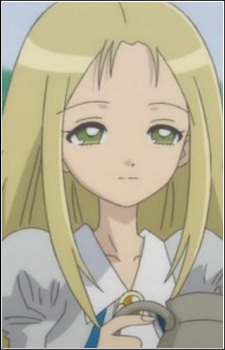
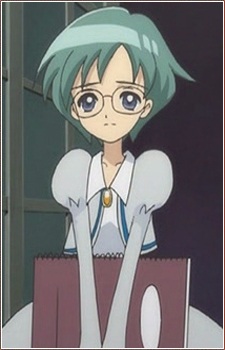
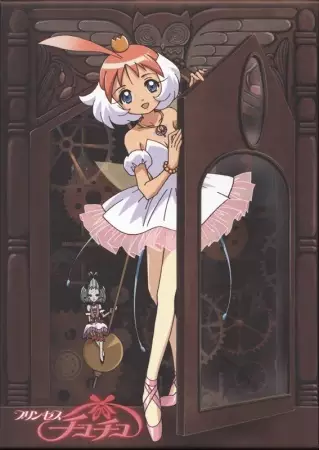
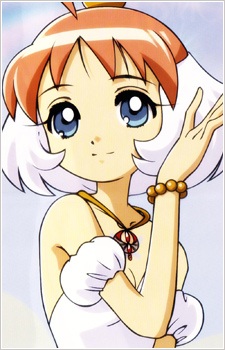
In a fairy tale come to life, the clumsy, sweet, and gentle Ahiru seems like an unlikely protagonist. In reality, Ahiru is just as magical as the talking cats and crocodiles that inhabit her town—for Ahiru really is a duck! Transformed by the mysterious Drosselmeyer into a human girl, Ahiru soon learns the reason for her existence. Using her magical egg-shaped pendant, Ahiru can transform into Princess Tutu—a beautiful and talented ballet dancer whose dances relieve people of the turmoil in their hearts. With her newfound ability, Ahiru accepts the challenge of collecting the lost shards of her prince's heart, for long ago he had shattered it in order to seal an evil raven away for all eternity. Princess Tutu is a tale of heroes and their struggle against fate. Their beliefs, their feelings, and ultimately their actions will determine whether this fairy tale can reach its "happily ever after." [Written by MAL Rewrite]
Главный
Главный
Главный
Главный
Второстепенный
Второстепенный
Второстепенный
Второстепенный
Второстепенный
Второстепенный
Второстепенный
Valle
August 12, 2008
I remember when I first heard the name "Princess Tutu". First impression: Girly. However, I was intrigued by the praise it received so I looked for a description. Second impression: Cheesy. Still, I was curious about how the show took advantage of ballet suites, so I watched the opening. Third impression: Too pink. There were few reasons for me to watch Princess Tutu, but I still had a strange feeling about it. Today I regret not having watched it sooner for what I saw was one of the most engaging, clever and downright beautiful shows I had ever seen, overflowing with soul and passion.Story: A unique fairytale which goes far beyond it's limitations. Masterfully written, the story is a perfect blend of powerful moments, unexpected twists, comedy and romance. The fairytale structure takes the best out of classic ballets and weaves a story that is both coherent and diverse. The endings to both seasons are particularly outstanding. Art: The series has a stylized and clean art style combined with great animation. Although I felt it fit the series very well, not everyone feels that way. Some believe the art style is a bit too girly or misleading, but it actually fits the fairytale theme very well. The backgrounds are great and the ballet scenes are beautifully animated (although some use too many stills which, even though beautiful, aren't as good as the animated moments). Sound: The "coup-de-grace" of the show, the soundtrack doesn't simply support the show: it is part of the story itself. Each episode is accompanied by a certain ballet suite and takes the most advantage of it. The suites were carefully chosen and superbly performed by a bulgarian orchestra. I had heard many of them before and I was amazed by the quality of the performance. Every single note fits perfectly and sounds delightful, even the songs that were composed for the show. Truly mindblowing, the music adds a whole new layer of depth to it. The voices and dialog are also very good and fitting. Characters: With such a great story and soundtrack, some would think that the development team wouldn't be focused on character development. Wrong. All characters are believable, feel real and evolve throughout the story. Even secondary characters show a glowing spirit that many main characters wish they had. If you allow yourself to, you will be able to feel a strong bond and sympathy for those characters, even those you didn't expect. The multi-layered Ahiru is an amazing and strong main character, and the others will surprise you as well. Not only do characters evolve but they also take advantage of a distinct way to show their "persona": dance. Enjoyment: A show that you won't be able to put down until you finish it. The episodes are so engaging and fantastic it's easy to get sucked in. A surprisingly rich experience you won't find anywhere else. Surprisingly, I found myself rewatching several scenes shortly after finishing the show. I recommend you to use headphones so that you don't miss a single note of this visual and musical wonder. Overall, Princess Tutu is a living, breathing anime that, unlike most magical-shoujo shows, truly feels magical. Yes, I may sound cheesy, lame and corny, but don't miss out on this unique gem. A true masterpiece.
Второстепенный
zawa113
May 9, 2009
Ok, here's a scenario that doesn't appeal to me in the least, a magical girl series that sound incredibly girly with copious amounts of pink and it's actually called "Princess Tutu". The only positive note I saw going into this was that I really like classical music, it was this and other reviews that convinced me to even give it a shot in the first place and am I ever glad I did, I've seen it through 4 times in less than 18 months and I'm always tempted to watch it again. The first point here is that even if it doesn't sound like yourthing in the least, this series is a complete shock at how amazing it is, this is the series that changed how I should look at watching potential anime in the future. Story and Characters: Well, the series starts off a little cliche and trope ridden. In fact, I had subconsciously made a list of every cliche I expected to play out during the series. But boy by the end of that series was I eating that list right back, this series completely redefines how magical girl series can be done. The series frequently takes plot lines and ideas from ballets and other classical pieces of music and then it takes all of them to make its own original and unique thing. And to anyone as concerned with the girly factor as I was, I really didn't find any of the main plot as overly girly as I was expecting (I found it mildly girly to be fair). The ending has to be one of the best and most rewarding endings I've seen in an anime ever, this is a series that definitely delivers, even if you didn't know what you wanted delivered. Presentation: Characters designs and animation are all crisp and beautiful and fit into the world so incredibly well. There's also frequent CGI at times that is never jarring and fits ever so perfectly. But sound is where is where it was really at for me, having been an already existing fan of classical music. The series didn't just use common pieces all the time, it used whatever piece fit, no matter how obscure and the series was made better for it. All the pieces that they picked intensified the mood of whatever scene it was in to make a perfect compliment. I'm not sure if I'll ever find soundtrack usage this perfect again personally. It wasn't only about having a strong soundtrack, but it was also about using it well. Overall: 10 This is one of my very few 10 series and quite possibly my favorite anime of all time. I think this series should be seen by everyone, you'll find a lovely diamond in the rough with a great and memorable story. I really can't think of anything else quite like it, this is a must watch.
Splitter
November 5, 2008
I think the only thing I didn't like about Princess Tutu was the name of the show. With a story that, while original, hails to the great storytellers such as Hans Christian Andersen and the Brothers Grimm, set at a pace that presents itself willingly to ballet, and refusing to pull punches, Junichi Sato's dark fantasy about a duck who wanted to be a girl, and the prince whose heart she wished to piece back together is a fairy tale that children can enjoy and adults can adore. Like all good fairy tales, the story is most crucial. It must be whimsical yet cautionary, quickly paced,and tightly-knit. Tutu follows this formula well, though not so much the "quickly paced" bit. This is because Tutu has an episodic monster-of-the-week nature that can become an irritance, and would have been if every episode didn't, in some way, tie directly back to the main story. Much like director Junichi Sato's other hidden gem Kaleido Star, the story is broken into two distinct parts, which while seperate, are directly connected. This storytelling works best in that it provides two distinct and memorable climaxes while never feeling rushed or out-of-place. The main story itself is flawless. A fantastic tribute to the forgotten and oft-dismissed power of fairy tales and ballet, whimsical enough to never forget its true nature, and dark enough to invest interest and revoke the idea of it just being a children's show. It's characters range from the absurd to the sinister and some even manage to play both during the course of the series. The characters alone are uniquely crafted. Though some follow certain Junichi Sato molds, such as Fakir and Mythos, Ahiru stands out as a subversion of the cheerful, determined heroine his works are often known for in that her efforts do not always deem satisfaction, and her ultimate goal is not met with her ideal ending. Everyone interacts sincere to their motives and personalities and no one ever feels like they're doing something they shouldn't be. Of course the art, provided by Sato's mainstay HAL Film Maker is divine. Every scene is fluid and graceful, especially the dance numbers. Character designs and backgrounds are very imaginative and hold the Germanic fairy tale motif that the series sets for itself. The accompaniment for the series is a numerous array of classical music and ballet numbers, most of which will be recognizable by ear even if you can't remember the name of what you're hearing. Moreso, the music provides a direct parallel to the conflict in each scene it is used, and often scenes are choreographed around the music, making for dramatic impact mostly unparalleled. Yes, the title is a turn-off, and I'm sure many of you out there think ballet is for 6-year-old girls, but Tutu takes the most universal and respected elements of the things children love and craft something everyone can and most likely will enjoy. Though it trudges in a few places, Tutu never forgets where it's going. It's magical waltz always catches up and makes sure it ends on the best note it can. Overall, I give Princess Tutu a 9 out of 10.
GonzyChan
December 3, 2013
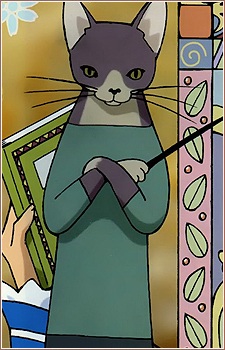
When you look at the picture cover of a show, that’s usually the deciding factor on whether or not it is worth your time to experience watching it for most who don’t bother to look into depth on what the show is about mainly. There is the common notion of “Don’t judge a book by its cover” in many forms of fiction, but that saying shouldn’t just be limited to books. If there are things to be said about Princess Tutu concerning this quote, it fits that description on every account. Anybody can perceive that Princess Tutu isn’t your average Magical Girl anime, even though itfollows the formulaic structure of one where the girl goes off into one plot arc to help save this person. What is particularly unique about the show isn’t so much its style but how it treats its narrative in a meta-style of storytelling. It gives the show a very fairy-tale feel to the atmosphere whenever you see them try to mimic the classic fairy tales that involved princesses, which Princess Tutu quickly turns its spin on the genre and makes it fresh and new to its writing. The meta-narrative is nicely written to give us an abstract feel to the story and make us feel more attached to the characters and the struggles they have to overcome that eventually drive them almost to mere madness. It almost becomes a self-parody of tragedy in how the characters want it to be a happy ending to the story because stories of these typical end, even though the meta-narrative is at odds with that philosophy; of course, I won’t get into it further to avoid spoilers. When we step into the world of Princess Tutu, it has a lot of influence from old fantasy tales that have since been existing since the rise of Western Folklore, something that anime isn’t known for a lot. Tchaikovsky would be proud to have the symbolic nature of his artistic music to be portrayed on-screen. Anthropomorphic animals run about in the world, but unfortunately, it isn’t given enough clarity as to why the world around the characters even exists or how the society is the way it is. However, it can be forgiven how the plot is more focused on a minimal scale from the character interaction. It is, nevertheless, a wildly imaginative world to experience and quite unlike you would see in most anime in recent times. To describe Princess Tutu’s authenticity in the short term would be like an actual theater production in animated motion. The ballet aspects feel structured like a real ballet play in action, from how the dialogue is performed and how the characters interact. That’s where the show's uniqueness jumps into gear and gives you a very fresh take on how you can portray a story in a show. Your typical magical girl show usually involves fight scenes that involve actual physical fighting involving magical powers that are mostly there to be flashy and entertaining for younger audiences. While many include swords and physical confrontation, Princess Tutu involves ballet dancing to invoke their powers to best out their opponent psychologically. These various aspects may seem a bit silly when you think about it, but what makes it work wonderfully is how well it’s directed. It sets the show's tone to new heights of tension and emotion, all without the single swing of a blade; that is if crows are considered a weapon of choice. Memorable characters are critical to a show like Princess Tutu to help keep its world and story unforgettable, which it most definitely succeeds. Our lovable magical girl protagonist Ahiru might not break new ground in how we look at magical girl characters in the same way as, say, maybe Sakura in Cardcaptor several years ago. Still, she is portrayed with bravery and elegance. Ahiru is sometimes a clumsy girl in rather hilarious, well-written comedic moments. And as a deeply involved sympathetic character who you always want to see overcome any obstacle that keeps her from achieving her goal is not only profoundly moving but also charming. Her voice might be a little grating when you come across her initially. Thankfully she eventually warms up, and you feel a friendly charm to her lovely personality as she transforms into Tutu. The rest of the main cast has a lot of complexity to their character archetypes. There isn’t anything remotely cliched in anything about them, from how unpredictable they are written into the story. Fakir is an excellent example of this where he is, at first, portrayed as the villain that stands in the way of Ahiru wanting to help Mytho regain his heart. It isn’t until later that we finally see the valid reason for his demeanor in protecting Mytho and provides extraordinary development to him, where we see him completely differently. His actions and motivations for doing the things that we were left with in mystery now come full circle and make Fakir a well-rounded character with that we can empathize. To our main villain Rue, she is given the same kind of treatment as Fakir, albeit a little differently. Since she is the main villain, her archetype isn’t fully explored until the very last parts of the anime, where we see her own tortured self that craves love and acceptance from her prince so that she won’t feel lonely again by anyone. Rue contemplates her existence as someone who will forever be associated with her adopted father, who is a crow of all things. Her development is in full circle, and by that time, we can now understand the pain she is going through, which puts her in a sympathetic light to the story that involves the dark themes that involve fate and death. There are side characters that pop up in most story arcs, but they mostly only fill in their roles to move the plot forward and nothing else that can be of significance. The ones that make an impression are some of the students, such as Ahiru’s two best friends, who are always up to no good in their mischievous misdemeanor into pushing Ahiru into a relationship with either Fakir or Mytho. However, the one that is the most entertaining of all is the almighty Neko-sensei, whose gags all include how if any of the girls mess up, he will force them into marriage with him. Not only is this hysterical, but it never gets tiring or overly done in one episode. Because of this, this useless form of entertainment that contributes nothing to the plot is always welcome if it’s Neko-sensei. With the show’s implementation of ballet, music should be the main driving force in keeping the spirit of the ballet portion solid and poignant. The music ranges from composers from most periods of music that delved into ballet music. The most obvious one would be Tchaikovsky with his famous “Swan Lake,” featured throughout most of the show and used to significant effect. Other well-known composers featured in Princess Tutu include Johann Strauss, Rimsky-Korsakov, and Erik Satie. What makes the score work so magnificently well is how it almost feels like the score is a part of the story itself and fits perfectly with the emotions that the characters exhibit. These include sadness and despair with Rimsky-Korsakov’s Scheherazadehappinessappy and optimism with Leo Delibes’s Coppelia. However, I felt the original score for the opening and ending didn’t leave a big impression on me whenever I came across them because of the weak vocals and downplayed instruments that hardly contributed much to the songs, which is disappointing. I wouldn't necessarily call this mainly a Magical Girl show for people who feel discouraged about seeing this with the Magical Girl genre tagged into it. It is more of a show about tragedy and drama than anything else. Not to say that Magical Girl shows can’t do that and do it well, but it’s best to look past your bias and see Princess Tutu as something that may surprise you on so many levels in how much depth it has in store. The drama doesn’t feel forced and flows naturally to where it doesn’t treat you like you don’t know how an anime should portray a tragedy. The anguish that characters in Princess Tutu get into feels authentic and genuine, which doesn’t push empty melodrama to make you sympathize with them. With pure honesty and clarity, this is genuinely a heartwarming show to experience for yourself. Classical music, beautifully choreographed dances, and memorable characters make for an experience worth having in all of Princess Tutu’s running time. A modern fairy tale for the ages. One that we might not see again.
Kanashimi
February 28, 2007
Story: Obviously, the story is an enigma within itself. It takes so many different aspects from every fairytale like setting that the watchers are left with a dishevel of fantasy. It\'s an intriguing reality, this plot loves to create things new and fascinating on its own as if it has no ultimate creator such as Drosselmeyer. Character(s) & Their Development: Actually, I personally think that the characters grow to fine degrees in this show. I\'m not sure if it\'s because there is such an unrealistic atmosphere surrounding the plot, which in turn throws the rational reactions of the characters off-guard towards the viewers. Or if it\'s becauseof the way the individuals do mature, by dancing and learning things from that dance. In the end, either is remarkably genius. First off, most people will decide that the people portrayed in this series have childish and predictable personalities; however, as the anime continues the majority of the audience will be surprised. Not only do they become like real figures, they take a life of their own with their deep ambition and urgent desires. As I said, quite remarkable when you as a viewer can feel the strength of a character\'s aspiration. This is a sole uniqueness that is hard to discover in any medium. It\'s certainly something the anime should be proud of. Animation: In all honesty, I found nothing special considering this aspect of the show. As disappointing at that sounds, the animation does have a certain yet unforgivable charm. It really all depends on the type of style a person enjoys. Personally, I found it to be cute and at some points oddly less detailed than should have been. I can\'t say it was bad, but it was more eh. Most places it was easy to tell what was a blast of sparkles from a computer program than an actual thought brought out by the creators. However, one thing I would like to note is how well the characters are shown in climatic dance scenes. Some people might disagree with me since some movements were used previously in the show while others are simple pans; regardless, I found the style they were brought forth rather delicate, adding a wonderful yet fragile touch to the show. Music: It\'s ballet, there\'s really not much to say. I will admit, I liked the opening but it was so slow, I found myself fast-forwarding to it and singing with the high-pitched squeal I got along with doing as such. Much of the music is not original, it\'s merely adaptations from plays and ballets that have been shown across the world. This includes such titles as The Nutcracker or Swan Lake. In the end, it is all a matter of tastes that determines the music as well. Obviously, the light and fluffy type of sounds fit the show to an expert tee. The movements seen in many of the scenes are incorporated to the classical soundtrack. In the end, it mixes together rather nicely. The only problem, is unless you enjoy listening to a CD that might put you to sleep then this melody might not be for you. Dubbing/Subbing: Yeah, I missed the dub once more. So, instead, let me talk about the subbing. While I enjoyed how different font color was used to demonstrate different characters with the fansubs, I always had a problem with the subtitles brought by the US release due to calling Ahiru the name Duck. What kind of name is Duck, literally? I know that Ahiru translates into Duck, regardless, I felt it was a rather idiotic choice. Besides that, nothing increasingly stuck out to me. Same old, same old. Overall: As said before me: The real gold of this show is how free it is to express its own imagination. Most shows hold back due to the public\'s reaction, Princess Tutu merely doesn\'t care. In the end, its colorful display of fiction and immense childlike plot will keep the viewer intertwined until the last wonderful episode. Feel free to bash it due to the interesting way it relates to other magical girl series; however, in the end there is too little focus on that aspect to really have that fact considered. This series is really quite grand though the ending will either have you wanting more or utterly disappointed. I will state outright that this is not an anime for everyone. Actually, unless you tend to have a creative mind and the ability not to question a show because of its unreality then you might have problems with this series. Go out and dance a pas de deux!
Ранг
#513
Популярность
#1483
Участники
184,233
В избранном
5,409
Эпизоды
38