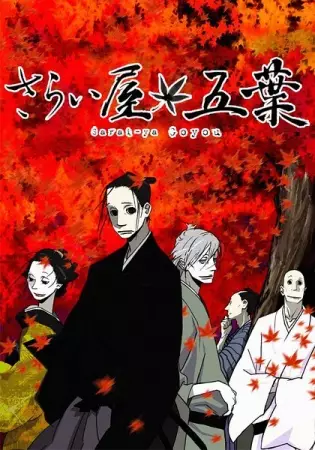
House of Five Leaves
さらい屋 五葉
Masanosuke "Masa" Akitsu is a wandering ronin adrift in Japan's peaceful Edo period. Despite being a skilled swordsman, Masa's meek personality has netted him the label "unreliable," and he is often abruptly dismissed by his employers, leading him to question his resolve as a samurai. As Masa reaches his lowest point, he is approached by Yaichi, a carefree man draped in pink who seemingly hires him on a whim as his bodyguard. Unbeknownst to Masa, the job is not as innocent as it seems, and he is drawn into the illicit activities of the group spearheaded by Yaichi. As he becomes further entwined with the gang known as the Five Leaves, Masa struggles with his own principles. Still, his curiosity spurs him forward to uncover the past and motivations of this mysterious band of outlaws. [Written by MAL Rewrite]
Detective
July 1, 2010
What if there was an anime, an anime that was about samurai. This anime wasn't about "the strongest samurai" or "the path to glory" or even a "demon sword," but instead it was about meek looking samurai with slightly above average skills. He wasn't looking to fight the strongest fight, or defeat the overlord and free his people, but maybe, he was just looking to make his living and help his little sister back at home. That would be, if not anything, interesting. That's exactly what Sarai-ya Goyou (House of the Five Leaves) is about. This anime isn't for those who live to see explosionsand special effects and isn't even for people who want to see some fight scenes - there's only about two or three in the entire series, and for an anime that has its main protagonist as a bodyguard, that's pretty strange. Story: 8/10 Welcome to the Five Leaves, an association of almost chivalrous robbers (I say almost because, well, they keep what they "earn" but do their jobs for the greater good). The story follows our already stated protagonist, Masa, the not-so-scary swordsman. Masa is in need of a job, since he keeps getting fired, because well, he just isn't good at being a bodyguard. It doesn't suit him. This is when he runs into the Five Leaves. The leader of the Five Leaves, Yaichi, is a bouncer at the local brothel. After a chain of events Masa joins up with Yaichi to take on jobs such as smuggling, theft, kidnapping, and so on. Also in the group are many other interesting characters - Ume the tavern owner, Okinu his daughter, Otake a local prostitute, and Matsu an unfriendly swordsman. The stories behind each of these characters are all eventually divulged, thus I don't want to ruin any of the fun here. All I can say about the story is that while at the beginning of the series it looks pretty weak, and by the end, it comes and hits you in the face pretty dang strong. Art: 9/10 Er well... If you don't like the art then well, there's no hope. You won't like this anime. The art I believe, is incredibly important to setting the mood of the anime. Awkward. No not like "that's so awkward" but like... It brings you out of your comfort zone of what you usually see in anime, while not being CrAzY like Trapeze or Yojou-han. The Animation is fine, but there really isn't a whole lot if it. The anime heavily relies on dialogue to explain things, unlike other samurai anime like Sword of the Stranger that heavily relies on animation to tell it's tale. If you liked the artist behind Ristorante Paradiso, you're in luck because well, it's the exact same one - Ono Natsume! Sound: 10/10 Simply brilliant. Each track of this anime got me snapping or tapping my finger, even if just a little bit. Every song sounded original and interesting and just... fun! The sound is like elevator music, infused with light techno, and a little jazz. It doesn't distract you from the anime, but you simply can't ignore it. The opening song, "Sign of Love" by immi is also just awesome - a light technopop opening in MY anime about samurais? Magnificent. The ending was nice too, but barely compares to the soundtrack and opening. The voice acting was great too. Namikawa Daisuke (Hohenheim from FMA:B) and Takahiro Sakurai (Suzaku from Code Geass) voice the two protagonists, Masa and Yaichi. If you like either you now have a very good reason to sitting your arse down and watching this anime. But fear not! The rest of the casts voices are also just so... right! So spot on! Takahiro Ai (who I've never heard of before until this anime) voiced Okinu, the young girl who assists at the tavern where the Five Leaves meets has such a cute voice it's deadly! I hope to hear more of her in the future. Overall, the sound is a feast for the ears and skipping out on it is like saying you don't like your ears. Your ears would be very sad if they heard that. Character: 9/10 I've actually addressed most of the characters at this point. Yaichi, the "lone mysterious cool guy" actually gets some of the most character development I've ever seen and part of the second half of the anime hinges on him alone. To be blunt, he isn't as cool and suave as he is first introduced to be. Masa obviously is a deeper character than first presented and I noticed a lot of people complaining how much of a "wimp" and "loser" he is. Let me say this, if all the protagonists in anime were AWESOME and COOL then anime itself as a medium would suck. Masa actually doesn't even whine or complain at ALL throughout the series, and saying he's a wimp is like calling Shinji from NGE cool. It's just not gonna fly. He undergoes some serious character development and by the end of the series he well, can be seen in a different light than before. Matsu is another character I'd like to talk about. He at first appears to be another cold and unfriendly character, but by goodness this anime manages to make even him look good. The secondary characters are all strong and interesting in themselves but a few here and there are kind of shallow (not many, but some). Whilst not perfect, House of Five Leaves has some of the most realistic characters I've seen to date that are simply just - human. Enjoyment: 8/10: Even with all these awesome aspects, the show can at times be a mixed-bag. Flashbacks at confusing times, with confusing material addressed, in a confusing way, and backgrounds that usually don't have much color or vibrancy in them (but seeing as a lot of the anime takes place at night I can accept that). The weird pacing that takes place early in the series, while very different, can be a major turn-off. The latter half of the series is totally amazing and ties off and puts a nice bow on top of everything occurring at the start of the series. It's not hard to miss something in this anime too, which was kind of a problem, because if you space out for a little while, you can miss some serious plot. If you don't like heavy dialogues and minimal action, then I don't recommend you try this anime, but if you could see yourself giving it a try, then heck, go for it. Overall: 8/10 There's nothing disappointing about this anime while I believe there could have been improvement. It's an intelligent anime that is better watched alone, and focus is definitely necessary, but a rewarding anime it is. You'll be glad you checked out House of Five Leaves. This anime will never be popular. You will never see someone wearing a Sarai-ya Goyou T-Shirt. You will never see someone pretend to be Masa and do his samurai techniques. It's not that kind of anime. It's an anime that is doomed to be unpopular and only spoken of on the smallest portions of internet forums and be referenced as "a hidden gem." I don't know why all gems have to be hidden, but the statement stands true with Sarai-ya Goyou. It's an anime that can easily be overlooked if you didn't take the time to check it out, so go take 12 episodes of your time (and a fast 12 it is) and enjoy yourself with House of Five Leaves.
Mimi_Taylor
June 23, 2010
Saraiya Goyou is about a gang called “Five Leaves” during the Edo period in Japan. There is very little action, the artwork is nontraditional, and the story moves at a snail’s pace. So why should anyone pay attention to this? Actually, I’d say that those points work to Saraiya Goyou’s advantage, resulting in a well-written, mature story. Story & Characters The members of Five Leaves make their money through undercover jobs such as kidnapping, but they are not the usual rough and tough gangsters. Most of them appear to be friendly, thoughtful people who spend their time lounging around in a relaxed environment,discussing personal issues until their next job. The gang includes a charismatic leader, a shy swordsman, a shop owner, a metallic ornament craftsman, and a woman. Their varied personalities make them an unlikely group to hang out, but they manage to work together on behalf of Five Leaves. This series is completely character-driven and wastes no time in exploring the member’s personal backgrounds, revealing each of their motives for joining the gang in the first place. Perhaps the most intriguing member of Five Leaves is the leader himself, Yaichi. He is admired for his calm demeanor, yet he is perceived as mysterious because he seems to hide a lot of information about himself. The show delves into how the other members feel about Yaichi, particularly the shy swordsman who is new to the group. The scenes move slowly and quietly as you watch the characters contemplate about things, plan their missions, and embark on a few short travels. You won’t see a lot of sword fighting or other eventful action here. Even when the members carry out a job, it is more about information gathering and sneaking around places rather than fighting. That is not to say that the show never has its intense moments though; it masterfully weaves in tension and drama just at the right times. The characters are so down-to-earth and believable that the pleasure of this series comes from observing their close interactions, facial expressions, dialogue, and the subtle changes in their personalities. If you don’t particularly enjoy concentrating on such details, this series might be perceived as a bit dull. Artwork & Animation I know a few people who thought that Saraiya Goyou was quite interesting, but they couldn’t continue watching it because they were distracted by the character designs. They're distinguished by having dark, gloomy eyes, pointy noses, and low, wide mouths. Some people just say "frog faces." Even though they are a little odd, I find the designs to be personally fitting in the context of this series. I've also known them to grow on viewers who have given them a chance. The amount of detail in the animation is very impressive. For example, I appreciate how well they animated the momentum of water in a cup while it was being swayed or tilted, the breeze effect on a lighted candle after a door was just closed, and the fluid movement of the characters. The artwork is finely detailed as well and really captures the look and feel of the Edo period. Atmosphere There always seems to be a dark cloud looming over the characters. Their minds are heavy with thoughts of their pasts and current responsibilities. Some viewers say that the show is merely all about "gloomy people," and they are right to a certain degree. The characters aren't that upbeat, but despite that, the atmosphere doesn't feel depressing all of the time. I found that there's also a lighter air of relaxation and occasional amusement which adds to the enjoyment of watching. Sound The opening song, “Sign of Love” by Immi, is a melodic, electronic beat which surprised me. I took a liking to it, so I had high hopes for the rest of the soundtrack. Fortunately, the background music has been superb. Nearly every musical piece is a calm, soothing melody that enhances the show’s atmosphere. Some of the tunes are also catchy, and I’ve found myself randomly playing them in my head. Overall Without a doubt, Saraiya Goyou is a must-see from the Spring 2010 season. Rather than relying on action to tell its story, the show excels in rich characterization, detailed animation, sound, subtleness, and realism. Saraiya Goyou is an example of maturity in anime at its best.
ZephSilver
February 23, 2015
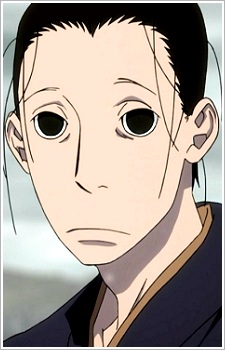
Every now and then a show is needed to unwind to. Something to break the monotony of the typical over-the-top anime shows with "in your face" color pallete and the overused tropes. We seek these melancholic shows to provide temporary release from the norm, a sort of meditative experience if you will. House of Five Leaves is that kind of show. A show that understands its audiences' desires and executes it with a delicate balance. This certainly isn't for anyone seeking an adrenaline rush or intense action flick but rather serves as an oasis for anime fans that want to just kick back and relax.Story: 7/10 The story follows our protagonist Masanosuke as he searches for a purpose in which he can excel at. However being a wondering ronin limits his options to bodyguard duty and through this he becomes acquainted with the "Five Leaves": A band of kidnappers that target affluent people of questionable business behaviors to receive ransom. It isn't structured as a clear cut point A to point B narrative but more of a character driven one. The show follows several mini arcs, each either involving the mission of the team or showing the main overarching story, which involves slowly unveiling the gangs' boss Yaichi's life and backstory. This slowly blossoms throughout the show's duration, allowing the audience time to truly piece together the puzzle pieces that make up a man. The effectiveness of the story is within its simplicity. It's structured in a way to allow the characters to inhabit the world created, breathing life into their circumstances and surroundings. It's patient storytelling done right. Art/animation: 8/10 Everything from the opaque backgrounds to the character's visual aesthetic was handled with great care. It's like a painting brought to life. The world-building was also handled well, as you're immediately sucked into the setting and time period that the story takes place in. You can also tell that the animators had a grasp of capturing a sense of depth-of-frame, as there was a clear distinction separating the foreground from the background, something many anime titles tend to neglect. They use an acid washed color palette accompanied with rich blacks and other textures to help build an aura that looms over the entire show, bathing in a distinct tinge of melancholy while still being easygoing. They were also aware of when and how to use color, as they would limit color choices given the kind of mood they're trying to capture and convey. This was evident with flashbacks and key episodes throughout the show. It's an impressive display of color theory and color placement that was spearheaded by a talented and impassioned crew of creators. The character designs of Five Leaves are far from conventional. They all share a distinct facial structure with gaping looking eyes (as shown on the anime art cover), which, despite the obtuse expression, was actually pulled off well. They become a part of the environment they're presented in and are uniquely designed when compared to the "run of the mill" brightly colored haired bishounens we're used to seeing. This unique character design gave the show its trademark identity that made it stand out from the crowd. Whether you like it or not comes down to preference but there's no denying its distinct look. Sound: 6.5/10 It's hard pinpointing the soundtrack for the show. Sure It had its somber piano ballads, traditional Japanese song instrumentals and other pieces to accompany its usual easy-going setting, but there are some tracks that are clearly inspired by French/European flavoring with an Accordion playing throughout certain songs. Seeing that this anime is set during an Edo period Japan, the cultural clash of European-influenced music seems like a rather odd choice. One would think they would stick to only traditional instruments of that era of Japan's history, such as the more common placed Biwa or Koto stringed instruments for example. This does not take away from the music used but it would have certainly set a better tone if the show would have taken a stricter cultured route. If they were going for a self-aware cultural mash-up like Samurai Champloo it would have been understandable but they clearly wasn't. It's certainly a unique choice but sometimes it doesn't fit the mood as well. Seeing that music is subjective to one's tastes, how much this bother you as a viewer will vary. Hell, it may not even register with you at all, which in any case it doesn't do much to hinder the show's overall quality to begin with. You can see this as more of a personal nitpick than an actual problem. The voice actors all performed well. Everyone came across like they were in their element, allowing the chemistry between the cast to come off natural as a result. Almost like listening to a conversation between old friends, which in turn allowed for great immersion. Characters: 8/10 Our main protagonist Masa has a clear inferiority complex in the presence of his peers. Although this approach isn't new it's handled with care. It's nice to see him strive for self-worth without sacrificing his ideals as a person, being a man of a decent moral compass. Another refreshing aspect is that he doesn't throw his ideals around like typical lead anime males would, but rather expresses it to show his distaste for certain actions. Due to his timid behavior, however, he doesn't seem to fight against the actions his companions partake in. This may make him out to be a pushover but it's never abused for unnecessary drama. Slowly but surely he opens up to the lifestyle of the group and proves his worth. Yaichi is by far the most enigmatic and captivating character, mostly due to his ambiguous motivations and confident personality. He always steals the spotlight in whichever scene he's in, as we as viewers are constantly trying to piece together his true intent. He isn't simply clear cut as "the cool guy" but more so a person that seem to dabble in the grey, which makes his presence unnerving yet captivating at times. Another character, Ume, is a man with stubborn pride that only seem to care for those who he's close to. He takes on the role of big brother to the others and is often the one with the sharp tongue. He isn't afraid to speak his mind but is also protective of his friends and family. Just like Masa, he has a moral compass, but unlike him, he isn't afraid to get his hands dirty if it means protecting the ones closest to him. Matsu seem to be a closed off individual that is all about business and fulfilling his obligations. He's the information gatherer of the group and his job reflects his personality. He can be summed up as a lone wolf. He only show respect to those he's indebted to and shows loyalty to the group but never brings up anything regarding his personal life. Due to his detachment to others, he isn't quite explored until later into the show with his individual arc. Otake is a rather carefree woman, she doesn't seem to take anything too seriously but still composes herself to a degree. She seems to go about things on a whim with a smile always on her face and always find pleasure in the company of others. Her past, like the others in the group, is revealed later on, which brought another aspect to the story involving Yaichi. There isn't much to her in layered characterization but she is still a nice addition. the rest of the supporting cast also play their roles well and don't need over the top quirky personalities to be understood. They simply play their roles in the story without overstepping their boundaries. Together these characters are all subtle in execution and are down to earth enough that their presence feel natural. The air of maturity complimented the melancholic tone of the show quite well. This brings forth nice organic character interactions between them, making all their time on screen a pleasure to watch. All the characters show a sense of honor as to be expected among Japanese customs. This mutual comradery for each other is what makes this cast among the better ones anime has to offer. Enjoyment: 8.5/10 I entered this anime to seek escape from the usual dime a dozen shows and that's exactly what I got. It's soothing, got to the point and didn't overstay its welcome. For that, I can easily recommend this to anyone seeking the same kind of escape as myself. Overall: 7.5/10 Don't be fooled, this anime will not be everyone's cup of tea. It's not trying to impress the audience nor is it trying to be more than it is. It's simply an anime that slowly unfolds a simple story on its own pace. If you're looking for a show to relax to or just something to offer a break from anime's usual tropes then this might be just the remedy. But if you're looking for intense samurai action flick and a grandiose story I advise you look somewhere else. As for other recommendations, I point you towards: Mushishi: A show that also captures the familiar melancholic atmosphere, accompanied with unique character designs and tranquil presentation. It also takes its time exploring its world and individual stories. However, it lacks an overarching story as oppose to House of Five Leaves. Shigurui: You won't find the tranquil easy going nature of House of Five Leaves here but what they do share in common is that sense of mutual comradery, slow pacing and similar Edo period world setting with samurais. Also, it has a slowly unfolding backstory of certain characters as well. Be warned though, it's a VERY bloody show and follows more of a grittier approach. If you're one who doesn't want to see a bloodbath, stay away.
Jodyqt
November 2, 2013
Peace and serenity, independence of the mind, graceful beauty, resting, & death; the rich magnificence of a maple leaf as it falls at the closing of its years. Before we begin, I would like to say that no other symbolism can effectively associate itself with Saraiya Goyou moreso than that of a satin maple leaf. At this very instance, the broad versatility of references that exists within this beautiful piece of nature constructs a focal point for everything that Saraiya Goyou is and stands for. To me, it simply opts to convey every aspect of the rich symbolic context of a maple leaf through its characterdriven drama, plot, and art. For story, I want to take note of the way that Saraiya Goyou handles its episodic nature by overlapping many of the stories into other episodes to effectively condense the series and maintain a level of fluid consistency between each episode and cleverly allowing minor points in these plots to serve a purpose later on in the series. Building on that, what I am more particularly fond of is the fast-paced "snappy" style of storytelling. For example, in many cases an episode will go into immense depth on tactics that will be used to carry out a crime that the characters are planning to execute and then suddenly, after this discussion of tactics and such, the actions that they were discussing have taken place and in the very next scene the characters will be dealing with the consequences or an issue that was encountered in the off-screen event. It's not a generally favourable story-telling style but it allows room for more development of the characters that is far more down to earth. This style also allows room for heavy interpretation of many events that take place off-screen and is essentially fast-paced, focused story development that never looses an ounce of its vigour. It's a case where the producers seemed to know exactly how long to make the show which is a problem that I have had many times with anime. Another thing that I wish to emphasize is how the show adapts its dialogue in such a way that it is constantly melded into each characters personality and essentially never falls into the pit of telling the story rather than showing it. Sure this kind of observation has been made on other series before, but in my mind Saraiya Goyou is one of the best examples of dialogue driven storytelling that show-cases an equilibrium between the audience and itself. Another dimension that I appreciated of Saraiya Goyou was the Robin Hood nature of the scenario's that it looked at, but unlike Robin Hood, all the scenario's were not left morally ambiguous but were "heavily in the grey" from the criminals perspective (e.g. the entire main cast) or the one's being subjugated to the criminal activity. In many respects it is quite suspicious that many of those at the receiving end of the criminals activities were more or less deserving but the best thing about it, is that it doesn't make a clear cut judgement on the themes that it explores, which are (at their core) very mature and sensitive topics and Saraiya Goyou takes a stance for a tasteful perspective on the mature themes that it explores which earns it extra credit in my book. I rarely hand out a perfect score for anything, but this is one part of Saraiya Goyou that I really cannot find a flaw, simply put, its characters are nothing short of remarkable. Saraiya Goyou is essentially a character driven drama and the series comes across as completely aware of that. It is rare to find an anime where the characters are so well developed with such little time, so the character development I can allegedly say is masterful, no member of the cast is left out of the equation (yes including minor characters that are only on-screen for an episode or 2) each character has a fully orchestrated history that is highly detailed. Taking it a step further, to truly emphasize the beauty of the characters within this series is that the show has not one occasion where any character does anything "out of character" and when questionable actions take place, the context of the series steps in to justify those actions fair and square. The art in Saraiya Goyou whilst it is an acquired taste, is nothing short of beautiful in its detail with lavish background settings, the character designs are very interesting and hardly comparable to anything with a possible exception of Kaiji and Fantastic Children's noses (those noses, I can't get them out of my head), that said the ending product in the animation department is fascinating in that whilst it does not allow itself to revel in an exercise of romanticism of the Edo period what it does do is somehow allows an attachment to be built that tugs at my "heart-strings" inviting me into a world of rich depth, making me wish that I was a part of the whole ordeal unfolding between the characters. That said, I cannot quite put my finger on what it is about the art that makes me feel that way, is it perhaps a combination of its art and the simple exchanging of words as one hikes down the main road or even partaking these everyday activities through the streets of an Edo suburbia? I haven't got much to say on the sound department except for the fact that it gets the job done. The OST is oozing with tracks that set the mood and allow me to become engaged and invest in the emotional aspects of the series. Like the rest of the series, the music used remains sincerely reflective of a story that is constantly providing subtle questions from the grey area, and the music recognizes this, with that taken into consideration it kind of pains me to say that the score is the series weakest point. One thing that is possibly wrong with the series; is that it lacks entertainment value. Now I for one enjoyed the series immensely but as I mentioned before in my comment that the art in this show is an acquired taste, this statement also applies to the entire series. That said, to fully appreciate the series you may need to be a more experienced anime or manga fan, so it is not favourable for many that Saraiya Goyou excels in every other department except for high-octane stimulation but with all of this said the fact that Saraiya Goyou takes up this bold sense of direction remains a benefit to the show. It serves as a reminder that simple stimulation can only achieve so much and sometimes we need to step back and take our time to divulge in a shows inner essence, which is something that Saraiya Goyou does very very well. There really isn't much else in the way of negatives and to be honest I am scratching my head trying to find a major flaw (there are 1 or 2 unbelievably-obscurely minor flaws that the only way that they would become major problems is if you kicked out logic in the first place). That said, there was one major flaw but quite contrarily the series managed to effectively rectify it in the end which makes it even more easier for me to say that this series is deserving of every bit of praise that it gets. Saraiya Goyou is a great anime, almost no flaws, amazingly well developed characters and top-notch execution all around. I believe that a review should let you decide whether or not you should watch a show, and if I was the ronin in this series, I would invite you all to spend a quiet moment with Saraiya Goyou. Story 9/10 Characters 10/10 Art 9/10 Sound 7/10 Enjoyment 9/10 Overall 9/10
Fleure
February 16, 2017
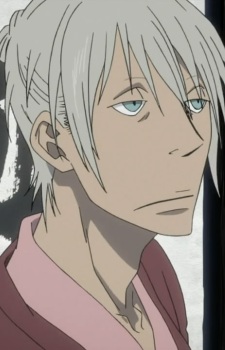
The streets glow with a crimson hue. Upon closer gaze, a pattern of five-pointed leaves stained with a fiery red flutter in synchronized elegance, encapsulating the essence of an enigmatic tale told in the 12-episode anime titled Saraiya Goyou or House of Five Leaves. Based on the manga by Natsume Ono, Saraiya Goyou tells a slow-burning narrative revolving around an unemployed samurai named Masa, who in simple desperation, finds himself hired by Yaichi – the leader of a small band of thieves who call themselves the Five Leaves. The bulk of the series focuses on the dynamics between the members of the Five Leaves, specifically Masaand Yaichi. Naturally then, this series is an entirely character-driven drama that entices with a very clear handle on its ambitions. Surprisingly enough, the fundamental strength of this series comes from its ability to deceive; from the characters to its progression. The series keeps itself under a veil, revealing in perfect doses, what’s necessary to tempt and assume, only to taunt those assumptions back into their flawed origins. It is in no way a standard samurai tale featuring spectacular sword fights or thrilling wars between conflicted states; rather it aims to do something far more basic than that and that is to tell an unassuming story about individuals trying to find their place in a fragmented society, where meaning is lost, and relationships are forged through coin and sin. The character’s journey to find sanctuary, belonging, and one’s self - when there seems to be very little hope - is a premise that echoes throughout time and land, and can be found really in every medium. What sets Saraiya Goyou apart in its story-telling is the mechanics it uses and the subtlety it does it with. All of the characters that are part of the “Five Leaves” find themselves together, bound by an unspoken contract and sense of camaraderie, but what’s important here is: why? The manner in which the series examines each individual’s motivation for doing so is nothing short of magnificent. Under the ruse of “criminal activities” whether its kidnappings, or thievery, or blackmail, the activities of “Five Leaves” are never the focal point, but rather it’s the interactions, reactions, and the impact of each respective crime on the band, and the individual characters themselves and that's what elevates the series. Thus, the show is able to streamline what it wants to do at all time, which is fleshing out the characters with every scene, and it does that, without skipping a beat. As the crimes escalate in risk, so do the vulnerabilities and traits of the characters regardless of how deceptive they may have seemed, initially, which brings up the strengths in the development of the individual characters. From the naïve, black-eyed Masa who suffers from a lack of confidence in his craft and himself; to the enigmatic white-haired, powder-blue eyed Yaichi with a seriously deceptive smile; to the reserved, lone-wolf-type Matsu – the gang’s spy – who is as reckless as he is reserved; to Take, the sultry geisha with a sharp tongue and undying loyalty to the gang; to Umezou, the unofficial member with a stained past trying to clean up his present and future, yet offers the Five Leaves his tavern as their meeting place. All of these characters with their idiosyncrasies and quirks are a pleasure to witness as they try to fulfill their own goals while maintaining the House of Five Leaves. It is astounding the amount of meticulous effort that went into each gesture, interaction, and conversation when evaluated elementally, and how those come together to give dimension to each character, and the relationships that come as a product. The last defining point of the characters is their design. Saraiya Goyou is not only unique in its content, but also in technical achievement and aesthetical quality. The art-style of this series is very peculiar. Uneven lines, big circular eyes blobbed with a simple pattern and one color, mouths drawn in a way to make the Joker envious - the way the artistic design comes together is indeed very different, but for a series as out-standing, as it is, it complements it perfectly. Even the background art and the music that accompanied the story-telling were equally fitting such as the subdued use of color except for very intentional markers such as the crimson leaf, or Yaichi’s eyes, or objects that consistently enhanced the mood or scene, contextually or situationally. The serene shamisen accompanied by the jubilant accordion and flute seemed to be the instruments of choice and bode well, as they really heightened the time-period it was depicting. Overall, every element seems to have been crafted only to tell this story, and Saraiya Goyou is that series where everything just came together in just the right way. As slow-burning as this show is, it’s worth experiencing for all those who enjoy a well-seasoned, character-driven tale. It isn’t flashy. It isn’t in your face. Saraiya Goyou is more like an impressionistic painting, which requires patience to fully appreciate the details. The strengths lie deeper than a first-look like within its stylistic choices, its clandestine characters, its simplicity, and unparalleled elegance. Though, don’t be deceived; even though it may run at a relaxed pace and seem indifferent to action, the impassioned crimson-hearted House of Five Leaves and their members will surely persuade you to stay until the end…
Ранг
#1279
Популярность
#2367
Участники
100,453
В избранном
884
Эпизоды
12