Legend of the Galactic Heroes
銀河英雄伝説
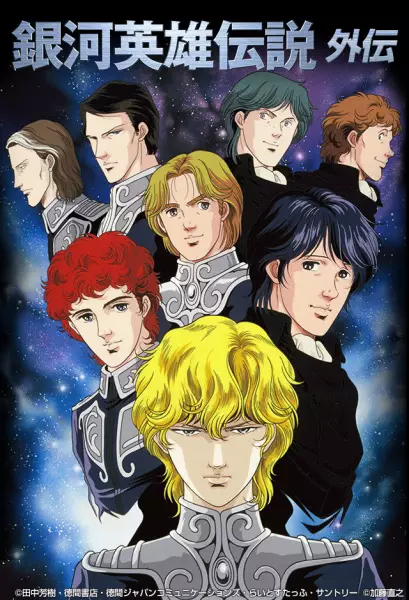
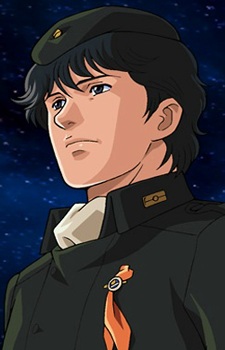
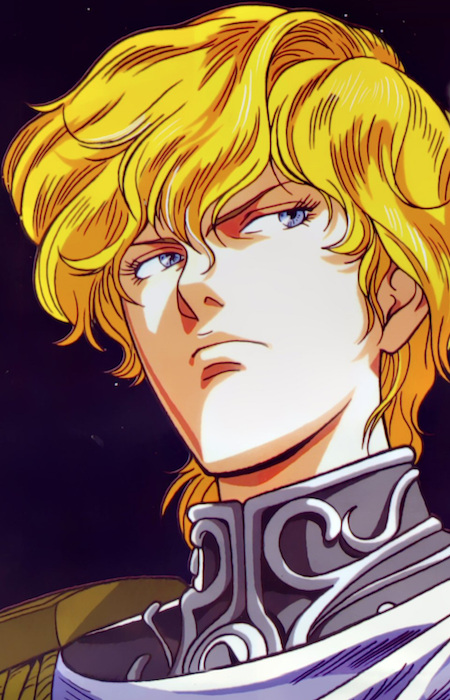
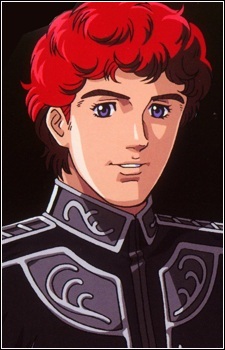
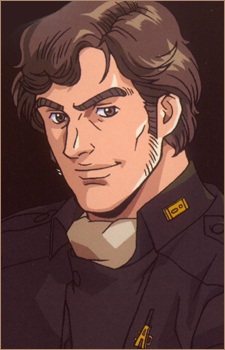
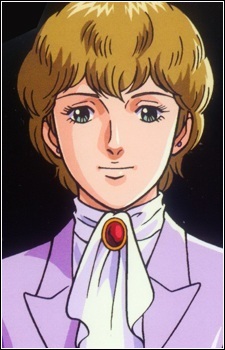
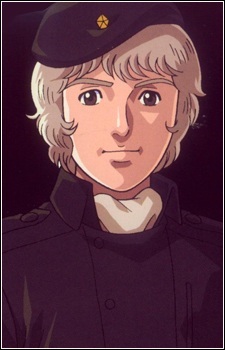
The 150-year-long stalemate between the two interstellar superpowers, the Galactic Empire and the Free Planets Alliance, comes to an end when a new generation of leaders arises: the idealistic military genius Reinhard von Lohengramm, and the FPA's reserved historian, Yang Wenli. While Reinhard climbs the ranks of the Empire with the aid of his childhood friend, Siegfried Kircheis, he must fight not only the war, but also the remnants of the crumbling Goldenbaum Dynasty in order to free his sister from the Kaiser and unify humanity under one genuine ruler. Meanwhile, on the other side of the galaxy, Yang—a strong supporter of democratic ideals—has to stand firm in his beliefs, despite the struggles of the FPA, and show his pupil, Julian Mintz, that autocracy is not the solution. As ideologies clash amidst the war's many casualties, the two strategic masterminds must ask themselves what the real reason behind their battle is. [Written by MAL Rewrite]
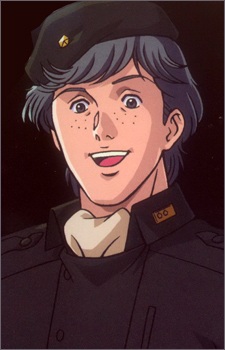
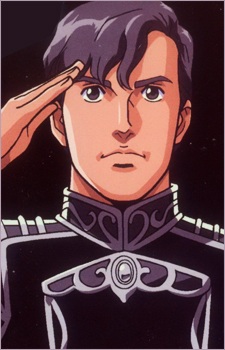
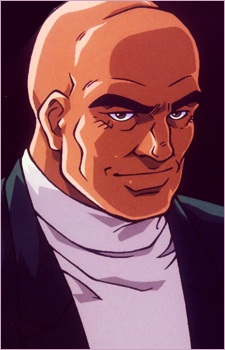
Главный
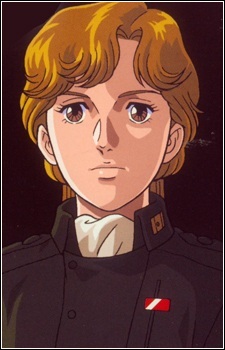
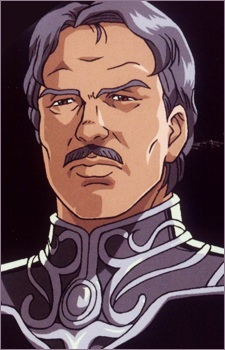
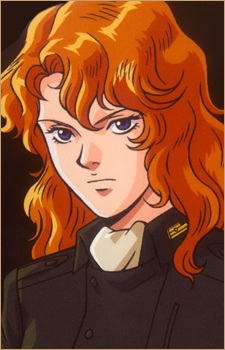
Главный
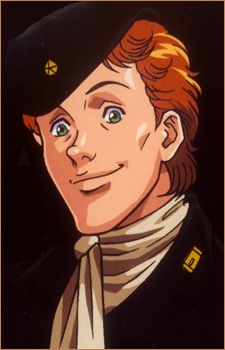
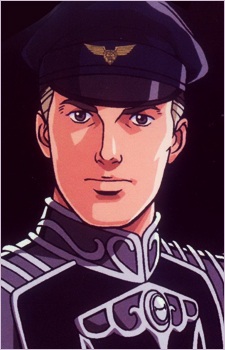
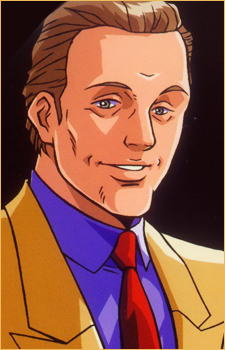
Главный
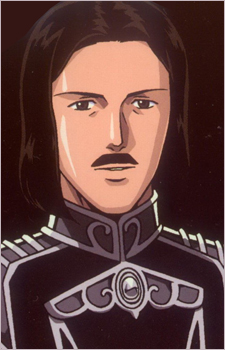
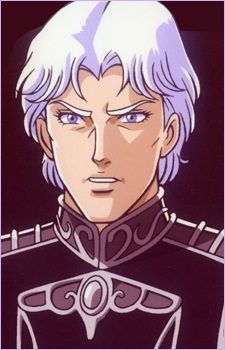
Главный
Главный
Главный
Главный
Главный
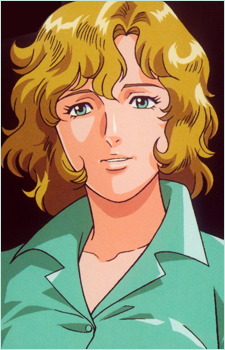
Второстепенный
Второстепенный
Второстепенный
Nervin
December 7, 2015
It is so rare to find any type of lengthy series that span over 100 episodes without declining in quality over its duration due to various factors such as the abundance of inconsistencies in the story, or rehashing the same narrative structural wise, which is pretty common in long running series. Other limiting factors are the available funds for its execution, or its own popularity, which can induce authors to change the course of the story. However, there is one title that managed to evade said issues, being an adaptation of a series of novels by Yoshiki Tanaka, with a lengthy production of 110 OVAepisodes released over the span of nine full years, from the period 1988 to 1997. I am talking of course of "Legend of the Galactic Heroes" or in its japanese title, "Ginga Eiyuu Densetsu", which is by far one of the best series I have watched so far, from all different mediums. It is a magnificent military space opera anime with drama and sci-fi, enriched with military warfare, intricate political strive, marvelous characters and fantastic dialogue. It is a tale that ultimately proposes a vision society often pondered about, and that is the validity of democracy and autocracy. Many people may have assumed that this anime is purely narrative driven, being its main focus dialogue, which is partially true, yet it has so much more to offer; naturally, it has its flaws as well, which I will try to depict below in addition to its strengths. ~Story~ The story of Legend of the Galactic Heroes focuses on the 6 year period in which the two main political factions of the galaxy clash, the Galactic Empire and the Free Planets Alliance, with Reinhard von Lohengramm and Yang Wenli as the most important figures respectively. However, this interstellar war has been waging for over 150 years, with casualties over the millions, marked by the crumbling Goldenbaum dynasty which rules the Empire, and the dysfunctional democratic state of the Alliance. Both Yang and Reinhard, have a reason for being engrossed in military affairs: one to finance his university education, while the other to save his sister from the Emperor. Both being the geniuses they are, they clash with each other in accordance to the pursuit of their goals. As they gain fame and deal with their superiors, people, scheming, political and military warfare, those are the aspects that will dominate these men's life. The premise may seem simple as first, which may appear as a struggle of good, democracy, against evil, autocracy; however, this is absolutely not the case. The anime portrays magnificently both sides, the first at its worst, while the other at its best respectively through the numerous advantages and flaws of both political ideologies. For example, democracy being a huge impediment for drastic changes, as opposed to autocracy. This makes it for the viewer impossible to root for a specific system, as in addition each side has its own charming/interesting characters. Furthermore, it leaves audiences pondering which is actually favourable, besides making the story unpredictable and exciting. As mentioned earlier, the story expands greatly on both ideologies with intricate political disputes that are well presented as it is realistically displayed to the viewer, with different things such as Nationalism, exploitation of the weak, oppression, you name it. Then there is another faction in the story, and that is "Terraism", which represents religious belief. This party was of significant importance in the anime, yet its motives and background was weak and never really expanded on; besides, its enormous influence would have many viewers raise their eyebrows whether this should be believable or not. Another lacking aspect was the fact that it didn't expand on the advantages of a religion, rather only focusing on the worst of it. Being an atheist myself, I still find this a lacking aspect. It should be mentioned that there is at times an external narrator to explain the situations to the viewer, including future events, which in the eyes of some may be a hindrance. The vast amount of episodes may deem viewers to think that the pacing is way too slow for its own good, yet this is not the case; contrary, in my humble opinion, its pacing is flawlessly done, befitting of the narrative. Detailed, rational and straight to the point dialogues are present, which are necessary for character exploration, as well as leaving viewers absorbed in it. Some audiences suggests that the first grand arc is slow, yet I tend to disagree with this; from the very first few episodes, it foreshadows on the big events that are to come, instantly leaving anyone interested, be it the story or the characters itself. In addition, LotGH does a fantastic job in world building, by exploring the characters and explaining the history of how human race developed since leaving Earth, as well as political events relatable to real historical data. However, speaking of the world, or in this case the universe, its map layout is oversimplified to a 2 dimensional plane, which is naturally not the case in space. Besides, the lone planet of Phezzan is supposedly of great economic influence, yet how or why it is, was never fully explored in the anime. Naturally, it is not all politics: war is waged to achieve afore-mentioned stances and goals. The various battles that take place throughout its duration are no simple "asspulls": these are all well-coordinated through the cunning of the different commanders of each fleet, and their tactical strategies and knowledge. However, it must be mentioned that said strategies are simplified in order for audiences to easily grasp and understand said tactics, which can be lacking in the eyes of some, in addition to display to viewers that not everyone in high positions are smart. These battles are in addition of big scale: people die in the ten's of thousands, if not millions, easily discerning the damage and scale of each confrontation. Neither it is a one-sided war: through intrigue, political corruption, conspiracies and civil wars, the outcomes of battles are often unpredictable generating a lot of tension for the viewer, in addition to appreciate the cunning of different individuals. There is a downside with the show though, even when it shows the ugly sides of warfare, it is slightly romanticized version, with subjects such as glory and honor, which not always blend in well realistically speaking - this doesn't mean that the fights are tensionless. Hand-to-hand battles are present as well, and these are done with battle axes most of the time, which is strange considering the advanced technology available. Another thing to point out would be the different strategies used: the majority is based on true historical recordings of medieval times, yet there is the problem that these are meant for ground battles, not three-dimensional warfare. Finally, some may indicate that the knowledge of the different commanders of each faction have too much influence in the battles, while at times acting a bit too convenient for plot progression, yet this was a small drawback. LotGH is not all death and mayhem, it also has its share of slice of life moments, as well as humor to relieve the tension of the situation at times. These are well done, explored though the characters personalities and conceptions of each situation. For example, taken from a conversation in the anime: Soldier: "Your left leg has been crushed" Commander: "Your reports has always been effective vice-admiral" - through the personalities of the characters, such situations and dialogues are easily either humerous or inspiring for the audience. ~Characters~ The cast of characters in Legend of the Galactic Heroes is huge to say least: each has a role to play, and are of importance, being evenly distributed between the different factions in the anime. Most of the character development is rather small, which may be a drawback for some, yet it could be said that it is crucial, as their beliefs are not easily bended to accommodate sudden plot changes, which adds to the intrigue and credibility of the story. Another strong point of the series is the fact that these are not your typical heroes, they're aware of their actions and the consequences, constantly thinking whether their actions are right or not, pondering if it is justifiable with their beliefs, and with society. Furthermore, these need support soldiers to be able to operate and execute their ideas. There is also the fact that the every single character is susceptible to death, and when it happens, it would hit any viewer as a train as audiences experienced and got to know the character from the beginning to the end. A positive aspect is that these are not over-glorified deaths as is frequent in other mediums: these death's are often simple and befitting of the atmosphere it was trying to portray at the time. Other thing to note is that although the presence of woman is scarce, and seem to take a back role when it comes to warfare, it never sexualizes them in any way; in fact, these are very capable and independent. Moving on to the different characters, from the Alliance, there is Yang Wenli, who is the likable type of character, intelligent and very cunning: in fact, his genius is one of the best among the last centuries of history. In addition, he is a pacifist which is strongly engrained in his beliefs of democracy, which he firmly stands on. He could be seen as a perfect character military wise, which may be deemed by some as unrealistic, yet is clumsy in daily situations. Then there are others such as Julian Minci, who is in care of Yang, Frederica Greenhill or Attenbourgh; who will forget the likes of Walter von Schennkoppf or Bucock? On the Galactic Empire side there are arguable more characters of interest. First you have Reinhard von Lohengramm, a strong-willed, naturally talented person. Viewers could describe him as the perfect alpha male, yet as will be apparent, Reinhard has its own weaknesses. There is certain character development presented, being affected by the various situations and character interactions. His motives may seem rather weak, yet is at the same time not overly dramatic, as is seen on his background stories. Kircheis is of sum importance as well, as he is the closest friend to Reinhard, and serves as counselor against some of his friends actions. Then there is Oskar van Reuenthal, which at first isn't that interesting, yet as story progresses, audiences observe and learn his character, a strong-willed individual with moral, composed and wise, while at the same time stubborn. What makes him so interesting is the fact that he struggles to find his meaning in life, and on how his childhood was. In fact, he could be described as a ticking time bomb, were it not for the fact of the soothing presence of his friend Wolfgang Mittermeyer, renown for his boldness in warfare, yet kind. Other outstanding character is Paul von Oberstein, an emotionless mysterious man, who firmly believes in the better good, yet with all motives based on reason, which he is often criticised for. The supporting cast play an important role as well, as without them, the main characters wouldn't be as well presented or fleshed out. The representation of human disputes for glory or status is likewise well relayed to the viewer, as it is a very accurate representation of human behaviour. It also introduces Maquiavellism for the justification of fights, another thing to ponder for the protagonist. Other good point of the anime is that there is racial diversity. A small drawback would be the fact that there are no alien races, only humans, which might seem odd considering a vast amount of space is already explored without encountering any other types of life forms. ~Animation~ The animation quality of Legend of the Galactic Heroes is rather lackluster, even considering it began airing in 1988: background characters were badly drawn, motions being very basic, not always fluid as desired and the likes. Nevertheless, it must be said that the quality certainly improved over the course of the story, which is rare in the medium. The character's design is something to behold as well: these are as realistically as possible designed, which enhanced the overall serious atmosphere it was trying to portray; furthermore, facial expressions are not exaggerated either, having the various personalities of said characters come over magnificently. The animation of the different battles fulfilled its purpose, yet the motions were basic as well, and sometimes rehashed. Nonetheless, the design of the various battle ships and military tools made up for it: these are not fleshy mecha robots, but blunt quadratic structures, best suited for space warfare. In addition, there is also a lot of explosions and gore, accurately representing what war really is: ugly and cruel. Other element to remark is the use of simplified schemes on computer panels on the movement of the enemies, in order to make the viewer quickly understand the situation of the battlefield. ~Sound~ The soundtrack used in Legend of the Galactic Heroes may not have been of original material, yet the compositions used were magnificent, and never overused. Artist such as Beethoven, Wagner, Chopin, Brahms or Mahler are on the order of the day, wonderfully transmitting the atmosphere and emotions it is trying to relay to the audience. The opening and ending songs don't fall short either, yet with compositions such as "Hikari no Hashi wo koete" by Kei Ogura encapsulates truly what LotGH really is: a glorious space opera. The sound effects of the battleships themselves may have been simplified to laser beam sounds, besides of the issue with sound effects in space: though entertaining, it isn't realistic. Where it truly shines as well are its huge cast of voice actors: with over 300 of them, each for all the different characters present in the anime: this is truly dedication to a series. The voice actor performed their role masterfully, carefully conveying the different emotions presented, as well as the different personalities each character had. People like Wakamoto Norio as Oskar von Reuenthal, Kaneto Shiozawa, Toshio Furkawa, you name it. ~Enjoyment~ Having dived in expecting a slow start, I was pleasantly surprised: the story gripped me form the very first moment with its clever dialogues, to build further up into even better story and execution of it. Legend of the Galactic Heroes falls nothing short of a masterpiece, with a fantastic narrative, complex and intricate story, a huge cast of very memorable and fantastic characters, in addition to a glorious OST, befitting of the anime. Naturally it has its flaws, such as exploration on the motives of some factions, or some oversimplified characters, yet I believe these are minor, and of all the things it executes well, it easily overshadows these. LotGH may have easily inclined me to try out other space operas. So do I recommend Legend of the Galactic Heroes? Yes, I wholeheartedly do to anyone. Surely the mere length and outdated animation of the series may put some viewers off, yet they will find themselves pleasantly rewarded. Don't expect any fancy overpowered characters or the likes, rather a well crafted story of the universe and battles amongst the stars. This is what could be considered the true Star Wars, a true epic. Thank you for reading.
ManlyTears
July 22, 2011
I can’t believe people has dubbed this most intellectual and complex to have come to anime. This is pretty much all talk and an unoriginal generic war story. Basically it follows two men and a guy who drinks tea on death star. These three are your typical “fight against the man because they are corrupted” characters. Of course everyone is corrupted because apparently humanity always ruins itself in the future. Humanity is split apart so our heroes must re-unite the universe, lame. If this was like 50 episodes I would probably rate this 7 and consider recommending to people. This anime pretty much consists of dialoguethat people claim to be complex and deep but is actually boring and made up of re-used history quotes. I am going to pull a LoGH right now, “One cannot taste bitter until one has tasted sweet.” -Confucius “I can ride my bike with no handlebars, no handlebars” –The Flobots “For the moth will eat them up like a garment, and the worm will eat them like wool” –Isiah 8 “They ask me why I do it? Cause I’m the fkin man” -Belly I guarantee you a bunch of LoGH fans just saluted me with tea in the air and pinkie’s up. There are like 100 characters and 90% of them die with incredible stupidity. All the bad guys are pretty much lame and underdeveloped. They die a dog’s death and never even put up a good fight. All I saw was victory after victory with no conflict. The only interesting battles are when some blonde woman battles a dorky looking blue haired guy. The art and animation is pretty lame, movements are stiff and pretty much everyone is ugly. The sound is the best part of this anime. It uses a lot of classical music which really fits sophisticated intellectuals like me. I really hate everyone’s voices though because they all sound emotionless throughout the entire 110 episodes. If you want to be bored out of your mind and live in stale air for 110 episodes then go ahead and watch LoGH. By the time you finish you will probably have pale skin from the lack of sunlight. The ending is really crappy too, I was crying manly tears because I wasted so much time on this lame anime.
martin03345
August 7, 2010
History is not just the study of the past, but the events that occur throughout history hold a different meaning for different people. These past events encompass the overall thoughts, beliefs, ideas, and conceptions of all those who lived throughout it. When a war between two different states and political ideologies breaks out with both states claiming to be fighting on the side of righteousness, which side is truly the right one? This is the overarching theme of of the epic 110 episode OVA space opera, Legend of the Galactic Heroes. Adapted from the science fiction novel series by Yoshiki Tanaka and directedby famed Ishiguro Noboru (SDF Macross), LotGH is a brilliantly orchestrated OVA that is carried out through its overall grandeur presentation of political and historical ideas, magnificently choreographed battles, and through an impressively well thought out storyline and characters that leaves you begging for more. LotGH is a space opera that takes place in the distant future. It shows the continuous struggle between believers in the democratic republic political system of the Free Planets Alliance and those who follow the rule and will of the Galactic Empire’s autocratic government. For hundreds of years, these two states have been battling it out through continuous, stalemated conflict in the depths of space. With both political factions becoming stagnant over the years, as corruption has seeped into both, the ambitions of one up-and-coming young admiral of the Galactic Empire, Reinhard von Musel, seeks to rid the Empire of the corruption and unite the galaxy under his own rule. On the other side of the spectrum and galaxy, admiral Yang Wenli observes the corruption that is strangling his country but hopes that through the will of the people and through time, the corruption will be rooted out. As time progresses, these two will become rivals and show one another that they are not only equals on the battlefield, but in intellect and charisma as well. LotGH has one of the greatest stories ever written in not just anime, but of any media of all time. The scope of the story is so vast and dynamic that it instantly sucks the viewer into the frenzy that is galactic politics and warfare. The fact that this is the longest OVA ever to come out may deter some due to its great size but do not be turned off. To achieve such brilliant storytelling, the series makes great use of every episode and fleshes out every possible detail leaving out the chance of ever having a plot hole. The story relies on giving the viewer not just one view point of the events carrying on within the story but a look through all the characters in the story. From Reinhard and his friends and allies to Yang and his allies, each character shares their thoughts on the conflict going on within each respective camp and their own personal philosophies. Because of this, the story gives us no protagonist or antagonist, but only human beings interacting and coping with the social, political and military changes within their society. It is interesting to see how each character reacts to the maelstrom of changes within the Empire and the Alliance. You will see that through the growing political and military strife certain characters try to use such instances to gain power and further their reputation or turn a blind eye to it for it does not suit the interests. Because of this, the viewer will see a flow within the events that make absolute coherent sense. This creates the overall theme that future events will occur as a result of the actions and will of others. It is also interesting to see the different philosophies the characters hold. Because the show is neutral regarding almost every matter, you will never see another show give such valid, strong, and well sounded arguments on why an autocracy is a better form of government than a democracy, especially when the former is under benevolent leadership and the other rotting from corruption. It is this gray area that the viewer can decided and see where their morals and philosophies lie and see if one argument can sway them to the other viewpoint or at least get them to think more critically on their own viewpoints. It is because of such care and detail given to the story on such issues that the viewer is able to find at least a handful of characters they can relate to and even admire. For some, the overall humbleness, laziness and intelligence of Yang greatly contrast the constantly battle hungry, charismatic, power seeking Reinhard. But even though the two characters contrast so greatly in personality, you do see that they are also greatly similar and admired by friends and soldiers alike. But the story does not just focus on these two main characters as the show an amazingly large cast of supporting characters that are given a lot of depth and personality that makes them differ from others. From the Alliane’s tough and ready Rosenritter leader General Schenkopp, the goofy personalities of pilot Oliver Poplan and admiral Dusty Attenboroguh to the protégé of Yang in Julian Minci, each character within the Alliance is distinct in some shape or form. This also applies to the men and women of the Empire as the best friends of admirals Oskar von Reunthal and Wolfgang Mittermeyer contrast greatly and serves as a great dichotomy on how opposites can attract. You also have the third parties of De Villiers of the Earth Church trying to stop both Reinhard and Yang from succeeding in their goals and Adrian Rubinsky of the autonomous Phezzan trying to play the Alliance and the Empire for his own personal gain and quest for power. What adds to this depth of the characters is the brilliant voice acting done for the show. With a show of this size, low of a budget and number of characters, you would think that voices would be recycled for some. You would be wrong. Only one person voices two characters in this entire series, one. The rest has their own individual seiyuu that adds a great deal of life and personality to the character that could not be possible if the voices were in fact recycled. Seiyuus such as Goro Naya, Kei Tomiyama, Ryo Horiwaka and Norio Wakamoto give their respective characters such great personality that adds to the already dynamic traits of the characters within the series. If it is anything that LotGH lacks, it’s in the artwork and animation department. Because the show started out in 1988 and ended its run in 1997, you will see a marked improvement in this category but the animation and art still seems to be not as detailed and beautiful to the eye as other contemporary animes. But does this mean the show is ugly looking? Not at all. The character bodies look very realistic in portion and design instead of the over exaggerated anime style and the detail in the background and objects such as the space ships is impressive but the animation is still suffers from stiffness at times and not as fluid as it could be. But as said before, this does greatly improve from season to season as more time and effort gets spent into making the show look stunningly impressive. However, these small hiccups and blemishes in the artwork and animation can be contributed to the small budget that the OVA had during its run and thus when looking at, one may want to keep this in mind as the show was not being produced by a company like Kyoto Animation. What is truly remarkable is the score for this show. LotGH utilizes a vast array of classical composers and their compositions such as Mahler, Mozart, Beethoven, Brahmas and Wagner. This gives the show a timeless, ageless feel that classical music often lends itself to. These compositions are always fitting to the situation and never come as underwhelming or overly pompous and melodramatic. The music isn’t just a means to an end but really does contribute to the overall atmosphere and adds another dimension of character to the show. The opening and closing songs for LotGH are amazingly well crafted and fits the mood of each season as they are almost hints to what you may see in that season. The particular stand out is the 3rd opening song of “Sea of Stars”. It may be one of the greatest opening songs for it’s sheer power and ability to move the viewer emotionally. Overall, LotGH is a magnificent show that does not fail to impress in any shape or form. With its multidimensional characters, impressive story and themes that cover history, politics, social issues, and philosophy, the OVA is a remarkable showing of human intelligence and creativity that requires thought and judgment from the viewer. Many shows are called epic and seen as brilliant though they have glaring flaws that make them not even close to that criteria, but LotGH is truly one of those series that goes above and beyond the call of epic works and is truly a milestone in anime history. May foppery and whim be with you Story: 10/10 Music: 10/10 Animation/Artwork: 7-8/10 (Seasonal Changes) Characters: 10/10 Enjoyment: 10/10 Overall: 10/10
literaturenerd
May 21, 2015
Overview: It finally happened. I'm finally going to review what is probably the most beloved anime on all of MAL. An anime so sacred that even trolls on 4chan don't dare to insult it and sully its glorious name! I'm sure everyone reading this review is already quite aware how amazing this anime is, so I am going to talk about WHY it's so good, why you should watch it, and even discuss some minor imperfections (gasp). I'm finally on Summer break from medical school, so I can afford to write a long review! I picked the right series for this! Legend of the Galactic Heroes isso grand scale and epic in terms of plot complexity and number of characters, that I feel it would overwhelm the reader if I actually tried during this review to summarize everything that happens in the plot and describe all the characters. This review would be at least 20 Microsoft Word pages long! Instead, I shall divide the review into strong points and minor imperfections. WARNING! SPOILERS!!!! Why is LOTGH so good? 1. The characters. It has an absolutely massive cast of characters that captures a wide range of personality types, morality, and world outlooks. I could write ALL DAY talking about the different characters, so instead I am just going to talk about the main 2 characters. The main character is the ambitious Reinhardt von Lohengramm, who wishes to overthrow the corrupt monarchy and conquer the galaxy to create a new age of prosperity with him leading it. Reinhardt seems to take personality traits and characteristics from several historical figures including Fredrick the Great, Julius Caesar, and Alexander the Great. For example, like Julius Caesar he sees a less than satisfactory government and believes that he is the man that can lead his nation to greatness, even if it means overturning the old order. Also like Julius Caesar, he dies immediately after establishing his empire and doesn't live to enjoy the fruit of his labor. This would also be true of Japan's Oda Nobunaga, who ended the Warring States period and unified Japan, only to get betrayed by one of his generals and forced to commit suicide. Reinhardt actually dies of natural causes unlike those 2, but the result is the same. Like Fredrick the Great, Reinhardt is absolutely brilliant, yet highly introverted and emotionally distant. Also like Fredrick, he is only truly close to one trusted male assistant, leading many to question his heterosexuality. Interestingly, Reinhardt shares this latter trait with Alexander as well. Reinhardt will sometimes resort to ruthless tactics to accomplish his goals, but he has a strong moral conscience and suffers whenever he does. This internal conflict gives depth to Reinhardt's character and makes him easily the most interesting character to watch. Note that I used the word interesting and not necessarily most likeable. The most likeable character for most viewers is actually the series deuteragonist, named Yang Wenli. Although Yang is extremely likeable and I too love Yang, he is simply too perfect and lacks human flaws that the audience can identify with. He doesn't resemble any historical generals because no one that nice was ever a successful general. The only person Yang resembles is the tank commander from the video game Valkyria Chronicles. Like Valkyria's Welkin Gunther, Yang is a highly quirky, loveable goofball that also happens to be the world's greatest tactician. Despite his godlike gift for military tactics, he doesn't want to be in the military and wishes to be a teacher, but feels obligated to continue protecting the lives of his men once he starts serving. Perhaps Yang's closest link to several historical generals is his unabashed alcoholism and propensity to get sauced. However, Yang is known for never just throwing men at the obstacle, always having highly intricate strategies, and almost always winning the kill ratio. Ultimately, I feel Yang is simply too perfect for his own good, which effects his character depth and overall development. I still love him though! 2. The Politics and Themes. If you thought Game of Thrones had a complex tapestry of politics, then you haven't seen LOTGH. Not only is the sheer number of subplots that the show manages to perfectly tie together impressive, but the show deals with real world problems of governance. Like the epic novel "War and Peace" used war to examine philosophical problems and arguments ranging from agricultural reform to the "Great Man" theory of history, LOTGH uses war to examine the question of whether corrupt democracy is truly better than a well led monarchy. Instead of just spoon feeding the audience the answer that democracy is better and monarchy sucks, like Victor Hugo spent about 400 pages doing in his novel "Les Misrables", LOTGH actually examines the benefits and flaws of both systems and allows the viewer to make their own decision. Holy Shit! LOTGH arguably tackled a topic better than Hugo, one of the greatest novelists of all time. I'm not saying LOTGH is a better work of art obviously since Hugo wins the prose contest by...quite a bit. I'm saying that in terms of debating a key topic, LOTGH really did a better job and for that deserves some serious credit! 3. The Music. If you love classical music than THIS is your anime. Fuck Shigatsu! This has a HUGE selection of great composers and classical works including Mahler, Beethoven, Brahms, Chopin, Schubert, and of course Wagner in keeping with the extreme length of this series. All music is performed by top rated orchestras, so it sounds fantastic! Although Bebop or Rurouni Kenshin probably have the best ORIGINAL soundtracks, LOTGH probably has the best non-original and best overall soundtrack in all of anime! Now is the part of the review that may anger some people. If you are such a raging LOTGH fanboy that any criticism makes you angry, you may wish to stop reading here. Why might people NOT like LOTGH? 1. The plot. Didn't I just get done explaining how awesome the plot was? Yes I did, but that doesn't mean it is perfect. It still does do some things that might annoy picky viewers, as I will explain. The entire series involves massive space battles and intricate battlefield tactics that the author Tanaka learned from reading military history. The problem is that he uses REAL battlefield tactics like semi-circle formation, phalanx, the oblique echelon formation used at the Battle of Leuctra in Ancient Greece. So what is the problem with this? Those tactics were designed for fighting on a 2 dimensional plane where your opponents can move side to side and back and forward, but NOT up and down...like if you were FIGHTING IN OUTER SPACE! The 2 BRILLIANT tacticians Yang Weng Li and Fuhrer Reinhardt play 3-D chess using exclusively 2-D strategies. Another problem is that LOTGH makes the HIGHLY unlikely assumption that space warfare will closely resemble land warfare in the 1700s where winning is determined by raw infantry numbers and field position. Each army has about 50,000 mini-star destroyers, which basically replace individual soldiers. The battles are then based off classical battles that Tanaka read about. Space warfare in my opinion would much more likely resemble naval warfare, where navies are ranked by "tonnage" NOT total numbers. A fleet of 11 Nimitz class Aircraft carriers would annihilate an armada of 50,000 speed boats. Naval wars are won and lost not by numbers, but rather by a smaller number of big, important boats. The Empire is revealed to have a giant fortress ripoff of the Death Star that was able to devastate the entire Alliance fleet on 5 occasions with its Death beam. Yet despite the existence of this technology, the empire makes 1 immobile Death Star and 50,000 Star Destroyers. If they had used the same resources to make about 20 mobile Death Stars, they would have slaughtered the Alliance with ease. I guess Tanaka never played Masters of Orion 2? LOTGH also puts WAY too much emphasis on brilliant generals being the factor that wins and loses wars using the "Great Man" theory of history that no historian has taken seriously since Napoleon lost 200 years ago. Wars are won and lost by logistics, which speaking of logistics brings me to another problem: The logistics, world building, and timeline of this series! Firstly, I will defend Tanaka by saying that some authors, like my personal favorite Dostoevsky, care a LOT more about their themes, messages, and characters, than they do about the plot element. This would actually describe the majority of esteemed classical authors, so Tanaka is in good company by not caring as much about the plot. However, that doesn't actually excuse the author from being completely sloppy with the plot and creating plotholes and continuity errors out the ass! Tanaka doesn't give a FUCK about the plot, and I will absolutely prove it to you! If you look at the timeline, you will notice that in 150 years a group of 400,000 refugees were able to increase their population to 400 million by the time of the first encounter between the Alliance and Empire. This was BEFORE, immigration from the Empire bolstered the Alliance population. An isolated population was able to increase by 1,000 times in 8 generations. Also keep in mind that this was without MASSIVE cloning, because the Alliance citizens are very diverse and clearly they aren't all clones produced on a conveyor belt like the Clone Troopers in Star Wars. Maybe they were mass produced test tube babies with lots of egg and semen samples to make a diverse crop with artificial insemination? It never states this, so I think it is more likely that Tanaka simply wasn't thinking about the logistics of his timeline. This becomes more likely when you consider the following fuck up. We learn that Earth had a population of 20 billion before a nuclear war reduced it to 1 billion around 2050 AD. The vast majority of the remaining 1 billion people leave Earth and colonize space, leaving just a few million people on highly irradiated and inhospitable Earth. Yet 200 years later, the colonies fight a war with Earth and slaughter 5 billion people by nuking Earth from orbit. Why the FUCK were 5 billion people living on a post nuclear war Earth when we had colonized dozens of planets by that time? Unless the 5 million or so stragglers fucked their brains out and increased 1,000 times in 200 years, which once again is impossible (Nigeria tried HARD and only managed 17X growth in 200 years), or a shitload of people migrated back to a nuclear wasteland out of sheer idiocy. It gets worse. We hear again and again how Earth was rendered completely uninhabitable after the 2nd nuking, yet at the end of the series...there are motherfuckers shown living on Earth again less than a thousand years later! The series went on so long that Tanaka just completely forgot what he wrote! These are the kind of mistakes and highly questionable logistics that plague the timeline. This is a plot that is best examined from a distance, because the closer you look, the more you notice shit like this. 2. the art. Since this is an older series, the art and animation is fairly dated. This didn't bother me, but it might bother some viewers. 3. The pacing. This series is LOOONG! I mean like Longcat long. It is also extremely slow at times and requires a large amount of patience. LOTGH fans will tell people, "don't worry, it starts getting good around episode 60!". The sad thing is that they aren't entirely joking. Not every anime watcher will want to watch a series where the first 26 episodes are basically just an introduction. 4. The sorrow. Do you have a favorite character? He's going to die. I fucking guarantee it. Almost EVERY loveable character dies in this fucking series, and they don't die happy old men. Overall: As much as I bash MAL's ratings and question the dogma of anime forums like reddit and /a/ on 4chan , I will admit that with Legend of the Galactic Heroes...people actually got it right. This REALLY is a great anime that deserves all the praise it gets! Is it a perfect anime with zero flaws? No. I think I just demonstrated a few reasons why some people might not think so. However, I personally really like this series overall and give it a very well deserved 9/10.
ktulu007
March 26, 2014
Ginga Eiyuu Densetsu is a somewhat odd series, in anime terms. It began as a series of novels in the 80s, got adapted into a manga and, over the course of the late 80s to late 90s, it was turned into a 110 episode OVA. The odd part being that it was released as an OVA. For those of you who don't know, an OVA is a direct to video/ DVD release rather than one that runs on a televised network. Usually OVAs are pretty short, running somewhere from an episode to maybe a dozen. A hundred and ten episodes is virtually unheard of froman OVA. Why was it an OVA? I have no idea. It's possible that its content was deemed unbroadcastable at the time but I really don't know. Let's take a look at this insanely long OVA. The basic story is that two forces, the Imperial Empire and the Free Planets Alliance, have been at war for centuries and the plot follows their conflict and struggles with a focus on the politics and stratagems. So, how competent is the execution? The short answer is it's not but allow me to extrapolate. The first issue is that the strategies used in this shouldn't work. They're really basic and rely on the other side being incompetent. The first strategy you see is “get all our ships together and hope that their fleets are far enough apart that we can take each one out individually before they can meet up.” It only works because the enemy is stupid enough to disperse their units far enough that it can work. There's another strategy that basically comes down to putting on enemy uniforms and using one of their ships. So, these guys have been at war for centuries and no one has ever tried disguising themselves before? For that matter, they don't keep track of their lost ships or have any kind of code words to identify their own soldiers? The future is dumb. That leads to another issue, since the strategies are pretty much all ones that shouldn't work you can usually tell which ones will or won't based entirely on whether it was one of the main characters who came up with it rather than based on any merit in the strategy itself. If either side had a single person who had read and understood Sun Tzu's Art of War this would be over in five episodes. The political “intrigue” also falls pretty flat. Its big downfall is the narrator. Yes, this series has a narrator. The narrator likes to tell you what the impact of any political discussion is going to be and even spoils death scenes. Just to make sure they leave as little impact as possible. Even putting the narrator aside, a lot of the political points they make are either stupid or get contradicted by the series. To give an example of the first, they have a criticism of the Alliance's leaders that “they aren't going out and fighting” and the series acts like it's a brilliant and poignant point, but it's not. Any war effort needs people to take care of getting resources, oversee distribution and hundreds of other administrative details that you couldn't do while also fighting. Furthermore, you don't want your leaders going into the fray because of the potential for social disarray if a bunch of those leaders were to just get killed all at once. Do they really think that social chaos would be good for the war effort? The future is dumb. This series also advocates the idea that war leads to societal advancement and society stagnates under peace. That's another particularly stupid one. Society doesn't stagnate in times of peace. It advances technologically and socially. Quality of life goes up and social problems are gradually taken care of. Frankly, the societies presented in this series could use some social justice advancements given that their gender roles have regressed back to roughly the 1950s. The future is stupid. Moving onto a contradiction, towards the end when it looks like peace is coming one of the characters discusses how “if only they'd been able to just talk so many lives could have been spared” which is fair enough but not even five minutes later he says that he's going to return to being a soldier and fighting. Yes, if only your sides could just talk, you know, rather than planning for the conflict to resume. Why is the future so stupid? Even putting the major issues with the politics aside, it's just dull. The scenes drag on far longer than they need to, especially since the narrator has already told you how it's going to turn out in most cases. The characters in this are pretty flat. Most of them are defined by a couple basic traits or an archetype. Like the guy who doesn't talk or the aggressive guy. Even with over a hundred episodes to work with, none of them ever get around to becoming fleshed out or developed in any substantial way. The female characters have it even worse since they get to be defined by their relationships to the men around them, usually their love interests. If the characters were compelling the series could have at least had some emotional investment but they aren't. They're boring. The art in this is really badly done. The characters tend to have these flat, emotionless expressions or look dully surprised. I remember one death scene in particular where one of the characters was looking at a dying loved one and their facial expression was what you'd expect from someone who had been staring at a computer screen too long and was tired, not the expression of someone losing a loved one. The action scenes are really bad too. The space combat scenes can be summed up as “phallic ships fire at each other. Some get destroyed. Cut to one of the major characters standing in their bridge and either giving orders or reacting while looking strangely emotionless.” After a while they all start to look the same and kind of blend together. The land-based battles are even worse, somehow. You get a lot of scenes where soldiers are firing shots at people who are charging with melee weapons and somehow miss every single shot. Cobra soldiers are better marksmen than these clowns. Making one side incompetent because you want the soldiers on the other to survive doesn't make the surviving squad look bad-ass. It just makes the action sequence look lazy. Characters will also go cross-eyed for no reason and a lot of the movements just end up looking stilted and unnatural. The art is also a problem when it comes to death scenes. There are quite a few that are supposed to be dramatic but end up being done in such an over the top way that they end up being humorous instead. Like Toga Guy's. (That isn't a spoiler. He dies very shortly after showing up and it's obvious from the moment he appears that he won't survive.) The voice acting is the best part of the series. It's not the best, but the actors do a good job of emoting and delivering their lines. If the art actually gave the characters expressions that matched the dialogue it would be far more effective, but at least the actors were putting an effort into it, even if they were the only ones involved in the OVA who were. The music is pretty mediocre. It's not bad, but it's not good either. The ho-yay factor is a 2/10. There are some scenes where Kircheis and Reinhard look like they're more than friends. There's also a scene about the Empire's history that involves a gay Kaiser, but that's the extent of the homo-eroticism. There really isn't much. That's Ginga Eiyuu Densetsu. It's actually pretty painful. Sure, you get the occasional scene that's over the top in a funny way, but most of the time it's just slow and boring. Any potential for dramatic tension is lost thanks to the narrator, the strategies are idiotic. The politics are asinine. The characters are flat and the art is really bad. My final rating for this is a 2/10. I would not recommend slogging through this one. Well, that's the last review of March. The request queue going into April is: Shinsekai Yori, One Outs, Doki Doki Precure, Sword Art Online and Shingeki No Kyojin. Next week I'll look at none of the above and check out Muteki Kanban Musume instead because I really need a laugh. I'll get back to the queue after that.
Ранг
#10
Популярность
#756
Участники
359,276
В избранном
17,700
Эпизоды
110