


Star Driver
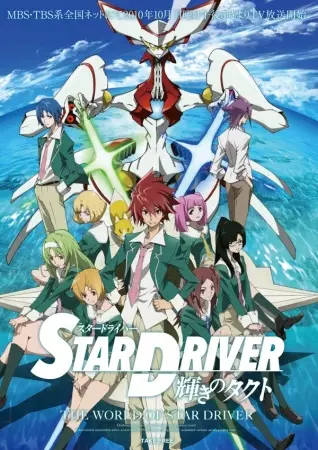
STAR DRIVER 輝きのタクト
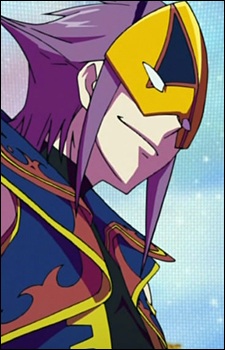
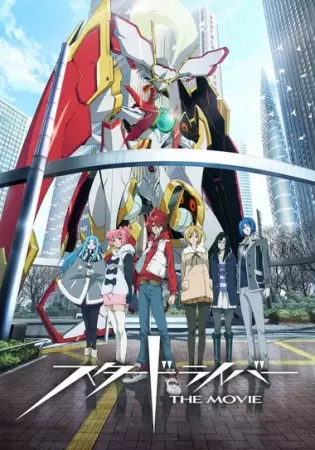
Deep beneath the surface of Southern Cross Isle, a mysterious organization known as the Glittering Crux Brigade frequently gathers in their underground fortress. The group is particularly interested in "Cybodies," stone giants which can transform into massive fighting humanoids but only in a realm known as "Zero Time." By finding and shattering the seals of the island's four seal maidens, Glittering Crux hopes to break free of Zero Time and use the Cybodies anywhere they please. One night, a young man named Takuto Tsunashi washes up on the island's shore and is rescued by Sugata Shindou and his fiancée Wako Agemaki, one of the island's seal maidens. After he awakens, Takuto quickly befriends the two and proceeds to enroll at the local academy, where many of his fellow students are secretly members of Glittering Crux. However, Takuto holds a secret: when in Zero Time, he can utilize a Cybody of his own—the Tauburn. In the forthcoming battle, Takuto and the Tauburn will be the key to preventing Glittering Crux from shattering Wako's seal and realizing its nefarious ambitions. [Written by MAL Rewrite]
Главный
Главный
Главный
Второстепенный
Второстепенный
Второстепенный
Второстепенный
Второстепенный
Второстепенный
Второстепенный
Второстепенный
siutou
March 21, 2011
Horray for Maho Shou...nen! Complete with magical transformation sequences, swords emerging from bodies(1), Juri (2) and Sailor Uranus/Neptune (3) characters, and mechs with heels! XD The best part about this show is that it's done by Bones, so the art is consistently good. This is one of the shows I look forward to the most this season, and although the story isn't mind blowingly unique, it's still refreshing. And the fight scenes are like emo versions of Sengoku Basara (4). What more could you ask for? 1. See Revolutionary Girl Utena 2. See Revolutionary Girl Utena 3. See Sailor Moon S 4. See Sengoku Basara Updatesince seeing the ending: kind of a let down - and the last episode failed to conclude many of the story points, in addition to looking like Gurren Laggan... -1. What happened? ;_;
Archaeon
April 4, 2011
Adaptations are becoming a bit of a thorny issue in anime these days, which is a bit odd considering how many are produced every year. The constant conversion of stories from other media is a pretty lucrative business as there's already an established market for the end product and its merchandise, regardless of how good the show actually is. Like anything in life though, there's a price to pay, and there are increasing concerns about the impact adaptations are having on original works. The resulting negative effect on script and screen writers is beginning to be felt throughout the industry as studios everywhere are findingthat their creative teams are slowly becoming unable to develop original concepts into viable storylines. The reason for this is purely because in comparative terms, it takes more effort, imagination and skill to make something original than it does to rework something that already exists, and if one doesn't regularly exercise their "mental muscles" in a substantial manner, then their creativity will begin to stagnate. And that's the reason why we get anime like Star Driver: Kagayaki no Takuto (Takuto of the Radiance). The series begins with Agemaki Wako and Shindo Sugata as the pair take a moonlit stroll along a beach on the fictional Southern Cross Island. Along the way Wako detects the scent of of someone she doesn't know, and following the trail, she and Sugata find a young man who has been washed ashore. He is Tsunashi Takuto, and his arrival on the island will awaken his destiny. Well, that all sounds pretty heroic, but that's about as far as it goes. Star Driver may initially seem like an interesting proposition, but many of the plot themes are never fully realised, which only exacerbates the fact that there is simply too much going on in the storyline. The series makes some rather nice subtextual introductions at certain points, but no matter how important these may be to plot or character development, they're never fully utilised and thus become the equivalent of the human appendix (i.e. totally useless). The storyline progression is handled in the standard "fight of the week" manner that is so prevalent in shounen anime and manga, but alongside that Enokido Yoji (series composition and script writer), and director Igarashi Takuya (Soul Eater, Ashita no Nadja, Doremi), have seen fit to add a number of themes that only serve to confuse the audience. In addition to this there are a number of questions that remain unanswered come the end of the series, which may hint at an attempt to have the viewer infer the relevant information rather than outright carelessness. That doesn't mean the storyline is bad though. While there may be a degree of confusion, Star Driver does offer up some interesting ideas that could have taken the show in a new direction. Visually the series is a bit of an odd blend as while the concept is predominantly shounen, several of the male characters have a decidedly bishounen look to them. Star Driver seems to play on this by naming Takuto's alter ego the Galactic Pretty Boy, but it's difficult to tell if this is an attempt to parody the character style. That said, there's a mundanity to the overall design that no amount of beautification can remove, partly because everyone is supposed to look good, but mainly because there seems to be a limited range of expressions. While there are a few scenes that depict specific feelings rather well, the majority of the time the characters display very little emotion, and many of the more expressive moments can seem forced or contrived. In addition to this, the complicated and overly sexualised costumes of Glittering Star, the weird posturing, the rather odd mahou shoujo style transformation sequence when Takuto summons Tauburn, and even the design of Tauburn itself, all promote the idea that Star Driver is a parody anime, and this conflicts with the serious tone of the show. Speaking of Tauburn ... The conceptualisation of the cybodies is interesting in that it highlights a degree of innovation and originality, which is odd when one considers the slightly banal approach to character design. There's a novelty to the mechas that's nice to see, especially Tauburn's rather obvious court dandy/musketeer influenced look, so the obvious question is why the same innovative approach wasn't taken with the characters themselves. The backgrounds also suffer from a similar mundanity, which is a little disconcerting given the nicely surreal overtones of Zero Time. As for the animation, the character movements are pretty standard, but the action sequences are often fluid and well choreographed. Unfortunately this is overshadowed by the the fact that specific scenes have simply been re-used to the point where viewers may find themselves skipping particular moments, and while this tends to be a fairly common practice in "fight of the week" shows, it still smacks of laziness. Which neatly leads me on to the audio side of the series. Star Driver initially seems to be well served in the acting department thanks to the experience of Miyano Mamoru (Takuto), Hayami Saori (Wako), Fukuyama Jun (Sugata), and the rest of the cast, so it's a bit strange that many of the roles seem shallow and forced. Part of the reason for this is the lack of facial response on the characters themselves as this gives the impression that the seiyuu are trying too hard, but the script is also to blame as much of the dialogue seems to have been written just to fill in the gaps. All of this makes the voice acting a much more difficult proposition as the seiyuu are often forced to compensate for poor writing. On the other hand the effects are well timed and very clear, and one of the nice things about this show is how it doesn't use music, as background tracks are often reserved for occasions of emotive importance or action sequences. There are also two opening and ending themes for the series, and while they tend to have a slightly upbeat feel to them, they seem to work well with Star Driver's major theme. Possibly the biggest issue though, is the lack of substantial development on the part of the characters, which could have been somewhat offset had they been clearly defined from the start. Unfortunately this is not the case, and while viewers are given the facade of progression through interactions, conversations, and even action sequences, in reality there is only one thing learned throughout the whole show, and this only occurs in the final episode. In addition to this there are few explanations forthcoming about why the members of Glittering Star are so determined to use the cybodies, and the only thing that seems to tie their actions into the story is something called The Departure (which is another thing that isn't properly explained). But that's not the worst part. In a nutshell, the characters are dumb, and leading the idiocy is Takuto. The very first episode has him entering the enemy base, but for some reason he "forgets" that he's been to the heart of Glittering Star's operation, and so the secret society is left to continue their work relatively unimpeded. This is possibly the biggest hole in the plot as at that point Takuto is aware of the enemy, knows where they and who their target is, and could very easily expedite a much simpler and shorter resolution. Because of this the so-called past traumas, the posturing, the banality of the high school setting, pretty much everything used to define the characters in some manner, all become slightly ridiculous. So, where does that leave us? Well, on the surface this seems like a pretty solid proposition, especially with Enokido Yoji (who wrote the screenplay for Diebuster), taking part on the production side, and there are some enjoyable moments that occur throughout the series. Star Driver is nothing if not an interesting idea that tries to approach certain concepts from a different angle, and the little touches of innovation here and there add a pleasing quirkiness to proceedings. Sadly, it's not enough as the series retains a ridiculous quality that isn't helped by a decidedly sub-par script, seemingly emotionless characters, and the lack of any substantial explanations. Star Driver tries to do too much with too little, and the apparent attempts at parodying certain themes only adds to the confusion and makes the plot more convoluted and overly complicated. This may not be an adaptation of any sort, but that doesn't mean that it's automatically good, regardless of who worked on it. There are some positives within the series, but ultimately this is nothing more than mediocrity at its finest. The fault lies solely with Bones, who in the last two years have produced one original anime franchise (Tokyo Magnitude 8.0). Everything else has been an extension of an existing title, or an adaptation from another medium. Unfortunately they're just one studio out of many that continue to try and cash in on the popularity of something else, with no regard for the effect this has on the viewer or the industry itself. After all, it's easier to blame things like fansubs for falling sales rather than admit that what you've produced is nothing more than average.
Cobbles
April 4, 2011
Star Driver has been one hell of a polarizing anime since day 1. Some people were initially on board because it looked like a throw-back to old school mecha. Some watched it because it looked like a full on parody of 90's anime with the ridiculous nature of the show combined with the over-the-top style. And even more watched it because it was penned by the same guy who did the composition for Revolutionary Girl Utena, Yoji Enokido. Yet when the credits rolled at the end of episode 25, it was obvious to me and to anyone who stuck with the show that Star Driverwas its own beast so to speak. It incorporated elements of the things I mentioned above yet it never really followed through with any one idea. Surely a mish-mash of these ideas would create schizophrenic anime which tries to do everything and succeeds at nothing, correct? Any other circumstance, I'd tell all of you yes, because there's absolutely no way an anime like that could ever be good. Yet against all odds, I found myself enjoying Star Driver more and more as the weeks went along until I reached the startling conclusion that hey, Star Driver was good! Not just good but pretty damn awesome and compelling! I wrapped my brain around why I was enjoying it so much, when virtually every aspect of the show was working against it. I mean what kind of anime has the audacity to take itself seriously when the main character's title is "Galactic Pretty Boy"? The answer is: Star Driver, an anime that somehow manages to pull it all off, and pulls it off with a healthy dosage of fabulousity. SD's story isn't really something out of the ordinary. A secret organization made up of high schoolers are bent on taking over the world with giant robots that are sealed in a pocket of space/time while some random Mary Sue shows up to thwart them with his own ridiculous giant robot while sporting an equally ridiculous costume and Mahou Shoujo-esque transformation scene. While this is the basic premise of SD (and pretty much every episode), many people will think it gets repetitive pretty soon (and believe me, it does). So why would anyone like it? Well my answer is derived solely from one aspect of the show and that's primarily the subtlety of the execution. The subtle way exposition is fed to the audience, the subtle way characters are presented and written, it makes for a really compelling style. Its one of aspects that made Utena as good and popular as it was. Now I know BONES' anime have a notorious reputation of not holding the audience's hand at all when it comes to story-telling and much of it becomes read in-between the lines or not addressed at all. Star Driver also does this, but only to a degree. It's not so vague that it becomes frustrating but its mysterious enough to compel the audience to continue watching. It gives the audience a chance to think about the plot and characters by themselves and tactfully delivers the answers later at an appropriate time. This is a grand form of storytelling not because the story itself is good but mainly because of the way its presented. Unfortunately while the storytelling borders on masterful, there are some really annoying pacing problems with the whole package. Case in point, most people will drop this in the first 5 or so episodes. I wouldn't blame them because the show has very weak start, where characters are very slowly introduced and the show pretty much relies on the mecha fights to carry it for 20 minutes. Didn't help that the fights were usually only 1-2 minutes long. It slowly builds itself up and it really gets better after episode 7 but I can't really look favorably at the beginning since it could have played up the shows strength which is characterization instead of lolhijinks and boring-as-hell mecha fights. The show also drags towards the end which is honestly baffling to me since there was plenty of material they could have used to make things interesting. Yup, around the end it sort of reverts back to the formula used at the beginning, but thankfully gets its shit together and ends on a strong note. Now like I said earlier, SD's characters are its strongest point. Even when nothing but high school antics are happening on the screen, there is a sense that everything that happens has some meaning behind it. So when characters often start talking about inane or seemingly pointless topics, it can turn out to be euphemism or a metaphor that has relevance to the plot. Now I don't mean all the antics and comedy have some ulterior theme to them, sometimes there really are comedy scenes to make the audience laugh but more often then not, you'll be thinking about some lines of dialogue long after they've been said. This brings me to another element that SD does really well and that's character interactions. Instead of long flashbacks about something or other, character's personalities are revealed through the way they act around each other, especially when the tone becomes serious. And these are probably the best parts of the show, Sugata's conflict with Takuto, Mizuno general interactions with her sister, Kanoko's demeanor and attitude towards the Glittering Crux and Wako's internal struggle between Takuto and Sugata are all great. Even more impressive is the fact that SD goes out of it's way to characterize minor characters as well as major characters. You can probably argue that Takuto himself is the Mary Sue and isn't characterized worth shit but at the same time you could probably write papers on how his real personality is implied in juxtaposition of the Mary Sue front he shows to all the characters and even the audience. Hell you could even write an essay on how his first phase ability makes him the main character of the show with his catch-phrase "Dazzling the stage" as proof of how meta things can appear. It doesn't go as far as Utena does but it certainly isn't a slouch slouch in that regard. As per all BONES anime, the art and animation is done very well. There are loads of awesome sakuga cuts for all the animation fans out there. Generally the fights can be very repetitive with Takuto winning all the time but the animation can make them very exciting sometimes. It doesn't happen too often since I can count the number of times where everything aligns on one hand but when the art, animation, plot and music are all synched in excellence, it becomes very awesome. But be warned, this isn't really an anime where the mecha fights are the most important part of the show, most of the backlash towards the beginning happened because the mecha bits were actually the worst parts. Mostly because the fights are nothing more than a tool for characterization in the end and you're enjoyment of it will revolve around how much you care for the character that fights Takuto. I won't say the mecha aspect is downright terrible, but I honestly think they could have better implemented the Cybody fights to coincide more with the plot than the characters. Some of the best episodes in the show don't even have any fights in them. The sound on the other hand is really good and is strong throughout the show. SD has some of the best insert songs I've heard in quite a while (like Monochrome) and uses them very efficiently. The other tracks manage to keep up with the vocal ones as well, so its not like the rest of the OST is bleh in comparison. The voice work is also typically good, the best performances come from Jun Fukuyama as Sugata, Ayano Niina as Kanako and Akira Ishida as Head. Can't say I'm not sick of Mamoru Miyano after watching a lot of animu but he pulls off Takuto's happy-go-lucky attitude well enough and still manages to convey his more serious moments with the appropriate tension. Star Driver really turned out to be that one show you liked but couldn't really point out why. Kudos to all those people who stuck with it through thick and thin, god knows it tried our patience many times. But for all its apparent shortcomings like derp pacing, flaky mecha moments and wasted potential, it still manged to be one hell of an anime, and a great ride. I'll definitely miss the Saturdays where I stayed up all night into the wee hours of Sunday morning discussing the newest episode and whatnot. If you haven't watched it, I recommend really pushing through those first couple episodes because they're not the best this anime has to offer. Star Driver offers a really unique experience that I haven't seen in much-if any anime, so I strongly recommend it. oh and (ノゝ∀・)~キラ☆ KIRABOSHI! because it had to be done.
ggultra2764
May 23, 2011
This series was giving me a number of vibes connected to Code Geass and I don't mean that in a good way. Star Driver appeared to be trying to mix around the classic archetypes of super robot anime, slice-of-life high school comedy and the over-the-top elements of Code Geass. If the series ran for the most part as a comedy like Gurren Lagann where it didn't take itself seriously, then I would have found myself liking this series quite well. Instead the series tries to take itself seriously yet with the many eccentric traits of the characters, it comes across as rather awkward and hardto take seriously just like Code Geass and is bogged down by quite a good number of issues in its plotting. Many episodes tend to run in a similar setup: 1. Takuto is enjoying himself with Wako and Sugata. 2. Random member of Glittering Crux in the student body meets with him or tries causing mischief. 3. Member decides to challenge Takuto to Cybody battle. 4. Takuto overcomes foe. 5. Repeat for much of the show's run. This was quite a repetitious setup for each episode and made things appear to be mostly episodic for the show. In addition, the show doesn't really bother going into great detail into its major elements such as what led to each of the students in Glittering Crux to join the group, how Cybodies came to be, how humanity came to discover them and why the Glittering Crux did not dispose of Takuto away from Cybody battles if they desired world domination so badly. The ending also came across as rather weak with a shallow baddie unveiling himself, elements of deus ex machina and failing to provide a proper resolution to the love triangle that later develops with Takuto, Wako and Sugata. There are some elements to the plotting of Star Driver that did work well for me and kept me from dumping it much earlier on. The series does do well at fleshing out and developing the bond between Wako, Takuto and Sugata showing that the three come to greatly care for one another, even as they are aware of the complicated situation they have to overcome with the Glittering Crux and their love triangle. Marino's character arc even lays out some heart-wrenching and deep-seated issues with her that are not as apparent with her on the surface. On the visual end, Star Driver does have clean artwork delivering a decent amount of detail on mecha, character and scenery designs; as well as having its moments of fluid animation during fights between Cybodies. There are some noticeable occasions where the visual quality can drop quite a bit, particularly in some scenes during the middle and last episodes. If you could put up with and enjoy the bizarre and over-the-top developments of Code Geass, then you might be able to enjoy Star Driver more than I did. Otherwise, be prepared for a mostly mediocre romp that tries to blend together the elements I mentioned above yet comes across as hard to care for because it doesn't cover its major elements and is hard to take seriously when it tries to be so.
adeeda
April 22, 2024
Star Driver is a show about adolescence, and of course adolescents. They wander, get lost, make mistakes, try to find meaning in life, and try to do the right thing. Some of them fall in love, and others yearn to. There’s a pitiable few who get trapped there, and never learn to grow up. That’s Star Driver. There’s also a story, of course, and it does some cool things sometimes, but it’s not what’s ultimately important: the feelings, the friendships, and the adventures. If you just let go and let Star Driver carry you, it’s an incredible ride. Its biggest strengths are that it looks fabulousand has a strong, weird vibe. Its biggest weaknesses are its plot and repetitiveness. Highly recommended. Kiraboshi!
Ранг
#3724
Популярность
#2078
Участники
120,989
В избранном
623
Эпизоды
25