

Ground Control to Psychoelectric Girl
電波女と青春男
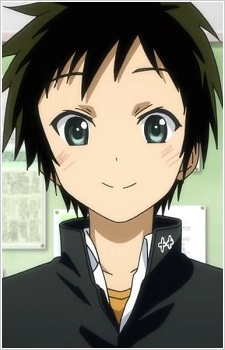
Makoto Niwa meticulously tallies the amount of positive and negative youthful experiences he engages in as if to grade his own life. When his parents go overseas, he moves to a new town to live with his aunt, welcoming the change and ready for a fresh start. However, as ordinary as he had imagined his adolescence to be, he could never have taken the existence of an enigmatic long-lost cousin into account. Upon moving into his aunt's house, he discovers the cousin he never knew about: Erio Touwa. Despite being Makoto's age, she couldn't be more different: Erio chooses to wrap herself in a futon all day rather than to go to school. She even claims to be an alien, and with a speech pattern and personality to back it up, any chance of Makoto's dreamt-of normal life is instantly tossed out the window. As he meets a string of other eccentric girls in town, Makoto must face the possibility of seeing his youth points in the red. However, he might be surprised by how thrilling an abnormal youth can be. [Written by MAL Rewrite]
Главный
Главный
Главный
Главный
Второстепенный
Второстепенный
Второстепенный
Второстепенный
Второстепенный
Второстепенный
Второстепенный
lilithtnight
December 17, 2014
My second masterpiece rating. Why? Well I'm not usually into a slice of life anime, I cant watch them but my favorites are all action and thrillers. The pace was random I suppose but all perfectly fitting to the end. The art and characters are beautiful, the story has a lot of comedy, whats not to like? But my very favorite is how deceptive the slow and oh so regular slice of life pace was, and completely whirled the story around last minute. Astounding plot twist, loved it! The anime left me stunned and impressed. Taught me not to underestimate the slice of life genre after all.
TofuZz
February 29, 2012
Второстепенный
Note: This is one of my works from Sekijitsu Art What pulled me into this series was the art. There was something about it that appealed to me and I don’t regret being pulled in because Denpa Onna has some great art. Sure Erio might sparkle a bit too often but those sparkles add effect and I really don’t mind it. There were times when Shaft decided to degrade the art during those not-so-special scenes which was fine by me. Although, during a certain episode, the art was so deformed it looked half-assed. Overall Shaft sure does some good close up shots and we’re talking about theguys who did Bakemonogatari here! Music Talk about the most dreaded OP I’ve EVER heard! Maybe I’m exaggerating a little but I really didn’t like that opening at all. The notes in the singer were going everywhere and being a music student, I couldn’t really take it. I will admit it was catchy but it’s just not my type of music. The ED was nice to listen to, but it doesn’t fall under the ‘like’ category. This also goes for the BGM in the series which also didn’t fall under the ‘like’ category. With the use of BGM’s, you want to try and add more emphasis to the certain scene. At times Denpa did execute it well but most of the times it wasn’t anything special. Story I don’t think Denpa was originally supposed to have a strong story line to its slice-of-life feeling and because of that I was lead to disappointment. With all the alien references, I had hoped for the series to take a deeper dive into the sci-fi but considering I haven’t seen Arakawa Under the Bridge, I didn’t really know what to expect from Shaft. I still enjoyed the series for what it was. Bouncing off each character and giving each character individual episodes did help in character development but at times it felt as though some characters should of appeared in certain scenes but just didn’t. The flow of the series seemed on par with the story. There were plot holes and some characters just disappeared after a nice build-up of events leaving a very blended flow going up and down. There were times I liked some episodes and there were times I didn’t. An example of this was Shaft leaving the proclaimed esper near the end made me wish she was introduced earlier. Another example included the cow tag man being spoken of but was left till an episode or two later for him to actually get introduced and Elliot was never heard of after we saw a child version of him. Of course, it’s not all so bad. Overall Other than being filled with heaps of moe moments and maybe some fan-service, it wasn’t as interesting and enjoyable to watch as I thought it would’ve been. Erio deciding to take on star gazing and a part-time job wasn’t what I expected for her social comeback towards society and the other characters had some lack of importance too in certain scenes. As I’ve said, the music wasn’t that great, the art was nice to see but there wasn’t an actual solid story to this series. Should you watch it? You might be hesitant to watch it after a score of 6 out of 10 but this is to appeal towards a wider audience. If you enjoy moe, sparkles, slice-of-life or nice occasional art then I’d recommend this show to you.
Wittgenstein
July 11, 2011
I don’t make it a point to write reviews, but I particularly enjoyed Denpa Onna to Seishun Otoko, and, upon seeing its subpar ratings, felt somewhat obligated to defend it, so, here goes: Art: Wonderful, wonderful artwork. I’m a stickler for art, having dropped numerous series simply because I couldn’t stand the way they were drawn, and Denpa Onna definitely wins in this category. Shaft has outdone itself – colorful, lively scenery, vibrant, multi-toned characters, and, in general, great color schemes, compositions, and dynamism in each frame. It’s not quite 5 cm/s, but I daresay it’s approaching that level. Soundtrack: I usually neglect this category, as I find itto be a relatively minor component to my viewing experience. However, Denpa Onna does provide some melancholic piano keys and nice ambience music that complement the pacing well. Can’t say I’m a fan of the OP or ED, but, then again, I was never into the high-pitched squeals that permeate much of anime JPop. Characters: As many reviewers iterated before me, eccentricities abound in this motley crew of a cast. Honestly, it’s refreshing to see a show invent new personalities instead of rehashing the standard anime prototypes. (I especially enjoyed how Erio Touwa [E.T.] sat in Makoto’s bicycle basket as he pedaled her into the sky). Development is admittedly slow, but it’s definitely there. This is something I feel many reviewers don’t emphasize enough. Denpa Onna is a show about the gentle adolescence of our halcyon days, and, to that end, I think it’s nice that events and developments aren’t explosive or convoluted. The subtleties and gradual changes are meant to mirror the normalcy of our teenage years and, thus, offer a stark but welcome contrast to the eccentric personalities – that is, while the characters are themselves bizarre, their growth is relatable and meaningful. Story: Denpa Onna opened with an explosive start. Bracketing the rest of the show, I think the first 3 episodes could operate as a short, standalone OVA series. Really, I was hooked after watching a prologue so rife with meaning and mystery. Erio’s personality is fully emphasized here, and here, too, is where the show probes most philosophically at the deeper themes of life. Makoto’s rejection of Erio’s delusions is a deeper rejection of ontological relativism as a legitimate means to happiness – his actions nuance his convictions well, and we really get a sense of Makoto’s take on what it means to be human. Sadly, I feel many casual viewers gloss over this last point and take Denpa Onna to be yet another mindless harem. Let me emphasize that it is not. Its insight is subtle, but present, and acutely profound. So, what about the rest of the show, you ask? Well I can say that the first three episodes are somewhat anomalous when compared to the slow pace and slice-of-life themed events of the last 9 episodes. Critics charge that Denpa Onna lacks plot or hooks to keep viewers interested, and I’m not unsympathetic to this criticism. However, as mentioned above, I think the slow pacing works well with what this show takes itself to be: a chronicle of a boy’s adolescence. I find it far more realistic that schoolgirl crushes don’t blow up into soap operas and baseball games don’t become matters of life and death. Don’t get me wrong; it’s not like the series never scratches below the surface – it really does, but, often, it does so almost imperceptibly. Take episode 8 (Tsiolkovsky’s Prayer), for example. It centers around Meme’s daily routine over a week, but the conclusion of the episode is nothing short of powerful, poignant, and profound, letting us really glimpse the depth beneath her skin. People are unique, change slowly, and offer interesting and poignant stories. This, I think Denpa Onna emphasizes very profoundly. Moreover, among these events of every day life are the rare gemstones that move boys closer to manhood, and Denpa Onna doesn’t forget this. Conversations with characters often revolve around mundane occurrences like deep sea fish or basketball games, but are artfully and subtly infused with lessons on the importance of curiosity or the rate of human progress. It’s important, when watching, to pay attention to these moments – as they offer enlightening insight into the human experience. So, what’s the final verdict on Denpa Onna? If you’re looking for something explosive, convoluted, and plot-driven, then I advise you to turn away. If, however, you’re looking for something light-hearted yet penetrating, then I urge you to pick this up. By the end of it, Denpa Onna to Seishun Otoko, with its subtle but philosophical messages, really offers you a novel and reflective outlook on that awkward phase between puberty and responsibility. And, after all, that’s how life is: subtle but profound.
8thSin
June 30, 2011
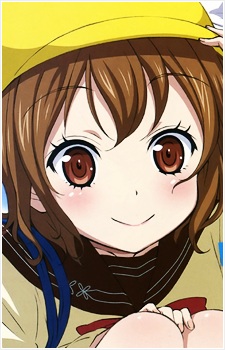
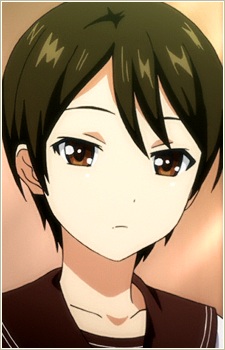
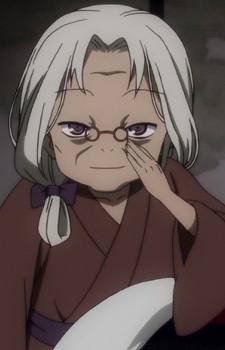
This review exists within the internet, authored by a SHAFT fanboi. It functions only as a test ground for me. It is also a spoiler zone in this page. Under the current assessment of the series, it is a "9/10". This was determined by my reaction to audio-visual investigation of the SHAFT seishun anime. Patience is the closest thing viewers have to salvation. However, accelerated exposure could amplify the viewing experience of a class-2 audience. A collective of readers that has forgotten it is a collective of voters... That is you. Members of the self-unaware, clueless MAL users under aliases are not permitted to vote "Not Helpful" on this review. Injection of correctiveprogram to opinionated haters with inflated pessimism and distaste! I would write the entire review in Denpanese, but I used up my esper mana for speaking an alien language. The word "denpa" (lit. "electromagnetic waves") is used to refer to people with overly-active imaginations who appear to live in their own world. In other words, delusional psychopaths. The word "seishun" (lit. "blue spring") means "adolescent" or "puberty". However, the term often implies the joys and challenges of overcoming immaturity, and youthful romance, as per usage in "seishun points". 'Denpa Onna to Seishun Otoko'(loosely translated to "Psychopathic Girl and Adolescent Boy") begins with the the protagonist Niwa Makoto moving into a new city, known as the "the City Watched Over by Aliens". He's in his aunt Meme's care, whose daughter Erio is a denpa hikikomori wrapped in futon. The story begins with Makoto getting to know Erio. She's got a serious case of denpa, believing herself to be an alien who came to Earth to investigate the mankind. Being a nice guy that he is, Makoto takes her out to prove she's a human being and can't fly like E.T. After that, the focus is transferred to the remaining cast, Mifune "Ryuushi-san" Ryuuko, Maekawa-san, and Hoshimiya Yashiro. Many viewers must have felt betrayed when Erio turned from a jargon-spitting enigmatic girl in a futon to an ordinary shy girl, but ironically, Makoto and Erio are surrounded by denpa and therefore has plenty of material for comedy and accumulation of Seishun Points. Niwa Makoto is your average protagonist in a harem setup. He even describes his own situation as a typical protagonist in school drama in the first episode. However, he does have his own unique Seishun Point system to keep track of the quality of his school life, and does actively pursue opportunities to accumulate points. He is one of the more likable protagonist around in that he has a skeptic, realistic personality, but man up when it really counts. He has a pretty good sense of humor, and we as viewers follow his narration as a guide, seeing things through his perspective almost the entire time. Touwa Erio started out as a hopeless loner whose own mother had given up on her for becoming denpa after a traumatizing event in her childhood. She does eventually get "fixed" by Makoto, and makes a slow return into the society. Her character provided early selling point for the series, and we see her gradual change after Makoto showed up. This season ended at volume 3 of the novel series, out of 8 volumes in total. Her change in character was limited to finding a part-time job and participating group events, but there is surely more to come if a sequel is ever made. Touwa Meme is a 40-year old aunt of Makoto, who acts like a child all the time and sputters nonsense all the time. Her role in this series is mainly MILF moe and acting as a puppet-master who influences the other main characters to get the story going. She's quite mysterious, and it's hard to know what she's thinking, but as audiences, we know she's hiding something about Elliott, who may or may not be an alien. Ryuushi-san is probably the most interesting character in this series. She is a moeblob, but has an unique and consistent quirkiness that worked really well with Makoto. Their chemistry is excellent, and she's just one of those adorably cute hard working character that you can't help but cheer for. She is the de facto Heroine in this season, spending most time with Makoto and the only one to actively try to win him over like a character in a true seishun series. Yashiro's line in ep11 makes me wonder if they would eventually become an item. The way she blushes around Makoto was really cute, and I'll certainly be cheering for her. Maekawa-san's personality is almost the opposite of Ryuushi-san. She's always composed and has a dark sense of humor, also seems to have analyzed every situtation and knows what's going on. However, she also seems to have a screw loose on her head, with all the strange cosplays shown in every episode. Her role in the show is mainly to tease Makoto and Ryuushi-san, but getting them together conflicts with her apparent feelings for Makoto. There could be some major character development for her if the sequel is ever made. And of course, her costumes are also there for moe to niche viewers. Hoshimiya Yashiro made a very late appearance this season, but left a huge impact into the story. She claims to be an alien esper, which no one believes, but she has shown evidence of her super powers throughout the final few episodes. Interestingly, she says Makoto and Ryuushi both have "the potential", which was precisely what Erio said to Makoto early in the show when she was still a major denpa. Yashiro also brings a new theme to the show, that one should not limit their potential, and develop the strength to believe. This message is extremely similar to 'Seikimatsu Occult Gakuin', but it is executed far better here, with many great inspirational scenes. Every major characters have their roles in the show, and the character headcount is very low to ensure every character gets their own spotlight. There were some pacing problems in the middle as one non-linear episode mixed in and extremely slow story development, but there are incredibly inspiring and touching moments of youth in every episode as a treat. There are also plenty of references to other manga and anime, sometimes even real life events to keep us entertained. Art and animation is this series is generally very good. The character designs are attractive, with great cuts and camera angles (although it's almost completely devoid of the signature SHAFT animation style). There are few scenes where characters seemed deformed for budget saving purposes, possibly using Korean animators, but every single inspiring scene (and fan service scene) that actually matters is drawn to perfection. SHAFT knows how to inspire and how to best use visual support to tell a story, and it shows once again in this series. Voice acting, with exception of Erio, is spectacular. Ryuushi-san's voice acting is what I would call 「ハマリ役」, epic casting. Her voice is so unique, yet fits the character perfectly. All the seiyuu staff in this series are extremely motivated, and their lines are filled with emotion, especially in the most critical lines. BGM is also incredibly touching and flows extremely well. It kind of just plays in the background, but becomes really noticeable in critical scenes to improve the viewing experience... it's in total harmony with the story. OP is a "denpa song" in a whole different way. The term is usually used to describe songs with incomprehensible lyrics. In this case, the lyrics do make sense, but BGM composition and the vocal sound absolutely retarded. This works extremely well for a series about denpa, and it's somehow addicting. Absolutely brilliant. ED is rather dull, but cute song with fun lyrics and unique whisper vocals. 'Denpa Onna to Seishun Otoko' has many classic, almost cliché seishun elements, such as screaming out corny lines in public, running towards the sun (its variation biking towards the moon was used), awkward silences between the opposite sex, working hard on sports... However, it's the execution that makes all the difference, and it really shows in this series. The main message of keeping our minds open and appreciate every moment of our lives, it really reached my heart. This series has also given me a new level of appreciation for NisiOisiN's works. Although the series does attempt to use witty dialogs to advance the story and succeeded to some degree, it lacks the pacing and sophistication seen in similar NisiOisiN adaptations by SHAFT, 'Bakemonogatari' and 'Katanagatari'. If I had to pick, this is closest to 'Soredemo Machi wa Mawatte Iru' for being a rare authentic 'slice-of-life' anime, and also the extreme quirkiness that's hit-or-miss for its viewers. It was a definite hit for me, and I'll definitely look forward to the sequel. 'Denpa Onna to Seishun Otoko' is a story full of dreams and depicts an ordinary guy in a crazy city, trying living his life to the fullest. It's brilliant, and exactly what a true seishun series is all about. If you disagree, I guess I'll just say it out loud in a clear and concise phrase... "If you say so."
DangoSadge
June 20, 2011
Let's say you have a drinking problem. Instead of admitting that you have a problem, you blame your drinking because your wife nags at you, or because the devil told you to do it, or some other excuse I could not think of because I do not have drinking problem. (No, I'm not in denial here, I seriously don't have a drinking problem) Reality distortion Denpa Onna to Seishun Otoko deals with characters who distorts reality to their own convenience to escape facing the inconceivable truth. As normal human beings, we usually believe our perception of the worlds within and around us is "true." The story revolves aroundNiwa Makoto (who is playing as the youthful man) and his cousin, Touwa Erio (who is playing as the electromagnetic wave woman) living with his aunt Touwa Meme (horny old woman with a 20 year old body. Yes in Japan it is possible without cosmetic surgery) in a small city famous for alien encounters. Now if you all know me (which I doubt you do) you probably think I picked up this title because it has youthful scent all over it which means a harem is soon to follow. YES. I wont deny that. Other reasons would be due to Erio hot legs. (No I do not have a leg fetish) So we follow the journey of Makoto collecting youthful points for god knows what reason (as if you can measure youth) and along the way he meets (as expected) more girls to add to his circle of harem... I mean circle of friends. Art wise, it's very obvious that you can tell that this is one of SHAFT's handiwork. The dramatic zoom into background objects, character faces, (especially the eyes) I've read a couple of chapters from the light novel and it is clear that the portrayal of the story using the artwork is nicely executed. The voice cast chosen are befitting for their characters. Now I can't go into detail about all the characters as I want to avoid spoilers as much as possible. But I would like to stress something on Niwa Makoto. [REASONS WHY MAKOTO SHOULD HAVE A HAREM] 1) He is a nice guy (Main characteristic a harem male lead) 2) He is a transfer student (Research shows that 4/5 of anime transfer students gets a harem) 3) He doesn't live with his parents (He is independent which means less cockblock) 4) He is not ugly (Have you ever seen an Ugly harem male lead?) 5 His name is Makoto (Reference To the Makoto from SchoolDays. I just hope his balls is still intact when everything is over) Basically, Makoto here is a personification of everything that is adolescent in anime terms. His cousin on the other hand (Touwa Erio) plays the fumbling yet lovable character (well I find her lovable because I love girls with blue hair. No I do not have a blue hair fetish) She plays the electromagnetic wave woman in this series (electromagnetic wave woman here means weird, crazy or someone who has an obsessive behavior on an perception) She provides the story for the first arc in the series, Makoto helping her cope from her transition from an 'extraterrestrial being' back to a 'normal' human being. She is also the main example of a person who is clearly distorting her own reality. But she may not be in denial? Perhaps it was misinformation? For example have you ever experience sleep paralysis? People who don't know the term sleep paralysis may think that when this occurred to them, aliens are actually probing them. This is just the way it is when you do not have information on your current circumstance. Do I find this amusing in any way? - I find adolescence amusing -I find eccentric characters amusing -I find futon wrapped Erio amusing -I find getting a million youth points for seeing a girl naked wrapped with a bath towel amusing What I do not find amusing? - I find incest not amusing -I find cradle robbers not amusing -I find cattle mutilation not amusing -I find no harem in a supposedly capable harem producing anime not amusing Overall if you're a fan of SHAFT like works (and no I'm not referring to Madoka, damn Madoka fanboys...) then I see no reason why you should not watch this. I have learn from this anime that sometimes blaming aliens is all what it takes to escape reality. (For those of you who had sleep paralysis, blaming alien is very common) Examples: "The crime rate had risen over the past few years" -I blame Aliens "Baby dumping has increased from a decade ago" -I blame Aliens "Our job opportunity has been falling recently" -I blame Aliens Case in point. Oh by the way, "Aliens" here DO NOT mean Mexicans. Racist pricks.
Ранг
#4097
Популярность
#871
Участники
320,957
В избранном
1,155
Эпизоды
12