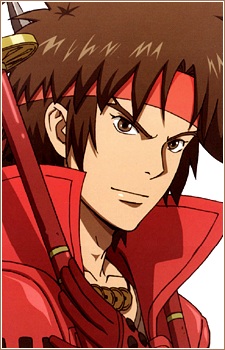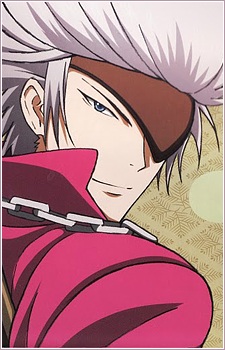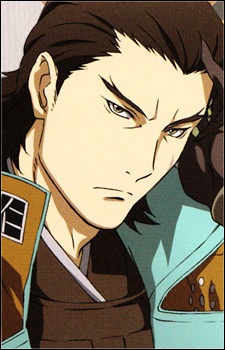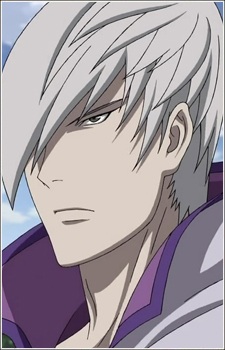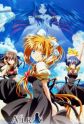


Sengoku Basara - Samurai Kings: The Movie
劇場版 戦国BASARA -The Last Party-
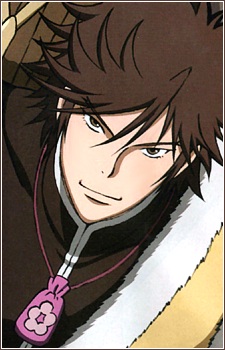
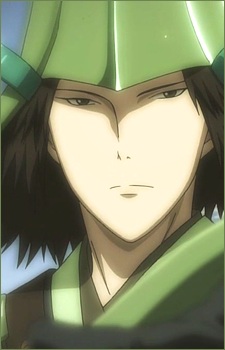
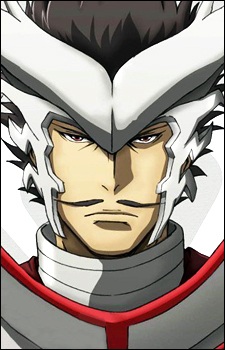
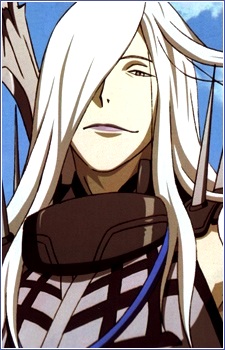
The story of the film is set after the conflict instigated by Toyotomi Hideyoshi ended, but not before the Battle of Sekigahara determines who shall be the Shogun of Japan. (Source: ANN)
Главный
Главный
Главный
Главный
Второстепенный
Второстепенный
Второстепенный
Второстепенный
Второстепенный
Второстепенный
Второстепенный
Kyrdua
January 2, 2012
ARE YOU READY GUYS?! DON'T SLACK OFF!! okay, enough of my obligatory one liner intro. but before I start the review, I just wanna make a few things clear: 1. This is NOT a standalone movie, this is a SEQUEL to Sengoku Basara 二, which in turn is a Sequel to Sengoku Basara. Though you can watch this first as it gives short synopses of the first two. but you will eventually have to watch those for this movie to make sense. 2. This anime may cause testosterone poisoning because it is overflowing with manliness 3. If you are looking for realistic war battles, this movie (heck, series) ISNOT FOR YOU. People do, and WILL constantly do increasingly impossible (and awesome) feats. okay, with those out of the way, let's get it on! Story: 10/10 Sequel to Sengoku Basara 二, this movie starts off with a "what happened after" style story telling. We get to see how the previous war affected the protagonists' faction on each of their POV. "Cameo Factions" of side characters are also given less focus too, so there's no filler in this movie. The story is mainly told in a character centric way. The plot itself, however, is the typical "tyrant trying to conquer a country" plot. It's pretty cliche yes, But is nonetheless still engaging due to the sheer awesome of the characters. who are all pretty well rounded. Art: 10/10 Character Design is pretty top notch. Everyone looks very modern yet still feel like they really are from the Sengoku Era, though it's mostly the mooks who look that part. 3D special effects look pretty integrated too. The animation is pretty smooth and the environment (even barren ones) look picturesque. Buildings and Transportation are very detailed. There's also a nice surprise at the credits, one of the few times you WILL want to watch the movie credits. Sound: 10/10 Epic fighting scene music? check. | Mood fitting music? check. | Good Opening/Closing credits music? quadruple check. Overall, the music here are all very fitting; there's the hard rocking music for fighting scenes and op/ed; there's the slow and serene music for the more serious scenes; there's the epic ominous music with latin-like chanting for when people are fighting the more sinister lot of the cast. Music aside. another strong point of this movie is the voice acting. (or at least, japanese voice acting) The characters that are meant to be Loud and Compelling are exactly just that. soft spoken characters are also appropriately soft spoken. NO ONE will make you feel like they sound off. It has always been even in the 1st Sengoku Basara. Character: 10/10 Character development HO! previously well developed characters are given even more development here. previously "Mr. I-Appeared-in-the-last-episodes" types are also fleshed out via showing previously offscreen events. There are still unexplained recoveries though. but we can safely assume it's part of every single plot relevant main/supporting characters' many powers. That aside. everyone gets their fair share of depth and screentime depending on their importance in the plot. Characters who are there just to kick in the story are immediately put aside in the sidelines and never mentioned directly again. And oh, I just would like to add that some characters here are pretty crazy awesome and often have hilarious one liners which only emphasizes their awesomeness. Enjoyment: 10/10 The Sengoku Basara series is originally one of Capcom's FIGHTING game series. True to it's Fighting Game origins. there's A LOT of fighting in this movie and it's prequels. even if you can't care much about the characters or plot there's still the insane amount of action to keep you entertained. This is definitely a must watch for action fans. there's ZERO fanservice too, unless you count the the male characters sculpted bodies and primal screaming during fighting fanservice. Overall 10/10 In closing. I really enjoyed the Sengoku Basara Series. This movie gives a damn satisfying ending. where the protagonists go have ONE HELL OF A PARTY.
Второстепенный
Northen_Lights
December 30, 2011
At last I watched this! I was realy looking for this release all summer, but it appeared the Enlish sub released only some days ago.(Not speaking about Russian subs) The story turned to be as it must be in both Basara seasons - the same characters and the idea of fighting samurai...But the spirit of this Movie i just as it must be - incredible guys, incredible speed, pathos... I realy love Basara's seasons and I think for those who realy true fans will understand what I mean. It is the Last party, but battle is not ended.I guess. So have good time and watch.I think you will enjoy! ARE YOUREADY GUYS?
Animezinghayden
May 6, 2012
Lets kick this off with a word of caution; Don't come into the Sengoku Basara franchise expecting anything more than a battle oriented program that makes little boys, and this 21 year old boy, want to go out, buy six swords and spout strange statements in poor English. Now if you can get past the fact that this series, and the last party, is purely for a laid back, stress free roller coaster ride of adrenaline filled manliness, then you will come into it with the right mindset and be able to appreciate it fully for what it is; an incredibly fun movie to watch. The storytakes place after the events of the first two series conclude (and for those who don't know, are loosely based on the real events and warlords of the waring states period) - I say loosely because while Date Masamune was in fact regarded as the one-eyed dragon of oshu, I'm about 70% sure he couldn't fly or shoot electricity out of his sword. So set between the defeat of Toyotomi Hideyoshi and the battle of Sekigahara, The Last Party is another adrenaline fueled fight fiesta featuring all of the characters we have come to love over the past two seasons; fighting the new threat Ishida Mitsunari, whilst deciding whether or not to throw in their cards with the real life eventual victor and ender of the waring states period; Tokugawa Ieyasu. As always, the art is superb, the voice acting is sublime and everything that has made this series noteworthy is transferred to this feature film. I won't say much about the show itself as fans know what they are getting into and those new to the series really should start at the first season. So all I can say that is if you want a fun and incredibly exciting movie to watch, and enjoy watching ridiculous samurai battles and physics defying feats of pure awesomeness, then this really is the show for you.
Quirky_analysis
January 10, 2020
Note: this is from a video review, look for links on my profile page. SB attempts to be forceful with some comedic interlude, hinting at the supernatural of historic times (as opposed to other anime with more fantasy-based settings, here the more fanciful is probably the weather changes). What it does usually is hype up specific scenarios that likely happened in a much more mundane manner in historic times, which can be be interesting to see as even the films of Kurosawa somberly contrast the animated possibilities that fiction can weave. While it does, at times, seem over-the-top, they're sort of this implicit capability that islikely not reality, but while animated makes sense. On this point, it seems to at times either inflate characters to such unrealistic proportions that the result might not be as expected (which might be due to relying on an arc for episodes, where other anime like Inuyasha tend to go on at length and so it isn't a burst as such), or confine them to such little time that one wonders why they exist at all (as with Itsuki, as discussed later; note that this review will not have spoilers from the anime, as such, but will detail the historic parallel realities). The battle of Okehazama was actually worse for Imagawa historically than depicted in the anime as his soldiers simply escaped, and it seems like, despite the episode showing more of other daimyō (Sanada and Date were not, apparently, present historically, whereas Maeda Toshiie was, but he's not introduced until the second season), in reality it was dominated more by Nobunaga (but only as a counterattack), whereas in the anime he seemed to appear out of nowhere; also, it omits the strategy involved behind a smaller army overcoming a larger one (partly involving the weather, which was animated). The battle of Hitotoribashi was briefly alluded to, and yet still affects the character of Masamune, so much so there is a flashback which also indicates as to why Kojuro is so loyal - Nihonmatsu was a daimyō who was seemingly forgotten in SB, and yet it would have built up an understanding for Masamune especially since the second season has its focus on him. Also, Satake Yoshishige is mainly encountered in the games, despite virtually being non-existent in the anime, and yet could have been at least introduced in a flashback as he appears to have been a daimyō opposing the Date clan in this battle historically (even Itsuki, though, with her half a minute screen time in the main Basara series, has more time than the Satake, who in the game is depicted as clumsy, with no mention of their history with Masamune). The battles of Anegawa and Nagashino (ep 5, 6) seem to be conflated perhaps; episode title references Nagashino, and yet Azai was not present historically, whereas he was in the anime, although he was at Anegawa where Asakura Yoshikage (briefly mentioned in the anime) also was - Nagashino also could not have had Shingen, as he had died two years previously in 1573 (but then the anime doesn't seem to care about dates and discrepancies at all), it did though have his son, who is totally excluded from the anime. It's mostly accurate when it came to Oda's distancing from Azai and his usage of arquebusiers, but Hideyoshi was notably absent in the anime, despite it being his 'debut' in history (introduced abruptly in the second season then); Shingen also seems to fight Tokugawa instead of the Asakura - Honda's actions were also seemingly artistic license (but then, so was the very fact he's somehow a mecha in 1570). These episodes also include, historically, events happening during the siege of Odani castle, but differ on most accounts. Along with the style over substance approach to the animation itself, the narrative had issues with either over or under-emphasis of certain characters and concepts - Nene being one, seen only in flashbacks, much neglected in animation despite seemingly being Maeda's motivation for many venture, and yet historically the crucial narrative that the anime claims is so important (the only thing said really, and often repeated) did not occur at all, and so the matter of its inclusion in the anime should be questioned, because a longer, semi-coherent flashback wasn't available, so what was the point of it at all? It seemed to be there to indicate that Hideyoshi wanted strength, but later on he's shown to be not as ruthless as Oda, and so motives are questionable. The anime tries to live up to the period's name by filling the story with as many battles as possible, but at times unnecessarily as historically there are seemingly no parallels, e.g. with the brief mention of the Hongan-ji situation, Hideyoshi feels like beating up the monks for some reason, despite meaning little in the anime as they've only been introduced thirty seconds previously, whereas historically it seems it may have only been Oda that tried to destroy the temple, with Hideyoshi later rewarding the abbot's son, Kennyo, for opposing Oda. There are some such politics in the series, but assuming constant battles entertaining, with history forsaken, creates monotony and inaccuracy... There is also a slight issue with not connecting the different eras depicted in multiple seasons in SB, as Hideyoshi in the anime seems unconnected from Oda, despite being a retainer historically, whereas in the series the only comparison is between their lust for strength, seemingly with only varying levels of mercilessness, but the narrative itself would have made more sense if all of these threads were seamless, along with being more realistic - not that fantasy takes away from potential enjoyment, but in this case not connecting the seasons (Ishida could have been brought in sooner too) could have been more narratively potent. The 1590 siege of Odawara is also another point in the anime where [the] difference with real life is conspicuous and strange - Hōjō Ujimasa is a comedic old timer in the series, but not only survives despite weakness (unlike in history), but forms a pact with Ieyasu, which did not happen in real life - why, then, change so much for trivially so little reason? The siege is mentioned in the anime and enacted, and yet it's seemingly unrelated to anything in history, which makes one wonder why it's specified at all. Tadatsugu, Tokugawa's guardian, is also another mysterious discrepancy - died in 1596 historically, in the anime he's strangely located in 1600 Sekigahara (although he has, arguably, a most funny encounter with Sōrin) - whereas Miyamoto Musashi, legendarily present in the battle, is absent in the anime (seen only in the first sequel). Overall, despite there being in total nearly fifty episodes, characters still may have an issue connecting with viewers, perhaps even the two most concentrated on, Sanada and Date, because their values might be so remote (it is, after all, a warring period, but they could have been more relatable maybe if comedy was used more intensely, and with more variety than it was, and even then Date had virtually none). Other than those, characters suddenly appear and disappear with as much mystery at times - this might be entirely due to historic reasons (despite otherwise following it only slightly), and so people disappear as they did in real life, but they all grew up, and so if animators wanted to they could have used such material to make them more meaningful - kind of like in season 2, episode 3 when the Maeda fight, it seemed like the conflict was not as empty as most others, mainly due to flashbacks which resonated in the moment. Similar to the games, the anime often seems to have invested more in how it looks, rather than substantial character development or a story that, like Inuyasha, forms a whole that connects the animation with what one perceives throughout - certainly, with nearly two hundred episodes the story is more spread out, but fifty is plenty too, and often even OVAs that consist of a few episodes can create a connection that lasts after they finished. Some were critical of Devil Kings due to the name changes, but it seems more deficient to have barely any narrative at all, just some one-liners that characters are programmed with, and despite being able to play everyone available in all the different domains, they barely make much difference in terms of changes to the script. This situation was improved somewhat in future games, but there is still a noticeable aspect of shallowness, and even when major characters go against each other, e.g. Ieyasu and Ishida, their programming only allows them a few novel lines, the rest being in common with the remaining characters. While in the games players can dedicate however much time to the personalities, in the anime there are, of course, variations, but some seemed like they could have made the anime more substantial if they were concentrated on more - Oichi and Sōrin being the more obvious ones, respectively for more pathos (and as so a vehicle for reason to be imbued in conflicts, as happened just a bit), and for comedy to ease this journey of war - the series still had both of these elements, but proportionally they did not seem to be accorded sufficient time for the rest of the anime to make more of an impact than it did (although, obviously, it is ultimately subjective). What could have also improved upon the essence of what Basara could have been (besides random craziness intertwined with a bit of history) is what it also attempted to do, but only a slight amount, and in a clichéd manner - is to comment on how history is itself made, and how minute factors often end up reverberating (Japan could have had centuries of an Oda shogunate, but events transpired that prevented that). What did happen in the anime is Ieyasu repeatedly claiming that bonds will solve all problems - and they could, in some sort of ideal world where everyone has honest intentions - when in reality, historically, Tokugawa seemed yet another opportunist, and did not appear to even be as idealistic, positive, or even as uncorrupted as the anime depicts him (all three 'unifiers' participated in unnecessary murder e.g.) - so much so it would almost be propaganda, especially if he was alive today and his personality obviously differed. Now, just historical differences isn't enough for a narrative to not be interesting (presumably Yumekichi the monkey is fictional, and yet is clearly the protagonist who speaks not a word), and one realizes that what SB does is parallel what happened in real life (just as Gakuen uses a school instead of the country) - but the last season would have made more sense had Hideyoshi's son, Hideyori, been a character as he was historically, since his young age was the reason why the Edo era happened as it did - not that SB needed more characters, as it already had more than enough for the number of episodes, but narratively it would have been more cohesive than the anime turned out to be. Gakuen is indeed intelligent enough to make historic parallels in a comedic narrative, which SB could have used more of (the Yukimura/Shingen back and forth might turn out to be a bit too repetitive... it is present in Gakuen, but is not the main source of comedy and isn't as pervasive) - it might, though, still be slightly obscure, as e.g. Gotō Matabei (who isn't present in SB) is shown as despising Masamune, purportedly because of some baseball incident, but historically this is due to Masamune having defeated him. Itsuki is another character who is a bit of a mystery, she has a whole domain in the first game, but in the anime appears a grand total of a few seconds - in Gakuen she's visible more often, but as a chef, so not historically relevant, even then there is an episode set in the past where she interacts too in a contextual manner, but it is still befuddling as to why she only appeared briefly in SB. With Gakuen being fully comedic and Sengoku only here and there, one gets the impression that there is still an ideal ratio that derives elements from both, but as it is, Gakuen, being not directly based on history either, but parallels it, has the tastiest ingredients for a pot made out of bonds... or such.
#1918
Популярность
#4508
Участники
31,513
В избранном
70
Эпизоды
1