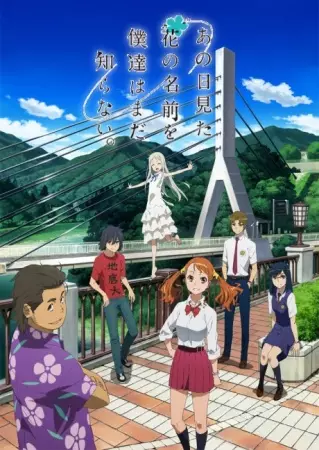


Anohana: The Flower We Saw That Day
あの日見た花の名前を僕達はまだ知らない。
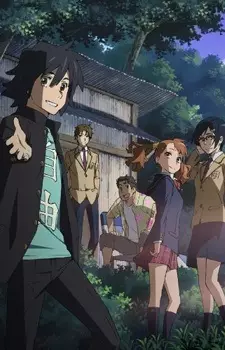
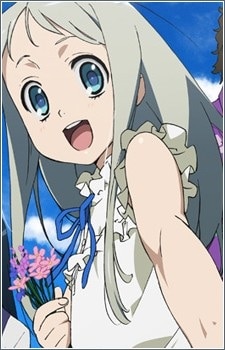
Jinta Yadomi is peacefully living as a recluse, spending his days away from school and playing video games at home instead. One hot summer day, his childhood friend, Meiko "Menma" Honma, appears and pesters him to grant a forgotten wish. He pays her no mind, which annoys her, but he doesn't really care. After all, Menma already died years ago. At first, Jinta thinks that he is merely hallucinating due to the summer heat, but he is later on convinced that what he sees truly is the ghost of Menma. Jinta and his group of childhood friends grew apart after her untimely death, but they are drawn together once more as they try to lay Menma's spirit to rest. Re-living their pain and guilt, will they be able to find the strength to help not only Menma move on—but themselves as well? [Written by MAL Rewrite]
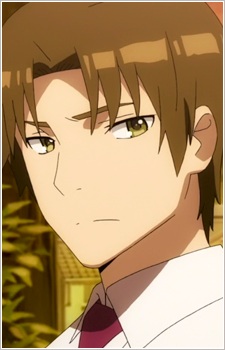
Главный
Главный
Главный
Главный
Главный
Главный
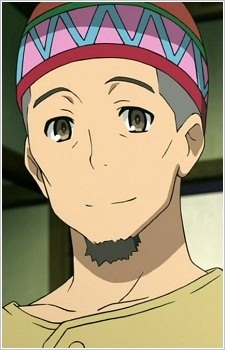
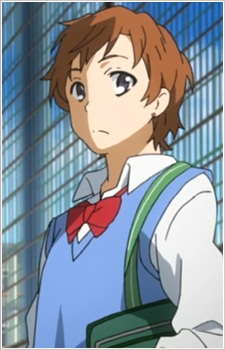
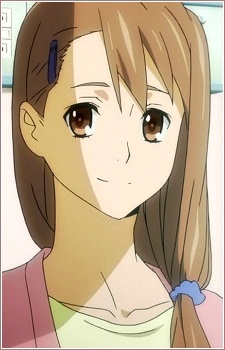
Второстепенный
Второстепенный
Второстепенный
Второстепенный
Второстепенный
Caleb_Marvell
April 23, 2014
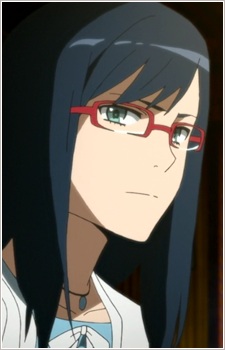
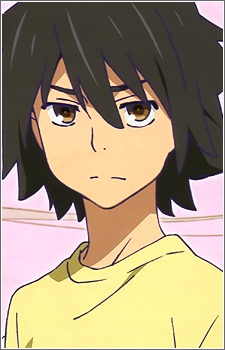
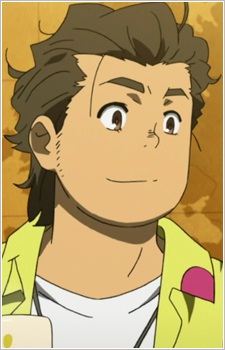
"I wonder... What were the names of the flowers that bloomed during that season?" Sorry, just give me a minute, I can't seem to stop these tears from coming out of my eyes... my goodness, it's been a long time since I've seen an anime that can make me cry like that. AnoHana... truthfully, I didn't know what to expect when getting into this anime. The first thing I always do when looking for an anime to watch is get recommendations from my friends, but due to some recent trust issues regarding the recommendation of School Days from a friend of mine, this was probably the firstanime in a looong time I actually decided to give an anime recommended by someone. And let me just say, thank God I listened to her. This anime was beautiful. When I first read the plot, it seemed simple. The ghost of a girl shows herself to her childhood friend, and he and the rest of his friends from back when they were kids tries to help her figure out what's keeping her earthbound, that way she can pass on and transcend into heaven. Now, the thing that makes this story amazing is how it all plays out, and then the overall outcome of the goal. What I can say right now is that despite the sound of the story, this anime's plot is incredibly unique and very well thought out. One of the things I tend to look for in an anime is how they finish off the series. One bad ending could knock a couple points off the overall score. Luckily, with AnoHana, they ended the series on a good yet emotional note with an overall feel of satisfaction. True, the ending left me in tears, but they were tears of joy. A-1 Pictures brought us this magnificently detailed anime. The setting, the characters, and the animation style brought good memories back to me when I watched OreImo and Sword Art Online for the first time. The artwork to AnoHana was remarkable. Sure, at a glance, you might not think much of it. It's simple, but once you start watching it, the animation really pops out at you with its details and color. There is no English Dub for this anime. Truthfully, I'm happy about it, because this anime should only be watched in Japanese. The voice acting was top notch. This is easily some of the best work that Ai Kayano and Miyu Irino have brought to us, as well as the rest of the cast. Now, for the music. If you think back to the soundtrack in other anime such as Clannad, Kanon, or Angel Beats, you can get a good idea about what kind of music AnoHana works with. The medleys are soft, slow, and calm, while letting you feel peace within your body. It might be a little hard to notice while the anime is playing, but if you listen closely, you'll see what I mean. As for the Opening and Ending, wonderful. I can't really describe them, so you'll need to listen to them to see what I mean. Characters were nearly flawless. Each filled with emotion and unique personalities, while hiding secrets within them that will tell you a lot about them. My personal favorite character was Menma. She seemed so full of life (haha, pun) throughout the series, and her smile was contagious. Jintan was one of the best male protagonists I have seen in a long time. He started off as that one gloomy character you see every once in a while, then started opening up and becoming more likable each episode, until the very end where you can't help but think how cool of a person he is. Poppo was the comedic character in the series. 17 in terms of his physical body, but childlike at heart. He brought joy throughout most of AnoHana, as well as some good laughs here and there. Anjou was the tsundere of the show, well... kind of at least. She seemed nice most of the time, but there were some issues that I had with her every once in a while, but they were easily resolved later on. Chiriko didn't really seem to stand out that much to me. She was shy, quiet, and seemed like the really smart person that you'll see studying in her free time. An overall likable personality though. And then... there's Yukiatsu. He was the one person I had the most problems with. To put it simply, he's a cross dresser with anger issues and can't seem to leave anything alone, even if it meant helping someone out. It doesn't make him a hateable character, but not a very likable one though. But for the most part, the characters in AnoHana were very well made. AnoHana is a tearjerker. My friend told me she cried her eyes out while watching it, but I had to see for myself just how emotional it could get. Well, I figured it out. It was able to make me cry from the last episode all the way to the end of this review. You will get emotionally attached to these characters, I can promise you that. You might cry out of sadness, you might cry out of joy, you might cry out of both. Some of you might be a lot manlier than me, but I'm not ashamed to admit that I have a softspot for anime like this, and this was well worth watching. I hope that you think so as well.
Второстепенный
Archaeon
June 24, 2011
Dealing with the death of a friend or loved one isn't easy, no matter how old you are, and everyone comes to terms with their loss in different ways. Adults can drink themselves into a stupor in an effort to dull the pain, take off on a journey of self discovery, bury themselves in their work, or find some other coping mechanism. Unfortunately the same isn't true for children, and all too often they are unable to truly deal with the emotional turmoil that occurs. Now it may seem a bit odd to talk about death, grief, and learning to deal with the loss of someoneclose, but essentially that's what Ano Hi Mita Hana no Namae wo Bokutachi wa Mada Shiranai (We Still Don't Know the Name of the Flower We Saw That Day), is all about. The story opens with Yadomi Jinta, a seemingly grumpy teenager who is playing a game in his room on a hot summer's day whilst his childhood friend Honma Meiko (Menma), pesters him repeatedly. Having had enough of the game, Jinta decides to make lunch, but only for himself and his father which annoys Menma no end as she also wants to eat the ramen he has made. It all seems like a fairly normal, everyday scene that one might see in anime, but not everything is as it seems ... On the surface AnoHana looks like a fairly straightforward tale of teenagers learning to deal with a past trauma and maturing in the process, and for the most part that's a fairly accurate perception. The plot is well constructed and takes a measured, almost methodical approach to events which is reflected in the often placid tone of the narrative. Unfortunately this leads to a degree of predictability as certain events in the storyline are clearly foreshadowed, and while the series promotes a degree of empathy for the characters and their situation, there may be occasions where viewers want the story to get to the point. One surprising aspect is the manner in which flashbacks are used to punctuate specific occurrences or emotions, whilst adding historical context to the relationship between Jinta, Menma, and the rest of the "Super Peace Busters". These sojourns into memory act as a nice counterpoint to the current state of relations between the characters, and highlight just how much has changed for each of them over the last ten years. This contrast is also reflected in the visuals, and while there is a marked difference in the appearance of almost all of the Super Peace Busters, it's actually the subtle contextual setting that makes the change much more pronounced. The key thing to remember is that people often romanticise personal history and memories, especially if one has undergone some kind of trauma, and AnoHana plays on this by sharpening the focus and darkening the tones on the present day, which contrasts with the soft focus flashbacks that are often filled with "light". The design itself is well handled, but while efforts have been made to really highlight the changes ten years can make to a child's physical growth, it's the character animation that stands out. A-1 Pictures have tried to visualize the movement differences between a child and an adolescent, and while there are a few niggles here and there, the overall effect promotes the sense that the characters are no longer the children they once were. Because AnoHana is a character driven piece there is a heavy emphasis placed on the dialogue, and while the majority of the script is actually pretty intuitive, the manner of speech during the flashback scenes can sometimes seem a bit odd. Thankfully the series has some very talented seiyuu on hand, and it's interesting to note that some of the roles feature two different voice actors - one for the present day and one for the past. Each role is given due care and attention, so it's unfortunate that even with so much talent on hand, there are a few issues from time to time as the seiyuu handling the child roles are all adults. Now while this may be standard practice in the industry, studios like Ghibli have proven time and again that children are much more capable of playing the younger roles than the majority of adults, and while the relatively minor flaws in the dialogue do stand out, one has to wonder how different the series could have been if child actors had been used. AnoHana features a number of slow pieces of background music performed on piano or guitar that reflect the measured plot and add a slightly bittersweet air to the storyline. The opening theme, Aoi Shiori by Galileo Galilei, features a sequence that shows the characters in their past and present forms and hints at the the reason for their emotional difficulties. The ending sequence features a montage of the three girls of the Super Peace Busters, Menma, Anjou Naruko (Anaru), and Tsurumi Chiriko (Tsuruko), and is set to Secret Base ~Kimi ga Kureta Mono~ (10 years after Version), which is a cover of the 2001 single by Zone and is performed by Kayano Ai, Tomatsu Haruka and Hayami Saori, the seiyuu who play the roles of Menma, Anaru and Tsuruko. Now given the nature of the series and the near constant focus on the characters, certain viewers may assume that AnoHana should feature almost continuous development, so it may come as a surprise to some people that the show takes more of a "stop-start" approach. Because of the attempt to apply a degree of realism to the characters and the emphasis on depicting them as plausible, any attempts at continuous development would seem overly contrived. Balancing that though, is some rather strong characterisation. One of the key things to remember about each person in the story is that they have experienced a specific defining moment in their lives, and that allows the characters to be depicted as individuals from the start. The strength of the characterisation is even more palpable if one compares the present versions of the Super Peace Busters with their past selves from the flashbacks. That said, there are occasions where the story has difficulty finding a resolution to a given situation so it can sometimes seem as though events are being dragged on in a effort to develop the characters. AnoHana is a surprisingly simple, yet slightly over sentimental, look at the coping mechanisms of children and adolescents when coming to terms with a past trauma, and in that respect it's one of the more surprising titles of the last few years. The series errs more on the side of soap opera than outright drama from time to time, but like many of the other relatively minor flaws, this can be forgiven in light of the fact that the subject matter is well managed and delivered. In truth, the closest neighbour to AnoHana would probably be Tokyo Magnitude 8.0 as that also highlights the difficulty children have in dealing with the sudden loss of a loved one. It's difficult to say whether I actually enjoyed the series or not. On the one hand it has some genuinely entertaining moments, but on the other the series deals with an issue that has little enjoyment value (unless watching kids coming to terms with emotional scars is your thing), and even though AnoHana isn't a story without flaws, that doesn't mean it's bad. In fact, the reverse is true as while the series does take a slightly romanticised look at the characters and events, the constant element of realism that runs through the narrative sets this anime apart from many others. If nothing else, AnoHana is a great example of how good a completely original anime can be.
Radzeer
June 27, 2011
What do you do, when you suddenly see a ghost of a person that you were close to? Most people would think it's just their imagination or the effect of stress. But what if your mind doesn't play tricks on you and you really encounter a ghost from the past? AnoHana plays with this idea. The story starts out on a usual day for the shut-in Jinta, who suddenly sees the ghost of his childhood friend Menma. Menma tells Jinta she has a wish that she wants to be granted by him. And from here on, Jinta's unusual summer starts. Story: The story itself centers around thesix members of the Super Peace Busters, which was seemingly disbanded after the death of one their members. At first you'd expect that the story revolves around Menma and her wish but the truth is, the story tries to center around the members' lives and the way they were affected by the death of their friend and the show does a sloppy job with that. Of course true friends wouldn't leave each other in times of need. So why were the Super Peace Busters disbanded? Obviously there are more reasons behind that than the death of their friend. I personally thought that story would be a coming-of-age story, where the characters deal with the problems of becoming adults and finally dealing with the death of their beloved friend. And boy was I wrong. Instead, the show turned out to be a love story pretty soon and the romance became the major driving force of the entire show. The mystery behind Menma's wish didn't unfold until the last episode and tension has been lifted so suddenly, at first I didn't know how it happened. The story itself moved forward pretty slowly, until the last 3 episodes, where the pace suddenly changed and everything was wrapped rather quickly up in one final episode. Not to mention many questions were left open and many were left unexplained. The first 4 or 5 episodes were very promising, but after them, the plot went down the drain pretty soon and was dragged out for too long. I think the story could have been told in roughly 6 episodes, and then we could have been spared of all those unnecessary scenes that were dealing with the love polygon between the characters. It's a pity that they wasted 11 episodes on a story that was worth roughly 6 episodes. The reason why AnoHana became popular is the romance and the fact that you could ship many characters together. Most of the characters rethink their relations to the others and since the cast is half male half female, it is inevitable that some of them play with the thought of starting a relationship with someone other from the Super Peace busters. The plot wasn't really planned out from the start and it seemed the writer didn't know what to do with the 11 episodes he or she got, the pacing of the story made this obvious. This problem affects most of the original anime shows and AnoHana wasn't an exception either. Art: One of the major strong-points of the show. The animation is consistent, the backgrounds are well drawn. This is no wonder, since the anime was originally meant to attract tourists to Chichibu city and I think that AnoHana managed to capture the beauty of the region pretty well and reached its goal with this. Sound: The background music fits in the show perfectly, it was very well done. The opening and ending songs are very catchy and perhaps they are the best of the season. Characters: There are 6 main characters in the story. The creators could have used 6 episodes to explore their backgrounds and the nature of their problems, but the show wasn't able to do this either. I would have really liked if we could have gotten more info about Chiriko and Poppo too, since they were as important as the other four. The characters aren't any special and there is little to no character development throughout the story. Not to mention everyone is emotionally so unstable, that they can break into crying every now and then. This became very annoying especially in the last two episodes. The conflicts between them feel over-exaggerated most of the time and everyone runs in circles until the very last episode. But the execution of the last episode was so terrible, I can even tell the exact moment when all the problems are suddenly solved. The character interactions are melodramatic and take everything to the extreme. As I was telling earlier I was expecting a coming-of-age show, so I thought maybe the characters were going to discuss their problems and try to find a solution to them, but all the cast was doing was crying and complaining about their issues throughout the story and they didn't even care about the things the others were saying. Without analyzing characters I must say, that they weren't original, the show just managed to re-use some common and popular character archetypes. They are rather easy to forget. Overall: This show makes a perfect job on summoning emotions from the viewers and fills the holes of the plot with the tears of the viewer. It started out as a promising drama but failed to live up to its high expectations. But this might be a good start if you're unfamiliar to dramas, because AnoHana heavily relies on the sympathy that you feel towards the characters and takes you on an emotional rollercoaster and sucks you in to the story easily. If you had experiences with dramas before, I suggest you skip the show, because it’s forgettable and has many flaws that might disturb you and the rushed ending basically ruins the tension that has been building up since the beginning. Overall I say that AnoHana is a mediocre show, that had potential, but failed to exploit it, but despite this it became very popular. If you like shipping in general and crying over love stories, AnoHana is the anime for you.
themegamancave
December 15, 2014
"Oh no, here come the tears!" Anohana was a fantastic, emotional story of loss that struck all the right heart chords. Anyone who has abruptly lost someone premature in their lives can relate to this series. What it does, it does very good in fact... And I really started empathizing with the characters like I knew exactly what tragedy they had gone through. All of the characters and their motives were believable, and it made for one enjoyable experience. Although Anohana only had 11 episodes to get it's point across, I had no problem understanding any part of the plot. Six kids, inseparableit seemed were devastated when one of them was tragically killed in an accident. Now they all gather back several years later to attempt to send off the memory of one of their best friends by granting an eternal wish. The exact details of Menma's death were never explained, but it was unneeded. The writers did an incredible job of making that information irrelevant. The subject was so sad to even talk about, the characters all got fragile when they started talking about it. I can't help but think the writer had some personal tie to a similar situation like had transpired in the series. It seemed so gripping and personal to me. Especially near the end, none of the characters wanted to let go of the memory they had of Menma, and often had trouble coming to terms with their own personal guilt. I'll just say it takes a lot to make me cry, but at the end as the closing theme played, I lost it. Incredible, original and emotional storyline. Like I previously stated, all of the characters in Anohana were believable... and it made the show that much better. The main, Jintan struggled constantly between wanting to move on and wanting Menmas memory and love to stay with him forever. He is obviously stricken by what had happened that day, and leads a very closed off life because of it. However, Jintan opens up more and more as the show continues. I love the growth he had even through such a short amount of time. Poppo reminds me a lot of myself. He handles grief by putting on a "everything is ok" façade, which the others mistake for him just being a goofy individual. Deep down is more than likely a sad grieving man desperate to make amends with his regret from that day. Yukiatsu kind of rubbed me the wrong way, but his character was still strong and understandably jealous of Jintan. The only strange thing I thought about the characters were how they all filled in a strange love triangle of sorts. I felt it was unnecessary to write in love interests of 10 year olds... And after years later their feelings were all still so strong. A bit odd. The animation was very good in this series, but nothing buzzworthy. I thought it was a little strange how they made Menma age, but still not quite as much as everyone else. I'm not sure what the artists were going for here. The opening was also alright, but didn't feel as as fitting as the ending song (which I felt was very good). Especially how it was incorporated into some of the episode's conclusions. I think it's safe to say that after all of the action animes I've seen recently, it was really nice to see Anohana. Even with as blubbery as I was at the end, I felt it showcased the feeling of loss and grief to the best extent possible. I would recommend this anime to just about anyone, especially those who enjoy heart-felt stories. Loved it!
PoeticJustice
August 18, 2012
Death of a close friend is always difficult to deal with, mainly because it always comes when you least expect it. It is especially hard to portray it accurately in any medium, let alone anime. When I first heard of Anohana, I was expecting a beautiful story about a group of friends coming to accept the death of their beloved friend and eventually becoming better people. I was sorely mistaken. Anohana is a travesty of writing and I have no idea why this deserved any praise whatsoever. Story- My first issue is, that Anohana is OVERLY melodramatic. The first couple episodes had me hooked to thecomputer screen, they gave me hope of seeing a great show but sadly I was wrong. Every episode after that is basically a crying contest. In all of the upcoming episodes, a different character breaks down in tears to get an emotional rise out of the viewer. This is not only laughable, but it boils down to poor writing and obvious emotional manipulation. My second issue is the ghost herself, Menma. Menma is the star of the show, every character in the show loved her and never got over her death. I assume she was supposed to be a plot device to facilitate the development of the other characters, but this never happened at all. Instead of the characters reflecting upon themselves, we got a group of morons crying over a ghost without addressing their own problems. Wasn't that the point of the story? Moving on and becoming better people? I guess not. Another issue is that many episodes are wasted on trying to prove Menma exists. In the first episode, Menma herself is a semi-corporeal being able to move objects around. Jinta ignored this fact and continued to think that she still didn't exist, despite objects moving around the room. This takes time away from the much needed development of character. My last issue is the ending itself. Not only was it horribly executed, but none of the character's problems resolved. People were misled into thinking this was a great ending because everyone was crying and Menma, "moved on," but ultimately everyone basically remained the same aside from a few minor changes. Art- The artstyle was pretty nice, a lot of vibrant colors and scenic backgrounds. Nothing to complain about here. Sound- I only liked the ED, "Secret Base~Ten years later," it was a very catchy and sweet song. Such a shame that the song was wasted on a horrible show. Character- In a show like this, the characters are arguably the most important aspect. This, however, is where the writers failed once again. The cast of this show is so unlikeable and idiotic that they failed to get any emotional reaction out of me. First we have Jinta, an NEET/social recluse who never recovered from Menma's death. He is the main protagonist of the show and a poor one at that. Jinta is so oblivious to the feelings of others that it becomes irritating just to watch him on the screen. Menma, as mentioned previously, is a moeblob with the personality of a doormat. Her one and only flaw is caring too much about other people? Isn't this supposed to be a slice of life? Aren't people supposed to have multiple flaws as opposed to just one that can't really be considered one? Too summarize this all up, basically we have a group of unlikeable nitwits who cry a lot, are selfish, and cross-dress. Now this wouldn't be a problem if they became better people but they never did. Overall, Anohana gets a 4/10 from me. To me, this is the most overrated show on Myanimelist. Maybe it is because people are suckers for people crying. In all honesty, that is all the show is, just a bunch of losers crying over a dead girl and never getting over it. Am I cold for saying this? Not at all. Many shows have done drama right EX: Kanon(2006) Clannad, Rumbling Hearts etc. and Anohana isn't one of them. I implore everyone who is going to watch this show to look at it with open eyes, do not be misled by the buckets of tears you are bound to see. The show has a poorly mis-managed plot, bad writing and terrible characters. I would not recommend anyone watch this.
Ранг
#316
Популярность
#74
Участники
1,700,148
В избранном
33,122
Эпизоды
11