
パプリカ
The world of dreams can be an incredible window into the psyche, showing one's deepest desires, aspirations, and repressed memories. One hopeful tech lab has been developing the "DC Mini," a device with the power to delve into the dreams of others. Atsuko Chiba and Kosaku Tokita have been tirelessly working to develop this technology with the hopes of using it to deeply explore patients' minds and help cure them of their psychological disorders. However, having access to the deepest corners of a person's mind comes with a tremendous responsibility. In the wrong hands, the DC Mini could be used as a form of psychological terrorism and cause mental breakdowns in the minds of targets. When this technology is stolen and people around them start acting strangely, Atsuko and Kosaku know they have a serious problem on their hands. Enlisting the help of Officer Konakawa, who has been receiving this experimental therapy, they search both the real and dream worlds for their mental terrorist. [Written by MAL Rewrite]
Main
Main
Main
Main
Supporting
Supporting
Supporting
Supporting
Supporting
Supporting
Supporting
slpless
July 4, 2008
I'm a big fan of Satoshi Kon's work, so when I heard that Paprika was showing at the Chicago Film festival nearly 2 years ago I had to go no matter what. So there I was with a fever, headache, and doing my best to hold back my coughing. After watching, I kind of wished I had stayed in bed. Perhaps it was due my illness but after a re-watching it I still share the same sentiments I had nearly 2 years ago. Those familiar with Satoshi Kon's work should know he likes to blend reality and illusion. Paprika was no exception,dealing with the dream world via DC mini, a device which can be used to enter someone's dreams. As expected the dream world Kon created was incredibly imaginative and surreal. Animation and art for this movie was easily the best of Kon's work as well as most anime. This movie was worth watching just for the animation and surreal world that Kon creates. Music was equally good, creating a haunting yet beautiful atmosphere. Sadly I don't think its possible to even possible to describe the surreal and imaginative dream sequences in Paprika. However, that's it, I could go on and on about the movie's technical merit, but it doesn't make up for its weak narrative. Paprika featured highly imaginative imagery and excellent editing that Kon is known for however, what was it all for? If we take out the imagery out of the equation, what do we have left? The basic outline of Paprika's story was wafer thin and had a painfully obvious twist near the end. In addition, a tacked on romance that made far less sense than even the most surreal imagery that Kon can muster. Chances are you're thinking “Its all about the execution, who cares about a weak storyline as long as its done well.” Yes, execution is more important and surreal imagery and crazy editing can be used to make an otherwise boring story captivating. For example, Millennium Actress, one of Kon's earlier works. However, in the case of Paprika the surreal imagery felt like it was the main point and the story/characters were secondary. Also, the imagery didn't serve any purpose with respects to the story, it was there for the sake of being there and a “plot” to provide it some context. What I said was only for the main plot line, the detective's sub plot was sadly far more interesting. Here the use of imagery really suits his story and conflicts, similar in execution as in Millennium Actress. However, something is wrong when a sub plot is more interesting than the main story. Characters are also pretty weak. The villain was pitifully boring and one-dimensional. Sadly, I can't say otherwise for the rest of the cast. Also, the development of Atsuko and her romance at the end was so forced it was unbelievable. Once again, this confused me more than even the most surreal imagery Kon can muster. Konakawa (the detective) was the only saving grace in the cast of Paprika. He actually had a decent amount of characterization and actually developed through the course of the movie. Paprika was a wholly imaginative work that only Satoshi Kon can create. He creates a landscape that was beyond words. This was coupled with amazing technical achievement by Madhouse, the animation studio. However, Paprika failed in terms of story and characters. The visuals didn't serve much of a purpose with respects to the plot and felt like it was there for the sake of being there. Also, this plot was incredibly superficial and painfully predictable. The tacked on romance and forced character development was equally painfully and confusing. Konakawa was the only saving grace in terms of story and character however, something is wrong when a side character was more interesting than the main story. In the end, Paprika is more like a dream than Kon probably intended. It was captivating during but when it ends you'll remember only a few visual snippets and forget everything else.
Washi
August 6, 2007
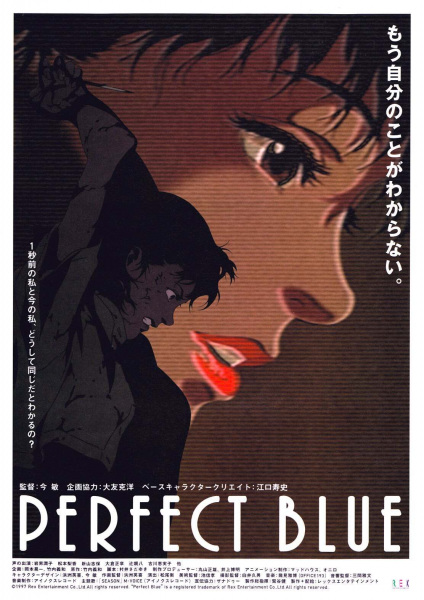
Paprika, Satoshi Kon’s (Perfect Blue, Millennium Actress, Tokyo Godfathers) latest movie, is a whimsical and imaginative journey into the concept of dreaming. As with each of his productions, Paprika is a distinctly unique and fresh film, while also retaining tones of Satoshi Kon’s usual quirkiness and style. While this is a film that revolves around exploration into the farthest reaches of human subconscious, it has traded the introverted and claustrophobic psychological tension seen in Perfect Blue for a decidedly free and open approach to the human mind, fitting with the theme of the limitless expanse of dreaming. This gives it a more relaxed and funfeel, whilst also retaining its depth and profoundness. In quite the same way as Tokyo Godfathers was, paradoxically, a light-hearted melodrama, this film is an accomplished juxtaposition of emotion, as the dark themes of jealousy and hatred are played out in the hallucinatory escapism of the dreamscape. Dreams as a concept have always captivated me, and never before have I seen such a well-done representation of dreams in any form of media. Movies usually treat them as either being pointlessly strange, or pointedly symbolic, but Paprika captures their essence to fascinating effect. Dreams are as much about flow and direction as they are about the immediate situation, and this is something very apparent when watching Paprika, as the dreams flow and change fascinatingly with mundane illogic, moving from one setting to another with only a thematic thread between them. Looking back at my own dreams and how they shift from setting to setting based on the emotional context, and I see that Paprika portrays this perfectly. I can see that the dream sequences were thoughtfully brought to life, and were not just crazy for the sake of crazy. But through all its fanciful imagery and creativity unbound from realism, Paprika has a story behind it that deals with very strong human emotions, and it excellently weaves this emotional content throughout the films, particularly in the dream sequences, where the subconscious expresses the truth behind each character’s external, day-to-day personality. The way it tells this story is simultaneously a strength and a flaw of the film; on the one hand I am inclined to say that it was obfuscatory in the way it obscured the plot from the viewer. While watching this movie I felt like I was trying to get my head around a particularly long riddle. As I followed it, the only understanding I really got of what was actually going on was in retrospect, and while some may call this clever, I found that not having an idea of the direction of the plot was a detriment. However, given that the movie revolves around the theme of dream analysis, it is also a fitting method of storytelling: the audience itself has to engage in the movie as though it were analysing a dream, and hence can only be understood when looking back at it. However, my advice to anyone planning to watch the movie: pay close attention to the dialogue and symbology of the dreams, because it is all too easy to get caught up in the zany fun of the dream sequences and lose track of the plot. When it comes to the plot itself, I’m not so enthusiastic. Nor am I so aflame with praise when it comes to the characterisation. Both of these factors are the reasons why I am hesitant to label it as my favourite Satoshi Kon film; Tokyo Godfathers had excellent characterisation, and a simple yet powerful story; and Perfect Blue, with its introverted character study, delivered a great emotional impact. It may well be impossible to create a perfect film, but if these factors had been better incorporated into Paprika, then it would be among my favourite anime films, possibly my very favourite. It is a shame that Satoshi Kon’s vision and creativity is let down by a lack of depth in his characters and stories now, after his consistent accomplishments in the past. I think the main problem was that the movie tried to involve a too larger cast, to whom it could not provide ample depth in its limited feature-length time-frame. The other problem was that there was very little attention given to delivering a sense of conflict, a crucial element to any story. Perfect Blue had the internal conflict of the subconscious and the conscious; Tokyo Godfathers had conflict between its characters and society; and this movie tries to incorporate an antagonist-protagonist conflict, almost as an afterthought, with neither party given enough profundity to their perspectives to make the conflict intense. There was mention of their different ideology when it comes to the exploration of dreams, and a subplot of jealousy, but little more. So the story lacks the optimal ‘beginning -> conflict -> end’ structure, meaning it felt like it just went on and on until it finished, as entertaining as it was. I have little to say about the technical achievements behind this film, other than the fact that it was fantastic in almost all aspects, with only the score music lacking. It is clear he used the same musical producer behind Paranoia Agent’s score track, and I simply cannot find his style of music appealing; it feels immature and cannot contribute effectively to the mood of the movie. Much better was the use of music in Perfect Blue, the score of which really sold the hauntingly intense atmosphere. The visuals are much better; this is his best looking film yet, with vivid animation and, as expected, brilliant direction. It was not given enough weight, but I liked the message that dreams are the final sanctity of the human mind, which should not be intruded upon. This movie beautifies dreams, and attaches importance to them (as seen in Atsuko’s acknowledgement of her feelings for Dr. Torataro through her subconscious), and the suggestion that veil between them and reality is sacred really spoke to me, even if it came from the mouth of the antagonist. Paprika is a thoroughly enjoyable, visually captivating movie, which does overwhelming justice to its theme of dreaming, but which has flaws in its plot and characters that prevent it from being a great achievement as a film.
NeverKnowsBest26
June 25, 2013
Satoshi Kon was among the best directors in the medium of anime until his unfortunate and untimely death in 2010. His blending of realistic character designs and settings with Lynchian surrealism created visual experiences unlike anything anime had produced before. Beautiful and haunting dreamscapes that unraveled the human psyche both literally and figuratively. A great example is his last work; the strange, dense, and insanely inventive Paprika. Adapted from a novel of the same name by science fiction author Yautaka Tsutsiu, Paprika takes Kon's mind-bending style and applies it quite literally to the plot. The story takes place in the near future, where a remarkable devicecalled the "DC Mini" has been invented, which allows people to enter other peoples' dreams and access their unconscious thoughts; intended for the use of psychotherapists. However, while still in its development, one of the DC Mini prototypes is stolen. Soon, development staff members begin to have their dreams invaded and entangled, and its up to head of development Chiba Atsuko, and her chipper alter ego Paprika, to find the culprit and retrieve the prototype before more damage is done. This premise works perfectly with Kon's directing style and the themes he often explores. The movie weaves from dream to reality and back again seamlessly. With the DC Mini giving the ability to enter (or invade) peoples' dreams and psyches, it becomes increasingly difficult to distinguish between delusion and reality. There are scenes which seem to take place in reality, until something strange occurs, pulling back the curtain to reveal that it is a dream instead. The dissolving wall between the two comes with some serious consequences, as characters slip into madness; becoming delusional and erratic. Kon perpetuates a sense of unease and delirium with colorfully deranged imagery, hallucinatory sequences, and sudden outbursts of insanity, keeping the audience in a state of constant imbalance. And yet there is a certain unhinged joy than comes with the madness. There is something wondrous about unconscious mind and the images it conjures; the limitless possibilities of a dream, and the hidden meanings behind those dreams. Even at their most disturbing, the surreal dreamscapes of Paprika are entrancing. Our protagonist, Atsuko, is cool-headed; always in control. She maintains a stern, often harsh, but logical and level-headed demeanor. She's all business, doesn't have much of a sense of humor, and little patience for the childish irresponsibility of man-child genius Tokita, the inventor of the DC Mini. Or at least that is how she seems on the outside. In stark contrast is Atsuko's alter-ego, the titicular Paprika. Paprika is a free spirit, more easy going and fun than Atsuko, to the point that the two seem to be completely different people, and not just because of their differing character designs. This contrast is interesting because it shows how a person's suppressed desires can manifest in spite of (or because) their attempts to keep control over themselves. As much as Atsuko would like to think she has control over herself and everything around her by suppressing her emotions, she's only being dishonest with herself. The rest of the cast (sans Detective Konakawa), are underdeveloped, yet still likeable and interesting. Tokita adds some nice comedic relief; the two antagonists are really quite interesting, though they would have certainly benefited from more screen time. There is also a sub-plot involving a detective who Atsuko is treating in unauthorized sessions using the DC Mini. Here, Kon infuses Paprika with his love for movies, ironically enough through a character who claims to hate movies. Despite such claims, Detective Konakawa's dreams often are movie themed, and his strong objection to movies implies some kind of past trauma. Indeed, as the movie delves deeper into his character, it reveals he has a deep knowledge and connection to movies, but now avoids them because of unfulfilled and broken desires of his youth. The movie reveals this slowly and uncomfortably, often playing out like a therapy session, using motifs such as a reoccurring dream of a murder in a hallway which represents a case Konakawa is currently having trouble solving, or his dislike of the number 17. Konakawa's character ark also draws a interesting parallels from movies and the internet to dreams; all are places that the human subconscious can escape into. A rather meta concept, considering that you are watching a movie. Paprika is Satoshi Kon's most vivid and wildly imaginative work. Kon clearly let go of restraint from the deranged, ever-shifting opening dream sequence. However, that isn't to say that it is done with no finesse, quite the contrary actually. Even with the free-floating lunacy of the movie, Kon's cinematic brilliance shines through. The radical transitions from dreamscape to dreamscape, which would look awkward in less skillful hands, flow like water under Kon's direction. The imagery is dazzling (if at times unsettling), and incredibly creative, sometimes frighteningly so. The chase scene in which Paprika is being pursued by the antagonists through multiple shifting settings is a breathtaking showcase of the movie's visual ingenuity. As is the movie's crazed grand finale, which features one of the main characters growing from infancy to adulthood while absorbing another character's dreams. There are also some crafty motifs the movie implements to set mood and tone, notably the crazed parade that is assimilating all other dreams. This all comes together to create a unique controlled chaos of visual imagination that is impossible to forget. It's also worth noting that the movie has the coolest opening credits I've seen, with Paprika taking a tour of the city in a way only she can. The sweeping electropop soundtrack by Susumu Hirasawa is fittingly strange, but also grants the movie a sense of grandeur. The music has an odd, otherworldly texture which works very well in a movie that spends most of time roaming through the realm of dreams and human consciousness. Interestingly enough, some of the vocals were produced using vocaloid, which doubtlessly contributed to the music's strangeness. Of special note is the bouncy track titled 'Meditation Field' that accompanies the opening credits, and the bizarre 'Parade' which plays as people descend into madness or when that crazy parade of dreams shows up. Though sometimes a bit convoluted, Paprika is an eye-popping, cerebral extravaganza that never fails to impress and entertain. More than simply a piece of eye-candy, the movie invokes some interesting ideas about dreams and the human psyche. Both Atsuko and Konakawa illustrate some fascinating insights in how people lie to themselves or bury the unpleasant, and what repercussions that might have. Paprika is just exploding with creativity, brimming with imagery straight out of your wildest dreams, and endlessly entertaining. It's a fitting final work for a great master.
Venneh
January 11, 2008
Title: Paprika Novel, Movie: Paprika is based off of the novel of the same name by Yasutaka Tsutsui, which was serialized in the Japanese women's magazine Marie Claire in 1993. The movie itself came out in Japanese theatres in November of 2006, and was animated by Studio Madhouse (famous for Death Note and Paranoia Agent, another one of Satoshi Kon's works) and directed by Satoshi Kon (famous for Paranoia Agent and Tokyo Godfathers). It received a limited run in theatres Stateside in May of 2007 courtesy of Sony Pictures, and was released on DVD in November of 2007. Story: The story revolves around a device called theDC Mini, which allows psychiatrists access into their patient's dreams, which gives them a glimpse into the patient's unconscious mind and helps treatment. One of these devices is stolen, and the researchers who worked on the project soon find themselves unable to tell the difference between reality and their dreams, which start blurring into one. Atsuko Chiba, one of the head developers of the device, uses her alternate ego, Paprika, to dive into their dreams and try to uncover the mystery of who's screwing with them. In case you couldn't tell, this is classic Kon, in that it hits on being unable to tell the difference between dreams and reality, and damn, does this come through amazingly in this story. There are points in the movie in which you are unable to tell whether you're still in the dreamworld, or in the waking world. And the things you find in the dreamworld are several kinds of bizarre and symbolic, which is also classic Kon. Kon actually admits to being a big fan of the novel, as it's one of his major influences; Tsutsui was impressed by his work on Millenium Actress and approached him about an adaptation. So this was something of a match made in heaven. As for faithfulness ot the original novel, those who have read it (I haven't) say that Kon's adaptation is a lot less technical, and Tsutsui has expressed his approval, so I don't think there should be any worries there. One of the neat little touches at the end of the movie is that in the cinema in the final scene, there are movie posters for his last three major film works (Perfect Blue, Millenium Actress, and Tokyo Godfathers), and the fourth and final poster could well be a promotion for the new film he's working on (he has yet to release any details on the project). Art: The art for this is absofuckinglutely beautiful and bizarre. The only way you can get an accurate sense of this is to look at the screenshots that I've included below, from the parade and a dream sequence, in that order, as I'm really unable to accurately describe the artwork in words: Studio Madhouse has pulled it off yet again. Music: Kon teams up with Susumu Hirasawa again for this, and the resulting music is amazingly haunting and beautiful as ever. I'm a particularly big fan of the music used for the recurring parade sequence, and the ED's fairly awesome, too. Seiyuu: Megumi Hayashibara (famous for her roles as Faye Valentine in Cowboy Bebop and Rei Ayanami in Evangelion) plays the role of Paprika, and Satoshi Kon actually cameos in a small role. And all the other seiyuu do an excellent job in their roles, so no issues here, as always. Dub: N/A, didn't see it. Length: Perfect, though it drags a bit at times. Paprika clocks in at about two hours; any shorter, and it couldn't have developed things properly, and longer, and it would've gotten tedious. Overall: Kon at his finest. This and Paranoia Agent are the two works of his that everyone should at least see once in their life. Story: 9/10 Art: 10/10 Music: 9/10 Seiyuu: 8/10 Length: 8/10 Overall: 44/50; 88% (B )
ue6o7
July 18, 2016
Paprika, the last film of the late Satoshi Kon, is in a league of its own when compared to his other works—a league that is far, far below the rest. Satoshi Kon is, of course, a very talented director, and in that regard he still delivers for this film. The visuals are every bit as detailed as expected from him and his team, and the sheer amount of technical skill on display here is mind-blowing at times. Unfortunately, that's about where my praise for it ends. Satoshi Kon films typically take you on a psychological ride that explores its characters' inner thoughts in visually inventive ways.You might think that Paprika does this as well, as it would seem so at first, but the experience ends up feeling very flat by the end in spite of the film's wacky and colorful premise. The elaborate dream sequences only distract you from the fact that everything here operates on a very basic surface level. While that physiological element does exist to some extent in Paprika, it's relegated to the sidelines in favor of an uninteresting, superficial mystery plot about stolen technology featuring one-note, unlikable characters. I don't dislike this film for being confusing or for going "over my head" as they say; I dislike it for being astoundingly simple and straightforward. There's not much to explore and not much to think about after the film is over. Paprika delivers entertainment that's built to last for the moment and nothing more. But, make no mistake: the entertainment that it does provide is still very much worth experiencing just for those immediate sensations alone. The soundtrack definitely deserves a mention, as it's pretty great and the recurring themes are very strong. As for the animation, the creators are able to get away with a lot because of the film's dream setting, and with that they're pretty creative. They must have spent a lot of time discussing what sorts of things tend to happen in dreams so that they could make those sequences feel genuinely relatable. Sometimes, though, the dream elements feel gimmicky and forced, like they were thrown in to remind the viewer that the characters are, indeed, in a dream; characters will dive into television screens and paintings to travel distances that would have probably been easier to walk across. Additionally, it feels like they miss a lot of opportunities to truly mess with the viewer's perception of reality, instead making it all too clear what's really going on most of the time. Now, maybe Paprika just isn't trying to be some intelligent psychoanalytical film; that's fine. Maybe it could instead provide a nice cast of characters with great chemistry who drive the film forward, a la Tokyo Godfathers. However, Paprika fails to provide even that. The characters in Paprika range from underwhelming to outright irritating, with a few exceptions. Kosaku, in particular, is on the "punchable" side of the scale. This guy is unbelievably, impossibly, and disgustingly obese. It's played off like some kind of charming quality, and that perhaps it's what's on the inside that matters most—a touching sentiment, but unfortunately for Kosaku, he also happens to act like a literal child. Well, shit, I guess he's got no redeeming qualities no matter where you look. Did I mention that he has the most punchable face of any anime character ever? Even Paprika herself, despite her gorgeous character design, is deceptively dull, much like the film. Going by the title and promotional art, you might be looking forward to seeing a film featuring her as the central character. That's why you'll be happy to learn that she actually spends the majority of the time replaced by her comparatively drab counterpart, Atsuko, and receives no development of her own. In fact, there's a ton of wasted potential when it comes to both of these characters, as it's never explored why Atsuko might take on this other form in the first place, and what this duality actually means for them. It ends up feeling like the only reason this "Paprika" alter ego exists is for eye candy and so that we can see a cool character battling dream monsters in trippy action scenes; if that was the intention, she at least succeeded in providing that. But, with Satoshi Kon, we've come to expect a deeper meaning behind every action, and in this film the action often takes place for its own sake, feeling a little too much like a Saturday morning cartoon. That Saturday morning cartoon feel doesn't end there, though, as the worst of it comes from the film's villain—something that Kon's films have never featured this blatantly before, typically favoring inner conflicts over the external. This is a villain whose first lines consist of him robotically expressing his ideals, as if he'd been carefully scripting his own words, eager to recite them to the next person who'd walk into his room. By the end of the film, he'll crush your suspension of disbelief harder than any amount of surrealist dream imagery could by acting like a totally unreasonable cartoon bad guy: a comically insane person with maniacally evil plans who shouts like a baby when he doesn't get his way. To make things worse, we never learn why he feels the ways that he feels, making him an underwhelming character and a weak villain. I didn't even mention the similarly flawed supporting villain whose existence is entirely unnecessary and serves no greater purpose. As previously stated, Paprika does still contain a bit of Satoshi Kon's signature psychological element, and that comes in the form of side character Toshimi's plot line. Unlike other characters in the film who only seem to be concerned for their job's sake, Toshimi actually has a strong personal investment in his own arc, as he takes the initiative to find answers to the questions that haunt his dreams. You grow to care about this guy because it actually feels like he cares, too. And, for once, the dream motif is used really well to give meaningful visuals to his inner psyche—the kinds of tangible things that can actually be pulled apart to learn more about a character. But, ultimately, the problem is that Toshimi's concerns are really only his alone. They don't mesh well with the main plot at all, and when the creators attempt to mash them together the results are questionable at best. He's left with nothing to do by the climax, becoming just another bystander watching the action unfold outside of his control, having no influence on the conclusion. With most of the characters being as two-dimensional as they are, it's no surprise that the film's climax ends up being a thrown-together mess. Everything is resolved with actions that don't need to make too much sense, using the fact that dreams have become real as a crutch for the deus ex machina finale. There are attempts to salvage Atsuko's lack of development by introducing a romance plot that, while hinted at, feels more insulting than anything else. They were clearly and knowingly taking a risk with this particular pairing, but the necessary steps to pull it off correctly were not taken. At most, you could say that the creators were at least trying to invoke some real emotions for once, but I'd honestly rather they'd not at this point, especially when the results are this awkward. I don't know exactly what went wrong with the making of this film to make it stand out in such a negative way. Considering Kon's otherwise excellent track record, perhaps it's the source material that's at fault; I wouldn't know. All I do know is that Paprika, as it exists in this film, is an overall emotionless endeavor that left me wondering what the point of it all was. Regardless, I do still have a lot of respect for Satoshi Kon; he's made his fair share of masterpieces, and his contributions to the anime industry won't be forgotten anytime soon, so I suppose he's earned the right to make a few mistakes. After all, it was his willingness to take risks that brought us such great films as Perfect Blue and Millennium Actress. You can see that Paprika was made with that same level of ambition; it was just bound to fail at some point.
#664
Popularity
#408
Members
606,458
Favorites
5,463
Episodes
1