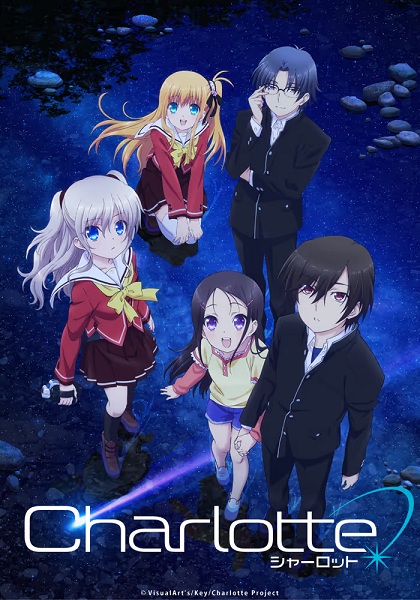
Charlotte(シャーロット)
If not for his ability to take over people's mind and body, Yuu Otosaka would be an ordinary high school student. Though it only lasts for five seconds at a time, Yuu's mysterious power allowed him to cheat his way to the top of his class and enter a prestigious high school, where he continues his dishonest acts. His shenanigans are eventually stopped by Nao Tomori—the headstrong student council president from Hoshinoumi Academy—who sees through his deceit. Through coercion, Nao convinces Yuu to transfer to Hoshinoumi and join the student council. Hoshinoumi Academy is secretly an institution created for adolescents who possess supernatural abilities—with the student council serving as a means of locating those who abuse their powers. With Yuu begrudgingly assisting in council affairs, the group sets out to find and protect new ability users from harm. However, as they further investigate the abilities, their findings entangle them in far more complicated matters than they could ever imagine. [Written by MAL Rewrite]
Main
Main
Main
Main
Main
Supporting
Supporting
Supporting
Supporting
Supporting
Supporting
Link_of_Hyrule
September 26, 2015
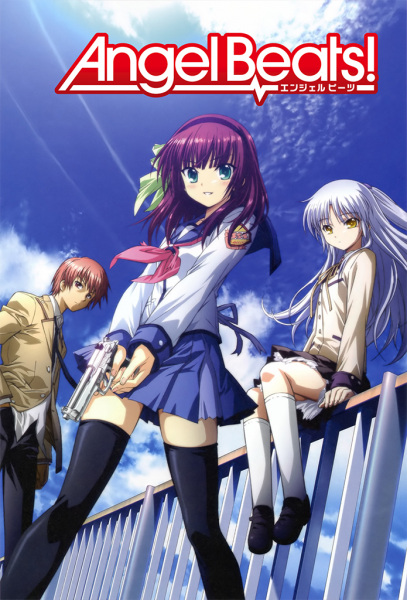
Mod Edit: This review may contain spoilers. -------------------- Tell me if this description sounds familiar: “A group of ‘special’ highschoolers defined almost exclusively by archetypes and/or tragic pasts form an organization together. They don’t really get along at first, but they get to know each other extremely intimately over time, eventually culminating in a romance. Many tragic events take place as the innocent and sympathizable highschoolers are victimized by the cruel, cruel world. Eventually, they must accept sacrifice to fulfill their lives and destinies.” Some of you are probably thinking “That’s Angel Beats!”, while the rest of you are probably thinking “That’s Charlotte!” Well, good news: You’reboth right, because for all intents and purposes, they are exactly the same show. Now don’t get me wrong, I’m not going to criticize this anime on the sole basis that it isn’t even pretending to differentiate itself from another show; I’m going to criticize this show because not only does it contain all the same errors that the show it plagiarized (yes, I know they had the same writer, so it’s not technically stealing) also contained, but it managed to magnify those errors significantly. Horrible plotholes, absurd amounts of over-convenience, awful world-building, identity confused characters, my god; Charlotte is nothing but a fucking mess. Let’s start with what is, in my opinion, the biggest problem the show has, the characters. They are completely shallow, completely one-dimensional, and more often than not, completely devoid of personality. Let’s take our protagonist, Yuu, for example: The first episode introduces him as a character brimming with personality. He’s intelligent, arrogant, devilish, etc. These are traits that at the very least gave him a personality and the potential for development. However, as soon as the ED played at the end of episode one, everything about him that was established in that first episode is COMPLETELY forgotten. Never again does he exhibit any of traits that supposedly define him. He instantaneously turns into literally Otanashi; A boring bland, personality-less nobody which is pretty much the worst thing a character can be. Did they really think that we wouldn’t notice if they stopped giving him individuality after a single episode? It’s either a laughable oversight or an attempt to trick the audience. There really isn’t much to say about the rest of the cast; they are either completely indistinguishable or defined entirely by traits/quirks. There is one in particular I will go over though just so I can talk about how terrible the romance in this anime is: Nao. Nao is Yuu’s love interest which is a big problem for one simple reason: They fail to demonstrate so much as a single iota of chemistry or personal connection with each other at all. Rather than gradually growing together, we are instantaneously told that they are in love! No no no writers: that’s cheating. You can’t just skip all the necessary steps of a good romance and expect us to buy it. Seriously, what intimate moments did they ever share together? I can even recall a scene where Yuu watched Nao get brutally beaten by a mob with complete indifference, as he did nothing to even attempt to assist her. What a pair. This romance is so laughable that when a love confession is finally made, the other character remarks in a surprised/confused fashion “I don’t think there was ever a time for you to think favorably of me.” I mean… That pretty much hits the nail on the head. I don’t think there was either. I haven’t even gotten to how shitty the plot of this show is and the reasons why it didn’t even remotely work. First of all, it doesn’t make sense. Being a show about superpowers, it’s obvious that plotholes are going to emerge from characters not using certain powers at certain times or in certain ways, but to THIS extent? You will pull your hair out trying to count how many times a situation that could have been easily resolved through superpowers is treated as a legitimate conflict. Every cardinal sin of story telling is present in Charlotte: Dues ex machine, plotholes, asspulls, you name it. It’s some of the worst melodrama to ever be animated. The second big issue with the plot is the remarkably inconsistent tone and its total inability to incorporate elements of both comedy and tragedy without being clumsy and awkward. This is a problem that is seriously pervasive in anime as a whole; if you want your dramatic scene to be taken seriously, DON’T IMMEDIATELY PRECEED IT WITH CHILDISH COMEDY! Every time something that is supposed to be taken seriously happens, you better believe a heaping dosage of comic relief is right around the corner. Even scenes involving death can’t keep comedy out of the picture. This form of writing demonstrates an inherent immaturity and lack of understanding of said medium; it’s completely embarrassing and there is no excuse for it. This disturbing pattern NEEDS to disappear from anime. The last thing I feel the need to especially stress is the god-awful pacing and stupendously rushed nature of Charlotte. If you want an example of how to rush your show so badly that even the most naïve audience members become alienated, watch episode 13 of Charlotte. Seriously; the world needs to see that miserable atrocity and learn from it so that history does not repeat itself. When you could literally turn the events of single episode into a series of its own, maybe spread your material out a little better? I’ve somehow gone multiple paragraphs without mentioning Angel Beats yet again, but this anime has the exact same issue with pacing; it’s very evident that these two shows had the same writer. In conclusion, Charlotte is one of the worst anime dramas you will ever see. Even Angel Beats with all its flaws is noticeably superior. This rushed, childish, shallow emotion porn cannot be believed by a thinking person; you will literally be taken aback by how many obvious mistakes have been made. The animation and music may be nice, but I do not recommend this anime to anybody unless you want to see how NOT to write a good anime drama.
Supporting
BanjoTheBear
December 15, 2015
(This has been adapted from my blog/reddit thread. Spoilers ahead!) You find it strange that a line is missing for the ride, but you chalk it up to luck. At some point, you find the lone worker, his nametag reading J.M. He instructs you to climb the ladder before you, with you more than willing to do so. J.M. smiles and waves you off, and you climb. The climb was quick because of how thrilling it was along the way. You are now at the top, with you overlooking the entire park. A sign says to sit down on the platform. At first, you wonder why thereis no seat and no seatbelt, but then the ride starts. From behind, you feel a push. You start to roll forward down a ramp. It is not pleasant but it is at least tolerable. Thankfully the incline is not steep, so you are not rolling fast. You start to develop bumps and bruises, thinking that this is some kind of experimental ride. Then, suddenly, you start to fall down steps. You start to hear bones snap as the hard edges of the stairs jut into your limbs. The stairs are made of wood, so your bruises start to scrape and then bleed. You start to panic, wanting off this wild ride, wishing that your parents had said no like they always did. At the same time, the steepness starts to increase, speeding you up at intermittent intervals. Just before you cannot take any more, you are in freefall. You believe that it is over, that a trampoline will cushion your landing. But it does not. Instead, you land on a landmine, blowing your arms clean off. The steep steps continue, except now that you have no arms the angular velocity of your person increases, forcing you to shut your eyes lest the spinning-induced nausea makes you vomit. With each new step, you lose a tooth, and with every other new step, you lose a memory, the repeated impacts putting you in and out of consciousness. You cannot tell who is what or what is where. And just when you cannot take any more for the second time, you land on a massive spike, impaling your chest, your insides now your outsides. Your breathing is sporadic and splinters have sewed your right eye shut. So with the last of your strength, you raise your left eyelid to discover the name of the ride you just rode. There, in white letters with a comet here and a swooping star there, it reads: Charlotte. STORY Charlotte is a poor excuse for an anime, and nowhere is that more evident than in the narrative it attempts to construct. A slew of problems plague it, sickening each of its areas to the point that no remedy available could possibly cure its ailments. From inconsistencies in the plot to the minutiae of the writing, the show is kept bedridden, prevented from performing at an acceptable level. It is a downhill tumble down a mountain, dwindling the health of the show and leading to its inevitable death. Like any descent, it is best to start at the summit. The first episode of Charlotte is quite well-done. While the “high school kids with superpowers” is an overused formula, it managed to establish its setting in an interesting manner, placing the abilities and the main character in a negative light. The negativity, the intriguing side cast, and the supposed theme of self-correction poised the show as something grand. Then the problems start. The most prevalent problem of Charlotte is the pacing. Pacing is the spacing of events – the more that goes on in a short amount of time, the faster the pacing and vice versa. For most shows, pacing is not a detriment so long as it is neither too fast nor too slow. It needs to rest in the Goldilocks region to maintain a leveled approach and keep its plot from careening out of control. Charlotte, however, effectively murders the golden-hair invader and dumps the molten porridge over her lifeless body. The anime transitions from tolerably slow to whiplashing the audience as it continuously ramps up the speed of the pacing. Yuu’s mental breakdown is the first sign – a high school student to a might-as-well-be drug addict over the course of a couple of weeks or so. Time travel is introduced shortly after. Terrorists follow, with the finale of the anime cramming together a literal worldwide, person-to-person vacation. The events are not illogical or even uninteresting but they happen so fast and so often that it becomes a disconnected smorgasbord of scenarios rather than a connected grouping of instances. Pacing speaks nothing of the actual events themselves, which are arguably worse. Many of the plot lines or plot points within Charlotte either lead to dead ends or are forgotten about entirely, both usually the byproduct of the aforementioned pacing. Nao’s older brother receives a resolution halfway through the season, only to never be mentioned again. The lead singer of “Zhiend” serves as a trigger to push events forward, but has no spot in the narrative beyond her final song. Ayumi’s resolution is overly clean, with her likewise tossed on the wayside after her conflict is taken care of. When this or any anime does this, it causes the plot to feel disconnected, therefore reducing its cohesiveness and subsequently the strength of its narrative. Interestingly the show did take advantage of its own plot developments at times – having his original girlfriend appear and try to help him out of his rut demonstrates the show’s awareness of its own material. But the majority of the time, the anime exists in the former camp, cumulative fragments that turn the plot into an indiscernible mess. Charlotte’s mess continues in other areas, specifically dealing with the writing itself. Again, to be fair, the anime does have its moments – Nao telling each of the earlier ability users to never use their abilities again to maintain the ruse against Yuu was clever. But a large amount of its other moments do not live up to even half of this execution. For example, Yusa’s “spells” are a comedic gag that treads into overused territory, the same reactions occurring every time. Also the time travel reveal, which is little more than a huge exposition dump. Worse still is the hospital visits near the end, where a series of characters appears one after another to make up for spending so little time on them in the first place. It leads to repetition and in most cases a distinct lack of purpose since each subsequent event is supposed to build off of the previous ones. But because the previous events are so weak due to a combination of the poor pacing, unused plot points, and the stagnant writing, the shaky tower they create is never capable of standing upright. This trifecta sees its lowest point during episode eleven, now infamous for being absolutely asinine. The character whose family was conveniently taken hostage, Shun having never known of this character’s extended family despite countlessly time travelling, and Yuu going to the warehouse alone despite the group tailing him moments later are more than enough to constitute a failed narrative. The entire confrontation was not even about Nao, the terrorists, or even Pooh; the whole point was to remove the time travel variable from the equation. Any other situation could have been chosen yet the show decided on this one for a reason, the reason being to avenge Pooh and to “payback” Nao. But both bonds are not exactly taut: the former he barely knew and the latter he had always butted heads with no signs of affection. In other words, Yuu’s inspiration was likewise lax. So while not entirely representative of the anime, this episode made it evident how broken the show truly was. Halfway through the descent, Charlotte has already broke but it does not stop hitting itself. Another issue is the title of the show, which is irrelevant. The comet it is named after is never seen or, perhaps obviously, never used throughout. It is simply mentioned as the source of the strange particle or virus that causes the people to gain the abilities. Granted it might be unimportant; the actual comet means nothing in the grand scheme of things, moving the attention away from it and to the abilities it technically contains. At least, that would be the argument if it did keep attention on its abilities. Instead, one of the show’s biggest focal points is confusingly ignored. Besides “invisible” – which gets used a lot earlier – and “plunder” – which gets used a lot later – abilities often go severely underutilized, appearing only a handful of times. Some hardly get used at all – the opening episodes contain abilities that, once stolen, are used to a minimal extent. The time travel is even purposely prevented from being used. Charlotte’s finale also follows this trend: Yuu plundered thousands of abilities, but no more than ten were shown. To play devil’s advocate, similar to the comet the abilities might not even be the point of the anime. If space rocks and superpowers are not what the anime is about, then something else must be. This is when the bottom of the mountain is reached because there is no point to Charlotte; there is no thematic presence. It never centers on one specific notion, with a fairytale ending of “living happy lives from now on” when they had been doing that (or trying to) from the beginning. There might be something about never giving up even in the face of ridiculous adversity, but the use of abilities makes this a moot point since the abilities lessen the adversity considerably. One might also argue that the show is about having and pursuing goals. Nao fighting to save others to have them avoid a fate like her brother’s, Yuu plundering everyone to earn a romantic relationship, and Shun time traveling to the point of blindness to protect his family and other “ability-wielders” (as they call them) showcase how a goal motivates and pushes people to do the impossible. But since Nao’s and Shun’s dreams fall on Yuu, and Yuu’s own goal is lost, this theme loses merit as well. Thus, after falling down a mountain while crashing into rocks formed of horrible pacing, weak writing, and nonexistent themes, Charlotte’s narrative lands at the bottom, perishing in the process. ANIMATION If Charlotte does anything correct, it is in regards to its art and its animation. The art itself is vibrant, with locations varying. Schools, parks, and warehouses are featured, each filled with details that make them realistic in their presentations, appropriate for the realistic setting. Lighting is nuanced, with sunlight and fixtures casting shadows and shine where needed. Camera angles are likewise well-done, with low shots, up-close shots, and landscape ones constantly shuffled through to give the show a dynamic feel. Other tricks, like reflections in mirrors and rippling water, demonstrate the anime’s regard for its visuals. The style of the abilities, when they are used, is also interesting. Invisible has a rainbow sheen combined with transparency, plunder makes Yuu’s eyes go green, and “collapse” causes the wielder to glow and essentially explode. A distinction for each ability is given – telekinesis has a purple outline, disintegration has a sparkly effect, and combustion produces flames – that makes each come off as unique as they are. Unfortunately the character designs dip in execution. Many are rather plain: Yuu, Joujirou, and Ayumi, to name a few. Nao as well, but for her, her deep blue eyes and white hair contrast, coinciding with her outward cuteness and inward abrasiveness. Surprisingly it is Yusa’s older sister that has the best design. Her orange hair, red outfit, and ruby-colored eyes are a perfect fit for her fiery personality. Similar to episode eleven, she might be an outlier, but she showed where they could have gone had the designs refrained from being so plain. Actual animation mirrors the art, staying consistently high throughout the season. Even disregarding the abilities, characters walk, flail, and react in nearly all situations, standing still for natural lengths of time. Alongside moving background objects, ruffling hair, and shattering glass, the anime always keeps its parts going, giving the show much needed strength. CHARACTERS Just when Charlotte starts to climb back up the mountain with its art and animation, it quickly falls down again when its cast is investigated thoroughly. Investigating the side cast first is simple since the majority of them are either missing characterization, development, or purpose, sometimes a combination of the three. Joujirou, the Yusa-obsessed man in glasses, has that to his name alone. He is a huge fan of a pop star. Nothing else is learned or given about him past a certain point since the anime decided to ditch him to focus on the latter half of the show – Shun, time traveling, and world plundering. Yusa is arguably worse; she can sing and dance, her bubbly behavior allowing her to befriend anyone. But the development she receives is shoved into the span of a few minutes rather than throughout the season with her older sister visiting her family to eat food and her older sister writing her a letter. That is to say, while she does receive development, it is arguably worse than having none at all since what she was given was so lazy and lame. Laziness and lameness are also found in Ayumi and Shun who oppose each other in a negative sense. Ayumi is the little sister, her adorableness and worrying attitude acting as a rock for Yuu. Plus, her pizza sauce skills know no bounds. She was poised to be a worthwhile character for the rest of the cast to connect with, but similar to Joujirou, following her death avoidance her presence diminishes nearly entirely. The worst part, though, is that this ruins her relationship with Yuu, which was a major driving force for his character. Shun is on the opposite side of the spectrum. The older brother, he was introduced late, so very little is known about him besides his friendship with Pooh, and even then the audience does not get enough of the two together to understand how connected they were. Meaning when Pooh dies, Shun’s breakdown does not have the necessary emotions established with the viewer to let them feel his plight. Furthermore, and opposite to Ayumi, Shun’s relationship with Yuu has no weight not because they stop focusing on it but because they never focused on it to begin with. Not during flashbacks and not during the present, either. Shun even purposefully hid himself from Yuu to keep Yuu out of harm’s way, meaning a relationship of any kind would not have the chance to exist. So when Shun gets emotional with Yuu or vice versa, once again the effect is not as strong as it portrays itself. Moving beyond the side cast of Joujirou, Yusa, Ayumi, and Shun are Nao and Yuu, arguably the worst characters of the anime considering the proportion of on-screen time and development they undergo. Nao is a seemingly distraught person. She lost her family at an early age and she is bullied in school (questionable, since it only happens once and is never touched on again). As a result, she trusts and believes in almost nobody, keeping people away to stop herself from losing anyone ever again. This explains why she uses a camcorder: she places an obstacle between her and the world, treating the world with the same distance as she does people. It is clear that she is someone who is afraid of connecting with others, a person in need of help. She has traits that would supposedly see change, but she never gets it. As the leader of the group, she has to act as such, never exposing her faulty interior. During more private moments, she cracks slightly but only to the point that her emotions evaporate. Taking a step back and looking at the season altogether reveals that Nao never truly had the spotlight all to herself, so she never could progress past her problems. The ending tries to instill the idea that she has changed for the better – that she will start using her camcorder to record “happy everyday life” – but it literally occurs within the last minute of the show, indicating how much of a failed character she is. But the worst character is undoubtedly Yuu for one reason: passiveness. Yuu, like the first episode, starts off really strong, a troubled person who was extremely full of himself. But after the first episode, he is sidelined, Nao, Joujirou, and Yusa taking center stage with Yuu making a comment or two here and there. The focus then shifts to Ayumi and Sara (the lead singer of “Zhiend”). Here, Yuu does not so much develop as he becomes an entirely different person, with the outcome having him go back to square one. The focus shifts once more to Shun, where both sides of his conflict use Yuu as a pawn. The final episode is the first instance where Charlotte puts Yuu at the forefront of its happenings. But as it was during Ayumi’s death, he becomes an entirely different person that has no relation to his earlier self, with this outcome even worse since he regresses not back to square one but to square zero. Sympathy is not possible since it is “too little, too late” to care about or have feelings towards him since he was relegated to being a side character for the majority of the show. In short, passiveness did him in. Lastly, themes for characters are passive in a way, since they are at the mercy of the characters that control them. In order to investigate what message the cast is relaying, their abilities should give the answer because each individual person has a power of their own. Joujirou’s speed makes sense given his overzealous outbursts. Yusa’s dual-self coincides with her normal student and super star status. Shun’s time travel represents his determination and willingness to sacrifice himself for something bigger. Nao’s invisibility makes sense given her loner persona. Yuu’s plundering strangely works since he is a person who has no discernable qualities of his own. Thus, the superficial view is that…people have traits that make them who they are. This is too commonplace and inherent to be a theme. Instead, it could do with uniqueness of traits – that everyone is different – but this fails since the abilities of people sometimes overlap – Pooh’s ability-wielder-finder ability exists in others. It might deal with the abilities themselves; each one has a peculiar caveat attached to them. Joujirou’s speed cannot be controlled, Nao’s invisibility can be applied only to one person at a time, Yuu’s plundering causes him to pass out for five seconds, and so on. So it might be that people are imperfect, that everyone has something about them that is off-kilter. Sadly this does not work as well since the reasoning for the defects is not expounded on, the imperfections a penalty rather than a talking point. Therefore there is no point. The abilities do not provide a meaningful message, an expected answer since the narrative also proved that the abilities were not what mattered most. Thus the characters are without themes and, coupled with their missing development, are left in dire straits at the bottom of the mountain once more. SOUND The opening theme is the last strong point of Charlotte. The piano and vocalist are in harmony throughout, creating a hopeful piece, fitting the tone of the anime. The ghostly reverb in the beginning, the quick, soft lyrics in the middle, and the resounding violins in the end combine to make a piece that is simultaneously familiar and otherworldly, once again finding comfort within the confines of the show. The ending theme somewhat counteracts its counterpart, the piece filled mostly with a repetitive middle section despite the strong vocals. The start of the song with its onomatopoeia is a soft lead in to the soft piece, said softness more or less matching Nao’s longing. The guitar, violins, and slow lyrics pad the song further, making it, if nothing else, an alright method of easing the audience out of each episode. The remainder of the soundtrack is filled with a variety of pieces to fit the occasion. Lots of piano tracks to heighten the somber moments, hard violin pieces to maximize tenseness, and silly sounding instruments to increase the comedy. While the OST is not particularly memorable, it effectively bolsters the scenes it takes part in. Voice acting is similar, resting somewhere around average. Kouki Uchiyama as Yuu has a voice that is too old for his character. Plus, his screaming was never convincing. Ayane Sakura as Nao passes due to the incredulity she can include in her speaking to give her that mean yet cute edge. Maaya Uchida as Yusa is the only strong performance, doing the voices for both the younger and the older sister, capturing their personalities nicely through the performances she gives. ENJOYMENT I would be lying if I said that the first episode did not impress me. Because it did. Then the rest of the anime happened, and I could not believe how it continued to shoot itself in the foot with each new episode. I did find Nao and Yusa cute and funny, but as individual characters they were so poorly presented that my disappointment nearly cancelled out the laughs. Yuu was a boring main character, Ayumi’s adorableness not being around was a bad move, and Joujirou’s shtick got old quick. None of the characters were engaging enough for me to resonate with, leaving me to simply follow the flow of the show. I also had no real emotional connection to the anime. I did not cry when Yusa was reading aloud her letter from her older sister, Pooh’s death did not impact me in the slightest, and I did not care for Yuu when he was going rogue or journeying alone. The anime’s events never made me feel anything, thereby reducing the amount of entertainment I got out of it. Still, I found myself wanting to know what was going to happen next. I was not invested in the show, but it piqued my interest when Yuu time travelled or set out on his unrealistic adventure. Something trivial that ticked me off was the order in which Yuu plundered abilities during his mega journey. The first official one he stole to start it off was Nao’s. It would have been infinitely more poetic to have her be the last one. Yuu fights and travels and steals, surviving as much as he can, until the very end where he finally meets her, with a touching yet heartbreaking reunion. Instead, the last one is some random girl in some random village with Yuu somehow getting hit with arrows despite being the strongest human to have ever lived, and then a helicopter coming down to save him as his arm is outstretched towards Nao’s gift. It is somewhat silly to be mad about this since this is not my anime. However the idea of going full-circle – starting at the beginning and ending at the beginning – is powerful narrative-wise, so seeing such a hugely missed opportunity irks me. Charlotte deserves almost no praise. Outside of the art and bits of its music, the anime crashes and burns, its story and characters abysmal in their overall execution. Needless to say, this is one ride that nobody should ever have to endure. SUMMARY Story: Terrible, poor pacing, forgotten plot points, weak writing, irrelevant content, and no extensive thematic presence Animation: Good, beautiful art, cool-looking abilities, okay character designs, and above average actual animation Characters: Terrible, Joujirou, Yusa, Shun, Nao, and Yuu are underdeveloped, underused, or both, with their abilities meaning nothing to them or grander themes Sound: Fine, good OP, okay ED, okay OST, and okay VA performances Enjoyment: Bad, zero resonance, no emotional connections, and an irking directional decision, yet still interesting enough to follow through to the end Final Score: 3/10
Lanz
November 29, 2015
I'll have a rant with Charlotte. It deserves it. Why isn't there a zero score for 'story'? It is oft repeated that everybody, well not everybody, but many people, had high hopes for Charlotte, and that 'people' includes me in the ranks. It was the first name on my team sheet for the summer season. Such a waste. It's also repeated that it started okay and plunged down after a certain point. This plays true to the words, it shot up the horribility scale after about EP8. Everything went wrong. The pacing, the character development. But especially the plot. The believability of that plot. Plot holes aregalore. It's really depressing trying to talk about every one of them. The last episode was especially a huge pile of garbage on that front, which you have to see to believe. How is that even possible? There were too many 'red dots' on one map in one city and too much time taken for him to erase one dot at a time for me to believe any second of it. The characters were a big problem too. Nao is well-loved and praised, at least round here in my part of the Earth. She is well-designed, no doubt about it. However she plays too little a part in the short and appalling main plot, think about it again, doesn't she? About all the others, well...there are too many come-and-go characters that just slip in, do their part which have wildly varying impacts on the plot, and then vanish with slim explanation on their past or future actions and intentions. Even two 'main characters' in the main party, glasses guy and idol girl, really do nothing to complement the anime outside of giving the odd giggle(or, to put it better, vain attempt at making you giggle) and being a kind of christmas visual decoration. We still don't know virtually anything about them after the end of the last episode. It's impossible to like the character as a moving character that has flesh and blood, even though they're 'main characters'. Ms. Zhiend and Nao's older bro clog up more than one episode of the anime, and the whole of EP8, for literally nothing, as their forced drama is reversed when the MC turns back time. What was the point? Pacing and production, to a lesser extent was also to blame. Look at the flashback scene in EP9 and...It’s really bad. I'll have a moan with the main band Zhiend as well. They're vaguely listenable, but how on earth are they a post-rock band? And why did Maeda try to emphasize that? That leaves the art. It's not a masterwork in design and movement, but it's certainly commendable and faults were hard to find in the quality throughout the series. That's it though. It doesn't leave waves of astonishment for that, and is just...a little better than the average anime you get. There's no trying to leave from the tradition neither, everything is standard. Is it better enough than your average 'moe anime' or whatever they call them to cover up its gaping shortcomings in just about every department excepting the art? Nah... it just serves to make this shit look a bit less shit. That's Charlotte then for me. I was planning to give this a long, critical mind you, but still long review up until EP11 or something. I lost the remaining love for this over the next couple of weeks, and gave up on giving it a long review as it was a waste of time. That leaves this rant. No recommendation people, don't watch it. No chance I'm waiting for another series from Maeda. Not in a million years.
HaXXspetten
September 26, 2015
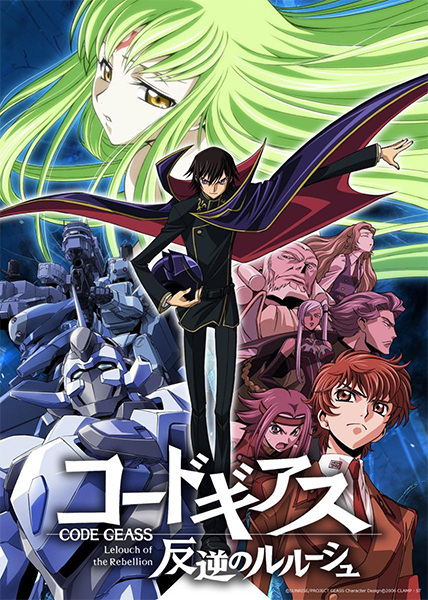
Charlotte is another one of those controversial anime which you see people complaining about *everywhere* yet it still actually has pretty decent ratings. From this we can deduce that there are probably a lot of people hating on it mostly because everyone else is doing it and they don't want to stand out, and/or that the show is mostly successful among casual viewers who don't bother speaking their mind about it over the internet to begin with. It all sounds uncannily similar to the public view on Sword Art Online in that sense, doesn't it? And in the same way, while Charlotte is certainly noton the same level as most of Jun Maeda's earlier works, there are still countless anime significantly worse than this. The world doesn't solely consist of black and white. Charlotte is a story about people with super powers. Only temporary and highly imperfect ones yes, but super powers all the same. It follows the life Otosaka Yuu, an initially arrogant high-schooler who has the ability to take control of people's minds for five seconds at a time; an ability he has used to cheat his way to the highest grades of his school. That is until he one day gets caught red-handed by an unknown girl who is seemingly aware of his ability, Tomori Nao, who then forces him and his sister to transfer into her own school instead: a special school built solely for students with supernatural abilities. And thus their new lives begin as Yuu and his newfound companions struggle through their lives as they attempt to fit into society, as well as do their best to stay away from any scientists who might seek to turn them into experimental guinea pigs. Now the first problem with Charlotte is simply that the first five episodes are rather... uninteresting to say the least, and feel mostly like filler. These episodes pretty much run on an "ability user of the week" theme, as they are all separate stories about Yuu and his friends having to find and subjugate some person abusing his/her super power in some manner of fashion. But there is no semblance of coherence to it, and it doesn't feel like the main plot is going anywhere at all. Or rather it doesn't feel like any sort of main plot even exists. It's mostly just quirky over-the-top comedy similar to what we saw in Angel Beats and not a whole lot more. It isn't until episode six that the main story actually starts out for real. Here the story immediately takes a significantly darker turn, which was clearly written for shock value. Then it gets a lot more interesting for a few episodes (though Yuu's character development still feels highly unrealistic), but as it gets closer to its climax, Charlotte starts feeling a bit like an unfinished mess script-wise. I'm not going to spoil any details of course, but there are a ridiculous amount of ideas that are juggled with towards the end of the story, and it feels like the plot takes a whole new direction with every new episode. One week it felt like I was watching Steins;Gate. The other it was Zankyou no Terror. Etcetera. Really it doesn't feel like the plot even knows where it wants to go, and as a result you get a jumbled mishmash of a storyline in the grand scheme of things. Also as an inevitable result of this, there are many plot elements which feel rather poorly thought-out. When you take a completely unexpected direction with the plot, you better have done the groundwork for it to make sense, but Charlotte doesn't always do this because some of the twists feel more like plot holes than anything else simply because earlier events seem to contradict them. In addition, despite the now more serious general atmosphere of the show, it still insists on reusing the silly comedic elements of its opening episodes every so often, but unlike those, it no longer feels appropriate at all. Oh and if you're looking for some sort of tear-jerking drama in this anime like Jun Maeda normally specializes in, you should probably look someplace else because Charlotte really isn't that kind of story at all. Rather the only drama it really has is quite cheesy, and among other things contains a pretty forced and unnatural romance subplot, but even that is still nothing more than a secondary aspect of the story. The characters are nothing spectacular, but I find them likeable enough for the most part. In the very beginning, Yuu is the spitting image of Lelouch both in terms of personality and super power which thrilled me quite a lot, but sadly he calms down and becomes more of a standard protagonist pretty quickly. Nao is rather hotheaded and violent, but still very caring for her friends and family on the inside. The other main characters primarily consist of other ability users from the school, including the pop idol Yusarin who has a quite unique take on the "split personality" concept, as well as the glasses guy Joujirou who possesses the ability to teleport... sort of. There is also the rather overwhelming little sister Ayumi whom I know a lot of people disliked quite a lot, but she's treated more like a plot device than anything else throughout the story. Whether or not this is a good or bad thing though is debatable. The production value however, as you may expect from P.A. Works, is top tier. While it doesn't look quite as mesmerizing as some of their earlier works such as Nagi no Asukara, it is still absolutely beautiful to look at. The character designs and the scenery both look amazing. The music is equally on point, which again may only be expected given the people behind it. The OP and ED are both among the very best of the year for sure. But although it may be pretty to look at and listen to, that is sadly not all there is to an anime, and Charlotte falls flat in the more important categories instead. I really felt like the story always had potential, but it never really got itself together. I felt like I was constantly waiting for some clever plot twist that would make all the pieces of the puzzle fall into place, and suddenly explain why all the questionable plot twists played out the way they did... but it never really happened. Episode nine did a good job with clearing up everything up to that point, but as for the events of the last few episodes... I'm afraid I can't say the same. As a result, the ending isn't exactly the best one I've ever seen. Despite everything though, I still somehow found Charlotte fairly entertaining from start to finish. Admittedly a lot of that probably just comes from the initial hype the series had, but even when it started to get more and more problematic script-wise, it didn't exactly get boring. And that is still the most important aspect in my mind, given that anime is, after all, nothing but entertainment media in the end. Charlotte feels kind of like an incomplete experimental anime which tries to do too many things at the same time, and as a result doesn't really succeed with any of them. Rather it leaves more holes than answers instead. But it still manages to keep you guessing and curious about what kind of curveball it's going to throw at you next. Does that make it a good anime? Maybe not, but despite all its problems I still can't make myself hate it. While it's certainly a very flawed anime, I still had fun watching it. Now if only we could all learn to not hype series up to the second tier of heaven before they start airing; it only makes the disappointment feel all the greater when it doesn't live up to the expectations in the end.
Zadion
September 26, 2015
ambivalence. Key is a household name for any anime connoisseur. Even those with a mere passive interest in the medium as a whole are probably familiar with at least one of Key’s titles—a close friend of mine whose anime experience mostly encompasses Naruto knows Clannad as “that anime which gives people the sads” and subsequently won’t watch it because “it’ll give me the sads.” Clannad: After Story has permanently lodged itself within MAL’s top 10, several other Key titles (such as Angel Beats! and Kanon) receive a lot of love around here, and multiple Key visual novels have received wide acclaim, with Clannad, Little Busters, andRewrite all ranking within vndb’s top 15. In short, people love Key, and when a new anime fronted by Key or Key’s figurehead and principal writer Jun Maeda rolls around, people pay attention. It could be because you’re excited for a new anime from your favorite writer, it could be because you’re one of the director’s many critics and you can’t wait to see their new trainwreck, or you could just be interested in the hype the new series delivers as a passive observer; whatever the case, interest is generated. Naturally, Charlotte, being the newest title in Jun Maeda’s impressive résumé, was met with a tidal wave of hype. Does Charlotte match the standards expected by a Key title? Well, yes and no. The first six episodes are a testament to all things Jun Maeda, a near complete collection of tropes anybody familiar with his work probably knows intimately by now: food jokes, baseball, school hi-jinks, and tinges of supernatural melodrama, among others. Frankly, these episodes are riddled with so many KeyTropes™ that one might think they were purposely constructed as a parody of everything Maeda is known for. By episode 4, all except the most rabid of Key fans will be more than a little tired with the barrage of shenanigans pressed upon us. The problem isn’t so much that Maeda uses his traditional writing style, it’s that the execution of his ideas are simply too familiar. “Yeah, I’ve seen this before, and I’ve seen it done better than this.” His writing is almost a caricature of itself at this point. As a fan of Maeda’s writing style, I found myself chuckling a number of times and invested in “The Everyday Adventures of Tomori and Friends” more than I retrospectively can understand, but I doubt the average viewer is going to empathize with these feelings. Then, against all odds, Charlotte turned 180 in potentially one of the most contrasting shattering of tropes and clichés I’ve ever witnessed in an anime: episode seven. The 7th episode of Charlotte is without question one of Key’s finest episodes, sitting in pleasant company with the 18th episode of Clanand: After Story, the 10th episode of Kanon, and the finale of Angel Beats. For probably the second time in his career, Maeda wrote a dramatic story earthed in realism and believability that does not rely on emotional oversensitivity. Filled with flawless progression, powerful character development, and tight writing, Maeda proved he has a grasp on human emotions and Charlotte is not just another show aimed at appealing to the viewer’s appreciation for zany comedy and “feels.” It even successfully implements Maeda’s traditional appreciation for sensationalism and does so with class. From episode seven onwards, Charlotte catapults through a number of plot twists and thrills with a sense of maturity foreign to Key’s works, only ever devolving back to its handbook of clichés to lighten the atmosphere and strengthen the execution rather than relying on them to even catch interest. However, herein lies Charlotte’s largest fault (no, it’s not the pizza sauce jokes): resolution. Perhaps a testimony to the fact a Key story can’t be told with finesse in a mere 13 episodes, Charlotte’s single most fatal flaw is its pacing and the means by which its drama is resolved. Character development is curbed for the sake of bringing a close to each individual obstacle in a single episode and, in the best of cases, two episodes. The drama of the early episodes is ruined by the absence of build-up and negligence of expansion, and the drama of the latter episodes is diminished by the constraints of its run time that force a harried resolution without thoroughly exploring the events and before viewers are given the chance to even register what’s going on, let alone sink into our protagonist’s emotions… which brings us to the characters. If Charlotte’s pacing is the gaping wound to the series, then its characters would be the taut string that attempts to cease the blood loss. Each member of our four-character primary cast is loveable and amusing, and a lot of Charlotte’s idiosyncratic humor would utterly fail without its characters to support it. Yuu Otosaka, accurately dubbed “mini-Lelouch,” is sly and selfish yet charismatic and… loves his sister. Nao Tomori is a stoic, responsible, and sweet girl that maneuvers skillfully across the tsundere rope, the one Key girls often do, striking a delicate balance between casually hostile and apprehensively caring. This gives her a believable emotional distance, especially taking into consideration the struggles pressed upon her, far removed from the cringe-inducing display of many of the anime community’s beloved tsunderes (Taiga is shit). Joujirou Takajo and Yusa “Yusarin” Kurobane kind of play second fiddle to our protagonists and would have benefited greatly from more development (Takajo especially; Kurobane received her share of development, but its execution was disappointing at best—more on that in a minute), but between Takajo’s presence as the butt of Charlotte’s many jokes and Yusarin’s dualistic personality, I couldn’t help but admire both of them anyway. There are a number of side characters which play an important role later in the story; speaking much of them would spoil several important events, but it’s worth noting that they are all likeable characters as well. Unfortunately, Charlotte’s fatal ailment to some extent succeeded in demolishing its characters as well. As mentioned previously, the pacing of the series consistently stifles character development. Some of Yuu’s actions come out of left field, Tomori winds up a side character by the end, and the bits of development the other characters get is crammed into a time allotment so tightly controlled it just seems forced—Kurobane’s ultimate resolution is literally compacted into less than 5 minutes of a single episode. Charlotte nearly completely sacrifices the important element of build-up in the execution of its drama, and without that build-up it’s difficult for the audience to really care about what’s going on. Episode 7 is the single moment in the series that remembers that importance, and, to no surprise, it focuses on Yuu. As the protagonist, all of the genuine development in the series is heaped at Yuu. Even the events seemingly intended to develop the side characters commonly, ultimately serves the purpose of developing Yuu. It is for this reason that, despite some misgivings, Yuu is a well-rounded, well-developed character and certainly among the best of Key’s protagonists. While I have no specific comments about the standard sound direction—the BGM is certainly not as noteworthy as that of Key’s holy trinity (Clannad, Kanon, Air)—praise should be directed towards the stellar voice work of Kouki Uchiyama for Yuu Otosaka and Ayane Sakura for Nao Tomori. Yuu’s voice work is theatrical and lively, perfectly complimenting his character, yet apprehensive and dejected when required. Nao’s voice in contrast is some combination of subdued, stern, and alluring; and, truthfully, Ayane Sakura’s voice is so charming I could’ve turned off the subtitles and just appreciate the beauty of her voice work. I opened this review up with the word “ambivalence” to set an atmosphere for my general impression of the series. While the first half of the series is an enjoyable yet basic collage of slice-of-life shenanigans, the second half swiftly swings into motion reminding me why I love Key’s works, yet ultimately leaving me with mixed feelings because its unfortunate pacing restrains its overflowing potential. The resulting product is a vaguely impressive series that falls short of its fathers. And, disappointing as it is, it could have matched them with a handful more episodes, just a bit more time to expand its events and characters, to cover its plot holes. I hope this serves a lesson for any hypothetical future projects: Maeda, please make it two cour.
Rank
#1209
Popularity
#68
Members
1,751,425
Favorites
25,039
Episodes
13