Liz and the Blue Bird
リズと青い鳥
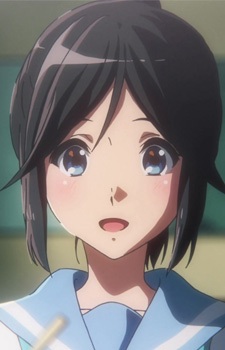
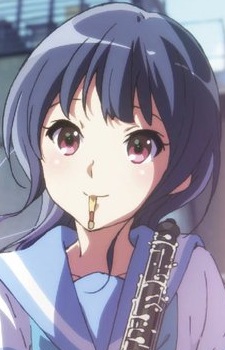
Liz's days of solitude come to an end when she meets a blue bird in the form of a young girl. Although their relationship blossoms, Liz must make a heart-wrenching decision in order to truly realize her love for Blue Bird. High school seniors and close friends Mizore Yoroizuka and Nozomi Kasaki are tasked to play the lead instruments in the third movement of Liz and the Blue Bird, a concert band piece inspired by this fairy tale. The introverted and reserved Mizore plays the oboe, representing the kind and gentle Liz. Meanwhile, the radiant and popular Nozomi plays the flute, portraying the cheerful and energetic Blue Bird. However, as they rehearse, the distance between Mizore and Nozomi seems to grow. Their disjointed duet disappoints the band, and with graduation on the horizon, uncertainty about the future spurs complicated emotions. With little time to improve as their performance draws near, they desperately attempt to connect with their respective characters. But when Mizore and Nozomi consider the story from a brand-new perspective, will the girls find the strength to face harsh realities? A spin-off film adaptation of the Hibike Euphonium! series, Liz to Aoi Tori dances between the parallels of a charming fairy tale, a moving musical piece, and a delicate high school friendship. [Written by MAL Rewrite]
Main
Main
Supporting
Supporting
Supporting
Supporting
Supporting
Supporting
Supporting
Supporting
Rakmaninoff
July 3, 2021
I have never cried for as long as i have in a movie ever. Genuinely. There were multiple points in this film where my eyes were stinging after having the tears just set in my eyes for ten minutes as a time. Granted, I was eating a solid burrito with salsa out of my spice tolerance so it seemed logical. Then I finished eating… I was still crying. I had intended to watch this film earlier than this, after I had finished the series of Hibike Euphonium. Yet for some reason I put it off. Life seemed busy I suppose. But as my yearning formore Naoko Yamada grew mighty and mightier, I had to check it out. For my love of her visions, and my curiosity of her upcoming projects. My oh my what I was missing. The aesthetics of the film already clicked with me upon seeing images of it, prior to full viewing. The character designs have this beautiful long and stretched quality. Everyone looks a lot more humanoid but int he best sort of stylised ways. It gives this instant connection and empathy through how soft & emotional the characters appear. Futoshi Nishiya, the character designer, spreads this quality through his other designs such as in The Shape of Voice. Where that same empathy can be felt. There’s an aspect to these designs where they seem like fantastical beings who are somehow only managing to survive. Which fits well with the struggles in this film. The film presentation is also top notch. Manipulating the frequently beautiful techniques of the digital anime medium that KyoAni have perfected over the past decade. The backgrounds have a dynamic form of realistic, apropos of the very grounded human drama whilst not being visually drab. With all that has been mentioned, character design, backgrounds, and drama, the film begins with these correlating elements to introduce us to the focus of the film. It is with these attributes that create this chilling and delicate human experience that rooted me into this film head first. This is a film that so gorgeously illustrates the struggles to communicate. The interlocking conflicts that build, stemming from this moment, is a beast understandable to myself and many others. I began to really feel sorry in here as I gazed at Mizore’s, the protagonist’s, attempts to bridge and get close to people. It’s this heartbreaking difficulty that you feel as though you also haven’t built up the strength to manage it. Pushing you to be happy for her to maybe even gain the ability to speak and create an understanding between people. It’s something that tussled with me most in this film. Just watching as some characters can’t get people to understand them really shout in my head “I know”. It’s not just Mizore that is unable to communicate properly. All of the characters are draped in this cover of unclarity which they are attempting to free themselves from and get to doing what they want. This being best communicated through the superb direction work. Naoko Yamada is known to have an infamous interest in the symbolic meaning of legs. With this film rooting that interest to its very core. The cutaways between legs always having something extra to say about the barriers between each character. Legs will even be explicitly shown changing positions as to correlate with the change in situation or role in the scene. Stand out scenes are in the beginning of the film, where there is a lot of fixed shots on legs that expertly communicate the problems our characters face. The confessions of Noizomi also stand out to me, where they effectively convey the change and reflection her character through her change in position. These details are charming with how they add dressing to the cinematography and give you something else to stare at. But ultimately, you grow to find it a very useful tool to understanding and connecting to the film that they become so important to your viewing. And there’s an appropriate amount of thought put into each scene where you can simply focus on legs as the dramatic visual to inform you on the conflict present. Frankly its hard to recall a particularly powerful moment because the imagery is so consistently embedded. But it’s also my first time viewing this film, and since it was quite an emotionally explosive session it’s fine that I didn’t soak up everything. But I would be remiss if I just kept ogling at legs this whole time. Not that I always could anyway due to my tear stained eyes. My ears were very active throughout this film. The moments of orchestra in the original series always impressed me with how they were able to channel such emotion. Even to change the emotion with the same piece at a different time in the episode. That sense of emotion is ever present here. Especially with the swathes of silence found scattered throughout, the music delivers in portraying the perspectives and struggles of these characters and it really strikes accord with me. Much like it’s their secondary voice that we can maybe understand better than the words that presently escape them. For me at least, I can hear and feel that voice. That is what truly devastated me at the climax of the film. All of these things unifying in this brilliant moment that was just so beautiful and powerful. It was something I could just understand so instantly. And it was as though the film proved to me at that moment how great it was. Not to say all was only revealed until that moment. But that, the mountain we climbed lead us to a place that was just what the journey was taking us towards. And that it was so satisfying to witness it, and follow everything as we came back down. I haven’t mentioned it at all but the concept of the musical piece Liz and The Bluebird is also wonderfully integrated into the story. As are the subsequent scenes that bridge between the film. Really it’s something I don’t want to explore here because it is so beautifully put in the film. That is something which must be experienced on your own. The one thing that doesn’t seem perfectly set with me is the pacing of this film. While I don’t find it an issue, it does have the sense that this is an extended episode of the TV series. Ultimately, I find that nature to the film charming. And if it is a longer TV episode, it is the best episode there is. This is something I’m keen to explore and feel towards upon rewatching. This uncertainty is why I would say the story as being a 9/10 but the film 10/10 overall. It is the immense lack of distaste or disinterest on first viewing that makes me feel so strongly about this film. In terms of firsthand impressions, this film has successfully captured my love. And I applaud it. Quick things i loved without saying much: - Reed making is such a cool looking craft and I love how Mizore makes her own. - Band members hanging in musical groups is super cute and I love to see the little communities formed here. - Taki-sensei once again giving inadvertent life advice makes me wonder how aware he is of fundamentally changing the lives of these performers haha. If I am to mention rankings, I don’t know if I would say this is definitely better than The Shape of Voice. But I’m willing to say they’re both equally fantastic and are wonderful benchmarks of Naoko Yamada’s bright and beautiful future as a director. I certainly hope to see her make as many she feels need. But all the more, it is these relatable and touchingly executed stories that invest me in the media of film. And i am always happy to see more. Thank you KyoAni, may you heal and grow to be stronger than ever before.
Liz's days of solitude come to an end when she meets a blue bird in the form of a young girl. Although their relationship blossoms, Liz must make a heart-wrenching decision in order to truly realize her love for Blue Bird. High school seniors and close friends Mizore Yoroizuka and Nozomi Kasaki are tasked to play the lead instruments in the third movement of Liz and the Blue Bird, a concert band piece inspired by this fairy tale. The introverted and reserved Mizore plays the oboe, representing the kind and gentle Liz. Meanwhile, the radiant and popular Nozomi plays the flute, portraying the cheerful and energetic Blue Bird. However, as they rehearse, the distance between Mizore and Nozomi seems to grow. Their disjointed duet disappoints the band, and with graduation on the horizon, uncertainty about the future spurs complicated emotions. With little time to improve as their performance draws near, they desperately attempt to connect with their respective characters. But when Mizore and Nozomi consider the story from a brand-new perspective, will the girls find the strength to face harsh realities? A spin-off film adaptation of the Hibike Euphonium! series, Liz to Aoi Tori dances between the parallels of a charming fairy tale, a moving musical piece, and a delicate high school friendship. [Written by MAL Rewrite]
Wirea
April 3, 2019
Naoko Yamada directs a masterpiece in Liz and the Blue Bird, a beautiful story between two close and longtime friends who run into a hurdle in their relationship and as a result are both forced to take a step back and reexamine their feelings toward each other. To get this out of the way immediately, the events of this movie take place after the events of the last episode of Hibike! Euphonium Season 2. You can certainly watch this movie without having seen the Hibike! Euphonium TV animation series beforehand, because it was made to be a standalone spinoff to said anime series, but having done sowill allow you to quickly get all the things happening in the background so you can focus your attention more on the sad, beautiful, and delicate story this movie has to show. Now, I'm a huge fan of the Hibike! Euphonium anime series for its inspiring tale of working hard as you reach for your dreams. I particularly liked the club's advisor, Taki-sensei's, blunt and unforgiving attitude towards improvement because honestly, that's the best way to go about in the real world. But I digress. In almost direct contrast to the anime series' focus on music, rehearsals, the ever-present goal of winning that coveted gold at Nationals... this Liz and the Blue Bird spinoff focuses on much more human and close to the heart concepts, such as friendship and learning to see when a relationship is starting to become unhelpful to a person and then taking steps forward to resolve that. The entirety of the movie's ninety minute runtime leaves little room for any of the familiar scenes in the anime series. Sure, there are a few slice-of-life scenes (an art that KyoAni has perfected) and rehearsals here and there but they definitely take the backseat in this movie. The movie takes place in the same high school and in the same wind ensemble club room that fans of the anime series have grown to be fond of, but the focal point, the viewpoint... the cinematography itself demands that you focus your attention on the two main characters in this movie, Yoroizuka Mizore and Kasaki Nozomi. Mizore is your quiet and soft-spoken girl who is close friends with Nozomi, your lively and outgoing girl. They are both third-years at high school and members of the wind ensemble club. Both know that this is their last chance to enjoy their youthful and carefree lives before they step out into the unforgiving real world. Luckily, they are both also the aces of the club in their respective instruments so they get a chance to play a critical solo part in the club's upcoming competitions. That's a pretty good way to go out, if I do say so myself. But I feel what I've just said in this paragraph does not do these two's relationship enough justice. The two of them have been friends since middle school. Nozomi is very introverted Mizore's first friend and definitely holds a special place in her heart. However, this relationship seems hopelessly one-sided as Nozomi, being the outgoing person that she is, views Mizore as simply another friend. Their relationship is made to go a little deeper though when Nozomi invites Mizore to join the wind ensemble club. Eventually, spending time together both in and out of club allows Nozomi to also see that Mizore is a special friend to her. Their relationship then hit a rough spot during their first year in high school but has since been resolved (watch Hibike! Euphonium Season 2 Episodes 1-4 for more details!), but not without leaving behind lasting anxiety and uncertainty in each others' hearts, especially Mizore's. This movie does a stellar job of portraying the two's pure, delicate friendship and how they resolve the aforementioned anxiety and uncertainty by reexamining their relationship. From the get-go, Liz and the Blue Bird sets very down-to-earth expectations for itself and that never wavers throughout the movie. It doesn't try to be the next big hit in high school romances, or drama, and definitely not in the music genre like its parent story. It is, very roughly summarized, nothing but a story between two close friends who are nearing the end of their high school lives. The movie both begins and ends with a normal, everyday scene of the two of them walking to or from school and engaging in typical youthful conversation, albeit a little less chatty than expected due to the nature of one of them. From an outsider's point of view they would certainly look just like typical best friends in high school.. And this is where this movie's beauty lies hidden. We see as the movie progresses that there is so much more going on between these two seemingly inseparable friends. The movie takes care to use every precious scene with detail and craftsmanship that turns an otherwise stereotypical "hIgH sChOoL" anime movie into a true work of art. Whether it is Mizore's constant uncertain glances at Nozomi, or in general just how much Nozomi's typical friendly acts and words toward her can turn her blushing red in an instant. Whether it is Nozomi's extroverted-ness shining out as she interacts with everyone. Every single emotion that the two characters feel in this movie get animated with clear distinction. You can physically feel Nozomi's surprise when Mizore asks if she can invite someone else. You can physically feel Mizore's hurting when Nozomi deliberately snobs her. I've read in an interview with Naoko Yamada that she took extra care to make sure not to "disrespect" the two characters' complex emotions and damn did she accomplish that in this movie! Interestingly and as an aside, Yamada showed increased interest in directing Mizore and Nozomi's story way before production and this goes to show how talented, passionate people who like what they are doing can really create the best works. Probably my favorite part of this movie is just how entrancing the relationship between Mizore and Nozomi is. On one hand, you know they are close friends and that chances are high they will remain so for the rest of their lives. But Mizore's increasing uncertainty toward Nozomi feels like it put their relationship on knife's edge; a bubble that has grown too big. Another big rife in their friendship could very well put it to a irreversible end, but you can feel that Mizore is taking great pains (at least for someone as introverted as her) to make sure it never comes to that point, ignoring everyone else as she only really has eyes for Nozomi. On the other hand, Nozomi is just being her usual outgoing self, confident that Mizore will always look up to her, but even she comes to a point where she realizes just how vast the difference between the two of them really is and makes up her own resolve toward their friendship. At this point I can only say that my number one ship in anime has safely become MizoreXNozomi (friendship ofc) and I really hope things work out well for the two of them going further. I've been focusing on the two main characters and their story in this review so far because after all, they are the highlight of this movie and imo, where the nail truly hits the coffin. But that is not to say that the other elements of the movie do not deserve mention. In particular, the accompanying soundtrack was really good and silent tracks were used with care in the movie's more emotional scenes. Mizore's oboe explosion at the climax was a thing of beauty to listen to as well. The different artistic style and redesigned characters really help to make this movie feel parallel to the anime series. Liz and the Blue Bird is not a grand story, and doesn't try nor have to be. It's not a tale between fated lovers, nor a huge chronicle of working hard towards sweet sweet victory. Hell, it's not even a good drama! This movie cannot be viewed with the typical expectations that its genres seem to imply, because it deliberately exists as an independent plot point in the Hibike! Euphonium universe and therefore cannot be viewed like the anime series. I'm sure this movie's events will only get passing mention in the upcoming Chikai no Finale movie or a Season 3 (fingers crossed), and yet they have stuck with me. It's a combination of the pure and delicate love story between Mizore and Nozomi and how they reexamine and advance their relationship forward and the sheer amount of detail and craftsmanship that went into making sure both their emotions got properly expressed and felt on-screen. The sound (as expected from a music-oriented series) and art-house like visual style were the cherries on top. Liz and the Blue Bird is a must-watch for anime fans period, but even more so for those looking to take a break from all the serious anime that have come out recently. For those that want a work executed to near perfection with skill and craftsmanship only made possible with a dedicated and talented director who respects their characters' humanity and emotions, this movie is right up your alley. People who don't care much about technical stuff and only want good content will still find Mizore and Nozomi's personal story to be a truly moving one, even if the setting seems a bit too ordinary and grounded. Even then, this movie reaches level of detail and craftsmanship seen in few other anime and that alone is enough to warrant me giving it a perfect score.
SSygrt
January 17, 2021
I'm going to keep this short and simple. I surprisingly really enjoyed this movie. Yeah I guess you could say its a little bit slow at some parts, but for me that didn't take away from this film. I cant really tell you what exactly I enjoyed about this film, the characters, storyline, the art style, everything just fit in perfectly. It really didn't feel like an hour and 30 minutes, I pretty much flew past this film in no time, and I understood the story. It was just very enjoyable for me to watch and that's why I'm giving it a 10 star rating.
OujoYunie
January 30, 2021
Overall rating: 10/10 I enjoyed this film more than the entirety of Hibike! Euphonium, and fully recommend to give it a chance. It is a beautiful and emotional piece of art. All elements of the film -- the story, art and sound direction come together beautifully like orchestra music. Nothing in the film is executed at random. Story and characters: 9/10The story is simple and fully contained in the film, although I'd highly recommend to have watched Hibike! Euphonium before giving this film your attention. It adds much to the backstory of the relationship between the main characters, which is the core of the film. That said, the film should be viewed differently than the anime series, as the overall tone is different (Hibike! has for the most part a casual, fun feel to it, while Liz and the Blue Bird has a more somber, mature feel). Art and sound: 10/10 The art direction is similar to the series and beautifully executed. There isn't a single scene wasted. The soundtrack matches the scenes and emotion perfectly. - - - I highly recommend to give Liz and the Blue Bird a chance if you've already watched Hibike! Euphonium.
manlyflower
April 22, 2018
"Liz to Aoi Tori" is essentially a side story to the "Hibike Euphonium" series, and from the very start, it fully embraces that role. Fans of the TV anime will likely find themselves despairing over the limited screen-time of their favorite cast members, inching forward in their seats as Kumiko, Reina, and the rest of the now-second-year ensemble teasingly jump in and out of picture for only moments at a time. This minor frustration will only be temporary, however, as we're forced out of that frame of mind, into the soft, melancholic lens of our focal point in this movie: Mizore. Although this story existsin the same music room we've all come to know, it takes on a different hue. Owing in large part to the incredible soundtrack and fresh character designs and art direction, the tone of the movie shifts entirely, transitioning from an inspirational story of motivation and hard work into a deeply somber and introspective world. The story itself is very simple, examining the relationship of Nozomi and Mizore in their final year in high school. It openly compares the feelings of the two characters with the piece they play, the namesake of the film, and the folktale it was based on. I was originally concerned that the comparison would end up overplayed and come off as forced, but I left pleasantly surprised. The film acknowledges the simplicity and straight-forwardness of the story, but instead of allowing itself to be confined to that, it achieves a level of technical mastery that managed to blow me away, even though I was already plenty used to the historically superb Kyoto Animation and the other wonderful works by director Naoko Yamada before watching it. The film succeeds on such a level because it allows itself to be a single vignette in the "Hibike" storyline. It's not a story of hard work, a story of competition, or even a story of music. It's a simple story of two characters, and it's precisely because this aspect of it was so intimately understood by the production crew at KyoAni that such a story was allowed to flourish. There is no excess. The film brazenly jumps through time, refusing to linger on anything unnecessary while still allowing the events that clearly happen off-screen to create meaningful depth in the story. We don't focus on what practicing is like. We don't see what the characters do on their weekends. We don't listen to the girls ruminating on their feelings in the comfort of their beds. From the moment we as an audience walk with Mizore onto campus at the beginning to when we exit it at the end, all we see is what's limited to the confines of the school, to the band room and to our two leads, and everything else is left to become a sort of wistful ether that exists on the fringes of our minds. Because what was shown was clearly so carefully chosen, we come to viscerally understand the weight behind every lingering shot. It's an incredibly delicate experience, and one that could've only been realized with production quality of this caliber. Yamada's quirks as a director have often been the subject of conversation in the anime community, but I believe that this film has been one of the best applications of those idiosyncrasies to date. Her approach to the art of unspoken communication paralleled the film's focus on Mizore, a girl unable to truly express, and at moments even understand, her own feelings. Subtle gestures such as Mizore stroking her hair not only serve to silently convey the cast's thoughts, but end up feeling as if they were sewn into the very plot itself due to how integral of a role they play. The consistent focus on the characters' legs—a mainstay in Yamada's works—mirrors Mizore's own downcast eyes, and the other camera shots always seem to look off to the side, as if shyly avoiding the characters around her. Add to this the introduction of a softer pastel art style, and we see the world brilliantly through the lens of our main characters, creating something amazingly intimate. The soundtrack and sound direction are, hands down, the shining star of the film. It combines composer Kensuke Ushio's fragmented, minimal approach also found on his work in Yamada's previous film, "Koe no Katachi," with the expertly realized orchestral arrangements that the series is known for. However, gone are the sweeping brass-heavy pieces that complimented Kumiko's role as a main character in the original series. The introduction of the new piece instead turns the focus to the woodwinds. Brass now supports from the background, and the airy voices of woodwind instruments paint the entirety of the film with a wonderful warmth that sets it apart from the main franchise. The parallel stories of Mizore and Nozomi and the girls from the folktale blend masterfully into each other because of this—from the gorgeous bass clarinet adding a sense of comforting security to the cold isolation of a "Koe no Katachi"-styled piano piece casting an ominous tone over the characters—yet the well-timed use of other instruments such as the bassoon add the perfect amount of levity when necessary (the bassoon in particular being used wonderfully to comedic effect when the bassoonists themselves are relevant to the scene), while still staying in line with the overarching thematic style. That's why this film works. Every aspect of it is fine-tuned to near-uncanny perfection. The psyches of each character are silently brought to the surface through each deliberate animation choice, from Nozomi's eyes darting around the room to Mizore's subconscious trembling. The soundtrack compliments each and every emotional swell—synchronized musical flourishes match footsteps and impeccably timed silences pull us devastatingly close to the most minute of actions. Each background track cuts to the core, yet never accidentally overpowers the gentle art and soft color scheme. Because of this masterful balance, all of the reactions are almost unnaturally natural, seemingly larger than life because of how lifelike they are. This kind of exaggerated humanity is an achievement only possible through the medium of animation, and even then, I have never seen it done quite like this. Although giving a full score seems like it could be a provocative statement for a film focused simply on the minutia of a measly two characters, if this movie isn't considered among the best for the sheer level of craftsmanship that it exhibits, then I really don't know what other film deserves to be.
#391
Popularity
#1654
Members
161,659
Favorites
3,131
Episodes
1