Recommended
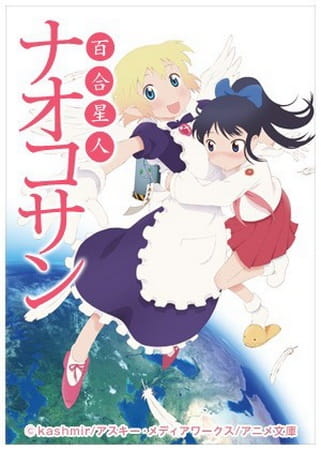
NieA Under 7 tells the ebbs and flows of early adulthood in a loosely constructed slice of life comedy. Thematically down-to-earth and occasionally depressing, NieA_7 inspires young adults to be hopeful no matter their personal situation. Reputed as ‘the forgettable Yoshitoshi Abe anime’, its lukewarm critical response severely undermines how relatable, sympathetic, and empowering this series can feel. Today’s young adults are stereotyped as socially awkward, riddled with financial problems and unsure about the future. Mayuko Chigasaki is the poster girl for these characteristics, presented as a hardworking student who is busy making ends meet by working several jobs. She lives with NieA, a rude,hyperactive alien who sells junk and builds faulty UFOs, much to Mayuko’s annoyance. Set in retro-future Tokyo where aliens have peacefully integrated over generations, the pair reside in a sleepy bathhouse with their friendly neighbours. With traditional bathhouses on the decline, the residents resort to drastic measures to save the business, with predictably hilarious consequences.
The first half of NieA_7 is composed of comedic slice of life adventures, where in typical Yoshitoshi Abe fashion, the eccentric is juxtaposed against the mundane. Battling carnivorous plants and surviving UFO crashes are no big deal compared to bathhouse promotion events and staying overtime at work. These early episodes illustrate Mayuko’s difficulty adjusting to living independently. Working three jobs and studying to re-take her university entrance exams leaves little time for social or personal activities, yet the bizarre adventures and amusing interactions she experiences reminds her that fun is in the eye of the beholder.
Mayuko is a stellar lead character. Her basic struggles with finance, unbearable roommates and maintaining a healthy social life are universally relatable to young adults, while her unassuming, multifaceted personality is a joy to watch. Central to her character is insecurity, which externalises as shyness to those she wants to impress (bosses, classmates, old friends) and as aggressiveness to those she looks down on (NieA and the other aliens). Her markedly varied approach to social interaction is brought to life by excellent character animation and Ayako Kawasumi’s versatile voice acting.
NieA_7 thrives in presenting realistic, likable side-characters who simply want to help each other succeed, ensuing plenty of wholesome exchanges. Mayuko’s co-worker ‘Chie’ is a remarkably mature child character who presents a realistic, endearing impression despite her limited screen time. The alien community features a diverse set of memorable personalities who primarily handle the comedic relief. Most importantly, Mayuko’s employers are dedicated and motivated individuals who unwaveringly promote their unorthodox businesses, despite lacking consumer demand. Mayuko draws enthusiasm from her employers, among others, to energise her own daily endeavours, even if it amounts to doing chores and studying for exams.
While good-natured and hard-working, Mayuko lacks the perspective and experience to place her efforts in a constructive place, instead working day to day with no clear direction. Summarising this aspect of her character are the closing moments of the early episodes, where Mayuko dwells on how motivated and driven her peers are compared to herself. Whether an artifact of her young age or her ambivalent personality, her search for direction in life becomes the encompassing facet of her character, which she must overcome despite the overwhelming stress and self-doubt she comes to face.
On the other side of the coin is NieA, the freeloading alien who spends her time trying to find things to do, sometimes causing trouble for Mayuko. She is categorised as an ‘Under 7’, the lowest social class of alien, based solely on the absence of an antennae. Under 7s are denied education, work and even citizenship, such that NieA is essentially an animal in the eyes of their society. Despite being seemingly free spirited and unbound by human rules, at heart she desires respect and a useful way to spend her time, which she struggles to achieve given the restrictions on her social class. While NieA appears to be the antithesis to Mayuko, they ultimately share the same dilemma of lacking a place to apply their efforts constructively, despite the causes of their problems being essentially opposite.
The underlying tension between NieA and Mayuko is the centrepiece to their relationship in the first half of the series. Mayuko grows irritated of NieA’s frivolous use of free time, while NieA is spiteful of Mayuko’s well-constructed, privileged occupation and connections, with both parties fundamentally wanting to live more like the other. This friction is usually dissolved in comedy routines, but as they enter deeper emotional waters, it becomes the key motivator for their relationship growth and development.
NieA_7 is an adult-contemporary comedy at heart, and as such, the humour is more audacious than typical anime standards. Jokes involving drugs, poverty and racism are plentiful, but remain light-hearted enough to avoid the dark comedy label. Ranging from elaborate and sophisticated to low brow and slapstick, the comedy will vary depending on the mood of the episode, while collectively becoming more consistent as the series progresses.
The most distinguishing aspect of NieA’s comedy is the Indian influence, which manifests on several levels of the production. ‘Dalgit's Tidbit of Indian Information’, the bizarre live-action segment which plays after the ending theme, features Dalgit telling a lame joke in broken Japanese for no apparent reason. In typical Bollywood style, tone shifts are instantaneous and jarring, most commonly between light and humorous to moody and depressive. Such abrupt tone changes may be unnatural to the preestablished mood of the episode but are nonetheless effective room brighteners to keep the series balanced and watchable.
The inclusion of so many Indian references feeds into the light social commentary, which is never boldly involved in the narrative, but remains a quirky and interesting sugar-coating to the production. The alien community is used to explore the dysfunctional attitudes of modern Japanese society towards increasing immigration, where some aliens adopt an identity based on the stereotypes of other cultures. Enter Chada, the Indian-impersonating alien who runs a corner shop and is desperate to share his homemade curry, and Karna, a high-class Chinese-impersonating alien who is completely insufferable and rude. It should be unsurprising that Indian and Chinese people are victims of significant discrimination in Japan in recent times, and these aliens represent the major stereotypes assigned with their respective nationalities. The alien hierarchy bares resemblance to the Indian caste system, and the metaphor between aliens and immigrants speaks for itself. While a deeper approach to the social commentary would have further supported NieA’s character development, it remains a memorable edge to the unique comedic style.
The visuals maintain a consistent, solid look which is characteristic of early 2000s anime. Produced by the same team of Serial Experiments Lain, expect similarly detailed line work, limited mechanical animation, and robust colours. The urban design shares the same fetishization of wires and clutter but does not attempt to be as absurdly detailed or abstract as its 1998 cousin. Instead, NieA_7 puts its energy into a diverse set of rural backgrounds, ranging from luscious jungles to vast open plains. The town of Enohana is drawn to be dusty, run down and isolated, which is accentuated by the hazy, bright colours and warm glaze to every scene. Evenings are showered in vivid, fiery sunsets which are accompanied by obligatory cicadas or suzumushi (depending on the season), and nights are bathed in looming shadows and lonely blues, which incidentally comprise the soundtrack for those scenes as well.
The animation is a mixed bag. Character animation is often impressive, with motions customised to each character giving an extra dimension to their personalities, especially to Mayuko’s awkward body language. Unfortunately, the framerate will drop to frankly unacceptable levels at times, with jagged movements and choppy panning shots. Complex animation sequences are rare, so this is not a major issue, but it remains a blight on the otherwise commendable visuals.
Yoshitoshi Abe’s character designs possess the instantly recognisable aesthetic balance which he is renowned for and are faithfully adapted from his manga. With such diversity in age and ethnicity, his designs are as eclectic and beautiful as ever.
Tomokazu Tokoro applies the same emotional intelligence to NieA_7 as he would late perfect with Haibane Remnei. Peppered throughout the production are transient moments of the characters quietly performing their daily duties or just chilling out, further deepening the relaxed vibe that permeates the entire series. When the characters enter more intense emotional territory, these scenes are placed more thoughtfully to focus on the silent introspection which the characters undergo. Blurry nostalgic flashbacks are scattered throughout, with increasing relevance to the characters as their personalities and histories are more extensively explored. Scene composition is superb, with expertly balanced and thought-provoking layouts and angles which punctuate the loneliest, most desolate scenes.
Yoshio Owa’s soundtrack is sublime. Nostalgic acoustic pieces provide a soft melody to the slice of life scenes, while solemn violin tracks deepen the more poignant moments. The psudo-rural setting is perfect for blues inspired songs, with winding guitar noises permeating the final moments of each episode, providing the 2000s version of low fli hip-hop for Mayuko’s evening studies. The ending theme functions almost as a dream sequence, with Maria Yamamoto’s "Venus to Chiisana Kamisama" perfectly encapsulating the peaceful countryside atmosphere with precise acoustic instrumentation, overplayed on illustrations of Mayuko’s earliest memories. The overall effect of the soundtrack is to produce a sentimental atmosphere, which is fully achieved once combined with the commendable sound design.
Spoilers from this point onwards, so enter at your own risk. Skip to the last paragraph for the verdict.
Episode 7 sees Mayuko invited by a friend to attend a mixer (contextually referred as a Go-Con, essentially a group blind date). She hesitantly agrees to attend, and subsequently informs her neighbours (who have taken the role of a pseudo-family by this point) that she will go. However, despite being pushed to enjoy the opportunity by her older neighbours, her overwhelming self-doubt results in her turning down the invitation last minute. The aftermath is an entire two episodes of saddening contemplation as she grapples with the shame of disappointing her friend, while facing her own unbearable social ineptitude. Heart-wrenching scenes of Mayuko soaking in her depressing state fill the runtime as she is battered by her painful introspection, while simultaneously dealing with her difficult routine. Tokoro’s excellent framing drives these lonely moments to even greater heights, while the more emotional pieces on the soundtrack find their moment to shine.
The eventual resolution to this arc involves Mayuko letting an old friend pass through her defensive walls, realising that she needs an external voice of reason to combat her wandering, destructive introspection. This arc is will deeply resonate with anyone who has experienced similar circumstances, who’s low self-worth also interferes with living a functional social life resulting in such depressive episodes.
As these issues subside, her narrative turns to her dealing with the sentimental attachment to her past, specifically how she must separate from these feelings to move forward in her current life. Despite being surrounded by such driven, understanding people, Enohana is little more than a steppingstone for Mayuko, as it is often contrasted against the big city of inner Tokyo, with more ambition and opportunity inferred on the other side. Whether a subconscious effort to give her life direction or a natural consequence of her life circumstances, she realises how the biggest roadblock to finding purpose is her tendency to live in the comfort of the past and the what is familiar to her, rather than advancing with confidence in herself. Flashes of Mayuko’s memories, drawn in serene, wistful strokes, are more frequently utilised to reveal her reflective, pensive state.
Running parallel to this arc is NieA’s dilemma. She receives a signal from the alien mothership, and while the contents of the message are vague, NieA comes to understand that only she, as an Under 7, can hear it. After finally feeling validated and gaining the small possibility of escaping her current life, she abandons Enohana in search of the source. Mayuko becomes worried by NieA’s absence, and upon asking others for her location, realises that her neighbours view NieA closer to a pet than a resident, and officials treat her disappearance as a non-issue. Left alone as she comprehends the terrible circumstances NieA has been dealing with, while feeling regretful for participating in such discrimination, Mayuko again enters the depressive state of just episodes prior.
Episode 12 sees these character arcs entwine, resulting in their simultaneous conclusion. Tomokazu Tokoro flexes his creative muscles by using a multimedia approach to the visual presentation, with the daunting urban setting vividly abstracted with colour inverted, high contrast photographs, a tangible insight to Mayuko’s experience of those intense moments. Imagery of lost children and pets are used metaphorically to parallel Mayuko’s newfound perspective of their friendship. Sion’s incredible insert song ‘Kage’ is used to full effect here, giving the resolute lyrical support to Mayuko’s dispirited search for NieA, perfectly contextualising her hopeless state. To fully understand the gravity to Sion’s inclusion to this series, his appeal as an artist needs to be briefly examined.
Sion is a perfect for NieA_7. His borderline unbearably sore vocal performance quite literally feeds into the narrative of his songs; that he struggles to connect with others because the inherently abrasive aspects of his personality repels the attention he craves for. Borrowing from the likes of Bob Dylan and Johnny Cash, his songs ride the line between melancholy and optimism, wrapped up in excellent storytelling. He takes you down to the abyss of disparity which he is all too familiar with, and lifts you back up to feeling defiantly hopeful, using his soulful lyrics as buoyancy. Rough around the edges yet truly from a place of genuineness and solidarity, his empathic, impassioned performances of ‘Koko Made Oide’ for the opening and ‘Kage’ as the insert song, are just two hits from his exceptional discography.
NieA_7’s opening is monumentally powerful, featuring seemingly tailor made, multi-layered lyrics which smash home the most emotionally involved moments of the series, which are supported by similarly cryptic and vivid imagery. Sion’s singing evokes a feeling of brokenness, of lethargically as life is beating him down, exemplified by Mayuko’s jaded character animation as she struggles to wake up to the lyrics ‘Right next to where you’re crying, right next to where I’m blue’. To highlight just a few more great moments from this opening:
‘I can’t be close to sadness because I’m not surrounded by people’. This line fucking kills me. It speaks to anyone who is trapped in the cycle of avoiding people to avoid being hurt, but in doing so, feels the hurt from being alone. The episodes where Mayuko experiences those exact feelings are made exponentially more devastating once these lyrics match up with her depressing circumstances. Those hopelessly self-validating lines are highlighted by quickfire flashes of her childhood, to highlight her tendency to live in the security of her past rather than pushing herself to outgrow her protective shell and embrace the changes she faces.
‘I can’t change anything, so I can at least manage this’. Emotionally and physically weathered, Mayuko sits in her leaky apartment room as it rains, sheltered by the thin veil of her umbrella rather than fixing the source of the problem, while looking to the sky for hope. Even though she’s impoverished, overworked and has nothing meaningful to work towards and with few resources to change that fate, her face lights up as she understands that she’ll be okay regardless. Sion delivers his uplifting, empowering lyrics like crashing waves, as the opening reaches its climax with those very lyrics. This moment perfectly encapsulates the appeal of NieA_7: hope is always there, even if you don’t feel like you deserve it.
Returning to episode 12, and much to Mayuko’s relief, NieA returns home. With few words exchanged between them, the implication is that NieA’s life with Mayuko gives her purpose, and she is willing to persevere existence at the bottom of society if it means that she can continue that relationship. While much of their communication is obscured through fighting and backhanded compliments, Mayuko is quietly happy with this compromise.
The episode climaxes as NieA and Mayuko watch the mothership spontaneously evaporate and disappear. The dying mothership visually reminds Mayuko of a memory from her childhood, and realises that in the same way NieA is currently accepting her reality as an Under_7 who no longer has a mothership to return to, she must accept that she can no longer return to her past for security and needs move on with her own reality. Even if indirectly, Mayuko finds the resolution to that problem through her empathy towards NieA, and in turn, deepens their relationship significantly.
NieA_7 is not without its criticisms. The realistic, slice of life approach to storytelling has disappointed fans of other Abe classics like Serial Experiments Lain, especially considering that NieA_7 lacks the wealth of fascinating concepts which support his other works. The character motivations are frequently open ended and left for interpretation, which may be uneasy for viewers who prefer a more straightforward approach to character writing. The comedic elements can also appear immature or repetitive, particularly in the first half, and the aforementioned rapid tone shifts may be too sudden at times.
The biggest criticism of NieA_7 is that it lacks a clear narrative through-line, with character motivations and story arcs seldom feeding into a single message. Side characters drift in and out of the story without accomplishing a substantial arc and several questions are left without conclusions. However, the chaos of narrative elements and the lack of conformity to traditional storytelling is arguably a strength rather than a weakness, if interpreted less as a conventional story, but more as a truer depiction of reality.
NieA_7 presents the imperfect reality we live in, where things don’t happen like they do in the movies. Nothing is black or white, personal problems take years to heal rather than being solved in an instant, and drama is ephemeral, unpredictable, and usually unresolved. To highlight this with a quote: “A drama has a progressive thought, an emotional climax, and a resolution, but our lives aren’t like that. All we get day after day, are a bunch of vague anxieties that are never really resolved.” – Kaoru Yamazaki, Welcome to the NHK. Whether the narrative messiness was the intention of the creators or simply creative incompetency, is up for debate, but the overall effect is the tremendously relatable, understanding, and hopeful series which NieA_7 is.
This reasonable approach to storytelling makes NieA_7’s messages hit much closer to home. Mayuko’s eventual conclusion is that she will remain positive and approach life at her own pace, and even though there are aspects about herself and her life circumstances which may interfere with that hope, she will be optimistic, nonetheless. This broad resolution to her character arc is far from a sweeping thesis to understand her entire character, but is a specific, believable approach to handling her circumstances which suits her and the series by extension. As an archetypical young adult, Mayuko’s triumph over her lack of direction is reassurance that being unsure about your future is perfectly fine and normal, and taking things one step at a time is more constructive than beating yourself up over your perceived incompetency. If anyone needed to hear that message, it was me.
NieA_7 is an endearing, powerful series which provides countless moments of relatability, connection, and warmth to anyone who properly resonates with its realistic, multifaceted approach to storytelling and characters. Judging by its MAL score, NieA, absolutely does not deserve to be, Under 7.
10/10