シムーン
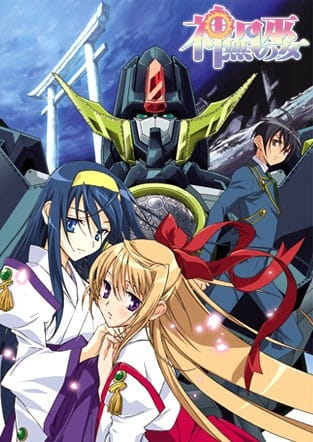
The verdant, peaceful country of Simulacrum resides on the planet of Daikuuriku. The country owes its existence to flying machines called Simoun and their holy Sibylla pilots. Powered by ancient artifacts, these ships can utilize Ri Maajon, frighteningly powerful abilities that can tear the very sky apart. Aaeru is a wilful girl who joins the ranks of the Sibylla priestesses at Chor Tempest in hopes of being able to pilot a Simoun one day. But soon after she enlists, Simulacrum is plunged into a war, as hostile nations desperately try to claim the technology for themselves. Hoping to save their respective lands from doom, these nations at peril believe the Simoun are the key to preventing disaster. Now struggling against their enemies and dealing with personal losses, the girls of Chor Tempest have no choice but to adapt to their situation if they are to have any chance at unraveling the mysteries that lie at the heart of their country: the Simoun and the Ri Maajon. [Written by MAL Rewrite]
neo_horizon
May 18, 2007
- The following review is spoiler free. - It's rare to come across an anime series that's as well executed as Simoun. In addition to its beautiful animation and incredible use of music, Simoun has a deep plot line that draws from many different themes and invokes a lot of emotions. The story takes place in a war-torn world where the main characters are young maidens tasked with flying Simoun, mecha-like flying machines with devastating attacks called "Ri Maajon" that can destroy the enemy. The twelve girls who come together in this war effort to fly the Simoun make up a unit called "Chor Tempest". Bywatching the struggles and triumphs of these maidens, we're able to touch upon the main theme of Simoun: love. Not all of the love explored in Simoun is romantic love, though a large part of it is. The rest is a friendship based love that is just as prominent as the former type. As young as these girls are (most of them are under seventeen), they've already realized the importance of protecting the people closest to them. But no matter how strongly they feel about someone, nothing is promised, nothing is for certain, and nothing is eternal. It's a truth that all these girls seem to realize, and it's because of that reason that they form such close bonds in an attempt to protect each other. Much of the show focuses on these relationships between the Simoun pilots, ones in which the girls try to figure out how to protect and save each other, and how sacrifices must be made in order to achieve their goals. The other major theme revolves around growing up and becoming adults. In the world of Simoun, everyone is born a female and chooses to permanently become a man or woman at seventeen by entering The Spring. This is a rite of passage that everyone must go through in order to become an adult. However, with war efforts in full swing, the Simoun pilots are allowed to delay their decisions since Simoun can only be flown by those who haven't entered The Spring yet. None of the main characters are eager to make their decision, and flying the Simoun becomes as much about protecting themselves from this choice as it is about protecting each other. Over the course of the 26 episodes, you'll see a staggering amount of character and relationship development. From forgotten childhood friendships, conflictive sisters, and experienced piloting pairs (two girls are required to fly a Simoun), to overprotective friends, an unlikely pairing of pilots, and troublesome new recruits, everyone gets their chance at growth and development. Each character and relationship is handled so well in this anime that every new twist, no matter how painful or happy, will evoke a fresh burst of emotions from the audience. This makes the show very satisfying to watch as it's so easy to relate to the characters and their lives. And by the last episode of Simoun, you're treated to an incredibly gratifying ending that ties up nearly all loose ends and will make watching the whole series worthwhile. However, as with anything that's as rewarding as Simoun is, watching this anime requires a bit of effort from the audience. The one major flaw with Simoun is that the story is fairly complex. Starting with the first episode and lasting until roughly the third episode, you'll find yourself swimming in a pool of brand new terms, characters, and politics so large that you're literally going to have to muddle your way through the series for a bit until everything becomes familiar and starts to make sense. (You might also need that time to get used to the fact that all male characters are voiced by women...) However, once this happens, you'll be thankful that you didn't run away after episode 1. By the time you reach episode 4, or episode 5 at the *very* latest, the plot and character development will take off in such a way that you'll want to go through the final 20+ episodes in a straight 8 hour marathon. And really, a marathon is the best way to watch a series this good. There's not much more that can be said without ruining some aspect of the story, so go watch Simoun if this review interested you in any way. Just be sure to watch until at least episode 5 before deciding to drop this series. You'll be glad that you did.

Mr_Tines
February 6, 2008
Simply the best anime title of 2006 (because the closest competitors, Akagi and Mushishi are technically 2005 titles that ran through the winter half 05-06. And a woefully under-appreciated title it was. The original fan-sub group that picked it up usually handles shoujo-ai titles; and the “key-turn” ritual for starting up the Simoun, the flying machines made it look like just another excuse for very pretty backgrounds and girls getting friendly together. But it turned out more complicated than that, and was left to languish in favour of more accessible highschool-romance titles, until picked up by the most dedicated and special-purpose group of fansubbers whose product Ihave followed. Simoun-Fans, an essentially ad hoc grouping, put together the most polished translations and sub-titling (including credits for the seiyuu against the characters during the OP, rather than the usual self-congratulation; that was left for a brief screen at the very start, before the TV footage). Of course, the polish came at a price — episode 26 wasn't subbed until a year after the first episode aired. OK, the story, and why you should watch this title… On a world that is not ours — two suns in the sky, for one thing — a transcendent civilisation rose and vanished. In its wake, the remaining people could unearth the helical motors, the snail-shell parts of both the Simoun and other powered devices (trains,flying boats). But only the Holy Land of Simulacrum has harnessed them, and the casual flight it offers. Other lands have more steam-punk technology, and seek the secret of the simoun. So war breaks out… In that world, all children are born as girls, and in Simulacrum choose to be man or woman at coming of age in their late teens. All the parts — even the men, are voiced by women; and, of course, young men are hard to tell from young women — the adulthood change is not instantaneous, as shown in the character of Wapourif, the chief mechanic to the simoun. While lesser flying craft can be piloted by anyone, the simoun needs to be driven by two girls; and these pilots are drawn from the ranks of the priestesses of Tempus-Spatium. While two priestesses at the helm they can produce magical effects by drawing glyphs in the air called Ri-Maajon, as part of religious ceremonial aerobatics. And as priestesses, they are allowed to defer a while the choice to become adult. So, a group of priestesses become, overnight, the necessary front line of the Simulacran fighting forces. Few can handle the mismatch between their vocation and their new orders — and when the new overwhelming forces of Argentum actually bring down a choir of simoun, many depart into adulthood. Only the latecomer, Aaeru, even refers to what they do in military terms, rather than liturgical ones. So, it's a war-story; but it's character driven drama, of love, sacrifice, choices, and growing up (or not, as the case may be). After 25 episodes of brilliance, I was anticipating the finale with some trepidation — too many series drop the ball at the end. This, however concluded with an understated and open ending which was as satisfying as could be, knowing that this story had at last come to its ending.
YourMessageHere
July 20, 2010
Watching Simoun seems like an exercise in how to discover and enjoy the latent sadist in yourself. You know that bit in the Shawshank Redemption where the old lags are betting on which of the new inmates will break down first, and the way Morgan Freeman says it, you totally get what he's talking about, even though you know it's horrible behaviour? This is kind of like that, but with gigantic eyes, inexplicably revealing pastel uniforms, unbelievably daft mecha and technicolour hair. To explain (and there will be spoilers throughout this review, just so you know): we have this premise -that everyone is born female and can choose to become male at 17 - which is so outlandish that it's completely impossible to take seriously, but well realised enough to be a genuinely hook all by itself. Then we have the cast, who are a grab-bag of stock archetypes, and a plot which is also awfully familiar. And we have the characterisation, including the art, which by being almost aggressively shoujo seems entirely at odds with the action-ish setting, and the script and voice acting, which practically redefine "wet" in most cases. And the production design, a highly camp take on art deco which resembles the result of a collision between Last Exile and Escaflowne, particularly the made-of-spare-parts Simouns themselves. We have, in short, a show entirely built around an idea and a formula. A Simoun is an aircraft of sorts. Its purpose is primarily religious, to draw geometric patterns in the sky which form complex prayers to the god Tempus Spatium, and it is piloted by two priestesses who have not yet made The Choice. Perhaps coincidentally, these prayers, called Ri Maajons, also act as a weapon; in fact they form the only real weapon the theocracy of Simulacrum has against invaders (apart from the army, who for unknown reasons are largely ineffectual). The invasion is due to other countries craving for the drive systems Simouns use, while they are forced to rely on polluting alternatives that poison their land and air. The practical upshot: naive, pampered, sanctimonious and hormonal young priestesses are the primary defenders of their country against devious and desperate, yet not entirely unjustified enemies, and experience the general destruction of their innocence as their friends, relationships, worldviews and lifestyles are placed under gigantic stress. Basically, while the thing is wrapped in sci-fantasy window dressing it's a story of spoiled, obsequiously devout snobby teenagers getting what's coming to them, which in this case is a rude awakening. I couldn't help cackling with glee as one or other of the ensemble cast first sets themselves up and then gets knocked down a peg. This is where the audience sadism comes in; the story cannot truthfully be called one that easily permits suspension of disbelief, so since I can't quite take it seriously, I nonetheless rather enjoyed a lot of the series precisely because of the carnival of ghastly people suffering for my amusement. But while this does have a fair amount of mileage due to the large cast composed of people whose suffering is highly amusing, it's far from enough to carry the series - and nor should it be. Once I came to terms with my newly-awakened sadistic side, I tried to take the story more seriously, but ran into trouble. For a start, this is supposed to be a war, and while there are odd interludes of capture by blood-vomiting enemy saboteurs among the snide carping about who's allowed to hang out in the ballroom, the whole thing tends to happen at this weirdly unworldly remove from the devastating war that appears to be happening. The use of religion, whether it's supposed to be or not, is a perfect cypher for the problems that hardcore religious attitudes create in reality; yes, people are dying in their thousands, but what about our rightful priveliges as members of the clergy? It's as if people out there on the front line didn't realise that prayers and love of god are much more important than their continued existence!! On numerous occasions, I started to get cross about the fact that people were being totally irrational, but then I realised that this series' depiction of religion correctly conveys that it is the most widespread form of irrational behaviour known anywhere. This is something which Studio Deen do deserve credit for, not least in that Japan is by and large not a devout country in any sense, and imparting to people raised in an atheist environment the sheer irrationality of religions in general is not easy. Among the 12-strong main cast there are just three people I actually like, one whose pleasing "I'm not sure what's going on but let's do our damnedest to have fun with it" attitude exists because she's voiced by Mizuki Nana, and another who's interesting mostly because she appears to have wandered in from a role as manipulative femme fatale with a slight S&M twist in an H-game (not least because she's called Dominura; you can also see the S&M in the fact that among all the completely non-uniform variations of skimpy pseudo-lingerie that purport to be uniforms, hers is the only one to incorporate fishnet stockings). The other likeable character, thankfully, is one of the main protagonists, Aaeru, because she's the only person on the whole ship with real drive, who actually seems to have any idea what she is doing, what she wants and when to stop tutting and gasping and wringing her hands in ecclesiastical angst and take action; the fact she's not bothered in the slightest about religion and just wants to fly helps hugely here. The remainder of the ensemble cast are similarly familiar character archetypes, but less pleasing: several are neither objectionable, nor particularly appealing, but specially aggravating characters include a gossipy airhead called Floe, the sergeant-like Paraietta who is bossy, curt, indecisive and basically totally rubbish, and the sisters Kaimu and Alti, who are singularly annoying because of their insistence on not getting on with each other for totally absurd reasons. These are however secondary annoyances beside the other main protagonist, Neviril. Being unnaturally talented at Simoun flying and thus particularly holy, everyone instantly forgives her inability to cope with stress, or in other words, her extended bouts of sulking. Adored by all, she is blessed with a life normally free from insight into anything (allowing her poorly-written comrades to provide it to her, and simultaneously to viewers) and avoids the curse of complex sentences or outward displays of emotion that might make people think she's normal; nonetheless, she manages to come to some highly generic and familiar conclusions about being true to her own feelings and so on and so forth. A poker-faced, monosyllabic protagonist almost never works, and this is no exception. However, while I generally found her bothersome, there's a certain amusement to be gained from how unrealistic a character she really is, for example a perfect moment of unintended comedy about halfway in, when Aaeru mentions the death of her former pair in characteristically down-to-earth terms, prompting a lollercaust of gasps, horror-stricken looks and emotional overload. Her look is part of it. Character design varies massively across the series, with other primary heroine Aaeru for some reason resembling a manic Kyoto Animation character, to me at least, Floe looking like a castoff from Sailor Moon, many others looking like off-the-peg Gonzo characters. Against all this, Neviril seems inappropriately ultra-shoujo in style, her perpetually waving pink hair, pink lipstick and unusually round eyes putting me in mind of Nana (note: I've nothing against Nana, it's just a very distinct style that, to me, clashes in this context with the others around it). Moreover, relative to others, her undemonstrative demeanor is seemingly at odds with her supposedly emotional temperament - the above-mentioned unintended comedy moment is partly as funny as it is because by this point it's by far the largest display of emotion she has exhibited for something like a dozen episodes, and it just shows up how little she seems to actually emote most of the time. This lack of theme is beneficial in that it makes the whole cast easily recognisable, but it does nothing to make the series as a whole look coherent. This is also severely hampered by the inconsistency of the art; I suspect an in-betweener had some out of date reference materials, as in once instance the entire cast gain enormous noses for an entire half an episode, and in certain shots thereafter. This is the worst problem, but not the only one; at times the animation gets very cheap and undetailed as well. A thing or two must be said regarding Simouns themselves, which sound like TIE fighters and move with the total disregard for G-forces that only CG can actualise. They are desperately silly things; imagine a cross between Escaflowne, an Mi-24 gunship and a flying snail, complete with incongruous gold ornamentation, twin bubble cockpits, chin cannons and silvery trail. Then there's the fact that they are variable geometry craft without reference to actual geometry at all, which is to say the pieces stay together and rearrange themselves without actually being connected together in the first place. And those chin cannons? They get used about once ever; I suspect they're a leftover from an earlier design stage where the concept still retained some plausibility. The silvery trail is the only true weapon, and it seems to work by producing blue light that makes enemies spontaneously explode. Oh, and they seem to be powered by kisses. Music is a mixed bag. The opening theme is by Ishikawa Chiaki, and as such is predictably excellent; the ending is too anodyne and mediocre for me to have watched enough of it to catch who sung it. This excellent/mediocre disparity continues through the BGM, some of which approaches excellence while other parts reach annoying territory. Also predictably, there's no real consistency, flavour or theme to the music, mixing electronic pieces, orchestral pieces and things of many other stripes in a way that seems to want to be Kajiura Yuki and clearly isn't managing to be. The central gender-choosing premise is, as I say, a major hook into watching; but it's mostly wasted, with the series becoming a sort of soup of mixed sexualities. There's a theme of putting off choice running through the series, as the protagonists are basically allowed to indefinitely postpone the normal gender choice if they'll continue flying a Simoun - but have to make the choice if they want to quit. Obviously, the gender choice is a half-allegorical single focus for all the changes in sexuality/loss of innocence/responsibility that adulthood represents. Credit is due for adhering to and emphasising the idea that, in serious relationships, people are naturally attracted to characters rather than to gender per se; however, on one level, all it really does is introduce an air of sexual ambiguity, making it an exercise in tame, vague sexually suggestive behaviour. It all appears aimed at the tastes of young adolescents who find themselves turned on by women kissing women, something that just doesn't match the seriousness with which the series takes this theme of taking choices seriously. On another level, it does tend to suggest that the gender a person finds attractive is your own free choice. Conversely, all of the gay people I know have never seen their sexuality as a matter of choice, any more than I can say I chose to be straight - they see themselves as having been born gay. I mean, I dare say some might disagree with this, but the point is, Simoun seems fairly invested in painting sexuality as a subjective choice, which seems a bit out of order to me. To cap it all, there's plenty of unblemished femininity on display, with none of the dozen protagonists appearing at all masculine, even though some profess to have already decided to become male, but nowhere is there a masculine male to be seen - no facial hair, no muscles. All the young males around look highly effeminate, 'bishie' and Ouran-ish, and even the older male characters, who one might expect would be more traditionally masculine, possess some feminine characteristics, a delicate ear-stud or a flick of ornamental hair. Most of the voice actors for male characters seem to my ear to be female, too. Nonetheless, whatever the cause, the effect is of depicting a world in which there's actually only one gender, female, and various degrees of distance from it, the furthest people from female being termed male, without wholly qualifying by what I understand male to mean. It all seems like a careful and deliberat design decision, rather than simply the programme's style, as if there's a standing instruction to make all males slightly feminine, but having never 'got' shoujo, I can't tell if this is trying to make a point about men and women, or whether it's simply the design ethos of a heavily shoujo-minded art director. The purpose of messing about with the significance of gender in Simoun remains, at least to me, unclear. Thought-provoking though it is, it does not end up explaining itself. Simply having all these priestesses face leaving the priesthood and becoming ordinary women, some gay and others not, if they give up flying Simouns, would surely work just as well. When you just ignore that side of Simoun, though, you start to see a funny thing (spoilers coming, so skip this paragraph if you wish); there's a war over resources, it escalates and the former superpower becomes the underdog when faced with military might, and then there's a highly unfair peace treaty, wherein the Simoun pilots are forcibly demob'd and the country demilitarised. What the gender-choosing thing is actually for, aside of acting as a fairly superficial gimmick, is to disguise the fact that the plot is an allegory of Japan's history, 1930-1945, as written by the ultra-nationalists who are once again on the up in Japan today. Japan, they'd contend, was the major power in East Asia in 1930, but an alliance of China and the US managed through a mix of sheer numbers and military superiority to turn the tables on Japan and force the country to accept a peace treaty that disbanded the Japanese military and demilitarised the country. While there are many inevitable differences, not least because of the difference between settings, the similarities are striking. And therein, perhaps, lies the meaning of Aaeru and Neviril's superficially baffling disappearance in the last episode, and all the rhetoric about another world actually being the same one in a different time; they are the embodiment of Japan's fighting spirit, a mixture of Aaeru's plucky determination and Neviril's sacred inviolability, shifted through time to where they are needed - presumably, by this rhetoric, in the future. When you take this reading on board, and add in the highly defined and divergant masculine and feminine images and ideals that exist in Japan, one final possible interpretation of the whole gender choice mechanic is that it symbolises the emasculation of Japan, and that people must choose whether to become male and fight for their country or stay female and remain passive non-actors. Perhaps this is how the approaching war at the end of the series should be interpreted. I recall starting to watch Code Geass and being turned off by that series' overt nationalism, a trait that always rings alarm bells for me. This, however, seems like it could be construed as covert nationalism, which to me is a more out-and-out disturbing trend. But enough politics; Simoun is supposed to be entertainment primarily, and for me, it succeeds in that aim to a limited degree - but not in the ways it originally intended to. It's serious moments are frequently hilarious, and its sense of importance is out of proportion to support its ideas with storytelling skills, but like many things that genuinely are so bad they're good, it tries earnestly. And there's the whole viewer sadism angle, which will doubtless appeal to many. I'm glad I watched it, but I'd be lying if I said I wasn't disappointed; the expectations I'd formed by the halfway mark were not really satisfied at the end, and the faux-enigmatic ending was neither satisfying nor suitable. I'm not fond of using genre to create expectations, but really, a series that starts out as a story about combat pilots and makes a big deal of aerial sequences surely NEEDS an aerial battle as a finale, rather than four episodes from the actual end. As for the characters, at least none of my favourites ended up annoying me overmuch; the muted tone of the end and the eventual fates of the characters, including their shared lack of certainty about anything, also bothered me. One thing I can definitely say in Simoun's favour is that if, like me, you're given to compulsive analysis of whatever you end up watching, this series will certainly give you plenty to get your teeth into and chew over.
Mecheye
December 14, 2007
I would have to say that I really enjoyed this series. I'd have to say it was something new and original, I've never seen a show built around this type of plot and that made it really worth watching in my opinion. The art was..different. when I first started watching it I thought the show had a horrible sense of hair and body design; all the characters had big noses and receding hairlines, but I got over that quickly and started to enjoy what a unique form of art this show had to offer. The character designs actually weren't that bad, they were quite good infact! Though while some characters seemed to have issues with their hair and noses, quite a few of them were beautifully done and very pretty to look at. The colors were soft and well blended; It had a good feeling about it, and even though it took a while to get used to the designs I came to enjoy them quite a bit. The art of the world they were in was different as well. The 3D effects blended well with the environment (though at times they looked out of place, it cant really be avoided). The ships, or Simoun, that the show was based on as well as the other things that were flying around has a nice archaic or Roman/French/Italian feel to them. This was a real surprise seeming that I never thought that such a design could be used in such a fashion. Not to mention the 'Colored Pencil' drawings that poped up every so often in the series during dramatic moments gave the show some sort of a blend between digital design and hand-drawn paintings. This served to reinforce the archaic notion that the show seemed to have as one of its motifs. Sometimes the scenery itself was drawn in such a manner; and in both effects it made the show feel more original and different, not just a cookie cutter war drama. Now don't get me wrong, I really enjoyed the art for this show! The rustic drawings, the intricate designs of the machinery, and unique character art made the show a thrill to watch. The plot was incredibly original. The main idea behind the show wasn't much different; a nation that I can only assume to be the French due to the music and how the art looked was fighting against (and everyone who saw it will probably agree with me on this) Nazi Germany with their 'How the hell can that fly?' aeroplanes. Actually, both sides had said airplanes but that doesn't matter, its anime and it looked cool. Other then the main idea being easily pulled apart, for the plot itself such an idea was only the driving factor behind the story. Though, as I reflected upon it further you could probably compare the whole thing to a typical war drama, the fact that it was laid out in such a manner would make it seem as if I'm comparing a rock to a grilled cheese sandwich. But that's what I liked about it! The story was so different that it made it nearly impossible to say 'its been done before' until after you watched it and then tried to write a review on it (at least in my case). I guess to make a long story short I can say that the plot was over used, but the story, front to back, was a very well written drama, and I'd recommend it to anyone who enjoys such shows. Now one thing that I went into this show knowing was 'The music was fantastic.' and 'The characters were well developed.' I'll have to agree 100% on both matters. The characters were VERY well developed, and that made me incredibly happy. The development didn't delve too much into each characters background, but it went far enough to get the feeling. What the show really did do, however, was create the characters personalities. Each character was different in their own way, had their own problems and issues, and that kept the show interesting. Not only that, but I actually found myself liking all the characters to the point where I couldn't pick a favorite. For me that's unusual, I could always pick out an archetype I enjoyed but this time I really couldn't. None of the characters stood out enough to draw attention away from the others. Some of you out there might disagree with that but that's how I saw it. The music was, as I stated earlier, spot on with what I heard someone else say. I really enjoyed it! The background music had a French-like taste to it, and the songs that played for the opening credits and every once in a while during the show were very pretty and nice to listen to. The ending theme didn't have the sound to it that I really enjoyed, but it was on par with the opening music so it didn't stand out too much when compared to the show. What I mean by that is every once in a while your watching a show and the opening is some kind of J-Pop and the ending is a sad waltz type of thing (for an example, see Kanon. The opening and ending had very different feelings behind them.) This show avoided that brilliantly, keeping with the same feeling that the show portrayed from start to finish. Overall, I'd have to give this show a 9. Theres really nothing keeping me from giving it a 10, so if you want to say 'Mecheye gave it a 10.' Then go ahead. The only thing really keeping me from 10'ing it is when I compare it to other shows I've 10'd, this doesn't seem to be on par with them. If anything this would be a 9.6 or so. That fact aside, this show was great and I'd recommend it to anyone who's into drama, romance and action.
Iris_12
October 29, 2017
This is gonna be fast: this is my favorite anime, so take me as biased about it. Simoun is that rare gem that appear once in awhile in the business, making we remember why we love the art on animes to begin with. Many have come to hate it, while speculating with their silly scrutiny, the things that are clearly almost obsolete in Simoun, and even those, are so very well constructed that it's jaw dropping. Simoun doesn't take place in the real world, and as such it's set its tone from the start as pure artistic fantasy. It is mostly a character study and those characters are ofsuch depth and their development explore so many things about the human nature and even the very sense of everything around us, that it's unbelievable. The anime starts of from the perspective that is generally the one that everyone roots for, some underdog country that suffers from pollution due to their poor technological level, as in the world of Simoun, everyone is born a female ( aka to any high school student that ever read a book in their lives, as not having sex, like you probably heard before "we are all born without a sex", hence we are all born a female, without definition, without domain over others, or desires of control, mirroring our real world; the female, who have almost no space in it, little to no voice sadly, and lives under an unnoticed spell of imagetic slavery ) in a theocratic world, but as sudden as a heart attack, it quickly changes its perspective to the country that have the biggest technology and live in peace and vanity, in contact with their sanctified entitie ( which is called Tempus Spatium, or Time and Space ), they can control the sexuality change in their community, unlike all the other country's that have to resort to prejudicial methods, and never again changes back to the underdogs, clearly, life is not fair gents. It is in the characters of such a wealthy country ( see, you should hate them, but that's the point, they have the way to develop what the anime have to say ) that you'll explore so many things about life and death, in such a blatant and open way, but as subtle to the point that you might lose it, that soon you'll notice the artistic care put behind this show, as those that made it ( unlike those that paid for it, that at some points you can even feel their strings, in the few scenes that try to cater to pure yuri fanservice on the first episodes ) knew, it was going to be a failure even before it started to air, and here it is, one of the most beautiful failures ever. Subtlety in what it delivers is key here: At one point you have an older character say to a very young one after "promising to do something very important just for her", something that she actually needs the younger one to active: "I wasn't trying to force you into anything, it's just that right now, I need to think that I'm doing it for someone else... or I can't get anywhere with it." Yes gents, here you'll have a brashing poetical dialogue of a woman using a child, telling the child that with honesty, while trying to convince herself, but in a scene that if led by the mood and atmosphere alone, one might lose the sense of it all completely. It's dramatical artistry at best, truthful and painful, and just like this one described scene, all the rest ensues, with complete brilliance. The art is second to none, while with clear budgetary problems. Just search up the art director, the master of his craft, Shinichiro Kobayashi list of works, and you'll have an idea of what's in store for you on this marvelous gem. About the music, there is simply no words to describe it, from orchestrated pieces to tangos, all fitting together to create one of if not the best OST's ever in any anime. Simply a masterpiece. May it get more attention as it deserves, and as such, the anime industry might carve its path back into brilliance of pure artistry. Everything in this one is made with a poetical and artistic meaning behind it, the characters fly in machines that have no engine, and are operated by two empty shells, with which they draw lines in the sky to pray to their God ( again, a punch in religion here folks, as their God is called "Time and Space" ), and just from their prayer and the lines they draw, a huge destructive force is generated, annihilating their enemies ( see ? ). But it never shows or imply anything: if the characters you follow for instance, are destroying their enemies, to them it's a moment of victory, and as such the mood and music will play out, it will be in fact a glorious scene; Only when the characters themselves notice the atrocity of their acts, further ahead, while looking at the faces of their enemies, will the mood accompany them, and with, again, the masterful music, a more gloomy atmosphere will be shown, while still retaining always, the subtlety of never for a second, trying to tell the viewer what he is supposed to feel. Story: 10 Art:10 Sound: 10 Characters: 10 Enjoyment: 10 Overall: 10

Rank
#2505
Popularity
#3709
Members
46,541
Favorites
441
Episodes
26