灰羽連盟
Born from a cocoon in the village of Old Home, a young Haibane—a being with a halo and small gray wings—awakens to a world she does not understand without memories of her past. Named Rakka for the dream of falling she had while inside the cocoon, she soon becomes accustomed to life in the strange town. However, there are strict rules for the Haibane, such as being forbidden to leave the village or go near the walls surrounding it. These, along with mysterious disappearances of their kind on their "Day of Flight," begin to unsettle Rakka and the others since they know almost nothing about their own kind. As Rakka and the other Haibane live their lives with no memories of the past, they try to break free from their former pain and ultimately find salvation. [Written by MAL Rewrite]
Main
Main
Supporting
Supporting
Supporting
Supporting
Supporting
Supporting
Supporting
Supporting
Siarus
April 25, 2010
This is the most striking anime I've ever seen. The care and imagination that went into every aspect of the show is remarkable, but due to the slow, gentle nature of the series I wouldn't recommend it to everyone, if only because this isn't a typical anime in terms of plot. The suspense is subtle -- difficult to spot if you're watching it for the first time -- and builds up over half of the series. Haibane Renmei starts off languid and mysterious, and it tapers off just as languid and mysterious, and every episode seems to reveal more questions that never get answered. Evenwith the sudden spike in conflict later in the series, most of it is internal. Don't be fooled by the angel-like appearance, by the way. Religion has nothing to do with this anime, and ABe has said before that it's a purely aesthetic choice, though some do feel that there's symbolism involved. That said, it's provocative and heartbreaking and dreamlike. Pacing is slow, but expertly done. You'll find that one episode transitions easily into the next. And so much of the story is implied... as well as character backgrounds and the like. Its art doesn't try to wow the viewer, and it seems content to just let the setting and soft colors and unique character designs speak for themselves. The backgrounds are gorgeous and detailed. Characters' personalities are mild and realistic; no character gets shoved into the standard archetypes you so often see in anime. Also notable is the soundtrack. Every song fits the mood of Haibane Renmei perfectly -- especially notable (aside from the opening, "Free Bird," and ending theme "Blue Flow") are "Garasu no Yume," "Ailes Grises," "Starting of the World," and "A Little Plate's Rondo." Many of them feel like lullabies. Personally, the soundtrack is one of my favorite parts of this series, but looking at the other reviews, it looks like I'm the only one who finds it so breathtaking. Your mileage may vary. It begins by letting the viewer into the peaceful simplicity of daily life in Glie, allowing insight into the setting and the minor characters, but it grows into a story about friendship and letting go and guilt and forgiving yourself and so much more. The climax of the story is likely to make you cry or cringe or suck in your breath -- maybe all three. At times depressing and at times gently uplifting and feather-soft, Haibane Renmei is unparalleled in beauty, and I wouldn't hesitate to call it my favorite anime of all time.
TheCriticsClub
April 14, 2008
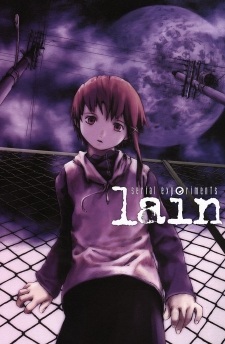
It wouldn’t be an exaggeration to say that a large number of anime fans have encountered Yoshitoshi Abe or the shows he’s created and worked on, nor would I be wrong to say that he has gained a strong fanbase for his beautiful art and creative vision. Many people were turned off by the gritty confusion that was Serial Experiments Lain (one of his previous works), but there were a still few willing to dive into Haibane Renmei despite the previous title's flaws. In his debut as a writer, Yoshitoshi Abe envisioned and penned an anime series that quietly tugs at the heart and thathas carved its own place in the anime medium with its unique charm. Like most things, the show is not for everyone. Although it is a solid work that should be at least enjoyed by most of its potential audiences, for those of us who, like I, find themselves yearning for a show that will sweep them away into another world and enchant them, it can easily become more of an experience than just a work of entertainment. One of the first things a viewer will notice when watching this series, is the visual and artistic style with which it is produced. Although the animation does not excel on any technical level, with occasional distortions and simplifications in the cel work, it certainly gets the job done and is more than made up for in the other artistic elements. The background artwork is detailed, scenic and fits the tone of the series perfectly. The character designs are simple but memorable and attractive, particularly Rakka. Most importantly, the series is washed in a soft, water-coloured style that gives it a subtle dream-like quality. The audio aspects of production were also strong, but, especially in the case of the score music, did not excel. Kou Otani (who recently did the score for Shana) handled the music and created a score that was engaging but ultimately forgettable. The main problem is likely that a real orchestra and instruments were not used to create the music, and although her synthetic compositions are strong, the sound ultimately feels tinny and a bit cheap. The OP and ED are very good, particularly the OP, which fits the series perfectly and is an inviting start to every episode. Haibane Renmei (lit. Ash feather federation), starts off in "Old Home," a small, peaceful village full of enthusiastic youths. The story focuses on a group of five female "Haibane," whom are young girls with tiny wings on their back, and halos floating above their heads. The five eventually become six as a new girl, Rakka, is "born" into their world. From there, Haibane Renmei follows the trials and tribulations of these girls until its stunning climax in episode 13. With little tangible plot to grip onto beyond the premise, Haibane Renmei essentially revolves around the characters’ journeys in confronting their own personal issues, set against the mysterious backdrop of Old Home and the encompassing town. People often have gripes about plot points and settings not being literally explained or explored, but in the case of Haibane Renmei the fact that the surroundings of the Haibane and their circumstances are a nostalgic haze lends focus to their internal struggles. This series makes no mistake about what lays at the core of its tale and, as such, every heart-warming gesture or pang of despair is captured with potency and poignancy. The characters themselves are benefited from this focus, with the two main characters given a remarkable amount of depth and intensity for a series of this length. The supporting cast are lent a certain weight, but are not completely fleshed out, which is befitting of their supporting roles, really. One great asset the series has is that, perhaps because it appears to be completely unconcerned with pandering to an audience or a market, its characterization feels uniquely sincere. They’re not classifiable as prodigies, tsunderes, role models or heroes, but rather feel like real people with a real heart and soul behind them. Not only does it make the cast likable, but, particularly in the case of the leads Rakka and Reki, this earnestness draws you into their emotional dilemmas and makes you empathize and identify with them. As the characters struggle to come to terms with themselves and their mistakes, it’s hard not to be stirred and affected. But much more than just a drama with believable characters, Haibane Renmei is hued in a melancholic and languid atmosphere, and dripping with beauty in its symbolism and mystery. Inviting, warm, and ultimately gripping, Haibane Renmei is a series that is nurtured on emotion and thematic overtones, rather than being constructed with plot and action. If you can appreciate that, then it is sure to captivate. Where Haibane Renmei truly succeeds and other dramatic anime fall to the wayside is in its sincerity. Rather than being conceived for audience appeal, one can feel the passion and emotion of the creator seep through. In short, on top of its charm and poignancy, it feels genuine. This review is the final result of a review team composed of members from the "Critics and Connoisseurs" club. The team members were: Washi - who composed the actual review Archaeon - who contributed directly to portions of the review and gave feedback Seishi - who contributed guidance from his own experience after already writing a review of this show Here are their individual scorings for the show: Category - Washi, Archaeon, Seishi Story - 9, 8, 8 Art - 8, 9, 10 Sound - 8, 9, 10 Character - 10, 8 , 8 Enjoyment - 10, 9, 9 Overall - 10, 9, 10 In the club wide poll held for Haibane Renmei it received an average overall rating of 8.23
Fleure
May 7, 2014
An endless fall; a young girl wrapped in white abruptly descends from the skies. A weightless haze lucidly embraces her. A dream too real, a fall too sudden; awakens she, from a strange trance and finds herself confined in a vessel that’s all too familiar in place that’s all too peculiar. A craft in the form of a cocoon holds the enigmatic maiden—a strange rebirth is to take place. The inhabitants of the building in which the cocoon swiftly lies, await in great patience for the arrival of the girl in white. Thus begins the hauntingly decorative tale of “Haibane Renmei” Instantly, “Haibane Renmei’s” inquisitivenature provokes the viewer while simultaneously mesmerizing with an unsettling, yet evocative atmosphere. Aesthetically, Renmei is subtly similar to that of an aged watercolor painting with broad strokes and distinct backgrounds. Musically, the series charms with its mellifluous pieces that refine its forlorn and bittersweet atmosphere with poignancy and care. Thematically, it probes the audience to ruminate indefinitely. Combining all those elements and packaging them in an amicable manner, “Haibane Renmei” manages to weave together a captivating tale with unforgettable characters that will surely capture the hearts of those who give it an honest try. The story is simple. The series traces the “new” life of Rakka in the quaint town of Glie that is enclosed off from the rest of the world by an impenetrable wall. The bucolic town is home to both humans and haibane—“beings” with halos and char-coal grey wings. Distinctive of something akin to angels, the haibane subtly but distinctly set themselves apart from their physical image and beatific attributes. Rakka with no former memory or traces of her past assumes her new role and life along with her new haibane family. Although the story seems straightforward, it is equally deceptive because where Renmei lacks in a strict plot, it makes up for infinitely through its substantial style and themes. With that being said, it is important to note that this is a series that capitalizes on maturing with time, making it a slow ride thereby allowing the viewer to appreciate both the artistic and thematic merits that constitute the show. There aren’t any cheap thrills, gratuitous expositions, female and/or male exhibitionists servicing the fans, or flashy fights; rather it’s a simple tale to bring the viewer a thought-provoking and beguiling experience. As aforementioned, the story is one that may seem simplistic, but under its “no-frills” veil, it’s a labyrinth coated with insightful and empathetic themes. The series is structured in a way that certain, obvious questions are raised. However, while the series provides perceptive themes, it does not supply many answers. Like a distant illusion, a hopeful mirage, the prospect of a potential resolution looms, but never fully manifests. While that can potentially turn away many viewers, this plays to the show’s strengths because it allows room for imagination and speculation while holding true to the essences of the series. Often times there are no answers and in a narrative based around some themes such as self discovery and self truths, churning out linear answers would be clearly unjustified and of poor taste. "Haibane Renmei" is a tale that inquires, but doesn’t resolve; it’s not to patronize the viewer, but to enhance the experience by showing rather than telling: a technique that’s highly underrated because it’s often misused or overly-done to a point where it can seem conceited or forced. Through Rakka and her fellow haibane comrades, we get to embark on a very special journey; a journey about a once crest-fallen girl who awakens in foreign lands only to discover the greatest truth—one about herself. "Haibane Renmei" illustrates the importance self-discovery, friendship, forgiveness, guilt, salvation, and “truth” in a world shrouded in ambiguity. The haibane almost seem like a nostalgic metaphor, one that eerily resonates with the viewer. Frequently, the closest familiarity lies within the most strangest of places/individuals and through these bizarre encounters do we get the chance to really look into who we are and more importantly, understand who we are. One of the strongest points of the show is the characters. The developing propinquity between the characters is depicted in a classy manner while also establishing memorable personalities amongst the cast. Most of the themes of the show are actualized within the interactions and through the wonderfully constructed dynamics between the close-knit haibane family, the true importance of relationships shine through with blinding effect. The notion of friendship is crafted with extreme care; it isn’t overdone nor is it overbearing to a point where it becomes a contrived plot-device. Rather, it’s there for a definitive purpose: to engage the themes of the show and direct the characters unto their respective paths while providing the viewer with a filling sense of empathy and endearment. The two main characters Rakka and Reki are idyllic in that sense because their dynamics as friends and individuals are done with principle and relevance rather than characteristics defined by formulaic absurdities that accompany “power of friendship”. Both girls struggle and continue doing so but how they cope with their struggle and try to manifest their true selves through their respective struggles is one of the greatest accomplishments of this series and rightfully so. The art and music both compliment the series nicely. The characters are designed in a humble manner which can be off-putting to certain viewers, but in all reality, the character design fit well for the purposes of the show. The art is fluid. A soft, pastel palette is used to give life to the rustic town while contrasting with darker tones of blues and grays to maintain the melancholy that lingers throughout the series. There seems to be a misnomer regarding this show’s art coming off as ostentatious and obtuse which could be considered distasteful due to personal preferences but as a whole, the art is alluring, complimentary, and aesthetically appeasing. The soundtrack is heavily composed of harmonious yet melancholic piano music accompanied by the lilting of a jubilant violin. Although, the soundtrack is sublime at parts, it isn’t a collective masterpiece or something that would compel the viewer to indulge in as a detached element of the show. Conclusively, artistically and musically Haibane Renmei does not disappoint and serves its intended function to augment the atmosphere and setting of the show. Perhaps it should be noted that this series comes from the unconventional yet brilliant mind of Y.Abe who created works such as Texhnolyze and Lain. Whether that is appealing or detracting, it must be understood that Haibane diverges from the extremely dark and brooding presentation of the aforementioned but maintains the thematic and aesthetic segments exceptionally well, just as the other works by Abe. Consequently, if you’re fan or new to Abe’s works and yearn for something that’s delectably intriguing but its own, Haibane Renmei will fulfill every intended quota. Haibane Renmei is truly an enchanting series that appeals to the viewer not just as a series to enjoy imminently, but one that forces introspective contemplation afterwards. Truths and answers about the world and self aren’t black and white, but similar to the haibane’s wings--tinted in shades of grey. Immerse yourself in the town of Glie and walk aside the haibane in a world that’s as strange as to you as it is to them; perhaps in the process, you’ll find your shade.
TrenchKamen
January 19, 2009
This is truly a stand-alone work in terms of originality. ABe did not self-censor and allowed the full weight of his intuition and dreams to direct his hand, and the result is a beautiful, ethereal, archetypal world fully-realized and yet deep enough to retain mystery. The show does not explain everything, even the most important aspects of Gile, and that feels okay. We can see in this fantastic world what is in our innermost hearts, and our intuition fills in so many of the gaps. Few stories manage to do this so well. The story manages to blend soft, yet interesting, aspects of slice-of-life with hauntingand bittersweet themes such as suicide, sacrifice, and redemption. This hints of something intimate from within ABe's innermost heart, something he himself has experienced--and in that rawness, there is a universal quality. Many people in fandom have experienced profound loneliness and depression in a manner that seems to echo throughout the story. Many of us have felt useless, hopelessly misunderstood, and lonely. This is a story of comfort. True to ABe's style, the artwork for this title is utterly fantastic. The setting is stunning in its beauty, European-style architecture amid emerald-green fields and rust-mottled windmills, harmonized with East Asian-style shrines, festivals, and esoteric memorabilia. The characters' names come from Japanese words for concepts, and the world's writing is in Japanese, so it is by no means divorced from its source country, nor does ABe try. The result is not in the least jarring: if anything, it is merely another aspect of integration, something soft and beautiful and lush. And the clouds--the weather phenomena simply looks fantastic. If you cannot stand anime with a slow, idyllic pace, or you simply must have action, giant robots, and political intrigue, this is not the show for you. Likewise, if you cannot stand symbolic, dreamlike storylines in which not everything is explained explicitly, this will drive you mad. Otherwise, I highly recommend taking a trip into Gile. It will be greatly worth your time.
Lycan
May 29, 2013
After watching this for a third time in the last eight years, I can still say that this is my favorite anime. The themes are very real to me and if you let yourself be immersed by the characters, culture, and plot, you will walk away with a heavy heart and a full mind. Like most ABe anime, this is not for everyone. If you are looking for constant action or laughs, I would chose something else. The first five episodes are quite slow, but it lets you take in the details. It helps you focus on the characters and realize they were all partof different walks in their previous life. It more importantly sets up the culture and setting, helping you to form your own theories about who the haibane are meant to be. The sixth episode is where the darker underlying theme start. This series tackles ideas of loss, attachment, depression and suicide. I admit for anyone who has not felt the sense of pure helplessness or bundling emotions until they burst can not fully understand the weight of the internal conflicts both Rakka and Reki face. I personally view this series with a spiritual mind rather than a religious one. Though haibane resemble angels, they are born again due to some past sin that they committed or couldn't overcome. Their wings are useless, they do not have a connection to a higher being, and they are almost seen as mystical creatures by the residing humans, often described as a cheerful presence that can give good luck. The haibane are instructed not to use anything that wasn't first used by a human, leading me to believe it is a hint for both discrimination and to cut off ties of the material nature of man. Their whole existence is to make peace within themselves so they can escape the walls on their Day of Flight. This anime teaches you that salvation can not come from yourself. You need to trust others and express your emotions or you will find yourself in the endless, vicious, self-loathing cycle. "To recognize one's sin is to have no sin. So are you a sinner?" "But if I believe have no sin I become a sinner." "This is the cycle of sin. Think about it. To spin in the same circle, looking for where the sin lies, and at some point losing sight of the way out. To find the answer is to find redemption." If you are someone who has trouble breaking the sinner's paradox, you will forever be sin bound. You need to realize your sin and know that you will sin again, but to learn from your mistakes and help others forgive you. In turn, they will aide you to break the cycle. Both Rakka and Reki exemplify consuming sin, which is shown by their wings turning a spotty black. Rakka had help from a crow (who was someone she knew in her previous life), which showed that although someone cared for her, after she presumably committed suicide, they still forgave her and wanted to send a message that she was not alone. After overcoming the feelings of wanting to disappear, Rakka uses her strength to help Reki, who was even more hopeless in finding salvation. The ending is bittersweet, but truly outstanding. This series is haunting yet charming, unique and touching. The musical score is enchanting and although the art may not always be the best, it makes up for it in every other aspect. For someone who constantly struggles with depression, it gives you hope and a reason to trust others, even when you don't believe in yourself.
Rank
#730
Popularity
#835
Members
331,646
Favorites
9,117
Episodes
13