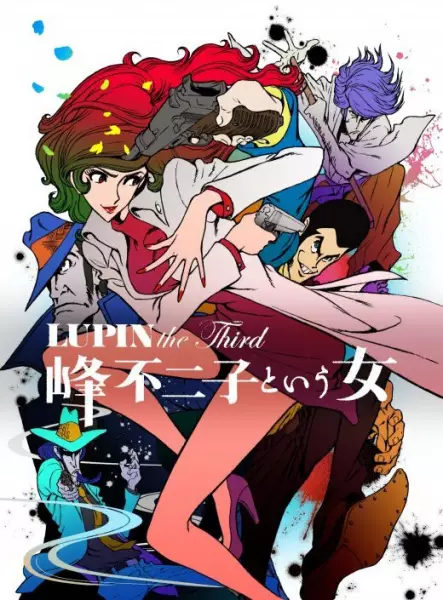
Lupin the Third: The Woman Called Fujiko Mine
LUPIN the Third ~峰不二子という女~
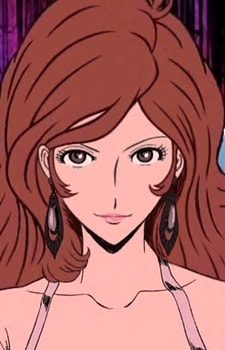
Many people are falling prey to a suspicious new religion. Lupin III infiltrates this group, hoping to steal the treasure their leader keeps hidden. There he lays eyes on the beautiful, bewitching woman who has the leader enthralled. This is the story of how fashionable female thief Fujiko Mine first met Lupin III, the greatest thief of his generation. (Source: ANN)
Главный
Главный
Главный
Главный
Главный
Главный
Второстепенный
Второстепенный
Второстепенный
Второстепенный
Второстепенный
SolidPayne
January 30, 2015
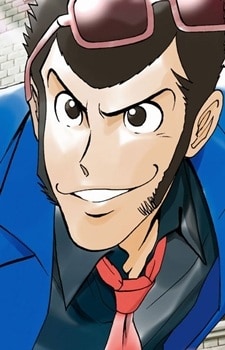
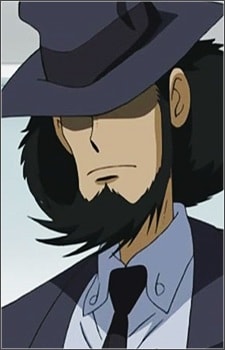
To call Lupin The 3rd important is a severe understatement, it's influenced many anime. Pretty much any western style anime about a bunch of crazy characters going on adventures and getting into trouble owes something to Lupin The 3rd but that does that mean it's still relevant? It's still popular in Japan sure but with how many stagnant specials and how silly it can be, The franchise was started to get pretty stale, it definitely needed a change of pace to keep things interesting. The result was to change Lupin from a cartoony comedy to a gritty Film Noir and to have the main characternot be Lupin but Fujiko Mine and with a great team behind this as well, it had alot going for it but did it pay off or was Lupin just grandpa anime? This answer is most certainly Yes, this thief still get some tricks up his sleeves. They took something goofy and fun and made it something far deeper than that. Analysis of The Themes and Ideas: Lupin The 3rd has always been a rebellious anime but it was more literal in the sense that it's about a thief stealing and making fools out of the police but here it's more metaphorical. Everything about this show is contradictory to the norms of what we think anime should be like. It's was made in 2012 but feels like the 70s, it's a Japanese product that has a very western look and feel to it, most anime fans are use to serial shows while this is mostly episodic, Fujiko Mine herself is a different main character than you would expect to see in an anime, you just don't see many femme fatales as the lead in anime but the show isn't just different for the sake of it, it all fits into the story. You might ask why don't they modernize Lupin the 3rd and make the characters look more modern but that would be missing the point entirely, they're not characters of our time, that's just not who they are. The whole show is about social outcasts and people's idea of how you should or shouldn't act. It's essentially a "Be yourself" kinda story but done in the least cliche way possible. Lupin is completely care free, he steals whatever he wants, acts however he wants, whatever Lupin does you can trust him to be him and he's completely at peace with himself in that regard with no regrets. He's the embodiment of what a part of the characters aspire to be: free. Jigen's the kinda man who probably would've been better off in 1940s New York/Chicago or in the wild west with his gun skills, taking sides of gangs not knowing who or what he should be fighting for if for anything. Goemon in this anime is not just here because samurai are cool and every action anime set in modern day has to have a samurai like how he use to be, he's a man with a code from a long line of samurai who lives in a time where nobody appreciate his kind anymore Fujiko herself is someone trying to be free of a past, a past forced upon her by others who want her in their image. She tries to repeal that by showering herself with treasures. The antagonists represents the societal norms in some way. Either being part of the authority or being controlled by one. Zenigata who was originally the goofy clumsy grump from the other animes has turned into a much more hard-boiled tough guy, he's definitely different from what was done before, he's not always likable but hearing what he says later on in the series, it comes across like maybe he use to be that grump that we all know and love but somewhere along the way, because he wanted to get to the top and be respected so much that he lost his soul and honor to get there. Oscar is completely obedient to Zenigata and is closer to what you would think an anime main character to be like: He's young, androgynous, good looking guy and he's gay which is even better for female anime fans but the only downside really is that he's kinda off his bonkers. The main villains here that are the owl people are all about control, they all dress alike, talk alike and want people to dress, act, and think how they want them to, everything about them is very orderly, they are everything our main characters hate Story: 9 Much like Cowboy Bebop, this is an episodic series with an overarching story-line and much like Cowboy Bebop, the stand alone episodes play into the themes of the overarching story-line. Almost every episode is about someone trying to control the fate of others or someone trying to break free and stand up for what they want. I also love that there's not a whole lot of action, there's action certainly but there's only action when there needs to be. It's a show that relies on good storytelling and amazing atmosphere to keep you hooked than cheap thrills. Not every episode is a homerun but the overall package is fantastic. Like I've said the show is done in a much more Film Noir way than in as other Lupin animes (that were more like Oceans 11 meets Spy vs Spy) with lots of deep blacks, people falling in and out of love, death, corruption, and of course the classic Femme Fatale, it's all great stuff. Frank Miller wishes he could do a Film Noir about sexuality and visuals as good as this Some have complained about alot of the nudity in this show and that is something to keep in mind when you watch this, I don't mind because that's just part of Fujiko's character. She uses sex as a weapon and really she seems to feel more alive and like her true self when she's nude than when she's in clothes which again that would play a big part of the idea of not being what other people think you should be. You might think that I'm looking for excuses to defend fanservice but consider that the writer and director of this anime are both women, I think it's safe to say that there's more to it than that especially since the director Sayo Yamamoto is the same woman who gave us Michiko To Hatchin, it's clear from that alone that she knows how to do female characters (she is a woman after all). If there was one complaint I would have with the story (and it's a minor one) is that it does become a little hard to fellow towards the ending, there's alot of explaining going on and it can be hard to keep track of especially if you're watching it with subtitles but aside from that I have no real problems with the story and I do love the atmosphere and feel of the last 3 or so episodes, it has a very Pierrot Le Fou from Cowboy Bebop vibe to the whole thing. Visuals and Animation: 10 The animation I will admit isn't always the best. Sometimes it looks great but there are moments where it can be pretty stiff but to me, you can forgive alot in the animation department (which isn't even that bad anyway) if you have the art to back it up and man that's where the visuals truly stand out. One thing I think makes Sayo Yamamoto stand out is that unlike other anime directors that have made western style animes, she doesn't seem to take her inspirations from much American source material where as alot of western style anime have a very American feel to them. She doesn't do that, Michiko To Hatchin had a very City of God brazialian feel to it and A Woman Called Fujiko Mine has much more European feel than American. That's the best way I can describe to you the imagery of this show without just plain showing you because my god this is seriously one of the most beautiful looking animes I've ever seen. I've said Film Noir alot but even that doesn't quite sum up up how this show looks, you can take a snap shot of almost any scene in this anime display it in an art museum, it's just that great to look it, it's very abstract. If the music in Cowboy Bebop is considered a character in that show than that same would have to go with the art of this show. Much like the show itself, the art style feels very familiar but is very fresh at the same time. Characters: 10 I've dived into what these characters are about but how are their personalities themselves? It's Lupin The 3rd, in other words I love these characters just like I've always have. Lupin is as funny, clever, and is as much of a jack ass as he always is and I love him for it. Jigen is just as bad ass as ever if not more so here and continues to be my favorite character of the entire franchise. Goemon is done best here than I've ever seen him done before, like I said before there wasn't much to him in other entries of the franchise outside of just being a bad ass samurai, here there's alot more to him than that. Fujiko makes a good anti hero, she's certainly not boring and thankfully she never does that "woe is me, feel sorry for me" crap. She never becomes a flat out good person but there's a tiny part of her that thinks maybe she could but it just never works out that way, I like characters like that. This Zenigata like I said certainly an interesting take on the character, I do miss the old one because he was funny and I felt sorry for him but that Zenigata wouldn't have worked here in this gritty stylized crime anime and Oscar... Oscar's just a creep, sure there's an episode where they get into his back story but the conclusion to all that makes me pity him more than feel sorry for him. Other than Oscar, they're classic Lupin characters with a twist. There's a reason why these characters have been around for so long and why people continue to cosplay as them to this day cause they're just so damn likeable and cool Sound: 10 It seems to me that any anime with an western flare to it is gonna sound better in English (Anything Shinchiro Watanabe, Trigun, Baccano!, Black Lagoon, Panty and Stocking, Hellsing Ultimate) and here is no exception because while the Japanese version is good. The funimation dub is fantastic and everyone is cast perfected (Also watching it dubbed makes the ending easier to fellow). Ever since the Pioneer dub of Lupin iii Part 2 Michelle Ruff has proven to me that she is Fujiko and while I miss Tony Oliver especially when Fujiko and Lupin were talking, Sonny Strait plays a great Lupin in his own right. Christopher Sabat when he did Jigen in the past I felt sounded too forced with his tough guy voice but he had finally perfected the character, he gives a smoothness to the role while still sounding like a bad ass and Mike McFarland does a good job as Goemon, keeping his voice stoic without being a bore. Richard Epcar does a great job with giving just the right tone with making Zenigata sound tough, he really does sound like he could stand up to guys like Humphrey Bogart or Robert Mitchum (although I found it so weird that Richard has played Jigen, Goemon, and now Zenigata. How odd is that to have played have of the Lupin The Third cast now?) The music was produced by Shinichiro Watanabe and composed by Naruyoshi Kikuchi and while not quite as memorable as Yuji Ohno's music. It certainly does sound cool and it gets the job done, makes you feel like you're watching a slick but gritty crime movie. One of my favorite pieces isn't really music, it plays during a flashback of Fujiko's child hood and it's these weird electronic sounds, it's very unsettling Enjoyment: 10 It's been a while since I've seen not only an anime with hard boiled film noir elements but it's been a while since I've seen anything Lupin this good since Episode 0: First Contact and the 2nd Tv series of Lupin The 3rd. This was exactly what the series needed. It's quite ironic that a reboot (for lack of a better word) of such an old franchise is one of the freshest animes I've seen in a long time. Sure, I've mentioned some problems here and there but they're so minor that who cares anyway and yeah this certainly isn't going to appeal to everyone (Hell, it even took me a little while for this anime to grown on me) but that just makes it more special to me. I don't want something to appeal to everyone, you try doing that and you appeal to nobody. You gotta have you mind set and tell the story you wanna tell and that's exactly what they did here. I can't give this more than the overall rating I'm about to give it Overall: 10
Второстепенный
ggultra2764
June 28, 2012
The Woman Called Fujiko Mine is certainly not standard Lupin III fare. Rather than the comical and over the top antics you would expect of Lupin and his group as they steal and outwit Zenigata, the humor here is more subdued and the series has a darker, more serious and mature feel to it. Fujiko finds herself the main attraction of this series as the first half to this series is prominently focused on her tackling different thefts while encountering Lupin, Goemon and Jigen individually and the second half features the four being caught up in the activity of a mysterious organization that Fujiko appearsto have past ties with. The series appears set up as a prequel of sorts considering Jigen and Lupin don't know about one another and team up until later in the show, as well as Goemon hardly interacting with the two in this series. The four do maintain their memorable character traits in this series, though Fujiko tends to get nude quite often in this series and Zenigata is more of a traditional hard-boiled detective in this series than his usual bumbling, Lupin-obsessed comic relief provided in earlier iterations of the franchise. Zenigata also carries in toll a new character in the form of a young assistant named Oscar who is an occasional nuisance in Fujiko's thefts as he tries to apprehend her and has his back story fleshed out in later episodes. While the first half of this series is standard Lupin III fare, while more prominently focused on Fujiko, the highlight for the series for me comes in the form of its second half which features a more linear storyline when said mysterious organization comes into play. The group have their identities concealed in bird masks and apparently have some type of mysterious past connection with Fujiko. This particular story element is quite effective in messing with one's perceptions of what you assume is going on with Lupin and his group, especially as more details on the organization's illicit activities come to light and come to learn that not all is what it would seem on the surface. I won't spoil the major elements of this plot, but all I will say is that the ending comes across as quite the surprising shocker yet makes sense once you put together the elements of the organization revealed from earlier episodes. The only rough element to this new storyline was the unclear resolution of the fates of Zenigata and Oscar when they become entangled in the mess involving the organization. The animation style to The Woman Called Fujiko Mine sticks out quite a bit as well compared to past Lupin III works. Anyone who seen Redline may notice similarities in the drawing styles used for scenery and character designs here in this series. This isn't a coincidence as two of the major figures behind making Redline, Sayo Yamamoto and Takeshi Koike, contribute their talents in the unique animation style used for The Woman Called Fujiko Mine. Scenery and character designs are drawn with a pastel-like feel as color tones are quite subdued and there is frequent use of pattern-like designs used to blend in with a number of scenery and character designs. The character designs are well-detailed and the memorable designs of Lupin characters are retained here, all the way down to Lupin's green dress coat worn during the original first series from the early 1970s. Action scenes are well-animated featuring fluid movement in many instances and have great choreography coming from gunplay and even the swordplay used by Goemon. Overall, The Woman Called Fujiko Mine made for perhaps the best offering I've seen from the Lupin III franchise thus far. It still retains the basic elements of the franchise's premise and characters while creating a more mature series in its prominent focus on Fujiko's exploits and its dark, mind-bending second half when focusing on Fujiko's connections with the mentioned organization. The series certainly won't be for everyone if they are expecting the typical comical antics of the Lupin III franchise. But if you are looking for something different with the franchise, The Woman Named Fujiko Mine should be a worthwhile gem for you.
Cardinyan
November 18, 2014
I'm going to say this from the start: Lupin III: The Woman Called Fujiko Mine is, to me, an absolutely outstanding piece of art. I'll also say this: this review is gonna be unbelievably pretentious. Sorry :p. It's probably not unfair to say that a lot of people, if not most people, watch anime primarily for straight-up, unadulterated enjoyment - fun, in other words - and this style of anime utterly floods the market. However, every so often there comes an anime or two that break the mold, and these more daring shows are absolutely crucial to reviving such a stagnant medium. I'd like topoint out that I'm not just pontificating about the overabundance of moe girls and fanservice by myself, Miyazaki and Anno have been going on about the "dead End" (Anno) that anime has hit for years. My point is that, while I thoroughly recommend trying this anime, I beg of you, don't expect it to conform to your expectations. Story: I'm going to try and keep this primarily spolier free, but I apologise if a few key details slip through. The story takes place pre-Lupin II (which I have not read, BTW), and centers, for the first time in the franchise, on Fujiko mine, Lupin's primary love interest. The first 9 episodes go through various heists and the stories surrounding them in a very film noir fashion; it's a very artful, but traditional action show, much in the style of Cowboy Bebop. However, at episode 10 it gets weird. WEIRD. A lot of people were put off by this - when you get to this point, let me assure you that everything is explained, save one detail, but that detail (Oscar's resolution) isn't really that important. Indeed, this is the only thing I can actually call a "flaw" in this anime, aside from perhaps a slightly lacking explanation of how the drugs work (episode 1, not really a spoiler), or a proper reminder when it become relevant again. Still, these are not abject flaws; you might ask why I give it a 9, rather than a 10, since it's so nigh-on-flawless IMHO, but... see the conclusion. The story is, to me, excellent. it relies of next to no tropes, it references famous operettas and movies (episode 4 is a take on The Phantom of the Opera, there's a later episode that takes from Indiana Jones etc). On top of this, it's original, it's fun, it's everything that a proper, gripping TV series should be. Art: 10. Glorious. GLORIOUS. I've never seen higher quality, or more suitable, or better utilised art in any anime ever, and I watch all the arty crap. Period. Not only does the dark, gritty, pencil-shaded style add to the noir-esque presentation and vibe that the whole show carries, not least thanks to its soundtrack, it allows the show to shine at every. single. moment. Explosions are lovingly animated, extreme close ups are striking and utterly transparent in terms of their meaning - as an actor myself, I've never, ever seen such good "acting" from animated characters. It's natural, and honestly rivals live-action hollywood for quality. The only word for this, is "artful" not just in the sense of being well drawn, but in the sense that Sayo Yamamoto's direction has such a sense for striking images that it's honestly difficult for me to focus at all times without just gasping at how utterly beautiful bits of this show are. It's clear to see the influence that working with Takeshi Koike (who incedentally did a follow up movie to this show) on REDLINE has had upon Yamamoto. *drools rainbows* 10/10. Sound: 9. I can't deny that soundtracks are usually my favourite parts of anime, and this one is fabulous. it's used to perfection, and it's utterly intrinsic to one of the most literarily significant aspects of this show - it's connection to previous film styles. While Fujiko Mine is definitely rooted in the noir-esque detective genres, primarily seen in the late 50's, it specifically hones in on the French new Wave. [Pretentious bit, feel free to skip] On top of having an almost truffau-ian preoccupation with running and movement, the soundtrack specifically references the works of Alain Resnais, specifically Last Year At Marienbad. I told you it was gonna get pretentious. LYAM is famous for being creepy - it has a constant baroque organ playing in the background, even when it doesn't match the diegetic suonds on screen at all, and this helps add a real sense of paranoia to the film as the viewer tries to make sense of the conspiracies within it; in episode ten of Mine, when it starts to get WEIRD, and when you begin to doubt everything rational about the show (and when a lot of people dropped it) this organ comes in. In the following episodes, the jazz is swapped out for organ music - throughout, the atmosphere is reflected and counterpointed by the soundtrack in a fashion so subtle but also totally intrinsic tot he show that i can only describe it as MASTERFUL. Honestly, I'd love to write an essay comapring this series to the new wave but y'all are here for anime so I'm gonna stop. Trust me, it's really cool. [pretentious bit over] So why isn't sound a ten? Alas, it doesn't have a memorable tune to it - take My Neighbour Totoro or Princess Mononoke. Both films have one recurring melody that, while utilised in different ways, really sticks with the listener and becomes inextricable from the climactic scenes; you're left humming the songs for days after, and this helps the films' emotional climaxes resonate more. Lupin's music is not designed to be like that, of course, and it's use is, to me, utterly perfect, but it doesn't have the same lasting impact, so... not a ten. Not quite. So close. Character: 10. Every character is fully developed. No tropes, no cliches, and the sexual nature of the show is completely separate from any ideas of "fanservice". When fujiko is shown having sex... she's not really shown having sex. instead, you see symbols of sex. he camera doens't take the usual approach of sexualising her body or emphasising ridiculous assets. She has those, and indeed spends a lot of time naked, but the camera doesn't ogle her - it's sexual, but not sexualised. ultimately, it's nudity in anime that isn't innately sexist. WHY CAN'T EVERYTHING BE LIKE THIS?. Every side character, no matter how minor, is full of life and character, and the lack of anime tropes is so totally refreshing. There's a character with no lines, and about 8 minutes total screentime - I ruminated on her situation for hours after watching because of how deeply affecting her character arc was. I've rarely, if ever, seen better developed characters in a TV show, aside from maybe in the works of Masaaki Yuasa (Ping Pong, Tatami galaxy). If you like this, go watch his stuff ASAP. Enjoyment: 10. I'm going to say something contentious here - this show is what Bebop aspired to be. Bebop is a great show, beloved by many, and I'm NOT saying it's better or worse than this, but the themes it employed - jazz backing, noir-esque atmosphere, conspiracy and crime, are all taken much, much further here. The show's later-on obsession with drugs, and the way this is used to screw with you as you watch it - is one of the most ballsy moves to come out of anime since... ever. Honestly, this show feels more like the spearhead to an art/cinematic movement than it feels like an anime. Overall: 9. Why a 9, not a ten? Other than the 1 unexplained detail... it's not for everyone. There are things I would change, bits where there might have been more humour or more explanation, but nothing that's really a flaw, if you're paying attention. That said, a lot of people will find it pretentious, and I can;t blame them. A lot will find it hard to follow at times - it is. That said, if you're even remotely interested in Anime as an art form, rather than just as a mode of enjoyment, please, I BEG you, watch this show (and then go watch Ping Pong The Animation). If you just want fun, then i'd honestly recommend not watching this. It's fun, don't get me wrong, but if you come into this show with any expectations at all based off regular anime, you'll be confused, disappointed and the show won't be given the chance it deserves to WOW you like it should do.
Taufiq91
June 15, 2012
I'm conflicted over this anime. For starters, it's an excellent take on Lupin III with beautiful art and a darker storyline, and had an interesting crew consisting of a SHAFT/Gainax freelancer, a KyoAni art director, Dai Sato and Shinichi Watanabe. On the other hand, it has a messy and pretentious story that kinda killed the "mystique appeal" of Fujiko Mine, added some unnecessary characters and is cluttered with bad writing by one of the biggest hacks in anime (And yes, i'm talking about Mari Okada). The story of this Lupin III series is all about Fujiko Mine, and how she became to be that one hotchick you see in every Lupin III anime from the past 4 decades. You also see her trying to rob things and steal stuff but who cares. It's basically Lupin III meets "Where in the World is Carmen Sandiego" with a sprinkle of Black Rock Shooter. The story is quite a mess. The first 5 episodes have that sense of humour of the typical Lupin III story. And that's fine. But then, they just have to add that fucking annoying and unnecessary "DEEP" crap and turn Fujiko into an Asuka clone. And i'm not talking of making Fujiko a tsundere. I'm talking about them turning Fujiko into a post-mental breakdown suffering of a woman. And yes, i hated that part. Why? Because it's unnecessary and pretty killed the character for me. Fujiko was made to be a mysterious figure of lust and envy, and to add something that's the opposite of the two pretty much killed that. I don't want to know about her past. I want to see her as the sex bomb figure of tension that she is. Also, the worst thing about the story are the flashbacks of Fujiko's childhood. It's messy and gives away nothing that would make understand her. It's just padding at its worst and i hated that. I understand the need to go dark. Hell, i loved Casino Royale and Batman Begins for offering a gritty take on their respective franchises. But you don't make it to a point where you kill the appeal of the character. It's one reason the Star Wars Prequels don't work. You don't try and be edgy to the point of butchering what makes the characters likable. And all of these can pretty much be blamed on Mari Okada. You can tell that all the "Deep & Dark" flashback trauma crap is handled by her. Hell, episode 11 has her shit all over it. And i fucking hated it. It reminds me of everything i hated about Black Rock Shooter. Who gave this woman more work? We kicked Shyamalan hard for butchering The Last Airbender and Akiva Goldman got cockpunched for Batman & Robin, and yet she's getting away with this? And besides Fujiko III, you see the return of the well-loved Arsene Lupin, the samurai wonder Goemon, the sharp-eyed Jugem and the bumbling Interpol agent Zenigata. And they added another main character named Oscar who's Zenigata's assistant and obviously gay for the Inspector. And to me, he's pretty pointless because he brings nothing to the story, and he makes me ask "Is this franchise really desperate of a new following that they need to add a character made for a fujoshi fanbse?" Seriously, he's just there for the fabulous. But those are the bad parts, so now, here's the good parts! The art is excellent.It feels like moving palettes rather than animation and has an excellent colour scheme of sorts. It's clearly influenced by Western animation and it's more colourful than the other stories in Lupin III, which is a contrast to the dark storyline. The sound's nice. In terms of music, it's clearly the jazzy orchestra type of music you'd expect from a Shinichi Watanabe production. It's nice and i enjoyed the score as it reminds me of music by Anton Karas. I'm surprised that the score wasn't composed by Yoko Kanno, because it feels like one. And thus, i think the composer did an excellent creating a score influenced by Yoko Kanno. And the voice acting's pretty nice as you have the original seiyuus for Lupin and Jigen(Kanichi Kurita and Kiyoshi Kobayashi), whereas Fujiko is now voiced by the talented Miyuki Sawashiro while Goemon is voiced by the excellent Daisuke Namikawa. The legendary Kouichi Yamadera now voices Zenigata and Oscar is voiced by Yuki Kaji. All of them provides excellent voice acting and i'm impressed the most by Sawashiro as she is able to weigh in and sound as good as her predecessor, Eiko Masuyama. All of these good points provide a counter-balance to the ridiculously terrible storyline. You have all of these elements of music and animation that brings more to the anime than the story itself. And surprisingly, the Lupin and Jigen scenes managed to be more enjoyable than the Fujiko scene and that is also a good point about this series. Overall, Lupin the Third: Mine Fujiko to Iu Onna is a conflicted series with a flawed story, but makes up for it with the music, animation and giving space to Lupin, Jigen and Goemon. If you're a Lupin III fan and its core, then you will like this. But if you haven't seen any of the Lupin III series before, then go watch the original series alongside Castle of Cagliostro and maybe one of the other OVAs like Fujiko's Unlucky Days which is also similar to this anime. And to end this review, here's Tom Jones singing It's not Unusual, because i really love Tom Jones: http://www.youtube.com/watch?v=QrwO8b9iq34&feature=related
AnimeObasan
May 14, 2014
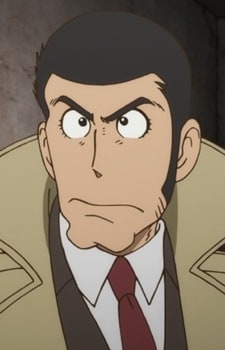
I've rewatched this several times to get a better perspective and open my opinion. Woow! As any Lupin franchise fan knows, the history of the characters is volatile and trying to make any one back story canon will make your head explode. That said, I think this series has possibly the best back story for the characters. CHARACTERS: Fujiko has never been one of my favorite characters. I think Jigen and I share the same opinion of her. But her meeting with the main characters (in this series at least) is great. First there was the Lupin episode (what happens at the end of thatone, the start of their relationship was pretty neat), then the Jigen episode, then the adorable Goemon episode, and then OMG WHAT ARE YOU DOING WITH ZENIGATA! STOP IT! Ok, I am a big Zenigata fan and I wade into each series or special wondering if this will be a "Zenigata the Fool" special or "Zenigata the Badass Detective" special. This one is happily the latter. His appearance is upped, which is neat considering the others seemed exaggerated in the opposite direction. At one point Jigen's beard is so distorted that it's almost touching the brim of his hat. On the other hand, Zenigata looks almost...bishie. I don't think his assistant was the only one to swoon over him thanks to that. And his character development was so different than a lot of the series. He never loses his cool, and seems to be really on his game. The characters here are changed a bit from the anime norm. But that's a good thing. Sit down and try to binge watch ALL the Lupin series, then the specials and movies, and now the new stuff. The early stuff was a bit heavier, including some of the specials. This show, however, opens up new meeting possibilities and changes not the characters, but the way the world sees them and the way they see themselves. Fujiko, for instance, couldn't care less about who sees her nude. She's overly secure in who she is. Then there's Zenigata, the older but still very attractive inspector. This seems a deviation from the normal bumbling officer fare from most other Lupin. We even get a new cop, Oscar, who is similar to Melon Cop in the manga, but definitely not the same character. This series, of all the Lupin series, is the closest to the manga. Depending on what you like about the franchise, this may or may not be a good thing. SOUND: Great voice actors. We've got the English dub's usual Lupin voice (the one used for all the specials, NOT the awesome Red Jacket version), a decent Goemon, a great Fujiko, and...the Red Jacket version's Jigen as Zenigata. That was a weird change. 100 episodes and they just randomly switch voice actors? Another thing that bugged me was that Lupin dubs can't seem to decide on which pronunciations they want for the names. Lu-pin (like a needle) or Lu-pin (like the French way). Same goes for Fujiko's last name: Mine. Is it Mi-ne (with the Japanese pronunciation) or Mine (like "Youre mine)? This becomes an issue when Fujiko flat out tells Goemon her name isn't Maria, it's Fujiko Mi-ne (Japanese pronunciation) and he responds by making it clear he's interested in her. He says: "Mine...Fujiko." (Mine as the "You're mine") That scene was ruined by the dual pronunciation. Another highlight AND lowpoint of this show was the music. It tried WAY too hard to be artsy. I was downright disgusted with the opening. But the rest of the music was fantastic, Goemon's theme in particular, that flutey sound that has become as iconic for me as the main Lupin theme. ANIMATION: My original reaction was that the animation was BAD! AWFUL! But they put so much attention into that strange animation method. Besides that, there are some slick movements, and attention to detail that you just don't see in "prettier" shows. As for the art style (I've gotta say something about it), it took me a lot of getting used to. It's extremely reminiscent of the original TV series and pays some serious homage to the manga. Which, if you go into it open minded, is a good thing. It doesn't try to be a new thing the way Green vs. Red did (and failed at). It screams, "I am old school and proud of it!" and then throws some boobs in your face.
Ранг
#1219
Популярность
#2950
Участники
69,975
В избранном
524
Эпизоды
13