


ルパン三世
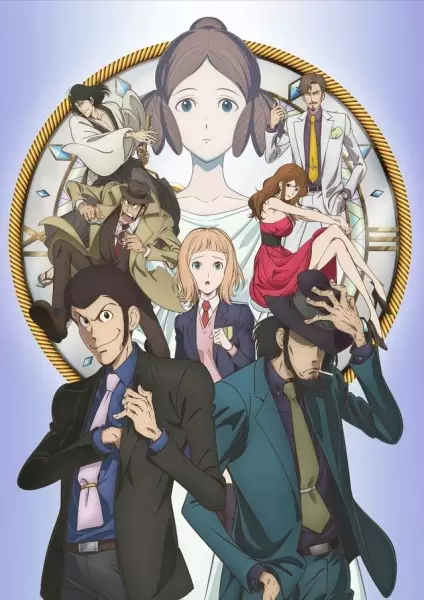
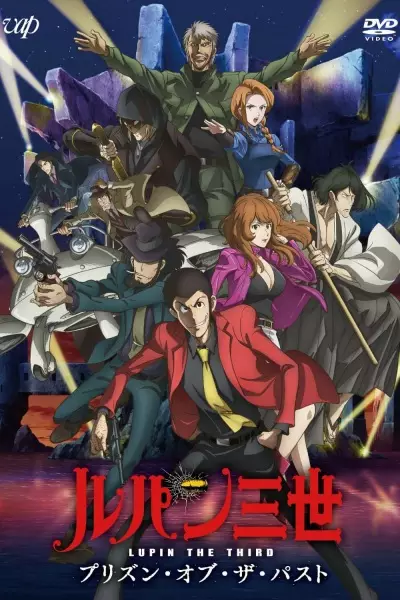
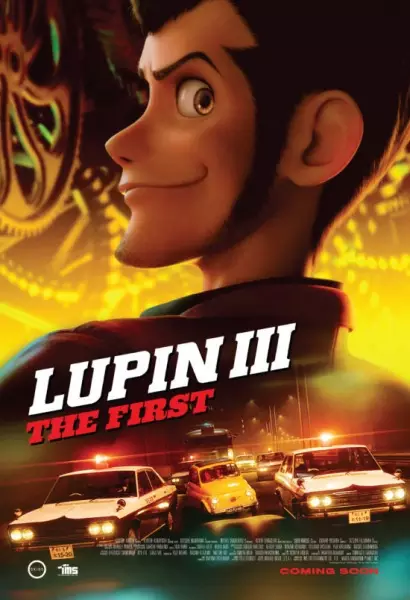
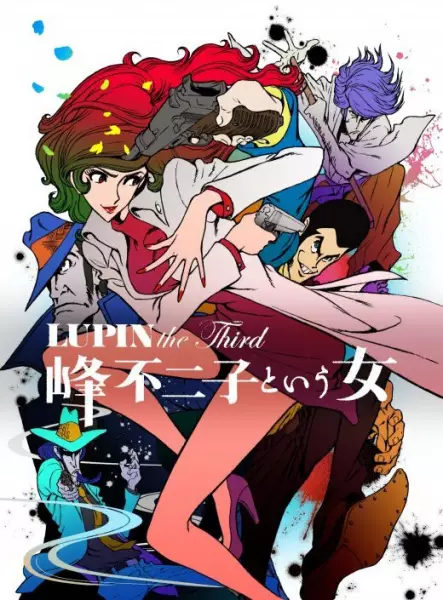
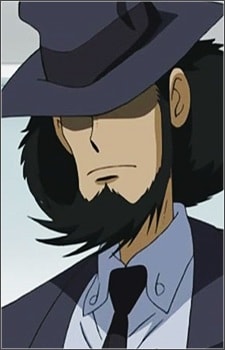
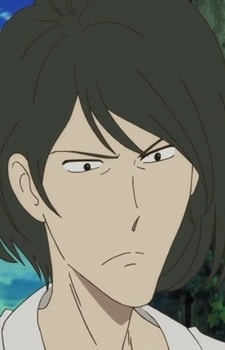
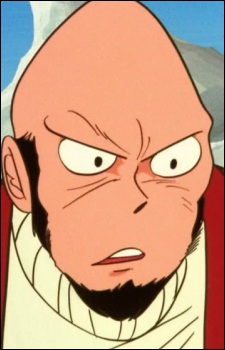
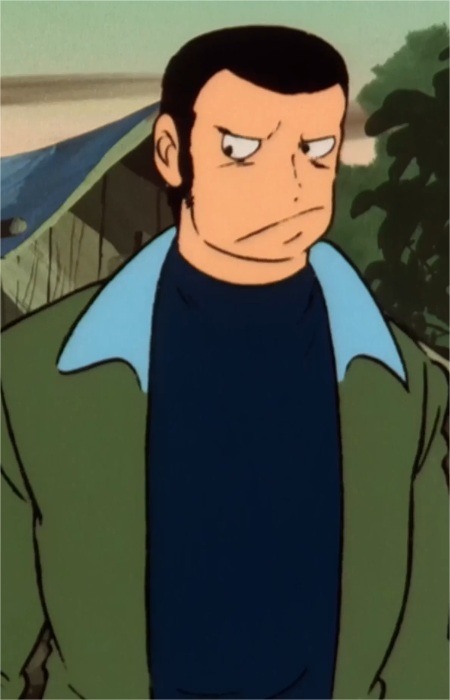
Arsène Lupin III is the grandson of world-famous thief Arsène Lupin, and he's living up to his grandfather's memory as a high-profile thief himself. Due to his infamy, Lupin III attracts the attention of the persistent Inspector Zenigata of the ICPO, as well as rival criminals. Lupin III's criminal lifestyle even seeps into his love life. The main woman in Lupin III's world is femme fatale Fujiko Mine, who Lupin III can never tell is working with or against him. Follow Lupin and his gunman partner Daisuke Jigen on their quest to own the world-or at least the valuable bits!
Главный
Главный
Главный
Главный
Главный
Второстепенный
Второстепенный
Второстепенный
Второстепенный
Второстепенный
Второстепенный
TheCompletionist
January 31, 2024
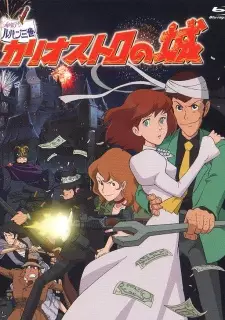
Even though I've been aware of Lupin the III since watching Lupin: Tales Of The Wolf which was a two episode vhs tape that was released by Streamline Pictures in the 1990's I haven't had much experience with Lupin the III as a whole. As of the writing of this review the only other time I've watched any additional works of Lupin III is the Lupin III: Castle of Cagliostro film. I decided to look at Lupin III's first adventure into the world of television with the original tv series released in 1971. This series despite being over 50 years old holds up incredibly wellwith some really excellent capers and some laugh out loud humour scattered throughout the majority of the episodes. In this series we also get to see the beginnings of Goemon and how he actually becomes a part of Lupin's gang because from his first appearance he is actually a villain to Lupin and his gang before he eventually joins them. The format of each episode is roughly the same for the most part. Lupin and his gang plan a heist. Multiple obstacles are placed in his way and with Inspector Zenigata hot on his heels, Lupin and his gang have to be on top of their game and their crafty shenanigans have to be top tier in order to pull off some of these heists. The majority of the episodes in the series are very self contained because there isn't really an overarching story minus the episodes showing goemon's evolution as a character from villain to eventually being a part of Lupin's gang. So besides these episodes you can truly watch many of the episodes out of order without feeling lost because there isn't really much of an overall story throughout this very first season. I often find the strongest episodes of the series are either the episodes that focus on a character's past or break away from the mold of trying to plan the perfect heist or steal a coveted treasure. There is a really great episode that focuses on Fujiko's past that is probably the most detail you'll get with regards to character development throughout the entire season. If you expect to see much character development with regards to Lupin, Jigen, Goemon, and Zenigata then your going to be sadly disappointed. We do get a few tiny scraps of Lupin talking about his father and grandfather but they're incredibly minuscule at best. There also some really great episodes where Lupin has to escape prison and even there are episodes where he has to stop a terrorist plot and he has to rescue a kidnapped girl which is actually nice to see becuase the typical trope of planning the perfect heist can get a little repetitive to the point of it being annoying when you pretty much see it in just about every episode. It's not to say that the majority of the heist episodes are bad, but they can come off pretty generic. Sometimes the best heist episodes are the episodes where Fujiko gets the last laugh, or at least she thinks she does until Lupin gets the upper hand which can often lead to some pretty hilarious outcomes. The humour in introductory season of Lupin the III is still as timeless as its even been but it's mostly at Inspector Zenigata's expense to the point that every once in a while you have to feel sorry for the guy because he constantly falls victim to Lupin's scheme even when he thinks he can come out on top. Definitely some of the best hilarious moments of the entire anime is trying to figure out how and when Fujiko is going screw over Lupin and his gang. I often ask the question why Lupin even trusts this broad to begin with but since she has the reputation of being one of the original anime waifu's it is perfectly understandable since Lupin often wants to hook up with Fujiko Mine despite there is literally a 90% chance she is going to take advantage of him one way or another. One of the nice things about this anime is that it can be mature when it wants to be. There are times throughout the anime where you think that children of any age can watch it, but throughout the entire series people do get killed (despite there being no blood or very little blood) and there are some very brief scenes of nudity scattered throughout the entire first season, but thankfully it never distracts you from what makes the first season of Lupin's adventure so enjoyable. It would definitely be more suitable for a teenage audience. I think one of the weakest aspects of the very first season of Lupin the III is the lack of compelling villains. None of the villains are truly that memorable for the most part. Some of them do make a minor appearance in other episodes but they're incredibly cookie cutter and incredibly basic, lacking any semblance of an individual and definable personality. I understand that Zenigata will always be the number one antagonist against Lupin the III, but if a little more work was put into some of the secondary villains then many of the heist episodes wouldn't feel so lacklustre. With regards to the animation it is pretty much what you would expect out of something made in the 1970's. It's not really polished all that well, and it comes across as incredibly jagged animation wise from time to time but you have to respect and understand the time it was made in. There are a few noticeable animation errors but it's nothing that distracting, and the series does suffer from unexpected and random time jumps when certain plot points happen throughout an episode such as when one of the character gets hurt and then the next scene your in the hospital room with that character with no inclination of what happened in between those moments and sometimes it can be pretty noticeable in a few of the episodes. The music is more than serviceable because it's an excellent time capsule into the type of music you would hear in the 1970's. As a huge James Bond fan it instantly reminds me into a lot of the background music you would often hear in the Sean Connery and the early Roger Moore era of Bond films. This first season of Lupin only had it's first English Dub fairly recently in 2021 and they got some really great old school voice acting talent from it. They took a few alumni from Robotech (Macross) with both Tony Oliver (Rick Hunter) and Richard Epcar (Ben Dixon) voicing Lupin and Jigen respectively. I will admit, that the voice they got for Fujiko Mine (Michelle Ruff) was absolutely perfect casting for her. Cute yet manipulative. Overall, the first season of Lupin the III is a great way to start getting yourself into the world of Lupin the III and even though his first outing isn't his best outing with a lack of character development for many of the characters and many of the episodes being completely generic - it is still a great time capsule into the world of anime in the 1970's and it pretty much helped cement Lupin the III as one of those timeless anime characters and all the great films that await him in the future especially his magnum opus of a story which is Lupin the III: Castle of Cagliostro directed by none other than Hayao Miyazaki.
Второстепенный
BowlingJD
May 22, 2015
This is the first animated series with the amazing third generation thief, Lupin with his gang of buds Goemon the samurai and Jigen the marksman. Also, one can't forget about the mystery cunning and sexy woman that is Fujiko Mine whom Lupin is totally weak in the knees for. Lupin III is episodic in every sense, and if James Bond was a thief, he would be Lupin. This is a fantastic show with each episode keeping your interest in the crew, and when will Inspector Zenigata (whom has devoted his entire life to catching Lupin) finally put the cuffs on Lupin. Each character is totally lovable andonce you watch a few episodes you will quickly realize how this show even stands up today. The art style stands the test of time, music is wonderful, and really pushes the boundaries of the time in which it came out. If you are an old-school anime fan and need something to watch from the 70's that isn't a super robot, look no further than the womanizing thief himself.
FOXHOUNDER1014
March 29, 2013
Like most fans of Lupin III, my first experience with the titular thief was with Hayao Miyazaki’s debut film “The Castle of Cagliostro.” It was simply a masterpiece with great action scenes, likeable characters, a heartwarming story, and excellent pacing. I consider Cagliostro to be one of the finest adventure films (animated or live-action) ever created and stands on my personal list of top movies. Anxious for more, I looked into the series and was amazed at how deep and spreading the franchise’s roots were. Lupin III is perhaps the most well-known and popular anime character of all time in Japan. There have been variousmanga series, three television shows, one live-action movie, five animated films, various other animations, and yearly television specials that remain popular with the Japanese masses. Unfortunately, Lupin never really got firm foothold of international markets. While the likes of Goku and Pikachu are known worldwide, our green (or red or pink) jacketed thief still struggles to gain popularity outside of Japan to this very day. Despite this, Lupin III still manages to have a small, but loyal cult following. For those of you that don’t about Lupin, here’s a little backstory. The origins of Lupin III can be traced back to the early 20th century works of French writer, Maurice Leblanc. Essentially opposite of detective Sherlock Holmes, Leblanc created a gentlemen thief named Arsène Lupin. Like his title suggests, Lupin was thief, but a gentlemen in nature. He would always “politely” leave notes to the police indicating where and when he would steal something, but would always escape their grasp. His goal was really not to steal, but to live life on a dangerous edge and to savor every moment of the chase. Old Arsène enjoyed considerable popularity in his days and has a long-running franchise to him as well. Fast forward all the way to 1967. Professional manga artist Kazuhiko Katō was “discovered” buy a magazine company who was interested in his work. He was hired, and his boss at the time suggested the pen name “Monkey Punch.” The origins of that name aren’t exactly clear, but some speculate that it came from the ape-like look of some of Katō’s characters. Nevertheless, he wasn’t too fond of the name but chose it anyways since he was only attached to a three month project. The project? A comedic manga series that parodied Arsène Lupin’s many exploits. It starred the grandson of the thief with him and his gang going on many adventures throughout the series. The art was rugged and abstract, the humor was vulgar, and it was a huge hit. Following the success of the manga, Lupin III was soon picked up for anime form in 1969 by TMS Entertainment and Toho. Virtually unknown director Masaaki Ōsumi was hired to craft a short pilot film that introduced Lupin and his gang. The pilot was highly controversial at the time to say the least. The realistic violence and adult themes simply didn’t fly well with the companies, so the project never saw distribution. Two versions were produced: a 16:9 CinemaScope version intended for theatrical release and a 4:3 version meant for television. Despite the failure of the pilot, Lupin III was still picked up for a 26 episode television series. On October 24, 1971, anime history was made. For the first time ever, here was an anime series intended for adults and not just kids. Some episodes were loose adaptions of certain manga chapters, but most were original stories. Like the pilot film before it, the show had realistic looking guns and vehicles, violence, and darker plotlines. It seemed, though, that the Japanese animation industry wasn’t ready for such material. Initially, Masaaki Ōsumi directed the first few episodes. They were dark and gritty, with mature themes and sensibilities. Because of this, the show failed to gather the ratings it needed and Ōsumi was fired because he refused to change the tone. This is when Hayao Miyazaki and Isao Takahata joined the show. You heard right, THAT Miyazaki and Takahata. Two of the most revered Japanese anime directors who brought us masterworks like Spirited Away and Grave of the Fireflies got their start on this show. When they did, everything changed. Now Lupin III was given more humor and the episodes noticeably became more family friendly. The show can be divided into three parts. The first eight or so episodes by Ōsumi are serious in tone. Sure there’s the occasional dry humor, but there’s gun fights and fan service shots aplenty here (though it could probably be considered as quite tame by today’s standards). The next section is the transition period. Here we see Lupin III slowly change from the dark nature and into more lightheartedness. By the time we reach the final portion, the show is now comedic and full of laughs, almost the polar opposite of how the show started out. The episodes directed by Miyazaki and Takahata are what the set the standard for the franchise to this very day, with the exception of the adult-themed Mystery of Mamo movie and recent Fujiko Mine series. This show as a whole never really had a set path or direction. Since this is the first ever show for the franchise, it feels very experimental at times and has many changes in tone and quality. Despite these changes, the ratings remained poor and the show was cancelled after only 23 episodes. The basic premise is that master thief Lupin III (now sporting a green jacket unlike the red of his manga counterpart) is always trying to steal; whether its money, jewels, or treasure. I think that his character would best be described if you took the coolness of James Bond, the adventurous nature of Indiana Jones, and the niceness of Tintin; and put it all together. Lupin will always try to steal things, but he’s never without honor. Along the way, he’ll help anyone in need, won’t kill without reason, and he’s fiercely loyal to his friends. Speaking of which, Lupin is joined by a colorful cast of characters that represent his gang. There’s Daisuke Jigen, Lupin’s most trusted ally who’s a quick split-second gunman and Fujiko Mine, a seductive women whom Lupin is infatuated with. Because of this, he’s easily tricked or swindled by her. Early on in the series, he’s joined by Goemon Ishikawa XIII, descendant of the legendary Japanese samurai who actually existed in real history. Goemon has a blade that can cut just about anything, and seems to want to help Lupin just as much as he wants to kill him. The gang is constantly chased by Tokyo Metropolitan Police Inspector Koichi Zenigata, supposedly the descendant of fictional detective Zenigata Heiji. His only goal in life is to capture Lupin. He always fails, but that’s perhaps for the best. Throughout the series, Zenigata has actually captured Lupin on occasion; but quickly realizes that he has no other purpose in life. Later on in the franchise, it’s clear that Lupin and Zenigata both respect each other even if they’re constantly at odds. The ideas are always fresh and exciting, with little repetition between episodes. It really amazes that, even after 45 years, this series is still going with new ideas. I haven’t even talked about the excellent voice actors yet. Lupin is played by Yasuo Yamada, a veteran seiyuu who voiced him for the rest of his life before his unfortunate death in 1995. Yamada brings out the perfect traits in Lupin. He’s cocky, suave, hard-boiled, classy, and even emotional all at the same time. Make no mistake, Yamada is the definitive voice of the character and no one else could have brought Lupin to life besides him. Yes, there have been other actors in the role of Lupin and they all do a fine job, but Yamada will be the one who’ll always be the most famous and well known. The tough and gruff Jigen is portrayed by Kiyoshi Kobayashi, historically known for playing the character in every single Lupin related animation with the exception of the 1987 OVA, “The Fuma Conspiracy,” where the entire cast was briefly replaced. It’s really impressive that this guy still voices him after all these years and he shows no signs of slowing down. Death Note fans might recognize Kobayashi as the voice of Watari. Fujiko’s seiyuu is Yukiko Nikaido, a talented actress who plays the femme fatale as a crafty and cunning woman who knows how to get what she wants. She would later be replaced by the more well-known Eiko Masuyama who has an equally impressive track record like Kobayashi. Masuyama, however, retired from the role in 2010. The no-nonsense samurai of few words, Goemon is voiced by Chikao Ōtsuka who some may know from One Piece and Dragon Ball. He is the father of Akio Ōtsuka of Metal Gear fame. Last but not least, we have Gorō Naya who plays Zenigata. Honestly, Zenigata’s over-the-top and hilarious performances are a joy to watch. He gives off all the right emotions and feelings that this character evokes. Unfortunately, Naya died only very recently (as of this writing), at the age of 83. Both Yamada and Naya will be sorely missed, but their legacy left behind will never be forgotten. I’ve talked about the characters, but what of the animation? At first glance, Lupin III seems primitive in its art style. But you know what? I like this kind of look. For the time, this was the highest quality animation available for television. Although it certainly shows its age, colors are still vibrant and sharp with the simplistic backgrounds nice as well. Characters move fluidly enough and action scenes play out nicely, but it’s obvious that some cheap tricks are used here and there. It doesn’t have the same thin cartoonish look as the second series, nor the gorgeous animation of Cagliostro, but I’m sure that most people will be satisfied with what they see. The audio side of things is more of a mixed bag. The main theme is a simplistic repetition of “Lupin the Third” sung in various tones. It may be basic, but just like the Batman theme, it’s pretty damn catchy. The ending theme is a more melancholic and bittersweet Japanese vocal song. These were all sung by Charlie Kosei, who does a pretty good job singing in both Japanese and English with excellent pronunciation. Although Kosei hasn’t been doing much recently, he contributed a song to the popular PlayStation 2 game Katamari Damacy. Within the series, there’s also background music by Takeo Yamashita. The themes are pretty basic to say the least, and there’s really not anything special, but it does the job when it needs too. For an amazing Lupin III soundtrack, check out the work of Yuji Ohno. He composed excellent jazz themes from the second series onward, and his addictive Lupin III main theme is still playing in my head even now. Exactly where can you get this series? If you live in Japan, it’s readily available on DVD and Blu-ray. Recently, though, North American anime distribution company Discotek Media released the entire series on Region 1 DVD for the very first time ever. This set boasts a brand new high quality video transfer, extensive liner notes on each episode, essays, song lyrics, a complete vehicle list, a complete weapons list, commentary on key episodes by Lupin fans, and even both versions of the original pilot film. It’s the ultimate release for any Lupin fan and I highly recommend you purchase this amazing set. Overall though, is Lupin III worth your time? I’d say without a doubt, yes. Not only is this an important and historical anime, it’s simply a fun show to watch. I’d even go as far to call this the “Cowboy Bebop” of the 1970s generation. The influence that this show had on the exploits of our Bebop crew is immediately noticeable. In fact, Cowboy Bebop director Shinichiro Watanabe has even gone on record to say that he was heavily inspired by this series, particularly with Ōsumi’s work. So there, you have it. An essential anime series that’s action-packed, entertaining, and full of great characters. It may be rough around the edges, as well as uneven in quality; but I guarantee you that you’ll have damn good time watching this series the whole way through. Check it out.
Psycho_Sanji
October 10, 2009
The one that started it all. This is a legendary anime series about some instant classic characters, the Lupin gang. This is amazingly ahead of it's time, being the first anime starring criminals, the first gritty comparatively more realistic anime with guns and such. Not just for anime, it's ahead of it's time in general. Most importantly, it's still a joy to watch nearly 40 years later. Lupin is the cool, laid back antihero. This laid back style, helped by the very cool soundtrack, is still influential today in titles like Cowboy Bebop. Lupin has other sides to him too of course, he has an ego, andhe'll laugh like a maniac and take on any challenge. And of course, he gets pretty excited when there are ladies around, especially Fujiko. The supporting characters are great here. You have Jigen, Lupin's partner and best friend. He's very cool himself, a smooth criminal, but he's also the voice of reason, a more mature criminal. Then you have Fujiko, the classic femme fatale cat burglar, she is Lupin's love interest, and often his rival. Then there's Goemon, the renegade samurai with a strong moral code, who can cut anything. And of course, Inspector Zenigata, who tirelessly dedicates his life to capturing Lupin. Lupin is episodic, featuring 23 self contained stories. Although there is one plot that takes two episodes early on, with Goemon out to defeat Lupin. One episode Lupin is in prison, another time him and the gang have explosive watches put on that they can't take off. These are all great stories. An interesting thing about this series is that it has two different feels to it, depending on who is directing. Masaaki Osumi directs episodes 1-7, 9, and 12. These are the more dark and gritty episodes, and sometimes have a melancholy feel. These episodes are amazing, giving us the depth that the Lupin characters are built on. The founders of Studio Ghibli, Hayao Miyazaki and Isao Takahata, direct episodes 8, 10-11, and 13-23. These episodes are also superb, with a more fun and upbeat feel, closer to what Lupin is known for today. You can tell Miyazaki is involved when Lupin starts saving cute damsels in a gentlemanly heroic way. All in all, Lupin III is a classic series, which is still going strong today with movie specials. I recommend checking this out, it's must see anime.
literaturenerd
November 20, 2014
Overview: Red jacket? Green jacket? Who gives a shit?! Ok, now that I am done quoting Happy Gilmore, I will review what is without a doubt one of the most famous and beloved anime of all time...in Japan... and pretty much nowhere else. Background info: Lupin the 3rd started way back in the early 1970s and was created by the legendary mangaka known only as "monkey punch". Yep, that's really what he calls himself. Lupin was created as a spoof/ homage of the character Arsene Lupin, who was a gentlemen spy in a series of French novels that were popular in the late 1800s and ran alongside theSherlock Holmes stories. Along with spoofing low brow adventure novels from 1800s France, Lupin also takes a lot of inspiration from James Bond and the spy movies and novels that were extremely popular during the 1960s and 1970s. In his adventures, Lupin is joined by the femme fatale Fujiko, badass samurai Goemon, and awesome sharp shooter Jigen. Lupin has crazy adventures that mix slapstick comedy with awesome action and some of the first "fanservice" in anime history. Lupin in Japan vs. outside Japan: Lupin was a HUGE hit in Japan, and to this day recieves reboot after reboot. A new live action movie was created just this year and will be followed by sequels. However, for some reason Lupin has never been a very big deal overseas. Perhaps this is because the West was already saturated with slapstick comedy and James Bond parodies like "Get Smart", which would have aired around the same time that Lupin first came out. Story and characters: 8/10 The story and characters are so well known and beloved in Japan that even if you have never seen Lupin, you have probably seen it parodied or homaged dozens of times in other anime. For example, the red coat worn by the character Nabeshin in Excel Saga is an homage to Lupin, as are the character designs from Cowboy Bebop. Spike is based on Lupin, Jet = Jigen, Faye =Fujiko and Vicious = Goemon. The plot works because it is simple and usually doesn't take itself too seriously. The characters have great chemistry and each brings something to the mix. Music: 9/10 Lupin was probably the first anime ever to have a truly KICKASS opening theme song. This was back in 1971 and no other animated show had an opening that mixed jazz, a smooth singer, and an awesome melody and beat like this one. The entire soundtrack is very jazz oriented, which started a huge trend in anime that continues to this day 40 years later! Art: 7/10 The art really scares away some viewers because it has a very unique style. I would compare it to One Piece, but I actually think even the original Lupin from 1971 has better character art than One Piece. An interesting fact is that one of the key animators for the original Lupin was Hayao Miyazaki, who later became the main animator for one of the early Lupin movies. Overall: 8/10 If you want to watch an anime that has stood the test of time and been HUGELY influential on the genre as a whole, then Lupin is an absolute must! It currently has a low rating on MAL of around 7, but don't let that dissuade you. Some people simply don't appreciate anything that is older than they are and don't care about influence, history, or enduring quality. I feel sorry for those people, because they miss out on a LOT of great stuff. If you don't want to watch the original series, at LEAST watch the 1979 movie Castle of Cagliostro. It is generally considered the the high water point of all things Lupin.
Ранг
#1625
Популярность
#2198
Участники
111,316
В избранном
1,080
Эпизоды
23