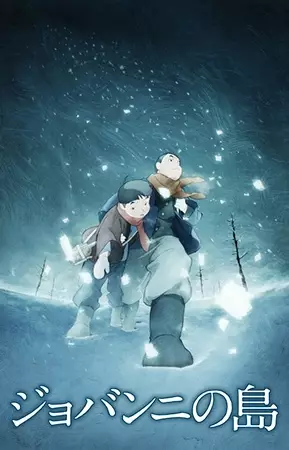

Giovanni's Island
ジョバンニの島
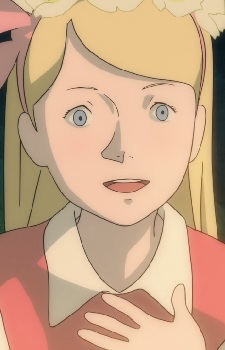
Even during the height of World War II, the small island north of Hokkaido where brothers Junpei and Kanta Senou live remains practically untouched. They spend their days gathering eggs and imagining themselves as Giovanni and Campanella, the heroes of Night on the Galactic Railroad, their favorite novel. But soon the war ends, and Soviet troops come to occupy the island. As their situation becomes increasingly unstable, the two brothers manage to form an unlikely bond with Tanya, the daughter of a Soviet officer. Even so, it may be too late for their lives to be as carefree as they once were. [Written by MAL Rewrite]
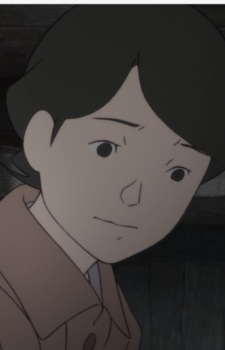
Главный
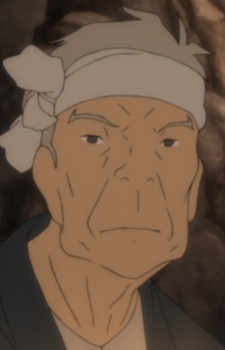
Главный
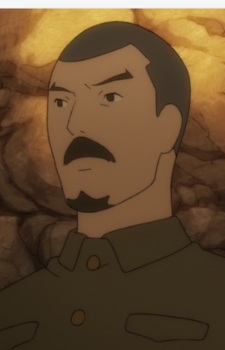
Второстепенный
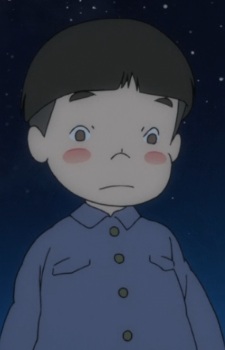
Второстепенный
Второстепенный
Второстепенный
Второстепенный
Второстепенный
Второстепенный
tameiiki
January 6, 2015
Giovanni no shima is a beautiful film about dreams, hope and love. Taking place at an island called Shikotan in Northern Japan during the end of the 2nd World War, Giovanni no shima displays a unique milieu even for the most studious anime-watcher. Siblings Junpei and Kanta are very young when the Red Army comes and takes control of their dear home island. But even on the hard times, when food is scarce and scary armed men watch every move they take, the two have something they can always rely on: their imagination. ‘The Galactic Railroad’ is their way to escape difficult situations, taking them faraway where ever they dream to, even if it's only for a moment. Soon they come to think that everything’s not that helpless after all. The culture the Russians brought with them is interesting, so different. As time passes the language sounds less and less strange in their ears. The fair-skinned kids they go to school with have become their friends. Maybe it’s possible to live along like that, in peace. Or is that only naivety of the youth? There are far bigger things happening and waiting to happen, things invisible, yet incomprehensible for Junpei and Kanta. Giovanni no shima relies on simple character design but interesting enough for everyone to look clearly different and recognizable. The colours and views of the island are beautiful, but a little plain. However, the ‘Galactic Railroad’ colours up not only Junpei and Kanta’s life, but the film’s looks too. Like the film overall, those dreams of Junpei and Kanta are beautifully animated. The voice acting is great. The children are really played by children, and the Russian characters by native speakers. We also hear some Korean in the film. All nationalities are shown to have both good sides and bad sides. The soundtrack is also beautiful, especially those few songs we hear sung by the children. The story told in Giovanni no shima is heartwarming, but also tragic. It’s an epic story of survival and loss, but also love, family and friends. Even though the story is fictional, it teaches you a lot about history you might not have heard about before, and makes you think. This interesting piece is definitely worth watching.
tsubagakure
September 3, 2014
1945, Japan was defeated in WWII. We find ourselves in the beautiful greenery island of Shikotan, and the Russian army has taken the land as their own. Junpei and Kanta are two little brothers who find themselves in the spoils of war and have to face this cruel reality. When two countries collide, we happen to discover different cultures, distinct features, language barriers and ruffling history. “Giovanni no Shima” takes us onto the railroads of a train, and stopping at every station, it shows us how to break those obstacles and teaches us about longing and loss, but also bravery and determination to achieve one’sgoal, in a destroyed and homeless Japan. Miyazawa Kenji’s words and reveries play a major role in the story, thus Junpei and Kanta are named Giovanni and Campanella, two main characters of Miyazawa’s “Night on the Galactic Railroad” book. Some quotes are often taking part in the narrative with Junpei’s soliloquies. A tangible imagination guides us in yet, another lovely Production I.G; the art is well conceived, although one might refer to it as a bit kiddy and dull, but remember, this is a movie for the whole family, therefore, you will find its funny moments with chibi expressions and scribbled backgrounds. Nonetheless, i believe it to be of a very delicate caliber. One fascinating aspect is the voice actors, and i have to say that is extremely well exerted. Not only we hear new exquisite Japanese talent, but, as well, Russians voicing the Russian characters, like Tanya. You may also enjoy the coalescence of Russian songs with the Japanese ones, it gives a profound and unique ambience, i think. Overall, “Giovanni no Shima” is a beautiful and powerful movie that should’ve earn the appreciation of everybody, and such will makes realize that the errors we committed in the past, cannot be repeated now, as well as in the future.
mushimaster94
July 12, 2017
Giovanni’s Island is an emotionally gripping film that depicts life in Japan near the end of world war 2 known as the Soviet-Japanese War. The film unfolds around our main character Junpei/Giovanni, who is a young boy living in one of the Islands in Japan, whose father is the commander of the firefighting force in the village (he’s basically the head honcho of the village). The soviets are invading their hometown and our adventure begins from here. Before I progress, I have to say I really loved this movie, but this film is very one-sided, it makes you feel empathetic toward the Japanese, and itbrushes of and ignores what the Japanese did before this period. I get that the film was made in Japan, so naturally there is pride when making a film about one’s own country, but I felt some recognition of history at the beginning of the film would have been appropriate. Though they do make one subtle reference to how they treated the Koreans in this time in one scene. Soundtrack/Score: A beautiful soundtrack, I would give it an 8/10, the instrumentals were very appropriate and really set every mood in the film. The real beauty in this soundtrack was the vocal choir done by the children in this movie, involving both Russian children and Japanese children. The song Ginga Tetsudou no Yoru (Hoshi-meguri no Uta) is one of these choir type songs played in the film. I was very impressed that they used children to sing in this film rather than adults, there is an innocence and purity in the voice of children that really just made you heart melt during these scenes. Animation: This section is a bit tricky, I am sure some people who felt like the animation designs for the characters could have been better, I too felt the same in the beginning of the film. However, as the movie progressed I realized that these characters, mainly children were made to be real, they were simple, but real. The characters didn’t have perfect figures, or perfect eyes, sure that stuff looks great in most anime, but that type of design wouldn’t fit in well with the harsh realities of this time. Moreover kids are imperfect, well everyone is, but it’s much more obvious in children and I felt the animation reflected that well (it’s a very delicate time in life where your struggling to find an identity and a place within your family). The backgrounds were always top notch and were visually satisfying, some scenes remind me of Makoto Shinkai’s work. Characters: Our main man Junpei is our star here, but really the whole event/movie is about children and what they experienced and felt during this time. Not only was the focus on Japanese children, but also Soviet children who were stationed in residential Japanese areas with their parents who were invading Japan. 2 other important child characters I feel I should mention in this film are Junpei’s younger brother Kanta and a soviet girl (about the same age as Junpei) whom Junpei interacts with. Giovanni is very confused about how he should feel toward the Soviet (she is the enemy, but she is just a child too, could she be “evil” like the adults?), and it’s very interesting how things play out between these two characters. The 2nd third of the movie is more focused on the relationship between these two characters. Our final arc of the film is really about Junpei and his brother and really about Junpei’s sense of family. This final arc is very intense and invokes so many emotions in you, grab some tissues if you cry easily, I didn’t cause I’m heartless moron, but yeah. Other: The film supposedly makes make references to a book called “Night on the Galactic Railroad” written by Kenji Miyazawa, the book itself is referenced in the film many times. You may like to read this book if you have access to a copy, to have a deeper understanding of the film, though by no means is required. Overall the film had very strong plot, pretty good characters, and a great soundtrack, I would definitely recommend it to anyone. Some themes or ideas that circulate this film are loss, confliction with change, confusion towards society, family, regret, the power and dynamics of a family unit, and the longing to be back home.
Timmytimtam
June 8, 2019
What. A. Big. Mood. in 1945 some stuff with some armies went on, you might've heard about it before. this movie does not mention the rape of nanking but it does tell the story of some people on some island somewhere. then it tells the story of the same people in places not on some island somewhere. the art is really really really good and enhances the most emotional scene in the movie which was very touching if you weren't listening to someone complain about the subs for the entire fucking scene, luceo. aside from the highly stylised moments on the galactic railroad the art isgenerally good, two of the characters are consistently vibrant and fun to watch. during the first half of the movie there's a great bit that really hits home how cool hearing stuff is, they're like singing a song and shit. the dub is really good and if you don't watch dubs i'm putting you on the f.b.i watchlist you fucking weebo pedo. i really enjoyed this movie. perhaps you could consider the portrayal of the soviets as pretty nice guys who're just following orders bad, but i don't feel like thinking super critically right now. also for a movie about world war II im pretty sure there was nothing about the nuclear bombs. mostly it's just a story about people, and the circumstances they're in, rather than a movie that makes any historical judgements. ok 10/10 i think, don't @ me on discord saying that i enjoy images of little girls i do not enjoy little images of little girls stop it do not say i enjoy them,
JuneNephthys
December 28, 2019
Giovanni’s Island is a film that I had to really grapple with. From the beginning, I was instantly entranced in its setting but, as the film went on, those feelings of awe fell away with the tiresome execution. This film has a lot of problems with characterization, but an unmistakably sublime visual direction. It’s missing the profundity of the novel, Night on the Galactic Railroad, that it consistently creates parallels to! This review of Joban'ni no Shima (2014) contains spoilers! You have been warned! —Story/Characters The story begins with two brothers, Junpei and Kanta, who live on the island of Shikotan, weeks before the end of World WarII, on August 15, 1945, *Soviet soldiers land on Shikotan and occupy the island. Junpei and Kanta, who live with their grandfather, a fisherman, and their father, the head of the firefighting force of the village, are forced to move to the stables while the Russian commander's family, among them the commander's daughter Tanya, move into the main house. At school, Russian children occupy half the building, and Tanya and the other Russian kids begin to mingle with the Japanese children at recess. After a playground jostle makes Junpei bump into Tanya, they become friends and the two brothers are subsequently invited to Tanya's house for dinner. The brothers' uncle, Hideo, asks Junpei to light signal fires at night so that he can make trips to the main island for rations as they are running low on rice. Meanwhile, their father, Tatsuo, with the help of their school teacher, Sawako, secretly supplies the rest of the village with food supplies from the Dawn Corps' emergency stores. When Hideo finds out about this, he tries to smuggle the food to sell outside the island, but gets caught instead. Tatsuo rushes to the cave where the Dawn Corps' supplies are kept and gets arrested. *For more information about this event, read about the Kuril Islands dispute. The dispute stemmed from a dispute in which Russia had claimed sovereignty over the Kuril Islands but islands, such as Shikotan were technically not part of the treaty. Therefore, Russian troops forced the islanders off of their land. On September 25, 1947, the Japanese on the island are made to assemble at the harbor sent back to the mainland. Junpei and Kanta set out with Sawako, while their grandfather chooses to stay behind, determined to spend his last moments on the sea. The three are reunited with Hideo while boarding the ship, and arrive at an internment camp at Maoka, in western Karafuto, a few days later, where they wait for the ship that will take them back to Japan. Hideo finds out that Tatsuo is alive and at another internment camp on the other side of the mountains ‘just a stone's throw away.’ Kanta, taking his words literally, sets out to meet his father, aided by Junpei. Sawako and Hideo track the two down the next day, and to Hideo's surprise, Sawako decides to visit Tatsuo's camp as well. The four of them drive to a pillbox where they spend the night, but in the morning they spot Soviet soldiers who've managed to track them down, and Hideo runs ahead as a decoy while Sawako and the children make their escape. The trio are able to make their way to the internment camp holding Tatsuo, where they have a tearful farewell, with Tatsuo promising he'll find a way to reunite with them no matter what. However, as they try to return, Kanta suddenly falls extremely ill and they are caught by the camp guards. The warden arranges for the trio to be sent back to the harbor by truck, but Kanta succumbs to his illness en route. Junpei and Sawako reunite with Hideo at the harbor where they line up to board the ship back to Japan. Junpei keeps talking to Kanta about the story of the ‘Night on the Galactic Railroad’ to fool the guards into thinking Kanta is still alive so they won't dispose of his body. As he talks, Junpei has a vision of Kanta's spirit riding a ghostly train up into the stars. 56 years later, Sawako and Junpei return to Shikotan and pay their respects at Tatsuo and Kanta's graves. Junpei's school holds a graduation ceremony for those who never managed to have it, and a blonde girl, Tanya's granddaughter, approaches Junpei at dinner. She hands him a notebook, containing one of Junpei's sketches of Tanya, and Junpei gives her his old copy of ‘Night on the Galactic Railroad’ in return. Junpei is saddened to learn that Tanya had died a year earlier. The Russian hosts then begin to play music and the partygoers, both Russian and Japanese, begin to dance. Tanya's granddaughter invites Junpei to dance with her, and the scene morphs to the spirits of Shikotan's original residents dancing with each other among the stars. The end. The story of Giovanni’s Island was greatly ruined for me because of my familiarity with Kenji Miyazawa’s Night on the Galactic Railroad. When I found out that Junpei was named after Giovanni and Kanta was named after Campanella, I was like ‘oh no, the younger brother is going to die!’ It’s one of the many cursed names, like Ophelia from Hamlet, where the mere mention of them harkens in a premonition of death. While the visuals for Joban'ni no Shima were beautiful, I had difficulty feeling an emotional connection to the characters. Especially the relationships with the older characters—Tatsuo, Hideo, and Sawako—felt rushed. I know that the perspective was a telling of Junpei’s recollection from that time, but I feel like there could have been more clues that hinted that (1) Hideo was in love with Sawako and (2) more about Sawako’s relationship with Tatsuo. When they’re at the interment camps in Russia and Hideo begins flirting with Sawako, it came out of left field. Hideo could have mentioned Sawako’s favorite color or a memory that they shared in childhood to anchor the audience in on their familiarity with each other. Another big discrepancy that I had was the adults complying with the children’s demands to see their father in the prison camp. It led to Kanta’s death and their uncle, Hideo, getting maimed. It is lightly implied that the kids were never going to see their father again because of his detainment in Russia but Tatsuo promised the kids that he would be released. Is it a lie? The film never hints at the truth, and because of it, Kanta dies and Junpei has to carry his little brother’s corpse on a freight ship; all the way to Japan! The whole plot digression just feels like misery fuel that could have easily been avoided. Joban'ni no Shima was a lovely visual spectacle but the character writing left me feeling empty. I really wanted to like it more than for its historically accurate portrayal of the Kuril Islands, circa 1951, or the stunning sakuga that Production I.G. always manages bring to the table. With how poor and predictable the scripting was, I would have probably rated it a couple of notches lower if the visuals weren’t up to par. Note: The only two scenes that emotionally moved me was (1) when Tatsuo is taken to a prison camp in Russia and (2) when Tatsuo reaches out and touches his children’s hands through the barbed wire, in the freezing cold winter. I attribute that flood of emotions to Masachika Ichimura’s incredible performance as Tatsuo Senō! This guy is so talented that he was able to make every scene with Mewtwo, in the Pokémon films, emotionally riveting! —Technical Mizuho Nishikubo is credited as the chief director for Giovanni’s Island—while more obscure in the western hemisphere, Mr. Nishikubo is a seasoned veteran, responsible for directing: Akai Kōdan Zillion, Bakuen Campus Guardress, California Crisis: Tsuigeki no Jūkai, Otogizōshi, Video Girl Ai, and the 30th anniversary film for Tokyo’s Disney Resort—Yume ga Kanau Basho. Note: The stylization in Giovanni’s Island is different than Nishikubo’s usual animation style, it resembles Kemonozume and Yojōhan Shinwa Taikei so much that I could have sworn that Yuasa Masaaki had a hand in it… if he did work on key animation and character designs, he’s not credited for it! The seiyū in this production are atypical. First of all, the voices of the child characters: Junpei and Kanta Senō, are voiced by ACTUAL child actors. This shocked the hell out of me because, while not directly a war story, covers very dark areas of *Russia’s occupation of Japan’s Kuril Islands AFTER World War II—I didn’t expect children to be able to act well in those kinds of scenarios! The rest of the cast is full of well-renowned Japanese actors, a musical theater performer, an enka musician, and a former gravure idol! *The film conveys a sense of dread when the Russian navy raids an elementary school and holds up the school with military-grade rifles. Another instance of this is when Junpei and Kanta’s father, Tatsuo, is taken to Russia to be held in a labor camp. Junpei Senō, the adult iteration of the protagonist, is Tatsuya Nakadai. Though Mr. Nakadai hasn’t starred in many anime features, he is a VERY famous actor. He has acted in five Akira Kurosawa films, as well as in some of Japan’s most highly regarded films: Hiroshi Teshigahara’s The Face of Another, Mikio Naruse’s When a Woman Ascends The Stairs, Kihachi Okamoto’s The Sword of Doom, Hideo Gosha’s Goyōkin, Shirō Toyoda’s Portrait of Hell, Kon Ichikawa’s Enjō, and many other classics! In 2015, Nakadai received the Order of Culture (Bunka-Kunshō) award from the Japanese government. This award is given for contributions to Japan’s art, literature, science, or anything related to its culture. Recipients of the order also receive annuity for life. His notable anime roles include: •Sumiyaki no Rōjin, Kaguya-hime no Monogatari •Devil, Kanashimi no Belladonna •Narrator, Uchū Senkan Yamato: Kanketsu-hen Hideo, Junpei and Kanta’s uncle, is Yūsuke Santamaria. Mr. Santamaria is an award-winning actor and singer. His noteworthy roles are in Kiyoshi Kurosawa’s Doppelgänger, Katsuyuki Motohiro’s Negotiator, and Kiyoshi Sasabe’s The Legacy of the Sun. Sawako, Junpei and Kanta’s homeroom teacher, is Yukie Nakama. Ms. Nakama is a Japanese actress, singer, and former gravure idol. She has dabbled in just about every performative field including—dramas, films, anime, video games, and dubbing for foreign films, such as Jurassic World. Nakama’s noteworthy acting roles are in *Gokusen, Love & Pop, Gamera 3: Revenge of Iris, Ring 0: Birthday, Shinobi: Heart Under Blade, Oh! Ōoku, The Big Bee, and many others! Her notable anime roles include: *Gokusen is a live-action manga adaptation, based off of Kozueko Morimoto’s original story that has an anime adaptation with the same name. •Asahina Mutsuki, Haunted Junction •Lapis Lazuli, Kidō Senkan Nadesico: The Prince of Darkness Genzō Senō, Junpei and Kanta’s grandfather, is Saburō Kitajima. Mr. Kitajima is an internationally famous *enka singer, lyricist, and composer. He has had no acting credits prior to this film. *Enka is a style of music that resembles traditional Japanese music stylistically. The term enka was first used to refer to political texts set to music which were sung and distributed by opposition activists belonging to the Freedom and People’s Rights Movement during the Meiji period (1868–1912) as a means of bypassing government curbs on speeches of political dissent—and in this sense the word is derived from "enzetsu no uta" (演説の歌), meaning "speech song." Tatsuo Senō, Junpei and Kanta’s father, is Masachika Ichimura. Mr. Ichimura is mostly known for his role in stage plays, particularly musical theater. He has performed in Jesus Christ Superstar, West Side Story, Equus, Cats, Evita, The Phantom of the Opera, and many more! He famously played the role of Shylock in The Merchant of Venice and was Macbeth in Yukio Ninagawa’s adaptation. He has also acted in films and television dramas, as well as dabbling in video games, anime, dubbing, and puppetry. Ichimura is Jack Skellington in both Kingdom Hearts and the official Japanese dub of the The Nightmare Before Christmas. His notable anime roles include: •Red XIII, Final Fantasy VII: Advent Children •Mewtwo, Pokémon Giovanni’s Island has won ten awards: •Jury Distinction, 38th Annecy Animation Film Festival (2014) •Satoshi Kon Award, 18th Fantasia Film Festival (2014) •Audience Award, 18th Fantasia Film Festival (2014) •Jury Special Mention, 13th Nueva Mirada (2014) •Jury Award, 5th Scotland Loves Animation (2014) •Children's Jury Prize, 31st Chicago Int'l Children's Film Festival (2014) •Adult Jury Prize, 31st Chicago Int'l Children's Film Festival (2014) •Excellence Award, 18th Japan Media Arts Festival (2014) •Best Animation Film, 69th Mainichi Film Awards (2014)[2] •Jury Award, 13th Imaginaria Film Festival (2015) Conclusively, Joban'ni no Shima could have been much better. The script seems like it needed to be doctored more before publication and the scenes during the internment camp slogged on a bit too long. Fictional writing can be metaphorically compared to walking on a tightrope. You can either say too much or too little in a narrative—the perfect balance being the middle: implying a lot, while showing enough visually to create a sense of intrigue. Giovanni’s Island showered us with flashy visuals, but forgot to leave a trail of breadcrumbs along the way!
#1524
Популярность
#4233
Участники
36,098
В избранном
74
Эпизоды
1