
Miss Hokusai
百日紅~Miss HOKUSAI~
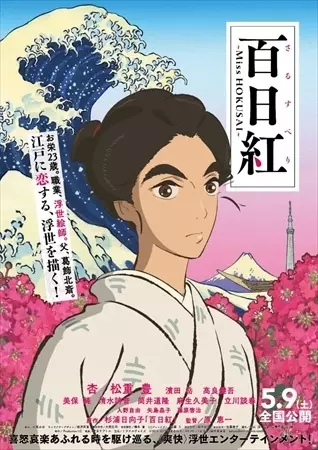
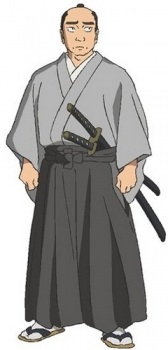
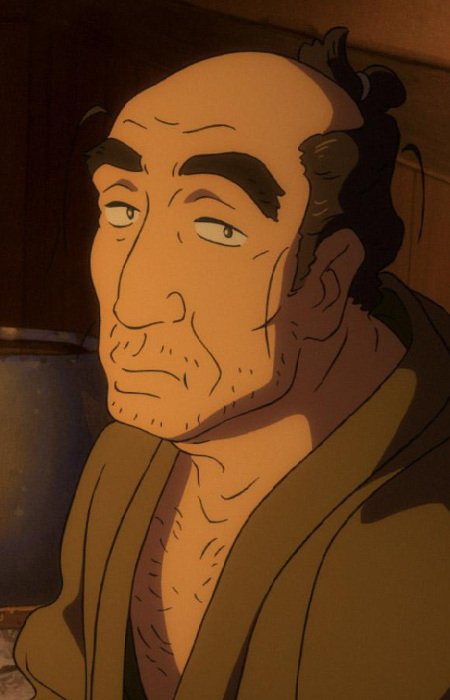
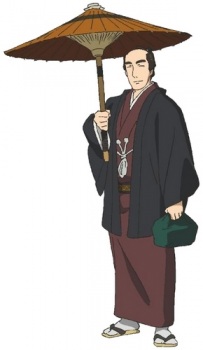
The time: 1814. The place: Edo, now known as Tokyo. One of the highest populated cities in the world, teeming with peasants, samurai, townsmen, merchants, nobles, artists, courtesans, and perhaps even supernatural things. A much accomplished artist of his time and now in his mid-fifties, Tetsuzo can boast clients from all over Japan, and tirelessly works in the garbage-loaded chaos of his house-atelier. He spends his days creating astounding pieces of art, from a giant-size Bodhidharma portrayed on a 180 square meter-wide sheet of paper, to a pair of sparrows painted on a tiny rice grain. Short-tempered, utterly sarcastic, with no passion for sake or money, he would charge a fortune for any job he is not really interested in. Third of Tetsuzo's four daughters and born out of his second marriage, outspoken 23-year-old O-Ei has inherited her father's talent and stubbornness, and very often she would paint instead of him, though uncredited. Her art is so powerful that sometimes leads to trouble. "We're father and daughter; with two brushes and four chopsticks, I guess we can always manage, in a way or another." Decades later, Europe was going to discover the immense talent of Tetsuzo. He was to become best known by one of his many names: Katsushika Hokusai. He would mesmerize Renoir and van Gogh, Monet and Klimt. However, very few today are even aware of the woman who assisted him all his life, and greatly contributed to his art while remaining uncredited. This is the untold story of O-Ei, Master Hokusai's daughter: a lively portrayal of a free-spirited woman overshadowed by her larger-than-life father, unfolding through the changing seasons. (Source: Production I.G)
imjusthungry
May 6, 2016
Sarusuberi is not a film I believe anyone can enjoy, but I have no reservations about calling it a work of art. Not only is it a beautiful film overall, the experience it provides in both its characters and its setting is poignant and thought-provoking despite its straight-forwardness, something that is regrettably rare in major feature-length anime releases. Sarusuberi has neither a main conflict nor a linear narrative, instead made up of a handful of shorter stories that are loosely held together by O-Ei, the film's central character. It is difficult to asses the story's effectiveness, because there isn't really a particular "goal" that it triesto achieve, thus no tangible criteria to judge it against. I did think, however, that each section of the movie had something of interest in it, was well-paced, and never felt pointless. The format also leads to the overall tone of the completed film being very subdued, with virtually none of the melodrama one would expect out of an anime. Where the movie gets its flair from are, in my opinion, the art, as well as the masterfully done sequences of magical realism woven throughout. There aren't many, but when they do appear these sequences are breathtaking, effectively adding some variation in what could have easily become a monotonous film. Due to the lack of a real plot, it's also difficult to asses the film's characters. While there is little development for most of them (though O-Ei does receive some, subtly but powerfully so,) it can also be said that they aren't really meant to undergo much development in the first place. All I can say is that I believe the film is meant to be experienced with the characters rather than following them as they try to get from Point A to Point B, and for this purpose most of the characters are interesting and unique (though not always likeable, which in my opinion is a good thing), even though some appear only briefly. The animation, art, and sound in this film are all exceptional. Perhaps due to the presence of O-Nao, O-Ei's blind sister, this film is truly a sensory experience. So much attention is paid to the details in the scenes where she appears - everything from footsteps, the crackling of woven grass, the creaking of a great wooden bridge - that it adds a touch of realism to the animation. A number of scenes delightfully weave some of Hokusai's actual art into the visuals, creating some of the most potent scenes of the film. Edo period Japan is crafted so immersively that it would be a joy to watch the film even for just that purpose. The only thing about this movie I'm not sure that I loved was the music. The film makes use of a more traditional orchestral soundtrack, with sections using traditional Japanese music, and, strangely, in a couple of scenes, electric guitar riffs. While I understand what the film could have been going for - perhaps showing O-Ei's character at odds with the norms of her time, I found it rather jarring to hear. Not all will have the patience for or the interest in this kind of film, but I would recommend Sarusuberi to fans of historical anime, animation, and subdued slice-of-life shows of the non-moe variety. It is a beautiful, subtle, intelligent film that doesn't try too hard to be any of those three, which is what, I believe, makes it so excellent.
Dullboy
September 4, 2015
While the vast majority of people must have heard at least one time in their life about Hokusai, the famous painter, little of them know about his talented daughter, O-Ei. So, maybe now you are interested in knowing the life of this mysterious unknown woman? Maybe you want to see the movie to find the truth and discover her life from her young age to her death...well, if that's the case, you might end up to be a little disappointed by this movie ^^ . But here, I'll try to tell you why you should watch it nonetheless and what is in fact the qualities (and thelittle minor default) of this movie: See, Miss Hokusai, while being centered around the figure of O-Ei, isn't about her life, instead the movie take the gamble to opt for a slice of life aspect, developing around little separated scenes involving the little crew of marginal painter composed of Tetsuzo (more known by the name of Hokusai) the monolithic eccentric artist, and his disciples, including O-Ei. The movie also didn't chose to make the relationship daughter-father into a central aspect, and the hint about the link of the two character is discreetly spread through the movie instead. Then about those different scenes I'm talking about, they can mostly be divided into two categories: First the one including Hokusai, one of his slightly drunken disciple (provider of some of the comical aspect of the movie) and O-Ei. These moments follow the crew involved in problems and mystery that they will solve with painting. In them, some supernatural and fantastic aspect are surprisingly very present, would it be a menacing dragon lurking in the dark clouds of the sky, or the spirit of a geisha coming out of her body at night. These moments, while being creative and unexpected, are not the best in the movie, instead, the real highlight of this movie come from the second type of scene: In them, we discover O-nao, the younger sister of O-Ei, who had the misfortune to be born blind. These moments, with O-Ei walking around, "showing" O-nao the living life of the people traveling a pond, or listening to the silent in a snowy day, are very meaningful and powerful moments. In fact, those moments reveal one of the best quality of this movie: the emotion is never expressed directly in a frontal way, with heavy talk and shows of tears, but by little touch, when O-Ei warmly touched her sisters little hands or when the screen simply took the time to show us her face, slightly smiling looking at her younger sister playing in the snow, discovering the discreet wonders of everyday life. The relation between O-nao and her father, never showing up to her, is also a very impactful aspect of the movie, even if never addressed frontally. But what about the music? Well it might be the weakest point of the movie. The movie take the bet on using rock instrumental music and sound, surely to try to emphasis on the modernity and strong whiled feminism of O-Ei...and while the intention is visible, the result don't match and feel out of place. Other than that, the sound and music are quite rare and most of the time the scene will be composed of the character talking without ambient music or much sound, which accentuate the slow pacing of the movie (while it's not really a default, it should be mentioned for those reluctant to watch a movie without action like this, that they might find boring). I didn't talked much about O-Ei in herself, but even if I might have made clear that the movie is not really about developing her character or make us enter in her life completely, she stays a very refreshing and free woman, a type of character that is not that often seen in anime, and it's also one of the good points of this movie. To summarize: if you like slice of life anime, if you want to take a look and feel what life in the end of the Edo periodeperiod was like, then you should watch this movie and will surely enjoy it. Thank you for reading this review to the end.
UnholyPinecone
March 26, 2016
Fair. The story was fair. It didn't have much of a focus, but this is to be expected. It features several arcs and has a couple of characters that interact with each other. Yet there is barely any progress or character development. The characters were realistic, yet it wasn't a story. It was a series of events that happened to somebody in a chronological order with no theme or message. The only arguable theme is to stop being afraid of death, yet there was so little focus on it, it can be barely called that. However, Onei's relationship with her little sister, Onao, is quitetouching. I almost cried. But as it failed to make me actually cry, it was alright. That small story is the only thing that somewhat redeems this movie. However, with so many arcs going on in the story, an ongoing series would suit the subject matter better. Despite its focus on traditional Japanese arts, the art was mediocre. The style wasn't something I liked, nor was it overly complicated or pretty. Several times some scenes were lacking too much in detail for it to be a movie made in 2015. The animation has way too many still scenes, often very confusing as I have to check if there was anything wrong with my computer while watching it. Had they chosen a different art style - perhaps one that has a watercolour feeling similar to Legend of Kaguya, it would have been much preferable to this bland mix. The soundtrack can only be described as terrible. As a story set in 1800's Japan, someone would expect a more traditional soundtrack with minimal electrical sounds. However, we are introduced to the opening scene with an electric guitar as a background. During one of the last climatic scenes featuring Oei running, the electrical guitar played, creating a somewhat ridiculous effect. The soundtrack wasn't just bad, it was disorienting. It takes the viewer out of the setting of the story back into our lives in the modern world. When any good movie should let the viewer forget about their life, the soundtrack choice for this movie was more than appalling. However, there are very rare moments when the soundtrack sounded nice, preventing it from getting a simple "1" for its score. Overall, it wasn't a good movie. The soundtrack was terrible, the animation was mediocre, the story lacked focus, the characters didn't get properly developed, and the art style just might not be your cup of tea. 4/10. And that's being generous because it almost made me cry.
tsubagakure
March 2, 2016
“nineteenth century Japan was a culturally dynamic society with much in common with its present-day counterpart. Many artists of the time, starting from Hokusai and his daughter O-Ei, had personalities and lives more interesting than any novelist could conceive." depicting the life of Katsushika Hokusai, Sarusuberi, however, is far more than the eye meets. the film centres around O-Ei, daughter of the extraordinary artist Tetsuzo, was a woodblock artist herself, painting with and for her father. more than just being and aging lonely man, Tetsuzo and his “cowardice”, as O-Ei so elegantly put, tends to isolate himself, even through he lives with O-Eiand his twit apprentice. O-Nao, his other daughter, blind since birth feels reluctant towards her father, thinking he might hate her, all of this because Tetsuzo has this derange with sickness, which makes him absented from the little girl. not only that, but Tetsuzo, in his mid-fifties, renowned all over Japan, paints day and night like a mad-man, making himself more and more apart from the real world. O-Ei is a devoted older sister, showing the world outside to her blind little sister O-Nao, through the touch of water, the noise of the crowd, the scent of flowers; with this comes a type of love-hate relationship with her father, who deserted home and now lives in a shabby house. simply an act of compassion or the wishes of her mother, O-Ei shares the house with her father and works with him. here you’ll find the classical bijin art and ukiyo-e paintings who fascinated people like Van Gogh. painting with her father since a child, O-Ei grows to be a fantastic artist, though, in her melancholy, it seems to have no fulfilment on her. she’s a caring person, but something seems always off. she’s a character so unique in her own way that you tend to float away with her pensiveness. this film (production i.g) gives us the young seyuu Watababe Anne-san as O-Ei, and Shimizu Shion-chan in the role of O-Nao. it’s always good to have new talents discovered. along the way you’ll find yourself surrounded by the mystical city of Edo, making the perfect scenario. since this is an adaptation of Sugiura Hinako-sensei’s manga, who was an enthusiast of the ancient Japan, i think the background art is beautifully delineated, from the snowy streets of the city, to the grand Ryogoku Bridge crossing it, making a poetic justice to her name and legacy. now, during the lines and colours, you’ll see, particularly in the woodblock paintings, a superb picturesque of the Edo days, like the splendid asian dragon to the nicest Oiran portrait in red-light district. the Japanese folklore plays an interesting role here, from the tales of dragons to the heaven and hell legends. it is good to mention that Miss Hokusai won the Mainichi Film Award for Best Animated Feature Film, and the Excellence Prize at the 39th annual Japan Academy Awards. so, why not go back in time and enjoy this singular masterpiece that retracts the passage from Tokugawa to the Meiji era, from Edo to Tokyo… teeming with life, samurai, nobles, artists, townsmen, merchants, courtesans, and a subtle touch of the unnatural, Miss Hokusai unveils a charismatic page in Japanese history spreading through the seasons, one that you may not want to miss.
onespankman
August 9, 2023
One of the more impressive animation productions I've yet seen. A particular strength is its subtle character animation, but it succeeds at all it attempts. That makes sense, a film about the great Japanese painter Oei and those in her orbit demands detailed artwork. Sarusuberi doesn't have great narrative ambitions. It portrays a series of vignettes covering a small portion of the protagonist's life, and doesn't conclude any of the narrative arcs it alludes to. This blunts emotional impact, but focuses the viewer on its themes. It's a reflection on the artistic process, though it has little to say about art itself. Oei never has any greatepiphanies, the film instead subtly conveys how her experiences influence her art. She can't draw women in sex scenes convincingly, and the people around her imply it's because of her sexual inexperience. So she goes out to a brothel, and when we next see her drawing erotic art, the woman in it resembles the sex worker she met that day. Most experiences Oei has tie into her art like this, and it provides otherwise disparately connected scenes clear narrative purpose. The film has some interesting things to say about how a lack of technical proficiency can enhance a work's impact. Oei's painter kohai Zenjirou's lack of technical skill gives his sex scenes an allure she cannot capture. She’s sure her art is technically superior, so this frustrates her, and to resolve the cognitive dissonance she further invests in her feeling of superiority. She works hard to improve anyway though. That’s a surprisingly accurate reflection of what visual artists are like. Technically skilled artists are a dime a dozen, as are creatively inspired ones. People who have only technical skill often feel superior to those who only have creative inspiration, vice versa. But a great artist needs both, and regardless of how self-critical they are, they can get better with practice and study. The dialogue has a satisfying pace that wordlessly informs the viewer as to the personalities and relationships of the characters. The way Oei pauses before answering Zenjirou's questions, but immediately answers Hatsugoro's questions informs us as to her disposition towards them. Likewise, the editing and sound design inform us as to the thoughts and emotions of Oei's little sister Onao. She's blind, and her mood is different on a summer morning, rich with audible and olfactory stimuli, than on a winter morning, where snow absorbs most sound. This is communicated through careful camerawork and editing, often changing angles to signal that she's picked up on something we expect to be received through visual stimuli. Explicit symbolism is layered throughout the visual tapestry. This is an East Asian film, so of course flowers are a primary symbolic tool. Many of the backgrounds, effects, and locations replicate the work of the historical Hokusai and Oei. It’s a nice atmospheric touch that works regardless of the viewer’s familiarity with their work. I greatly appreciate the film's attitude towards sex, sex workers, and erotic art. Sex is generally treated casually throughout the piece, and sex workers are regarded with appropriate respect. Homosexuality is not treated as exceptional or aberrant. Erotic art is considered to be of equal value to all other art, a view I particularly enjoy living in a society that very much looks down on erotic art. I should moderate my praise somewhat, as this is largely reflective of the society it portrays rather than a moral stance of the film, but I still found it refreshing. The narrative and characters may have only the barest traces of arcs, but this is a carefully constructed film, and it pays off in every important way. It isn't intensely emotional, but it paints an enthralling picture that keeps the viewer engaged throughout its run. It is a meaningful, worthwhile experience. I recommend.
#3782
Популярность
#4124
Участники
38,084
В избранном
67
Эпизоды
1