Megalobox 2: Nomad
NOMAD メガロボクス2
Megalo Box is an advanced form of boxing where competitors wear metal frames called Gear. When the first ever Megalonia tournament took place, "Gearless" Joe became its champion and known to all as a legendary fighter. However, soon after, he lost an exhibition match against the second champion and vanished from the public eye. Seven years later, Joe now goes by "Nomad" and keeps a low profile, occasionally fighting in a few underground matches to get by. He is haunted by hallucinations and relies on a set of painkillers to numb his mind. During a match, Joe wins against an opponent, Chief, who purposefully loses for some extra cash from gamblers. Subsequently, Joe discovers that Chief is from a community of immigrants called the Casa. Chief is gradually trying to make enough money to purchase the land where they live illegally. At first, Joe hesitates to get involved, but eventually decides to lend the Casa a helping hand. [Written by MAL Rewrite]
Main
Supporting
Supporting
Supporting
Supporting
Supporting
Supporting
Supporting
Supporting
KANLen09
June 27, 2021
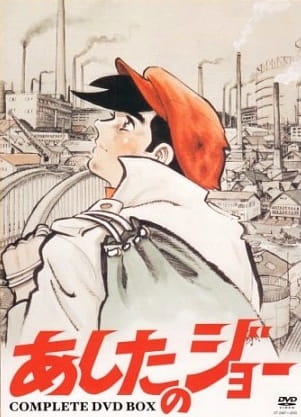
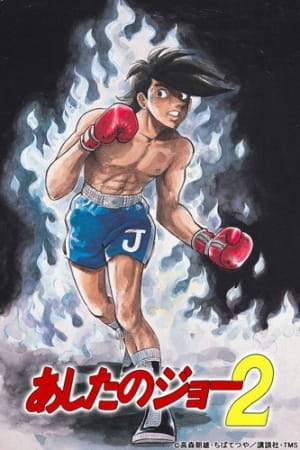
"As the wind whirled by, a Hummingbird appeared before the Nomad as they made their way through the wasteland. Hummingbird: Will you listen to my song, Nomad? I'm in a hurry, ask someone else. But the Hummingbird just won't give up and pursued the Nomad. Hummingbird: Please, I must sing my song. Nomad: You're rather selfish. Sorry, but I' m just not in the mood. I'm on a journey to die. Hummingbird: But that's ridiculous. Who goes on a journey to die? Nomad: It's the truth. Why would I bother lying before I die?But the hummingbird refused to give up. Hummingbird: Then how about this? If I can make you lie, listen to my song. If I fail to do so, I will say no more. Wanting to be freed from the persistent pest, the Nomad agreed. Hummingbird: Why do you want to die? Nomad: Because I lost everything. Hummingbird: That's a lie. Nomad: But it's not a lie. I lost my home, my fortune...and my family died from illness. I've got nothing left. Hummingbird: No, you still have eyes to see me and ears to hear my song. You even have a mouth to speak to me. Nomad: Yes, you're right. Though they felt that they had been duped, the Nomad admitted defeat. Nomad: All right, I lose. The Nomad didn't want any more trouble, and stopped to hear the Hummingbird's song. The voice was so beautiful that it filled the Nomad's empty heart with a gentle warmth just for a moment. After it had finished its song, the Hummingbird flew towards the ray of sunlight that was peeking through the clouds." - The Hummingbird and the Nomad (Storybook) Redemption. The most successful and decorated Olympian of all time, Michael "Flying Fish" Phelps, sums the one word this way: "Perseverance, determination, commitment, and courage-those things are real. The desire for redemption drives you." Going back to Megalo Box, the prequel being a creation and a homage to the 50th anniversary of Ashita no Joe a.k.a Tomorrow's Joe, was a fun watch when the anime first debuted in Spring 2018, but quickly faded into obscurity for it being like a stereotypical Shounen anime where the underdog fights his way through all the underground boxing ring matches, to then rise up and be a formidable foe. Even I'll admit that going back to Season 1 now, just feels like the re-watch has made the experience much worse and a slog to finish this "boxing" anime. But the sequel here, dubbed Megalo Box 2: Nomad? NOW THIS IS A 100% GAME CHANGER of anything but everything that we haven't yet seen before. And apparently the production team behind the prequel also thought of it the exact same way with director You Moriyama, whom producer Minako Fujiyoshi had to convince him to do so, thinking that the prequel by itself is an open-and-shut case. Rather than make yet another season of staying with the whole "tribute to the past" thingie-a-bob (which was what attributed to the less-than-stellar feedback in both Japan and the West at the time), the staff team scrapped that idea, and went for a more mature theme that displays the post events of Gearless Joe in a long timeskip of 7 years, where everyone has matured and Joe's fall from grace as a depressed adult post-Megalonia. Instead of sticking to the same "Ashita no Joe" guns that bullets could crack for its own niche, the production staff team went for a more independent work which incoporates real-life societal issues, while still following Joe as he travels from place to place, while simultaneously not being able to move on from his past friends and rivals. AND BOY DOES IT SHOW, I'd say this change greatly increased the impact that boxing anime fans have been craving for the longest time. If anything, this Nomad sequel proves one crucial thing that is missing from the prequel: character development IS KING, neither the boxing matches (though since this is a boxing anime at its core, it has to be there) nor the impact of wins or losses. As such, Nomad starts out differently than your average sequel, giving it the vibe sense that the world of the past is present, but you cannot always look back to your glory days and make the same results again. And that's Gearless Joe's re-account of his mature life being the Nomad: the one who wanders around with no goal in sight. Need I mention that Nomad itself is more complex (as foreshadowed by the production team), but still reigniting the same flame of nostalgia? Because that is what it is: the Gearless Joe is not the same Gearless Joe 7 years later, and has largely kept to a low-profile state after losing out to Yuri's young successor Edison Liu, leading to his recluse life under painkiller drugs and earning money from his old ways of underground boxing matches. If you're wondering why I'd mention a "nonsensical" story in the beginning of this review, "The Nomad and the Hummingbird" is essentially the mature-but-depressed and delusional Joe's road from cradle to death, then riding the road to redemption, and it is a crucial pointer in the progression of the sequel. Through the same-old and new characters that are like character arcs in and of itself (and outstanding ones at that), these people will teach Joe the meaning of life, and what it meant by getting through all the trouble of being an outcast and making the most out of the new life, setting new goals, objectives and aspirations for the future. Seriously though, never have I been so captivated by a character-centric story so jarring, yet is intensely intriguing and hits at the heartstrings like a solemn foreign song played on the guitar. You can never find a better original story like this that is done through much of the production staff team's back-and-forth multiple discussions about the new Gearless Joe and his mature characterization, but fix as much as they can it did to give it an edge that I can say, is on a much higher pedestal than any typical "underdog to champion" fame kind of boxing show. Mature being the theme of Nomad, and of course, with such a huge timeskip, Joe and the kids of Team Nowhere have matured A WHOLE LOT. We all know what happened to Joe, but in the course of events, his manager-cum-coach Nanbu...shall I say, had some life complications to the point that Sachio and crew thought that Joe was solely at fault when he "abandoned" them for his own gain when going against the former No. 1's student successor (Edison Liu). Needless to say, all of that was a recipe for disaster, as the tables had drastically turned on Joe: the loss of his Megalonia "champion" status, and Sachio with the Team Nowhere kids exiting Joe's life thereafter. 7 years later, everyone obviously grows up, but Joe's fame got so much on his head that the loss subjected him to post-natal depression. Overtime, the new characters Chief (an Afro-Latino immigrant) and Mac "The Hero" Rosario (brought in as the new technological face of boxing Gear) encounters Joe, fights him, and teaches each other about what their human values are worth fighting for, hence the symbolism of "The Nomad and the Hummingbird", which explicitly interchanges the roles between the three Megaloboxers (once in each character arc), educating them and edifying the meaning of "coming home to the family". Even if all is lost, your family will still be right beside you, even through the course of life and death. And you know that I ABSOLUTELY LOVE symbolisms in shows, and Nomad does an outstanding job at reading between the lines when it comes to characterization of the tightly packed and immaculate kind. TMS Entertainment is back to produce this show (without the help of its subsidary 3xCube which also produced the classic Ashita no Joe), but this time, the old-school style animation is largely improved for the better. Even Joe's VA Yoshimasa Hosoya was surprised at the improved animation, and quote-unquote "was surprised by the improved animation which he felt to be more fit of a movie rather than a TV series". Season 1 wasn't bad, but the asinine tight production schedule, other than the tribute of sampling full HD to old 480p visuals, made it truly stand out in its time. Season 2 here is largely more of the same, though I'd guess that 3 years of production development is more than enough time to make this sequel work its legs to kick out wonders. It is an unique mold, all on its own. Even the music by famed composer mabanua is back with more of the same-old, old-school style instrumentals, but incorporating with Mexican-Spanish themes. Such as the OP "The theme of the Nomad" which is meant to sound like a glorification of Gearless Joe's better days in mono, to the Latin-American ED "El Canto del Colibrí" (translated as "The Hummingbird's Song") in full Spanish Tejano "folk" style music, meant as a song of the hummingbird, seen as a messenger of the gods used to convey good and peaceful thoughts to kin about their loved ones, dead or alive. And even as much as I miss LEO Imai's hyper OP "Bite" of the prequel, this narrative shift of a sequel does not need all the barking and biting hype, and settles for the comtemporaries to add the classic punch to the impact. Overall, it's insane to see a famed sequel like Megalo Box 2: Nomad, be so shunned by the community, because other than it being a vastly superior sequel, it can also be taken in as an independent work all by itself. Providing the fact that you have to bear through the decent prequel to get to this sequel, I can safely tell you that the wait is worth the trouble. Este es un Anime Excepcional Secuela! Realmenté excellenté.
Stark700
June 27, 2021
Anime that mixes science fiction and sports drama together aren't very common these days. When you throw characters into a boxing ring, it becomes more of a sensation because you konw, someone is going to get hurt. No, I don't just mean getting hurt in the fight. I mean, someone is going to risk their pride on the line in front of the world. Megalo Box returns for a surprising sequel in Spring 2021. Indeed, Megalo Box getting a second season almost feels like a miracle. Joe has been established as a character with integrity but also one we came to understand and relate to. Fromthis season, we see a change in his character, including his name. Now going by the name 'Nomad', the first episodes explores his psychological state of mind and how he lives his new life. Taking place roughly 7 years since the first season, we see Joe living his life not with luxury but one who tries to get by everyday, almost like a survivor. He relies on painkillers that translates into a sort of dangerous addiction. This self-destructive behavior shows that Joe has a hard time letting his past go. The painkillers he takes feeds on his mind to forget, even if it's damn impossible. And that's the beauty about Nomad: Megalo Box 2. This show is so much more than about throwing punches in a ring. We start off this season with heavy drama that deals with sensitive topics in the sports competitive world. Let's also not forget that despite Joe trying to keep a low profile to himself, he still possess competitive skills in the ring. Sure, he may not be at his prime but Joe hasn't lost his touch either. From the first few episodes, we also meet Chief, a character who inspires Joe to once again rise up and be himself. It's not until a life changing event later when Joe decides to truly move on from his past. Chief represents the source of power that Joe needed this season. He's been running from his past and if it wasn't for Chief, his future would be grim, perhaps even nonexistent. For this season, it gave us a deep dive into Joe's psychological mind, about how he's been dealing with Nanbu's death, and how he moves on. Joe's worst enemy is himself and it's important to see how manages to defeat it. Joe isn't the only character who underwent changes. One of the more prominent characters who underwent a character change is Sachio, a young boy who has now grown up as a teenager also getting involved as a Megaloboxer. But no mistake, he isn't as skilled as Joe, Yuri, or any other of the elite fighters. More importantly is his feelings towards Joe and how he seem him this season. Other important characters making their appearances includes Edision Liu, a man who wants to prove himself and to Joe that he is a true Megaloboxer. On the other hand, we also meet Mac, a Megaloboxer who draws in some parallel similarities to Joe in his quest of redemption. The season even goes through his past life and how he became where he is in he present time. Even more interesting is how we see technology can influence a person's life, most noticably Mac. You have to know that fighting in a ring with a robotic arm and gears has its risks. This season turns up to the 11 when we realize the real consequences, with Mac being the perfect example of telling and showing. If you believe in this show to succeed, you're going to need some patience especially with the story pacing. The first half of this sequel is more about Joe's personal recovery from his past and move on with his life. The second half draws in more about the boxing world's truths and consequences. It also sets up for a mega confrontation between perhaps two of the series' biggest names: Joe and Mac. The latter is a character that isn't easy to accept at first but over time, the show truly wants us to understand his character. And indeed, Mac's personality and characterization gives us a deeper insight not just about him but also the Megalo Box world. How can we ever forget the dystopian society that differs so greatly between the wealthy and the poor? When I came into this season, I knew this show would do a lot more than just show us a memorable boxing match. Similar to the previous season, we got the crude yet aesthetic art style we were familiar with. The most memorable quality relies on Joe's physical features, showing his longer, dirtier hair. His character expressions were also more depressed until he meets Chief. Speaking of which, Chief himself shows traits of a leader and mentor. His general composition and personality is reflected in his expressive dialogues. To say the least, we managed to get a very human story with characters driven by certain ambitions. As with a sci-fi dystopia, the technology in this show has both a simple yet complex way of selling its product. The robotics and technology adds credibility to the unique style of Megalo Boxing. Every move in that ring shows what the capability of such technology in this timeline and by no understatement, it's a sight to remember. The director and producers managed to truthfully animate this season with a goal in mind and that goal was achieved. Megalo Box may seem like a simple sci-fi sports drama show at first but it proves itself to be a complex storyteller. From the deep character development of Joe/Nomad to the storytelling of Mac, it shows how people can change or influenced by certain people or events. This season may not be very easy to jump into at first but you won't regret taking that step to live the dream again.
Skarvalin
June 27, 2021
A happily ever after doesn’t exist. Nomad takes the cheerful conclusion of the first season and throws it down the gutter. Gearless Joe, a man who had reached his peak early in life, is left stumbling into a downward spiral. What’s left after a few years is a lone man with nothing. Wandering on without a destination. Getting money the only way he knows how. A stray dog now more than ever before. A continuation of a story whose ending, albeit not perfect, felt complete, could very well have been just a way to milk a pre-existing series dry. But I was glad to seethat wasn’t the case here. Nomad doesn’t use the first season as a crutch, but as a foundation to build off of. The uplifting nature of season one is replaced with a much more somber tone. Joe who had previously been fighting for his future, now fights to handle the pain of his past. It’s in stark contrast to where we last saw him in his life, but not a bad direction to take his character. Of the whole first season's cast, he was definitely one of the least interesting ones. He’s a blatant representation of an underdog and works as an inspiration to seize your future with your own hands. He was pretty much just a caricature, and the show was more or less carried by the people around him. But without the urgency of a massive tournament, this season had more room to develop him and the rest of the cast. Taking what we already knew and expanding upon it. This is where Nomad truly shines greater than its predecessor. It’s not tied down by a destination and has the freedom to explore its cast to the fullest of its runtime. Resulting with the characters having an added sense of realism and complexity to them. While also staying true to how they behaved in the past. But with this freedom comes a paper-thin narrative. Nomad is very much just about exploring the characters as they find their way of life and where they belong. At the start of the show, Joe had lost his former home. Much like a nomad he travels around. Stuck in his past guilt, unable to move forward in his life. Throughout the show there’s a wide usage of the hummingbird as a symbol for guidance. The one who sets Joe on the right path again, a man named Chief, wears this symbol as pride of his nationality. It’s not symbolism at its most subtle, but ties naturally into the main theme and gives meaning to it. The lack of an overarching story means that your enjoyment will be largely dependent on your perception of the cast, even more so than in season one. However, even with the looser structure, the identity of Megalo Box is very much still present. If the first season's distinct artstyle and stellar soundtrack was enough to grind your gears then you’ll find that Nomad still has that in spades. Visually pretty much identical to where we left off. The same grit and rawness is still present in the artwork, with good use of lighting and shot composition. Animation is still packing the same punch as what we were given in season one. The fights are bloody and the punches have a strong sense of weight to them. Meanwhile the music is yet again made by mabanua. Giving us beats with an attitude, getting the blood pumping and ready for action. But has a much stronger hispanic influence in its identity this time around. The music also isn’t afraid to leave it’s upbeat focus to suit the otherwise pretty dismal tone of this season. Nomad was an unneeded follow-up to a show that’s been falling into obscurity. But one that left the series on a higher note that it previously had done. Delivering on more of the series strengths as well as improving on some of its more sour apples. With characters that are more empathizable, and themes one can easily relate to. This installment is definitely an underdog, and it's a shame this won't get the amount of attention that it deserves. But thanks to the ones who'll follow through, the story of Joe is not dead yet.
valzzor
June 27, 2021
Slight spoilers ahead. I’m on the record saying I didn’t think Megalo Box needed a sequel and that I don’t think a sequel could even do much. Boy, was I wrong, and i’ve never been happier to be wrong in my entire life. This season of Megalo box is a masterpiece. It takes everything good about season 1: setting, animation, aesthetic, and soundtrack, makes them better, then just makes everything else better while its at it. It improves on the established characters, introduces interesting new ones, and has a more engaging story, all while being thematically brilliant. This season improves upon every character, showing the effects ofthe previous season on them, but also producing new arcs for certain characters that feel incredibly organic, but also personal and emotional. This season is significantly more “noir” in feel then the first season, so much so that the opening looks like it could be attached to something like reservoir dogs, and the characters reflect this. They are selfish and quite often do the wrong thing for their own personal benefit, both emotional and financial. Joe himself is especially standout in this season, which given the level of character writing is very impressive. They take previously established ideas about his character, such as his drive to feel alive within the fight, but also using the ring to move forward in his life, and deconstruct these elements to show how these ideas can negatively impact him and the people around him. The other stand out character for me this season was Chief. Chief is a character we meet early on who helps get both the story and joe’s character arc rolling, while being a thematically brilliant character. His and Joe’s dynamic is one of my favourites of all time. Story wise, this season is very different from the first. Whereas the first was a simple underdog story focusing completely on the sport, Megalo boxing takes a major backseat in this season, used only for character progression. It becomes a true character story, with almost a seinen feel to it. Now for some who came for the boxing itself, this may be a drawback, but for me it most definitely wasn’t. A strong focus on the themes and characters within the narrative allowed for far more emotional moments then the first and has seriously endeared me to characters within the story this time round. Without spoiling too much, the story is simply about joe hitting rock bottom and what he wants to do now he’s here and this story helps explore many of the character's from a completely different angle from before, which helps keep the season feeling incredibly fresh and new, despite being a sequel. The visuals of this anime are just amazing. This is a superbly directed anime, with an incredibly unique and engaging visual style that really helps set it apart as something different. While it may not always have the insane sakuga moments of many a shonen out there, that’s not to say they don’t flex their artistic muscles at all, because they do. There is still plenty of moments of brilliant sakuga to be seen, made ever more appealing by the brilliant directing and visual style. One visual motif omnipresent within the season is the hummingbird, which is used to great effect within the anime as a symbol of home and a visualisation of what people are fighting for. Everything from the style, direction, cinematography and visual motifs are great. The soundtrack. What to say about the soundtrack. Mabanua is a genius. The soundtrack of season 1 was already brilliant and one of my favourites, but he somehow made it better. With this effort, Mabanua has easily cemented himself as one of my favourite musicians within the industry. On top of that, the voice actors give an amazing performance and everything within the sound production is solid. Genuinely nothing to complain about, and a lot to love. And to top it off, it’s also thematically brilliant. It uses the first seasons ending to bring forward these ideas of dreams and how joe has impacted the world but uses the same characters that have been impacted by these dreams joe has shown them to show the importance of its other theme, home. This inner duality is present within all the main characters, but also within a lot of the world building. The show also tackles other themes, such as drug abuse and physical trauma within athletes, immigration and morality issues within the realm of technological progression. Its an incredibly diverse, but compact and tight thematic piece that sticks to these themes above all else. I can already tell there will be people who think the ending is anti-climatic, and while I understand why they think this, I think this is the only ending that really makes logical and thematic sense and they definitely didn’t drop the ball on these aspects. As far as this “version” of the ending goes, it definitely did it well. This season got me emotionally many a time throughout all the season and has been an absolute treat to watch every week. This will be my choice for anime of the year.
Chief_AJ
February 15, 2024
This is the best singular season of any "sports" anime I have ever watched, and the reason it's in captions is because this was more than a story about boxing. It was a beautiful depiction of a broken man, a man that was so successful but so shattered into pieces, it's a story of that man reinventing and reinserting himself into his past life with the help of amazingly written characters along the way. From his old companions from season 1 to newer characters that were introduced here. All of them played a huge significant part in Joe's story, and how he looks at theworld, which is all that you can ask for. This was more than a sports anime, this was a masterpiece that I would recommend for anyone to watch. To me I would give this 10 right hooks out of 10.
Rank
#460
Popularity
#1223
Members
229,369
Favorites
2,251
Episodes
13