Penguindrum
輪るピングドラム
For the Takakura family, destiny is an ever-spinning wheel, pointing passionately in their direction with equal tides of joy and sorrow before ticking on to the next wishmaker. With their parents gone, twin brothers Kanba and Shouma live alone with their beloved little sister Himari, whose poor health cannot decline any further. On the day Himari is given permission to temporarily leave the hospital, her brothers take her out to the aquarium to celebrate, where the family's supposed fate is brought forth with her sudden collapse. However, when Himari is inexplicably revived by a penguin hat from the aquarium's souvenir shop, the hand of fate continues to tick faithfully forward. With her miraculous recovery, though, comes a cost: there is a new entity within her body, whose condition for keeping her fate at bay sends the boys on a wild goose chase for the mysterious "Penguin Drum." In their search, the boys will have to follow the threads of fate leading from their own shocking past and into the lives of other wishmakers vying for the Penguin Drum, all hoping to land upon their chosen destiny. [Written by MAL Rewrite]
Main
Main
Main
Main
Supporting
Supporting
Supporting
Supporting
Supporting
Supporting
Supporting
ShiiKatsu
January 14, 2012
Before I started watching this anime, even before I knew what it was called, I already had a feeling it was going to be special. After watching the first episode, I said aloud: "This is the weirdest anime...!" But despite that, I was very drawn to it and kept watching. I wasn't disappointed. Mawaru Penguindrum has made me both laugh and cry more than once, and after episode 8 I could hardly wait to watch more, putting all the other anime I had been watching on hold for this. The story is very touching, and the Takakura family's close bonds with each other was somethingI really loved. I was rather surprised at the plot twists(I won't give anything away, but beware- Penguindrum isn't all sweetness and light), but I do like anime that's darker than it first appears to be. The story also gets much deeper, and although by the end some things are still left unexplained, I think that's part of the magic of the show. The artwork and soundtrack both left me speechless. I felt like the music fit perfectly, whether it was a moment of happiness, sorrow or a gripping dramatic scene. I also got incredibly attached to the opening and ending themes, both music and art-wise. The characters are amazing. The Takakura siblings are all lovable, and some later characters (which I won't name because of spoilers) are just to die for. Ringo's existance annoyed the hell out of me, but now I've grown to love her as well. All in all, I think Mawaru Penguindrum was a fantastic show. I couldn't reccomend it more, and it's one of the best I saw in 2011. Magic, mystery, love and tradgedy- it's all there. I've seen several people say that "it isn't a show for everyone", but doesn't that apply to most anime? I think it would be a shame to go through life without seeing it. But watch and see for yourself- Penguindrum may just leave you spellbound...
Supporting
cumsussertodd
April 24, 2014
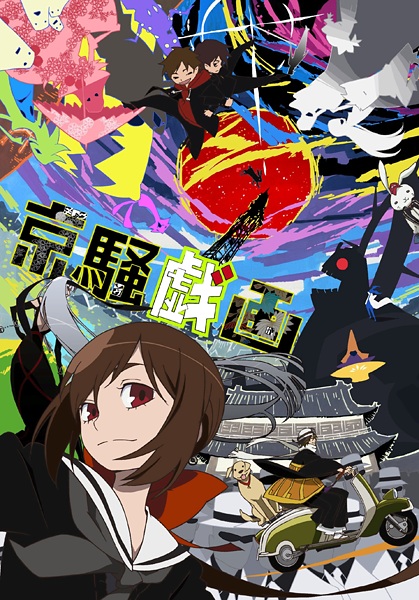
STORY Honestly, I feel that Ikuhara had many good ideas in terms of the plot. However, the end result is a clusterfuck of stories and themes mashed together. On their own, each arc stands up quite well, and a lot of ideas are well executed too. I liked the Child Broiler idea for one, ignoring the fact that it was a tad overused. The plot is extremely convoluted and confusing. Unlike other anime that explain their convoluted storylines like, say, Kyousougiga, Mawaru Penguindrum does not make any attempt to do so. The viewer is left wondering what the fuck is going on as plot development afterplot development happens without any explanation whatsoever. In the last 8 or so episodes in the series, everything just goes completely apeshit, with characters suddenly changing personalities and sudden "twists". The viewer is not given any time to think about the twist or what the plot development means. Instead, the show simply shoves the ED in his face and tells him to deal with it and watch the next episode. Don't even get me started on how pants-on-head retarded the ending was... PRODUCTION QUALITY (ART+SOUND) The art was very well done. Unlike some others I have no problem with the cardboard cutout background characters since a blurry or improportionate man would distract me from the show even more. The environments were all very colourful and varied. The vibrant use of colours was a major plus point for me too. Animation is smooth enough, and there aren't any noticeable drops in quality. As for sound, voice acting was great. Nothing out of the ordinary though, but that's perfectly fine. I greatly enjoyed the soundtrack, although I got a bit bored of them playing the same tracks in the second half of the anime. The sound direction was very good too, with the tracks playing a prominent role in many scenes to create a bigger impact. Production quality was definitely up to standard. However... CHARACTER I would suppose the characters in the show are just decent. I didn't find any of the characters particularly likeable or interesting. They're kind of like background characters. Himari takes on a minor role of the damsel in distress. Kanba is your typical angsty teenage badass. The only characters I liked were Shoma and Ringo. I feel that both had a significant amount of character development by the end of the series. They also have very good chemistry, and I enjoyed their scenes together. ENJOYMENT No, I did not enjoy it at all. Except Ringo x Shoma. OVERALL "Warning", Spoilers of the ending following this. I recommend you just read it and spoil yourself so you spare yourself the pain of watching this. All in all, the show had some great ideas, but failed to execute them well. It would have been way better if the director didn't have such big visions for the show and fall short completely. Perhaps he should have used his ideas for different anime series. There is also a stunning lack of attention to detail, which is something that continuously broke immersion for me and annoyed me immensely. The ending was just shit too, why the fuck did Shoma and Kanba die and be revived? And why the fuck was Himari's penguin walking with Kanba and Shoma at the end(lack of attention to detail, see)? Mawaru Penguindrum, like the Kyousougiga TV series and Kyoukai no Kanata, is a prime example of why every anime needs a solid plot, not just good production quality to be good. Do yourself a favour and take this out of your backlog.
starfirexi
January 11, 2017
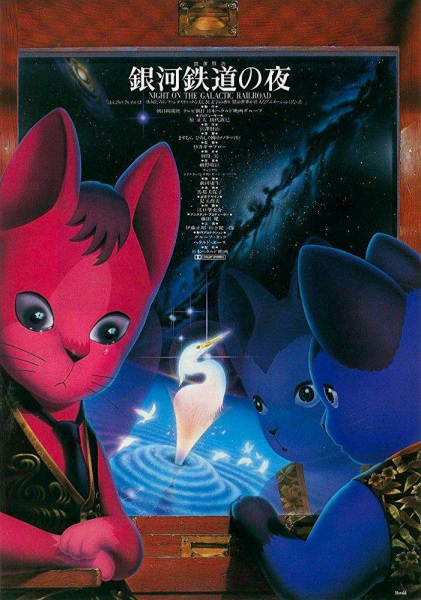
This is my first review on MAL and normally, I wouldn't be too interested in writing reviews, because honestly, I'm not very good at it, but in the case of Mawaru Penguindrum, it was inevitable. I felt like if I did not write what I'm feeling after watching this anime, then something inside my mind will definitely break... So here I go. I found out about the famous ''mawaru penguindrum'', when I overheard two girls in my school talking about how mindblowingly amazing it is. Perhaps , it was then, that i made a mental note to maybe check it out. When I came home that day, Isearched it up: "Best anime ever" "I can't believe something as good as this anime exists" "Amazing" "10/10" I was super excited. I couldn't wait to watch it. I waited until my exams were over and cleaned my room and brought lots of popcorn and turned off the lights and opened my laptop and put on the first episode. 23 and a half minutes later, I was a little confused. OHH! this must be like those anime, you know...the ones that start out fairly weird but get super interesting a few episodes later. I continued watching. Exactly 144.5 minutes and 6 episodes later, I was very, very confused. Frustrated, I googled: "Is mawaru penguidrum really worth watching?" "ITS A MUST WATCH" "You cant miss it" "I strongly, strongly recommend it" Are the answers I got. You see, I'm a simple woman. I value the opinions of my fellow anime fans. They have never let me down. 3 to 4 MAL reviews alone, guide me enough about the worth of an anime and 99 out of 100 times, I agree with majority, if not all, of the reviews. But this wasn't the case with Mawaru Penguindrum. I decided to watch it till the end. 576.5 minutes and 24 episodes later, I sat there fuming, with a burning ache in my head. It felt like I had wasted a quarter of my life and I felt incredibly stupid for still not being able to find a single thing that was "mindblowingly amazing" (or even remotely interesting) about this anime that I had just finished watching. I still go to blogs and MAL reviews sometimes, to find some explanation for this anime...an explanation that I missed, yet I always thought I was that one person that always searched for a meaning in everything I watched or read, which is one reason I like anime, because I believe that it is a medium of entertainment that is capable of conveying deeper meanings to seemingly shallower things, because everything can be visually explained. At some points, I saw a bit of potential in this anime. Some scenes were nicely portrayed, the BGM was fitting. It even had a bit of nice comedy. The character designs were not bad. It could have been a nice romantic comedy or a heart warming story about two brothers trying to save their ill sister. Even earned some points from a psychological aspect (the stalker business and child boilers and terrorist organizations)...but it took all of its nice potential and smashed it together into a wannabe deep complex drama that was really just meaningless. Everywhere I looked, they talked about some deep ''symbolism'', some ''hidden meanings", a "relation with art/history/religion/etc..". At first it frustrated me and annoyed me, but now I just laugh. Despite the fact that it was a ridiculous anime, that poorly conveyed/did not convey at all whatever hidden meaning it was supposed to carry to an average viewer, and that it was only meant to confuse people, and that it tried WAYY TOO HARD to become a psychologically thrilling masterpiece and for that it even tried to steal ideas and symbolism used to in many pieces of literature (such as night on the galactic railroad), it FAILED MISERABLY. And people like me, who were disappointed to see the anime they had such high hopes for fail so badly, forcibly tried to put it on a pedestal. These are the same people who gave excellent reviews and ratings to the most troll anime of 2016, "Erased" , that won everybody's hearts at the first episode but failed miserably by the last, but people couldn't deal with it so they refused to even acknowledge its failure... Despite all that, I have taken a strange liking to Mawaru Penguindrum. It is my wonderland. My crazy world.A haywire fantasy. Because whenever I search it up, or hear about it, its like reading or hearing about somethingremarkable, something that only exists, but explodes and sparkles and flashes and shimmers...but is invisible to me. But I did learn that it is possible to attach a meaning to anything if you try hard enough. TLDR; I do not recommend this anime to anyone. If you're really such a fan of deep symbolism and hidden meanings, then I suggest you invest yourself in anime that successfully delivers at least SOME of it when you watch it. So I'd say go watch ghost in the shell, or perhaps even Angel's egg (yes, even that does a wonderful job with symbolism) and there's plenty more. You'll love those. Cheers.
orionator
April 19, 2015
Mawaru Penguindrum; also entitled 'I Have a Lot of Feelings' I won't lie. This was amazing. Absolutely beautiful. Stunning script, clean art, a unique plot line and music that wrenches at your gut in the most despairing moments of the series, whilst enhancing the humour and light-heartedness that this series needed as a preventative measure for hearts breaking and tears overflowing everywhere. Where should I even start? The story itself was...definitely unique. I heard the title of Penguindrum and passed it off as a simple family orientated fantasy adventure, but when I saw that it was categorised as 'psychological', my curiosity was piqued and I began to watchit. Boy, was I in for a journey. In typical Ikuhara-esque manner, the themes dealt with in this anime are at times questionable, offensive, immoral, philosophical; an all encompassing myriad of emotion and thought at the same time. I've actually had a friend I recommended this to, who refused to watch past the first episode as she found some of the themes unpalatable. Only a few directors are able to pull off such a jumble of themes as artfully as Ikuhara while retaining an appeal to a wider audience. Complicated, but watchable. I especially loved how all of the characters intertwined with each other, reminding the watcher of the underlying theme of 'fate'. Every character in this series is fated to meet in some way, to make an impact on another's life whether for better or for worse, and the sheer curiosity and interest behind the slow reveals and the twists in personalities are a joy to experience. Originally, I was going to drop the series as it started off so slowly. It was bizarre and it moved at a snail's pace, and the main characters did not seem to be going anywhere but in circles. It all changed around the halfway mark of the series, when the characters began to show their dark sides, their hidden personalities, their motives, the appearance of ghosts and the disappearance of logic and morals. Of course, the pace is uneven every here and there, but the variance in almost pointless humour and fast paced drama is a welcome contrast; it keeps you hooked and on edge, wondering what will happen next. This isn't a story about just familial love. This is a story of revenge, passion, the futility and cruelty of humankind, of fate and of salvation. The characters portrayed all of this beautifully. One of the most masterfully written scripts in terms of character development, characters whom you initially expected to be stereotypes found in anime (the playboy, the 'motherly' character, the girl with the crush, the beauty, the teacher, the Innocent) are all turned on their heads when the series comes to its climax and tapers to an end. Characters whom you initially thought unimportant are really the most important of all, and they are all linked so intricately together in a web that Ikuhara has spun to pull the story together, coupled with flashbacks of their pasts which explain their motives and their philosophies, creates such rich personalities. None of these characters are shallow. For example, when I first encountered Ringo Oginome I found her irritating and obsessive for what seemed like a schoolgirl's mere crush, but with her past tragedies being revealed as the story went on, as well as her understanding of her self and of others developing, I grew attached to her; I cried for her and I cried for her conflicting circumstances. The initial set up of all of these characters is for you to either hate them, then grow attached, or to love them and sympathise with them, then when the series hits its climax and their darker sides are revealed, it's hard to hate them, knowing what they've been through. Even the main villain, Sanetoshi, is charming and elegant, first shown as a miracle worker and slowly evolving into a darker entity, but even then I didn't hate him. Sure, I was angry at him, I was angry with what he had put our heroes through, but the initial charm still lingered and I couldn't bring myself to outright hate him (also because damn, smooth talking while attempting to break humanity? Let me have some of that). The art as well. Oh, god the art. I've always been a fan of Lily Hoshino, so when I found she was doing the character designs I was immediately interested. The animation is smooth and fluid, with a clean style and bold colours. However, there are discrepancies within the animation at times, with one episode (the episode at the hospital where Natsume makes her debut) being horrendously animated in comparison to the rest of the series, but I can forgive this for the outstanding beauty that the rest of the series brings. It's not just the clean, pretty style that makes the animation stand out; its the symbolism. During the series, the backgrounds are often a plain colour, interspersed with small symbols such as penguin logos, apples or train signs. It's not until the end of the series when you recognise their significance that you fully appreciate the bizarre symbols. What you thought was artistic bloodshed, you realise to be a symbol of love and fate. What you thought was a strange, alien ritual, you realise to be a portrayal of sexual intimacy. You realise things, the second, the third, the fourth time around. You don't stop realising things even when you know the script off by heart. The art is so rich and intricate, that even small symbols and inconspicuous posters have a meaning to them That's part of the beauty that Mawaru Penguindrum has so carefully placed and has me rewatching to find all of these subtle nuances. But really, what has me coming back to this series time and time again, to rewatch and analyse and have sudden epiphanies is the thematics that Ikuhara plays upon. The anime starts off with Shouma Takakura stating that he 'hates the word fate'. 'Okay,' you say to yourself. 'An anime about fate. Interesting. Goes along nicely with the family love theme.' It's at the end of the series where you realise that you were so very wrong. So very, very wrong. You kind of wish that someone, a reviewer, a kind, hopefully non sadistic friend or a big caution sign had warned you of the emotional journey that you were about to embark on. You see, this anime isn't just about fate. Okay, well maybe a large proportion of it is, but that's just the running theme. Fate is the cause; fate caused grief, passion, murder, revenge and sacrifice; in turn these caused each character's own unique motive. The futility that all of the characters feel in the face of their destinies is heart-rending, and their efforts to change their fates, and the fates of their loved ones is valiant and littered with tragedy. When I finished watching this series, I cried. There is a sort of melancholy beauty that accompanies a bittersweet ending and this was no different. Some would call it a happy ending, some would not, but in each case the emotion behind the climax and the finale of the series was so utterly raw that you cannot help but grieve and rejoice at the same time. Because when you finish watching, you realise that this wasn't an anime about the futility of the human race in the face of their destinies. This was about the hope, the courage, the unwavering love for another human, or the love for the entirety of humankind to FACE their destinies head on and sacrifice their being for someone to have a better fate. This was a story about salvation through sacrifice. You finish watching, and you think about the themes and subplots. You think about YOUR fate. You think about the sacrifices you would make, the extremes that you would go to to protect what you love. That's what makes this such a though provoking series, because really, as hard as it may be to imagine, all of these characters are like us (but hopefully without the tragic backstory). They just want normal lives, normal families, normal relationships and an unconditional love (unlike Sanetoshi, who was probably there to hate everything). I cried during the series out of laughter, but I also cried watching the gradual loss of innocence and hope that each character suffers. I cried because I grieved at the end, but I also cried because I sympathised with our heroes' final decision and I cried because I was overwhelmed by the lengths that they would go to to protect what they loved. In this series, you realise; sacrifice is the ultimate act of love. Enjoy the music while you watch the series for the first time, because believe me, at the end of it, just one track will have you blubbering on the train during rush hour. The mood is set beautifully by each track, be it humorous, tense, sad or pensive, and enhances the emotion during these scenes. I can't listen to either 'Ash-Grey Wednesday' or 'I Love You, Sons of Destiny' without getting a lump in my throat anymore. If you're wavering about this anime, don't be put off by the weirdness. Don't be put off by the somewhat bizarre relationships that each character has with each other, and don't be put off by the erratic pace and initial characterisation. It's a beautiful series, it really is. Art-wise, music-wise and story-wise, its a masterpiece in all fields. Watch a story unfold before your eyes and watch as secrets are revealed to you. Most of all, don't be surprised when you finish, face damp with tears, that you begin to wonder about humanity, fate and salvation. And I assure you, five months down the line, you'll watch it again for the fourth time and catch all of the symbols and hints that you missed the last three runs, and your newly gained knowledge won't soften the grief any more. I applaud you Ikuhara. I applaud everyone on the production team. It truly was a work of art. It truly was...'fabulous max'.
Link_of_Hyrule
April 25, 2015
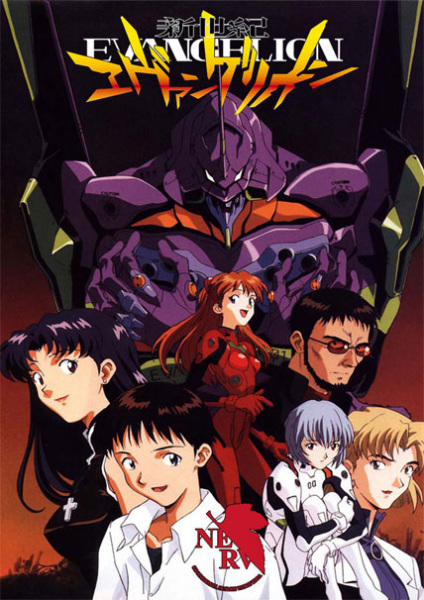
**SPOILER FREE REVIEW** “What is Mawaru Penguindrum?“ If ever there was a more loaded question in the realm of anime, I’m not sure I’ve heard of it, because this show is an absolute enigma. Adequately reviewing this show is a daunting task for reasons that will soon be clear, but let’s give it a shot: First of all, what is this show? Well, it’s a lot of things. A moving story about the importance of love. A detailed commentary on the way society treats children. A unique perspective on mental health issues. An insightful interpretation about the concepts of fate and destiny. Etcetera etcetera etcetera. Whilethe vast majority of anime are driven by their plot or by their characters, Penguindrum is instead driven by its themes, style, and the artistic messages that lurk in the 2nd, 3rd, and 4th layers of the show. It is extremely complex and jam-packed with more symbolism, motifs, and allusions than you can shake a stick at, but it’s simultaneously intriguing and investing enough that you could miss all of them and still enjoy the show. For that reason, Penguindrum is on the remarkably short list of shows that manage to have vast and flawlessly executed themes while simultaneously managing to have an engaging story and fleshed out characters. It’s one of my all time favorite shows and, as far as I’m concerned, a masterpiece. Synopsis: Twins Kanba and Shouma Takakura lost their parents long ago, and now live alone with their younger sister Himari. They lead relatively normal lives until Himari is diagnosed with a terminal illness that could cause her to drop dead at any moment. Distraught, the twins attempt to make the best of the time they have left with their beloved sister, until she finally collapses during a family trip to the aquarium. Himari dies. However, when the souvenir penguin hat that Shouma bought for her finds its way onto her head, she miraculously comes back to life with her illness cured. The only condition to keep her alive? Find the Penguindrum. The plot of Penguindrum has always been intriguing to me because, in theory, it should be a total disaster. You’ve got this unbelievably absurd concept of a penguin hat that grants immortality, an evil mastermind who controls your destiny with the help of two of his rabbit sidekicks, and comedic relief penguins who serve no immediately apparent purpose, yet you’re going to try to tell a heart-wrenching story of love and betrayal that delves deep into philosophy, ethics, and social commentary? I mean, does that sound for a second like it’s going to even remotely work? In any other circumstance, it probably wouldn’t have. Luckily, this anime was directed by Kunihiko Ikuhara, who is also known for Revolutionary Girl Utena and, more recently, Yuri Kuma Arashi. Ikuhara, if I may be so bias for a second, is a complete and total artistic genius. I’ve said before that his style is not for everyone; the repetition of sequences, the abstract environments, the use of vibrant color dissonance, etc. It all serves to provide this show with a remarkable artistic flair that will dazzle you and ensure that there is never a dull moment. Getting back to the plot, the reason that Ikuhara is so widely praised is for his ability to convey information without words; to connect the events of the show to the real world and make the viewer question what the meaning of it all is. Of course, the storyline of Penguindrum can be taken at face value by all means. It is complete with exciting plot twists, intense moments, and general excitement. The thing is, there are LOTS of anime that can give you those things. However, there are virtually NO anime who can give you those things on top of the sheer depth and artistic passion that went towards conveying a refined, emotional message to the viewers. This serves to make the humble story of the Takakura family all the more memorable, as it can only be described as a rollercoaster of emotions. Penguindrum will make you feel every emotion that you have over its duration, and I think that is saying something. The character cast of Penguindrum adheres to the writing technique known as “The Mystery Box”. For those unaware, this is when the characters are presented to the audience, but the show has no intention of letting you get to know them at first. No real backstory is given; all you know about them is what you see. Then, slowly and steadily, you begin the learn more and more about them. Their pasts. Their motivations. And finally, their deepest darkest secrets. Every time you think you know everything there is to know about the large cast of Penguindrum, wham! Another twist! This is a remarkably impressive accomplishment because it is only through the viewers’ sheer exasperation after their perceptions of the characters get turned on their heads again and again and again do they begin to realize just how much depth that all of them have. Note the emphasis on the word “all”, because no character in Penguindrum is left behind. All of them, no matter how seemingly minor, are fleshed out and manage to feel real. The icing on the cake is that this anime manages to accomplish all of this without ever feeling contrived; these are not twists “just of the sake of twists”. They are all thematically coherent and well thought out. For that reason, I can’t see anything to complain about with this cast. They are likable, relatable, well written, dynamic, and they have depth. What more could you possibly want? Discussing the presentation aspects of an Ikuhara anime is never easy simply because of how unique and simultaneously profound it manages to be. As I mentioned earlier, Ikuhara is a master of visual storytelling. He frequently conveys more information with animation and shot composition than he does with dialogue/monologue, and that’s something you just don’t see often. I won’t even try to describe the myriad of techniques used in this anime, because I don’t think I could do it well without writing a separate essay. Speaking purely in terms of aesthetic appeal, the art style of Peguindrum is extremely pretty. The colors are immensely bright and everything pops right off the screen. The animation itself is also very fluid, and even memorizing at times. In short, it’s one of the most visually impressive anime I’ve ever seen for reasons that are hard to describe without demonstrating specific examples. As for the sound design, I struggle to find legitimate complaints yet again. The OPs and EDs are both unique and worthy of listening to in your spare time. I can’t tell you how long I had OP 1, “Nornir”, on repeat when I first finished this show. What really makes the OST work is the directing; Penguindrum’s mood and tone fluctuate a lot, and the soundtrack never fails to provide the proper accompaniment. Songs always end right when they need to and begin right when they need to. By the way, the voice acting is spot-on. There’s not a single VA who didn’t totally nail the character they are attached to. Penguindrum’s story and themes may be its main talking point, but by no means whatsoever does the presentation lag behind; it is just as superb as the rest of the show. What more is there to say about Mawaru Penguindrum? Well, a lot actually. I could quite literally gush over this show all day; it has turned me into a hopeless Ikuhara fanboy. However, fanboying aside, I think this show is an absolute must watch. Not everyone is into the whole symbolism thing, and I get that, but it’s an enjoyable show even without paying mind to the themes. For people who ARE into critical analysis, this is your dream come true. Penguindrum is a show that means a lot to me and has genuinely made me reassess several of my worldviews. The effort, passion, and sheer emotion poured into this anime is palpable, and rivaled only (in my opinion) by Neon Genesis Evangelion in terms of how well you can feel the creator’s pain. It is one of my absolute favorites and it is one of the few anime that I can say without hesitation is indeed a masterpiece.
Rank
#840
Popularity
#880
Members
318,100
Favorites
7,407
Episodes
24